
What’s the Real Vibe in North Las Vegas?
What are locals really saying about life in North Las Vegas? The answer depends on what you came here expecting. For families chasing affordability near the Las Vegas metro without paying Strip-adjacent prices, North Las Vegas tends to feel like a smart compromise—space, parks, and access without the premium. For those hoping for walkable urban texture or the polished resort-town aesthetic of Henderson, the city can feel like it’s still catching up. The vibe here isn’t about arrival; it’s about momentum, tradeoffs, and whether you’re comfortable with a place that’s visibly mid-transformation.
North Las Vegas sits in an interesting emotional space: close enough to Las Vegas to benefit from proximity, far enough to feel like its own entity, and growing fast enough that longtime residents and newcomers don’t always agree on what the city should become. The median household income of $71,774 per year and median home value of $340,200 position it as one of the more accessible entry points in the metro, but that accessibility comes with tradeoffs—older infrastructure in some pockets, newer planned communities in others, and an identity that’s still being negotiated in public forums and neighborhood debates.
This isn’t a city where everyone feels the same way. It’s a place where your experience depends heavily on which part of town you’re in, what you prioritized when you moved here, and how much patience you have for growth pains.
The Emotional Landscape: Who Feels at Home Here
People who tend to feel aligned with North Las Vegas are those who value pragmatic wins over aesthetic perfection. Families appreciate the relatively lower housing pressure compared to Las Vegas proper and Henderson, especially first-time buyers who can actually afford a yard. The city’s park density exceeds high thresholds, and locals consistently mention green space access as a pleasant surprise—playgrounds, walking paths, and water features show up more than expected in a desert metro.
Remote workers and pragmatic renters also find footing here. The median gross rent of $1,479 per month is meaningful savings compared to nearby alternatives, and the presence of rail transit (though car dependency still dominates) offers some flexibility for those commuting into Las Vegas for work or entertainment. The pedestrian-to-road ratio in certain pockets supports walkability better than the car-oriented reputation suggests, though this varies significantly by neighborhood.
On the other hand, people who struggle here tend to be those expecting a certain level of finish, walkable daily errands, or the kind of dining and nightlife variety that comes with denser, more established urban cores. North Las Vegas feels like a place still building its identity, and for some, that’s energizing. For others, it reads as incomplete.
Social Media Buzz: What People Are Talking About
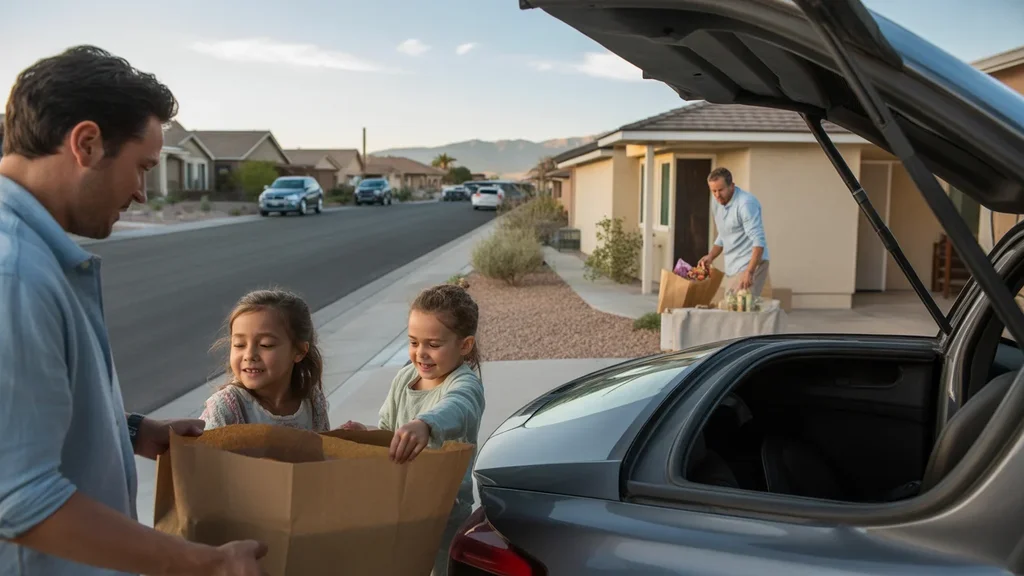
Conversations about North Las Vegas on platforms like Reddit, Facebook groups, and X tend to cluster around a few recurring emotional themes: affordability pride, growth anxiety, and defensive loyalty. There’s a palpable sense that residents feel misunderstood by outsiders who conflate North Las Vegas with Las Vegas itself or who dismiss it as “the rough part of town.”
“People hear ‘North Las Vegas’ and assume it’s all rundown or dangerous, but my neighborhood is quiet, clean, and full of families. It’s not fancy, but it’s ours.”
“I love that I can afford a house here, but I wish there were more local restaurants and coffee shops that weren’t chains. It feels like everything interesting is still a drive away.”
“The parks here are honestly better than I expected. We’re at the playground or splash pad almost every weekend, and it’s never crowded.”
Growth is a double-edged topic. Newcomers tend to celebrate new retail, updated infrastructure, and the sense that the city is “finally getting attention.” Longtime residents express more ambivalence—they want investment and amenities, but worry about losing affordability, increasing traffic, and the erosion of the small-town feel that drew them here in the first place.
There’s also a recurring thread of frustration about perception. Locals frequently defend the city against what they see as unfair stereotypes, but that defensiveness itself reveals an emotional tension: the desire to be seen as legitimate, independent, and worthy of respect within the metro.
Local News Tone: How the City Is Framed
Local coverage of North Las Vegas tends to frame the city through the lens of change, growth, and civic debate. Headlines and story angles often reflect a city in transition, grappling with infrastructure needs, development pressure, and questions about identity and equity. The tone is rarely celebratory or crisis-driven; instead, it’s procedural, focused on projects, plans, and community input.
Common headline themes include:
- “New Development Brings Retail and Housing to Growing Corridor”
- “Residents Weigh Tradeoffs as City Expands Rapidly”
- “Community Debates What Growth Should Look Like”
- “City Seeks to Strengthen Identity Beyond Las Vegas Shadow”
- “Infrastructure Investment Aims to Match Population Growth”
The framing tends to emphasize potential and challenge in equal measure. There’s acknowledgment of progress—new amenities, improved parks, expanded transit—but also recognition that the city is still working to catch up to its own growth. For readers, this creates a sense that North Las Vegas is a work in progress, which can feel exciting or exhausting depending on your tolerance for uncertainty.
Review-Based Public Perception: Praise and Frustration
Public reviews on platforms like Google, Yelp, and neighborhood apps reveal a city that exceeds expectations in some areas and falls short in others, often depending on what part of town you’re evaluating. Newer planned communities tend to receive praise for cleanliness, parks, and family-friendly design. Older pockets draw more mixed feedback, with residents noting affordability and established trees but wishing for updated retail and better street maintenance.
Grocery density in North Las Vegas exceeds high thresholds, and food establishment density falls in the medium band, meaning essentials are accessible but clustered along corridors rather than evenly distributed. This shows up in reviews: people appreciate having options, but note that convenience depends heavily on where you live. Those in corridor-adjacent neighborhoods feel well-served; those in quieter residential pockets describe more planning and driving.
“We have everything we need within ten minutes, but it’s all big-box stores and chains. I miss the local spots we had in our old neighborhood.”
“For the price, this place is unbeatable. We have a yard, a park down the street, and my commute to the Strip is totally manageable.”
“It’s not walkable in the way people from other cities mean it, but there are sidewalks, and I can get to the grocery store without getting on the highway. That’s more than I expected.”
Healthcare access is strong—hospital presence and pharmacies are confirmed—which tends to reassure families and older adults. School density falls in the medium band, and playground density is below the low threshold, meaning family infrastructure is present but unevenly distributed. Parents in newer developments tend to feel well-supported; those in older areas express more frustration about school quality and extracurricular access.
How North Las Vegas Compares to Nearby Cities
| Dimension | North Las Vegas | Las Vegas | Henderson |
|---|---|---|---|
| Overall Vibe | Pragmatic, growing, family-focused | High-energy, tourist-adjacent, varied | Polished, suburban, established |
| Affordability Feel | Accessible, value-driven | Moderate to high pressure | Premium pricing, low availability |
| Walkability | Pockets of pedestrian infrastructure | Varies widely by district | Planned communities, car-oriented |
| Dining and Retail | Chain-heavy, corridor-clustered | Extensive variety, all price points | Upscale chains, local spots |
| Parks and Outdoors | Integrated, well-distributed | Present but inconsistent | Abundant, well-maintained |
| Identity | Independent but overshadowed | Dominant metro hub | Confident suburban alternative |
North Las Vegas occupies a distinct emotional position relative to its neighbors. It’s more affordable than both Las Vegas and Henderson, but that affordability comes with tradeoffs in finish, retail variety, and perception. Las Vegas offers more entertainment, dining, and job concentration, but at higher cost and with more tourist saturation. Henderson delivers polish, top-rated schools, and a cohesive suburban identity, but prices out many first-time buyers and renters.
If you prioritize space, day-to-day costs, and access to parks over walkable urban texture, North Las Vegas tends to deliver. If you want a more established feel, Henderson is the safer bet. If you want maximum variety and energy, Las Vegas proper is the center of gravity. The choice depends on what you’re willing to trade and how much patience you have for a city still defining itself.
What Locals Are Saying: Voices from Different Life Stages
“We moved here from California, and honestly, the space we got for the price was unbelievable. The house isn’t new, but it’s solid, and the neighborhood is quiet. I don’t regret it.”
— First-time homebuyer, early 30s
“I like that we’re close to everything Vegas offers, but we don’t live in the middle of it. My kids can ride bikes, we have a yard, and I’m not paying Henderson prices.”
— Parent of two, mid-40s
“It’s fine for now, but I feel like I’m always driving somewhere to do anything interesting. There’s not much of a local scene here yet.”
— Remote worker, late 20s
“People talk about North Las Vegas like it’s sketchy, but I’ve lived here for fifteen years and never had a problem. It’s not perfect, but it’s home.”
— Longtime resident, early 60s
“The parks are great, the rent is manageable, and I can take the bus to work if I need to. It’s not fancy, but it works for me.”
— Renter, mid-30s
“I wish there were more local coffee shops and restaurants that weren’t chains. It feels like the city is still figuring out its personality.”
— Newcomer, late 20s
“We looked at Henderson first, but everything was out of our budget. North Las Vegas gave us a chance to actually own something, and we’re grateful for that.”
— Young family, early 30s
Does North Las Vegas Feel Like a Good Fit?
North Las Vegas tends to work for people who prioritize affordability, space, and access to the broader Las Vegas metro over polish, walkability, or a fully realized local identity. It’s a city that rewards pragmatism and patience—those who can see past the chain retail and uneven infrastructure to appreciate the parks, the relative cost relief, and the potential for a place still becoming itself.
It tends to frustrate people who want immediate gratification, a strong sense of place, or the kind of dining and cultural texture that comes with older, denser cities. The city’s growth is real, but it’s uneven, and your experience will vary significantly depending on which neighborhood you land in and what you’re comparing it to.
If you’re asking whether North Las Vegas feels like a good fit, the answer depends on whether you’re comfortable with a city that’s visibly mid-transition, whether you value cost savings over aesthetic finish, and whether you’re willing to drive for variety while enjoying quiet, park access, and space at home. For many families and first-time buyers, that tradeoff feels worth it. For others, it feels like settling.
The city’s emotional profile isn’t about happiness or unhappiness—it’s about alignment. If your priorities match what North Las Vegas offers, you’ll likely feel at home. If they don’t, you’ll feel the friction quickly. Exploring related topics like quality of life factors and housing tradeoffs can help clarify whether this city’s particular set of compromises works for your situation.
How this article was built: In addition to public economic data, this article incorporates location-based experiential signals derived from anonymized geographic patterns—such as access density, walkability, and land-use mix—to reflect how day-to-day living actually feels in North Las Vegas, NV.
The perspectives shown reflect commonly expressed local sentiment and recurring themes in public discussion, rather than individual accounts.