
Do you really need a car to live in New Britain? The answer depends less on what you prefer and more on where you live within the city and where you’re trying to go. New Britain sits in a middle zone—close enough to Hartford to benefit from regional rail service, developed enough to have walkable pockets near downtown, but spread out enough that most daily errands still assume you’re driving. Understanding how transportation actually works here means recognizing that transit exists and can be useful, but it doesn’t replace a car for most households.
What newcomers often misunderstand is that New Britain’s transportation landscape isn’t uniform. The older core near downtown has sidewalks, mixed-use blocks, and access to both local bus routes and commuter rail. Move a mile or two out, and the infrastructure shifts—wider roads, fewer crosswalks, shopping plazas designed around parking lots. That’s not a failure of planning; it’s the reality of a small city that grew in layers, and it shapes how people move every day.
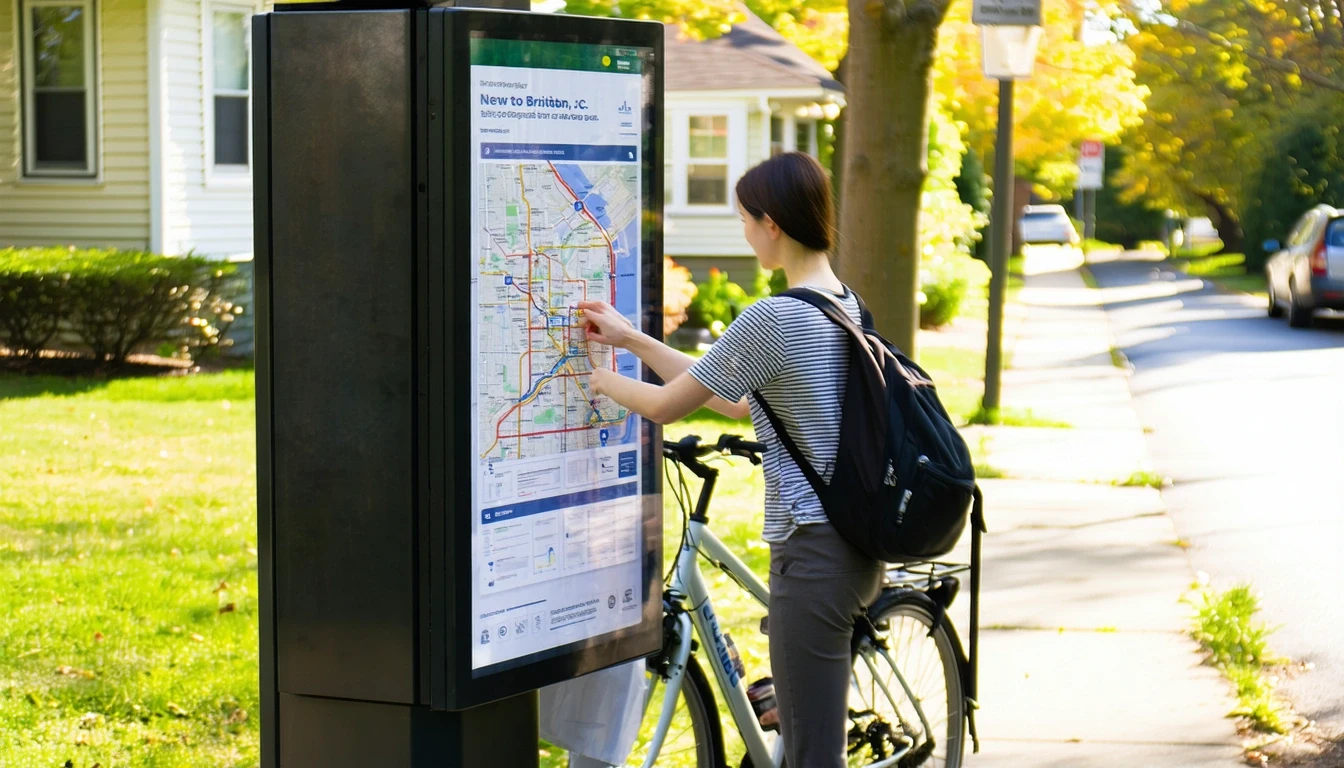
How People Get Around New Britain
Most residents rely on cars for daily life. Even in neighborhoods with decent sidewalks and nearby shops, the car remains the default for groceries, errands, and getting kids to school. But that doesn’t mean transit is irrelevant. New Britain benefits from rail service that connects directly to Hartford, making it a practical option for commuters working downtown or at state offices. Local bus routes serve key corridors, linking residential areas to shopping districts and municipal services.
The pedestrian-to-road ratio in parts of New Britain exceeds what you’d find in many comparable cities, meaning there are areas where walking is genuinely viable for short trips. These tend to cluster near Main Street and older residential blocks where homes sit closer to the street and commercial uses mix with housing. But walkability here is localized—it works within certain neighborhoods, not across the entire city. If your daily routine involves crossing town or reaching suburban retail strips, you’re back in the car.
Cycling infrastructure exists in pockets, with some bike lanes and paths connecting parks and residential areas. It’s enough to support recreational riding or short commutes for those who live near their workplace, but not enough to make biking a primary transportation mode for most households. The terrain is manageable, and the presence of bike infrastructure signals that the city supports alternative transportation, even if adoption remains modest.
Public Transit Availability in New Britain
Public transit in New Britain often centers around systems such as CTtransit and the CTfastrak bus rapid transit line, though coverage and service levels vary by area. The presence of rail service—specifically the Hartford Line commuter rail—gives New Britain a significant advantage for residents commuting to Hartford or other stops along the corridor. This is real, scheduled service that runs multiple times a day, and it’s a genuine alternative to driving for work trips into the city.
Local bus service connects neighborhoods to commercial districts, medical facilities, and municipal centers. Routes tend to follow major corridors like Broad Street and Main Street, where density and mixed land use make transit more practical. But frequency and span of service matter. If you’re trying to catch a bus in the evening or on weekends, options narrow. If you live outside the core routes, you may find that the nearest stop is a long walk or requires a transfer that adds significant time.
Transit works best in New Britain when your trip aligns with the system’s strengths: commuting to Hartford during weekday business hours, traveling along established corridors during daytime, or making point-to-point trips between dense nodes. It falls short when you need flexibility, when your destination is off the main routes, or when timing doesn’t match the schedule. That’s not unique to New Britain, but it’s important to understand before assuming transit will cover your needs.
How this article was built: In addition to public economic data, this article incorporates location-based experiential signals derived from anonymized geographic patterns—such as access density, walkability, and land-use mix—to reflect how day-to-day living actually feels in New Britain, CT.
Driving & Car Dependence Reality
Even with transit options, most households in New Britain own at least one car, and many need two. The city’s layout assumes car access for most activities. Grocery stores, big-box retail, medical offices, and schools are spread across the city in a way that makes driving the most efficient option for chained errands. You might be able to walk to a corner store or take a bus to work, but if you need to pick up kids, stop at the pharmacy, and grab groceries on the way home, the car is the tool that makes that possible.
Parking is generally available and free in most residential areas and commercial lots, which removes one of the friction points that makes driving impractical in denser cities. That ease of parking reinforces car dependence—it’s simply more convenient to drive when you know you’ll find a spot. For homeowners, driveways and garages are standard. For renters, off-street parking or street parking is typically accessible, though availability can vary in older apartment buildings near downtown.
Gas prices in New Britain currently sit at $4.10 per gallon, which is a real cost factor for households that drive daily. But the bigger issue isn’t the price per gallon—it’s the total exposure that comes from needing to drive for nearly everything. Commuters, parents managing school and activity schedules, and anyone living outside the walkable core will find that transportation isn’t optional; it’s a fixed cost built into the structure of daily life here.
Commuting Patterns & Daily Mobility
Commuting in New Britain breaks into two broad patterns: those who work locally or in nearby towns and drive, and those who commute into Hartford and have the option to use rail. For the latter group, the Hartford Line offers a real alternative that avoids highway traffic, parking costs, and the wear of daily driving. It’s a structured, predictable option that works well for traditional office schedules.
For everyone else, commuting means navigating Route 9, local roads, or Interstate 84 depending on direction. The road network is generally manageable, but congestion during peak hours is common on major routes. Flexibility matters here—if your job allows you to shift your schedule slightly, you can avoid the worst of the traffic. If you’re locked into rigid start times, you’ll absorb that commute friction regularly.
Daily mobility in New Britain often involves multiple stops. Parents drop kids at school, swing by work, pick up groceries, and manage errands in a sequence that assumes car access. Transit can handle one leg of that trip, but it rarely handles the whole chain. That’s why even households with access to good transit often keep a car—it’s the tool that handles the complexity of real life, not just the commute.
Who Transit Works For — and Who It Doesn’t
Transit in New Britain works best for renters living near downtown or along major bus corridors who commute to Hartford for work. If you’re in an apartment on Main Street and your job is in downtown Hartford, the rail line is a practical, cost-effective option that eliminates the need for a second car. You can walk to errands nearby, take the train to work, and use a car occasionally for trips outside the core.
It works less well for families with kids, especially those living in residential neighborhoods away from transit routes. School drop-offs, activity schedules, and the need to carry groceries or equipment make car dependence nearly unavoidable. Even if a bus stop is nearby, the time cost and logistical complexity of managing a household without a car outweigh the savings.
Homeowners in peripheral areas—where lot sizes are larger and commercial uses are separated from residential streets—will find transit impractical for daily life. These neighborhoods were built around car access, and the infrastructure reflects that. Sidewalks may be present, but destinations are too spread out to make walking viable, and bus service is limited or nonexistent.
Older adults or individuals with mobility limitations may find transit useful for specific trips, particularly if they live near a bus route that connects to medical facilities or shopping centers. But the system’s limited evening and weekend service, combined with the physical demands of waiting and transferring, can make it less reliable than driving or arranging rides.
Transportation Tradeoffs in New Britain
Choosing between transit and driving in New Britain isn’t about which is cheaper—it’s about which fits your daily routine and where you live. Transit offers predictability for commuters, eliminates parking hassles, and reduces wear on a vehicle. But it sacrifices flexibility, limits your range, and requires you to structure your day around the schedule.
Driving gives you control, speed, and the ability to handle complex errands in a single trip. But it comes with ongoing costs—fuel, maintenance, insurance—and it locks you into exposure to gas price swings and vehicle depreciation. For households that can make transit work for commuting and use a car selectively, the tradeoff is manageable. For those who need a car daily, transit becomes a backup option rather than a primary tool.
The real tradeoff in New Britain is geographic. Living near downtown or along transit corridors opens up options and reduces car dependence. Living in quieter, more spacious neighborhoods farther out means accepting that a car is essential. Neither choice is wrong, but each comes with different cost structures and lifestyle constraints.
FAQs About Transportation in New Britain (2026)
Is public transit usable for daily commuting in New Britain?
Yes, if you’re commuting to Hartford. The Hartford Line provides reliable rail service that works well for traditional office schedules. For local commuting within New Britain or to nearby towns, transit options are more limited, and most people drive.
Do most people in New Britain rely on a car?
Yes. Even residents with access to transit typically own a car for errands, family logistics, and trips outside the core. Transit serves specific use cases well, but it doesn’t replace the car for most households.
Which areas of New Britain are easiest to live in without a car?
Neighborhoods near downtown and along Main Street offer the best combination of walkability, transit access, and proximity to services. Renters in these areas, especially those commuting to Hartford, can reduce or eliminate car dependence.
How does commuting in New Britain compare to nearby cities?
New Britain benefits from direct rail access to Hartford, which gives it an edge over towns without commuter rail. But for local driving, commute patterns are similar to other small cities in the region—manageable during off-peak hours, congested during rush periods.
Can you bike for transportation in New Britain?
Biking is viable for short trips in areas with bike infrastructure, particularly near parks and residential streets. But the network isn’t comprehensive enough to make biking a primary transportation mode for most residents, especially in winter.
How Transportation Fits Into the Cost of Living in New Britain
Transportation in New Britain isn’t just a line item—it’s a structural factor that shapes where you can live, how much time you spend commuting, and how much flexibility you have in daily life. Households that can use transit for commuting and live near walkable services face lower transportation costs and less exposure to fuel price swings. Those who need a car for everything absorb higher fixed costs, but gain speed and control.
The choice isn’t about optimizing a single expense; it’s about understanding how mobility affects what a budget has to handle in New Britain. A cheaper apartment farther from transit may cost less in rent but more in time and transportation. A downtown rental with higher rent may reduce or eliminate the need for a second car. Neither is universally better—it depends on your work location, household structure, and daily routine.
New Britain offers real options, but they’re not evenly distributed. If you’re moving here, start by mapping your commute, identifying where you’ll need to go regularly, and testing whether transit can handle those trips. If it can, you’ll save money and reduce complexity. If it can’t, plan for car ownership and the costs that come with it. The city rewards residents who align their housing choice with their transportation needs, and penalizes those who assume one mode will work everywhere.