
Murray sits in the heart of the Salt Lake metro, a commuter suburb where housing decisions hinge on access, infrastructure, and long-term cost exposure. With a median home value of $415,700 and median rent at $1,376 per month, the city offers a moderate price environment relative to national baselines—regional price parity sits at 96, slightly below the U.S. average. But what surprises many newcomers is how much housing experience varies depending on proximity to transit corridors, school zones, and walkable pockets. Ownership here isn’t just about the purchase price; it’s about navigating property tax volatility, maintenance exposure in a climate with hot summers and cold winters, and the governance structures that shape long-term costs.
This article explains how housing costs behave in Murray, what drives the rent-versus-buy tradeoff, and which household types fit—or struggle—in this market.
The Housing Market in Murray Today
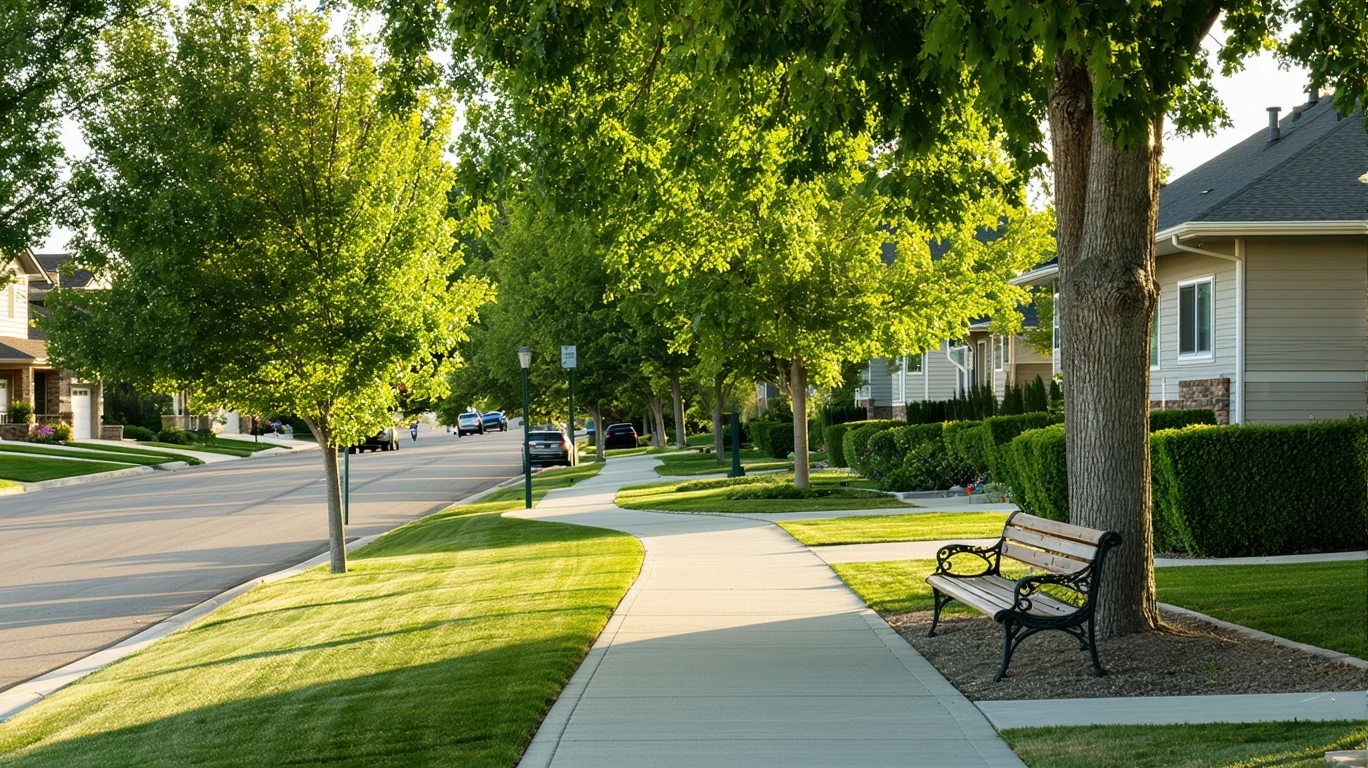
Murray’s housing market reflects its role as a transit-accessible suburb with strong family infrastructure. The city benefits from rail service and high grocery and food establishment density, creating pockets of urban-like convenience within a predominantly suburban layout. Schools and playgrounds meet density thresholds across much of the city, and park access exceeds high benchmarks, making Murray attractive to families planning to stay long-term. But the low work-from-home percentage—just 2.6%—signals a commuter-oriented workforce, and the average commute of 20 minutes suggests that many residents rely on proximity to employment centers rather than remote flexibility.
What shapes Murray’s market distinctly is the tension between accessibility and ownership exposure. Walkable pockets with high pedestrian-to-road ratios and rail access reduce car dependency for daily errands, but these advantages are unevenly distributed. Buyers near transit corridors experience a different cost-of-living texture than those in outer residential zones, where car ownership becomes non-negotiable. Median household income sits at $81,693 per year, which positions many households in a moderate affordability band—but the income-to-home-value ratio means that ownership requires careful planning, especially when accounting for taxes, insurance, and maintenance that aren’t captured in the purchase price.
Renting in Murray
Renting in Murray offers flexibility and lower upfront exposure, particularly for households prioritizing transit access and walkable errands. At $1,376 per month for median gross rent, renters avoid property tax volatility, major maintenance obligations, and the long-term capital risk tied to home values. For those living near rail stations or in neighborhoods with high food and grocery density, renting reduces the need for a second vehicle, cutting transportation costs and simplifying household logistics.
Rental pressure in Murray is shaped by the city’s commuter orientation and family appeal. Proximity to schools, parks, and healthcare—Murray has hospital presence and pharmacy access—makes certain rental zones competitive, especially for families who want infrastructure without the commitment of ownership. But renters should expect variation in unit quality, building age, and utility responsibility. Older apartment stock may shift heating and cooling costs onto tenants, and in a climate with extended cooling seasons and cold winters, utility exposure can add noticeable monthly pressure.
The rental experience also depends on neighborhood structure. Areas with mixed land use and higher pedestrian density offer more walkable errands and shorter trips, reducing time and fuel costs. In contrast, outer residential zones with lower transit access require car dependency, which changes the total cost picture even if base rent appears affordable.
Owning a Home in Murray
Ownership in Murray means taking on long-term exposure to property taxes, maintenance, and climate-driven upkeep. At a median home value of $415,700, buyers face a significant capital commitment, and the income-to-value ratio requires careful budgeting for households near the median income level. Unlike renting, ownership locks in housing costs in some areas—such as principal and interest on a fixed-rate mortgage—but introduces volatility in others, particularly taxes, insurance, and repair obligations.
Property taxes in Utah are governed by county and municipal assessment practices, and while no specific rate is provided here, buyers should expect taxes to adjust over time based on assessed value changes and local budget needs. Ownership also means direct responsibility for heating, cooling, and structural maintenance. Murray’s climate—hot summers and cold winters—creates dual seasonal exposure: air conditioning dominates summer utility bills, while heating drives winter costs. Homes with older HVAC systems, poor insulation, or deferred maintenance face higher ongoing expenses, and these costs are unpredictable and non-negotiable.
Homeownership in Murray also involves governance exposure. Some neighborhoods operate under homeowners associations, which may bundle services like landscaping or snow removal but add monthly or annual fees. Even outside HOA structures, owners face municipal regulations on property upkeep, water use, and exterior modifications. These rules shape both cost and control, and buyers should verify governance terms before committing.
Apartment vs House in Murray — Cost Behavior Comparison
The table below compares cost behavior between apartments and single-family houses in Murray, focusing only on categories where local conditions create meaningful differences. Rows are included only where Murray’s climate, housing stock, infrastructure, or governance justify the distinction.
| Expense Category | Apartment | House |
|---|---|---|
| Heating & Cooling | Lower exposure; shared walls reduce surface area. Older buildings may lack efficiency upgrades. | Higher exposure; standalone structure with full envelope. Dual-season climate (hot summers, cold winters) drives noticeable year-round utility costs. |
| Maintenance Responsibility | Landlord typically covers structural, HVAC, and exterior repairs. Tenant handles minor interior upkeep. | Owner bears full responsibility for roof, HVAC, plumbing, and seasonal upkeep (snow removal, irrigation). Deferred maintenance accelerates cost exposure. |
| Property Tax Exposure | None directly; tax burden absorbed into rent, but landlord may pass through increases over time. | Direct and ongoing; assessed value changes and municipal budget adjustments create year-to-year volatility. |
| Parking & Vehicle Dependency | Lower in walkable pockets near rail and high grocery density; some buildings include assigned parking. Car optional in transit-accessible zones. | Higher in outer residential areas with lower pedestrian infrastructure; garage or driveway standard, but car dependency increases transportation costs. |
| Governance & Fees | Lease terms govern occupancy and modifications; no HOA fees, but building rules may limit personalization. | HOA fees possible in planned communities; municipal codes govern exterior changes, landscaping, and water use. Adds cost and complexity. |
Methodology note: This table reflects differences driven by Murray’s dual-season climate, transit accessibility variation, and suburban governance structures. Categories omitted (e.g., internet, trash) do not vary meaningfully by housing type in this market. Utility and maintenance differences are shaped by building age, insulation quality, and household size, which vary within each housing type.
Utilities & Upkeep Differences
Utility and maintenance exposure in Murray is shaped by climate intensity and housing structure. The city experiences extended cooling seasons with summer heat and cold winters that require consistent heating, creating dual-season pressure on energy bills. Apartments benefit from shared walls and smaller conditioned spaces, which reduce heating and cooling loads, but older buildings may lack modern insulation or efficient HVAC systems, limiting those advantages. Houses face higher exposure due to standalone construction, larger square footage, and full building envelopes that lose heat in winter and gain it in summer.
Maintenance differences are structural, not incidental. Apartment tenants typically avoid responsibility for major systems—HVAC replacement, roof repairs, plumbing failures—while homeowners bear these costs directly. In Murray’s climate, HVAC longevity is tested by year-round use, and deferred maintenance accelerates failure risk. Homeowners also manage seasonal upkeep: snow removal in winter, irrigation and landscaping in summer, and exterior maintenance that affects both function and property value.
The distinction matters most for households with limited cash reserves or unpredictable income. Renters face stable monthly obligations with occasional utility spikes; owners face stable mortgage payments but unpredictable repair and replacement costs that can dominate short-term budgets.
Rent vs Buy: Long-Term Exposure in Murray
The rent-versus-buy decision in Murray is not a savings calculation—it’s a risk profile choice. Renting offers predictability in housing costs, flexibility to relocate, and insulation from property tax increases, maintenance surprises, and market value volatility. Renters in transit-accessible zones also benefit from reduced transportation costs, as walkable errands and rail access lower car dependency. But renters face lease renewal risk, where rent adjustments reflect market conditions rather than household income stability, and they build no equity or ownership stake.
Ownership provides control and long-term cost stability in some areas—fixed-rate mortgages lock in principal and interest—but introduces exposure in others. Property taxes adjust over time based on assessed values and municipal budget needs, and insurance premiums respond to risk factors outside the homeowner’s control. Maintenance and repair costs are episodic and unpredictable: a furnace replacement, roof repair, or water heater failure can require thousands of dollars on short notice. In Murray’s climate, these risks are not hypothetical—heating and cooling systems endure year-round stress, and deferred maintenance accelerates failure timelines.
Ownership also ties households to a specific location and market. Selling involves transaction costs, market timing risk, and potential capital loss if home values decline. For households planning to stay in Murray long-term—particularly families using the city’s strong school and park infrastructure—ownership can provide stability and community integration. For those with uncertain job tenure, income volatility, or plans to relocate within a few years, renting preserves flexibility and limits downside exposure.
The decision depends on household priorities: control and equity versus flexibility and predictability. Neither path is universally better; each fits different risk tolerances and time horizons.
FAQs About Housing Costs in Murray
Is renting or buying more affordable in Murray, UT?
Affordability depends on time horizon and household stability. Renting at $1,376 per month avoids upfront capital and maintenance risk, making it more accessible short-term. Buying at a median home value of $415,700 requires significant down payment and ongoing tax, insurance, and upkeep exposure, but offers long-term cost stability in principal and interest. Neither is universally cheaper; the tradeoff is predictability versus control.
How do property taxes affect homeownership costs in Murray?
Property taxes in Murray are assessed by county and municipal authorities and adjust over time based on home values and budget needs. While no specific rate is provided here, buyers should expect ongoing tax exposure that increases as assessed values rise. Taxes are non-negotiable and add to monthly ownership costs beyond mortgage payments.
What makes Murray’s housing market different from other Salt Lake suburbs?
Murray combines suburban housing stock with urban-like accessibility in certain zones. Rail transit, high grocery and food density, and walkable pockets reduce car dependency for daily errands, which is uncommon in many surrounding suburbs. Strong family infrastructure—schools, playgrounds, parks—also distinguishes Murray as a long-term family destination rather than a transient commuter zone.
Do utilities cost more in a house or apartment in Murray?
Houses typically face higher utility exposure due to larger conditioned space, standalone construction, and full building envelopes. Murray’s dual-season climate—hot summers and cold winters—creates year-round heating and cooling demand, and houses bear the full load. Apartments benefit from shared walls and smaller square footage, though older buildings may lack efficiency upgrades that limit those advantages.
Is Murray a good place to buy a first home?
Murray offers strong infrastructure and moderate regional pricing, but the income-to-home-value ratio requires careful planning. At a median household income of $81,693 and median home value of $415,700, first-time buyers face a significant capital commitment. Those prioritizing transit access, schools, and parks will find Murray well-suited for long-term ownership, but buyers should account for taxes, maintenance, and climate-driven upkeep that add to monthly obligations.
Making Housing Choices in Murray
Housing costs in Murray reflect the city’s dual character: suburban structure with pockets of urban accessibility. Renters benefit from flexibility, lower upfront exposure, and insulation from ownership volatility, especially in transit-accessible zones where car dependency drops and errands remain walkable. Buyers gain control, equity, and long-term stability in mortgage costs, but take on property tax exposure, maintenance risk, and climate-driven upkeep that varies by building age and neighborhood.
The decision depends on time horizon, income stability, and household priorities. Families planning to stay long-term and use Murray’s schools, parks, and healthcare infrastructure may find ownership worthwhile despite the capital commitment. Households with uncertain job tenure, limited cash reserves, or plans to relocate within a few years should weigh renting’s flexibility against ownership’s control. Neither path is universally better; each fits different risk tolerances and life stages.
For more detail on where money goes each month in Murray, including how housing fits into broader household expenses, see the monthly budget breakdown. To understand how Murray’s overall cost structure compares and what drives financial pressure beyond housing, explore the affordability overview. And if you’re planning a move, the moving companies guide offers practical logistics and cost considerations.
How this article was built: In addition to public economic data, this article incorporates location-based experiential signals derived from anonymized geographic patterns—such as access density, walkability, and land-use mix—to reflect how day-to-day living actually feels in Murray, UT.