
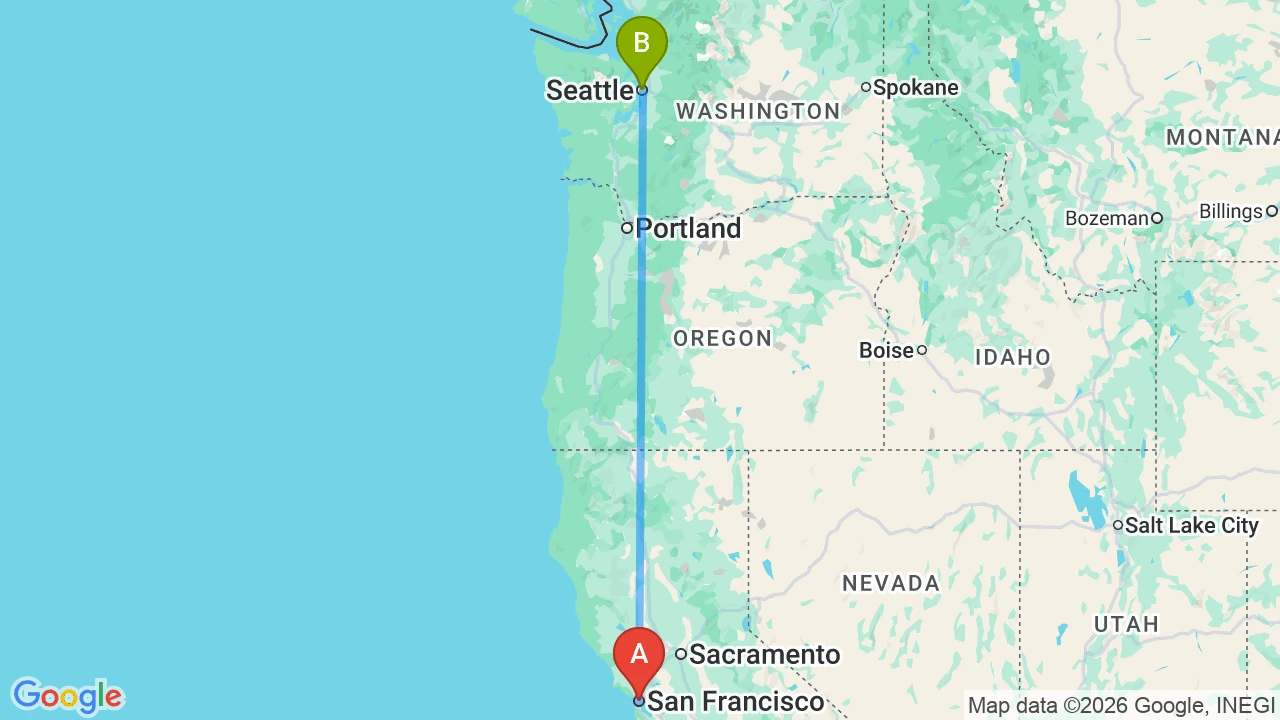
The move from San Francisco to Seattle represents one of the most common relocation corridors along the West Coast, driven by a mix of career flexibility, housing pressure, and lifestyle recalibration. While both cities share tech-heavy economies and coastal Pacific Northwest character, the shift typically redistributes cost pressure rather than eliminating it—housing entry barriers tend to ease, but new patterns emerge in commute behavior, climate exposure, and neighborhood access.
This guide explains how costs, daily rhythms, and household logistics typically change when relocating from San Francisco to Seattle in 2026. It does not calculate total savings or declare a financial winner. Instead, it clarifies where pressure moves, which households tend to benefit, and what surprises movers most after arrival.
Cost Pressure Shifts: Where Expenses Concentrate Differently
The most immediate financial shift involves housing entry costs. San Francisco’s median home value of $1,348,700 drops to $879,900 in Seattle—a substantial reduction in the capital required to enter the ownership market. Median gross rent follows a similar pattern, declining from $2,316 per month in San Francisco to $1,945 per month in Seattle. For households stretched by Bay Area housing costs, this represents meaningful breathing room in monthly cash flow and down payment requirements.
However, the cost structure shifts in other dimensions. Seattle’s regional price parity index of 113 (compared to San Francisco’s 100) reflects higher costs for many goods and services outside of housing. Grocery staples illustrate this pattern: ground beef runs $7.56/lb in Seattle versus $6.69/lb in San Francisco; milk costs $4.57/half-gallon versus $4.05/half-gallon; eggs are $3.06/dozen versus $2.71/dozen. (Derived estimate based on national baseline adjusted by regional price parity; not an observed local price.) These differences accumulate for larger households or those who cook frequently at home.
Median household income also declines in the move, from $136,689 per year in San Francisco to $116,068 per year in Seattle. While housing costs drop more sharply than income, the income-to-expense ratio tightens in categories outside of rent or mortgage payments, particularly for families managing childcare, groceries, and transportation simultaneously.
Housing & Neighborhood Patterns: Entry Barriers vs. Ongoing Obligations
Seattle’s lower housing entry costs make ownership more accessible to households priced out of San Francisco’s market, but the structure of ongoing obligations differs. Both cities feature vertically oriented urban cores with substantial pedestrian infrastructure, but Seattle’s building height profile and mixed-use density create distinct neighborhood trade-offs. Walkable neighborhoods with high food and grocery density remain concentrated in central areas, while car-dependent pockets appear more frequently in outer residential zones.
Renters moving from San Francisco may find Seattle’s rental market less rigid in absolute dollar terms, but the gap between rent and ownership costs narrows more quickly in Seattle. Households planning to stay long-term often face earlier pressure to decide between continued renting and entering a still-expensive ownership market. Property taxes, HOA fees, and maintenance obligations—while not captured in median rent figures—add layers of cost that renters transitioning to ownership must absorb.
Neighborhood selection becomes more consequential in Seattle for households prioritizing walkability or transit access. While both cities offer rail transit, Seattle’s system serves a smaller geographic footprint relative to its metro sprawl. Choosing a neighborhood farther from transit nodes typically increases car dependence, which shifts transportation costs upward and adds commute friction.
Lifestyle & Daily Rhythms: Commute, Climate, and Household Logistics
Daily life in Seattle tends to feel less vertically compressed than San Francisco, but more horizontally dispersed. Average commute time drops slightly from 31 minutes in San Francisco to 27 minutes in Seattle, yet the percentage of workers facing long commutes (over 60 minutes) remains substantial at 43.2% in Seattle compared to 53.1% in San Francisco. The difference reflects Seattle’s sprawling metro form: shorter average commutes coexist with pockets of severe commute burden for those living in outer suburbs or working across the metro area.
Seattle’s experiential texture supports walkable errands and transit use in core neighborhoods, where food density, grocery access, and pedestrian infrastructure exceed high thresholds. Both residential and commercial land uses mix throughout central districts, reducing the need for car trips when running daily errands. However, work-from-home rates in Seattle (6.3%) lag behind San Francisco (12.8%), suggesting that more Seattle households must navigate commute logistics regularly rather than relying on remote flexibility.
Climate exposure shifts meaningfully. San Francisco’s mild, fog-moderated temperatures give way to Seattle’s longer, darker winters and more pronounced seasonal swings. Heating costs dominate winter utility bills in Seattle, while San Francisco households rarely face sustained heating demand. Electricity rates favor Seattle (14.06¢/kWh versus 33.60¢/kWh in San Francisco), but natural gas prices run slightly higher ($24.71/MCF versus $21.94/MCF). Households accustomed to San Francisco’s temperate year-round climate often underestimate the behavioral and financial impact of Seattle’s extended heating season and reduced daylight during winter months.
Access to parks and outdoor spaces remains strong in both cities, but Seattle’s integrated green space network and water feature presence create different recreational patterns. Families and outdoor-oriented households often find Seattle’s park infrastructure more conducive to year-round activity, despite wetter conditions.
Relocation Logistics & Practical Friction
The physical move between San Francisco and Seattle spans roughly 800 miles, typically requiring professional movers or a multi-day drive. Timing the move around lease cycles, school calendars, or job start dates adds logistical complexity, particularly for families with children. Seattle’s school and playground density supports family infrastructure in central neighborhoods, but availability and quality vary widely across districts.
Healthcare access remains robust in both cities, with hospital and clinic presence in urban cores. However, establishing new provider relationships, transferring prescriptions, and navigating different insurance networks introduce friction that households often underestimate during the planning phase.
Utility setup in Seattle typically involves separate billing for electricity, natural gas, water, and garbage—similar to San Francisco—but provider structures and deposit requirements differ. Households moving from rent-inclusive utilities in San Francisco may face unexpected upfront costs when establishing accounts in Seattle.
Gas prices drop from $4.20/gal in San Francisco to $3.82/gal in Seattle, offering modest relief for car-dependent households. However, the shift from San Francisco’s transit-rich environment to Seattle’s more car-reliant outer neighborhoods often increases total transportation expenses despite lower per-gallon costs.
How this article was built: In addition to public economic data, this article incorporates location-based experiential signals derived from anonymized geographic patterns—such as access density, walkability, and land-use mix—to reflect how day-to-day living actually feels in Seattle, WA.
Frequently Asked Questions
- Does Seattle feel more or less expensive than San Francisco?
- Seattle typically feels less expensive at the point of entry—lower housing costs and reduced rent pressure create immediate breathing room. However, costs concentrate differently: groceries, childcare, and transportation expenses often run higher relative to income, particularly for families or single-earner households. The shift redistributes financial pressure rather than eliminating it, with the biggest relief felt by those entering the housing market and the tightest squeeze affecting households managing multiple dependents or long commutes.
- How do housing markets differ between San Francisco and Seattle?
- San Francisco’s housing market imposes steeper entry barriers, with higher median home values and rents that consume a larger share of income. Seattle’s market remains expensive but more accessible, particularly for buyers transitioning from renting. However, Seattle’s ownership costs—including property taxes, HOA fees, and maintenance—add layers of obligation that renters may not anticipate. Walkable, transit-accessible neighborhoods in both cities command premium prices, but Seattle’s sprawl creates sharper cost gradients between central and peripheral areas.
- What aspects of daily life feel different after moving to Seattle?
- Commute patterns shift from San Francisco’s dense, transit-heavy core to Seattle’s more dispersed metro form, where car dependence increases outside central neighborhoods. Climate exposure changes dramatically—Seattle’s extended rainy season, darker winters, and heating demands replace San Francisco’s mild, fog-moderated year-round temperatures. Errand logistics remain walkable in Seattle’s urban core, but outer neighborhoods require more planning and vehicle access. The pace feels less vertically compressed but more horizontally stretched, with longer distances between activity nodes.
- When does the move from San Francisco to Seattle tend to feel easiest?
- Moves timed to avoid Seattle’s wettest months (November through March) reduce logistical friction and allow newcomers to acclimate before winter sets in. Households with school-age children benefit from aligning the move with summer break, while those relying on public transit should prioritize neighborhoods with established rail or frequent bus service before committing to a lease or purchase. Career transitions that allow remote flexibility during the first few months ease the adjustment to new commute patterns and neighborhood rhythms.
- What challenges do people commonly face when relocating from San Francisco to Seattle?
- Underestimating Seattle’s climate impact—both emotionally and financially—tops the list, as heating costs, reduced daylight, and persistent rain affect mood and household budgets. Households accustomed to San Francisco’s walkability often struggle with Seattle’s car dependence outside core neighborhoods, leading to higher transportation costs and longer errand times. Income adjustments that seem manageable on paper tighten when combined with higher grocery and childcare expenses, particularly for families with multiple dependents. Establishing new social networks and healthcare relationships also takes longer than most movers anticipate.
- Who tends to benefit most from moving to Seattle, and who may struggle?
- Households stretched by San Francisco’s housing costs—particularly first-time buyers or renters seeking more space—tend to benefit most, as lower entry barriers and reduced rent pressure free up cash flow. Remote workers and those with flexible schedules navigate Seattle’s commute patterns more easily than those tied to fixed office locations in outer suburbs. Families prioritizing outdoor access and park infrastructure often thrive in Seattle’s green space network. Conversely, single-earner households, those managing multiple dependents, and car-free individuals living outside transit corridors face tighter budgets and greater logistical friction. Households sensitive to seasonal darkness or prolonged rain may find Seattle’s climate more taxing than anticipated.
Conclusion: Tradeoffs, Fit, and What Comes Next
The move from San Francisco to Seattle redistributes cost pressure rather than eliminating it. Housing entry barriers ease meaningfully, offering relief to households priced out of Bay Area ownership or stretched by high rents. However, costs concentrate differently in Seattle—groceries, transportation, and heating expenses rise, while income typically declines. The net effect depends on household composition, career flexibility, and tolerance for climate and commute shifts.
Households that benefit most tend to prioritize homeownership access, value outdoor recreation, and can absorb higher ongoing expenses outside of housing. Those who struggle most often face car dependence without vehicle ownership, manage multiple dependents on a single income, or underestimate the emotional and financial impact of Seattle’s extended rainy season.
For deeper exploration of Seattle’s neighborhood patterns, cost drivers, and household fit, visit the Seattle living guide and Seattle metro overview on IndexYard. For San Francisco context, see the San Francisco city hub.