
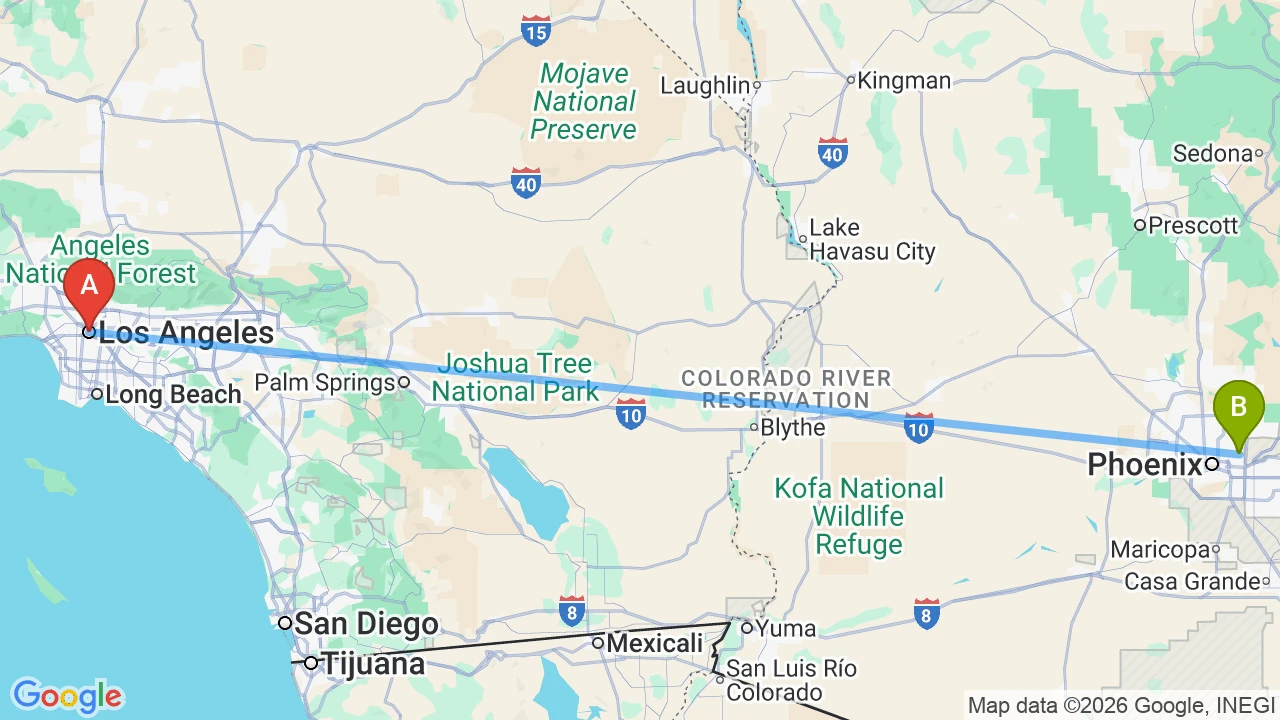
Moving from Los Angeles to Scottsdale: Where Cost Pressure Shifts
The move from Los Angeles, California to Scottsdale, Arizona represents one of the most common relocation corridors in the Southwest—driven by housing costs, lifestyle preferences, and the search for breathing room. But while Scottsdale often feels like a financial reprieve on paper, the reality is more textured: some costs drop sharply, others rise in unexpected ways, and daily logistics shift enough to change how households budget, plan, and move through their routines.
This guide explains where cost pressure concentrates in each city, how housing and utilities behave differently, and which household types tend to benefit—or struggle—after the move. It’s not about declaring a winner or estimating savings; it’s about understanding where exposure moves and what that means for your day-to-day life in 2026.
Cost Pressure Shifts: Where Money Shows Up Differently
The most immediate change for most movers is housing entry cost. Los Angeles’ median home value sits at $822,600, compared to Scottsdale’s $651,800—a meaningful drop that opens homeownership to households priced out of LA’s market. Median gross rent tells a similar story: $1,791 per month in Los Angeles versus $1,768 per month in Scottsdale. The difference is modest for renters, but the broader rental market in Scottsdale tends to offer more space and newer inventory at comparable price points, which shifts the value equation even when the numbers look similar.
Income dynamics matter here. Scottsdale’s median household income is $104,197 per year, significantly higher than Los Angeles’ $76,244 per year. This reflects Scottsdale’s role as an affluent suburban enclave within the Phoenix metro, where retirees, professionals, and dual-income households dominate. For movers earning LA wages who secure remote work or transfer to Phoenix-area roles, the income-to-housing ratio often improves. For those taking local Scottsdale jobs, the higher income baseline can offset some—but not all—of the lifestyle cost differences.
Utilities flip the script. Scottsdale’s electricity rate is 15.55¢/kWh, less than half of Los Angeles’ 33.60¢/kWh. But Scottsdale’s desert climate means air conditioning runs hard from May through October, and illustrative summer bills can rival or exceed what LA households pay year-round despite the lower rate. Natural gas prices are slightly higher in Scottsdale ($23.77/MCF versus $21.94/MCF in LA), though heating demand is minimal. The net effect: utility costs shift from a predictable, moderate burden in LA to a seasonal, high-intensity exposure in Scottsdale.
Transportation costs drop for most households. Gas prices in Scottsdale average $2.96/gallon, compared to $4.21/gallon in Los Angeles—a difference that compounds quickly for daily commuters. LA’s average commute is 31 minutes, with 52.1% of workers facing long commutes and only 13.1% working from home. Scottsdale lacks comparable commute data in the feed, but the Phoenix metro’s car-dependent layout and Scottsdale’s suburban form mean most households drive more miles per week, even if time spent commuting feels shorter due to less congestion. Fuel savings help, but the shift to near-total car dependence—for errands, socializing, and recreation—means transportation becomes a larger share of household logistics.
Groceries reflect regional price parity differences. Scottsdale’s overall cost index is slightly higher (106 versus LA’s 100), and derived grocery estimates show modest increases: bread runs about $1.94/lb in Scottsdale versus $1.83/lb in LA; ground beef is $7.09/lb versus $6.69/lb. These are derived estimates based on national baselines adjusted by regional price parity, not observed local prices, but they signal that everyday grocery costs won’t drop—and may edge up—despite the move to a lower-cost state.
The unemployment rate in Scottsdale is 3.1%, compared to 5.8% in Los Angeles, reflecting a tighter labor market and stronger economic base within the Phoenix metro. For job seekers, this can mean faster placement and more leverage in negotiations, though industry mix and role availability vary significantly by sector.
Housing & Neighborhood Patterns
Housing in Los Angeles is defined by scarcity, age, and geographic fragmentation. Inventory is constrained, competition is fierce, and even modest single-family homes in accessible neighborhoods command high prices. Renters face frequent increases, and ownership often requires dual incomes, family help, or long commutes to fringe areas. The housing stock skews older, and many properties require deferred maintenance or updates that add to upfront costs.
Scottsdale’s housing market operates differently. The city is known for master-planned communities, newer construction, and HOA-governed neighborhoods that bundle amenities like pools, landscaping, and security. Entry costs are lower, but ongoing obligations—HOA fees, higher property insurance in desert climates, and landscape maintenance—can surprise movers accustomed to LA’s older, lower-maintenance housing stock. Scottsdale’s market also tilts toward ownership; renters often find themselves in luxury apartment complexes or single-family homes owned by investors, with fewer middle-tier rental options than LA offers.
Neighborhood form matters for daily costs. Los Angeles, despite its car dependence, offers pockets of walkability and mixed-use density where errands, dining, and services cluster within a few miles. Scottsdale’s layout is more dispersed, with commercial corridors separated from residential zones by wide arterials and golf courses. This increases drive time for routine tasks and makes spontaneous errands less practical, which shifts how households plan their weeks and manage convenience costs.
Lifestyle & Daily Rhythms
Daily life in Los Angeles is shaped by density, traffic, and the friction of access. Commutes are long, parking is scarce, and even short trips require planning. But the city’s transit presence—limited as it is—and walkable commercial districts mean some households can reduce car dependence for specific routines. The climate is temperate year-round, with mild winters and moderate summers that keep outdoor activity comfortable most of the year.
Scottsdale operates at a different tempo. The city is quieter, more suburban, and heavily car-dependent. Errands require driving, social plans involve coordinating across sprawling distances, and public transit is functionally absent for most daily needs. The trade-off is less congestion, easier parking, and a slower pace that many movers find restorative after years of LA’s intensity. But households that relied on LA’s walkable pockets or transit for specific trips will feel the shift to total car reliance.
Climate exposure changes significantly. Scottsdale’s desert heat dominates summer planning: outdoor activity shifts to early mornings and evenings, air conditioning becomes non-negotiable, and utility bills spike. Winters are mild and dry, with rare freezing nights and minimal heating costs. For movers from LA’s coastal or valley climates, the intensity of Scottsdale’s summer heat—often reaching triple digits for weeks—requires adjustment in routines, wardrobe, and household cooling strategies.
How this article was built: In addition to public economic data, this article incorporates location-based experiential signals derived from anonymized geographic patterns—such as access density, walkability, and land-use mix—to reflect how day-to-day living actually feels in Scottsdale, AZ.
Relocation Logistics & Practical Friction
The physical move from Los Angeles to Scottsdale is straightforward by interstate standards—roughly 370 miles via I-10, manageable in a single day or split across two with an overnight stop. Most movers hire professional services or rent trucks, and the route is well-traveled enough that logistics rarely surprise. Timing matters: summer moves mean arriving during Scottsdale’s peak heat, which complicates unpacking and settling in. Fall and winter moves feel easier, with moderate temperatures and less strain on cooling systems during the transition.
Administrative transitions are smooth. Arizona and California don’t share reciprocal agreements for all services, so movers need to re-register vehicles, update licenses, and transfer utilities within standard windows. Scottsdale’s municipal services are efficient, and most administrative tasks can be completed online or with a single in-person visit. The bigger adjustment is behavioral: learning new commute routes, finding preferred grocery stores and service providers, and adapting to Scottsdale’s more dispersed layout takes weeks, not days.
What surprises movers most is the shift in convenience friction. In LA, density means options are close—even if traffic makes them hard to reach. In Scottsdale, options are fewer and farther apart, but once you’re in the car, access is faster. This changes how households think about errands: fewer spontaneous trips, more batching, and a greater reliance on planning. For some, this feels liberating; for others, especially those used to LA’s variety and immediacy, it feels limiting.
Frequently Asked Questions
- Does Scottsdale feel more or less expensive than Los Angeles?
- Scottsdale tends to feel less expensive at the point of entry—housing costs drop, gas is cheaper, and the overall cost index is only modestly higher. But ongoing expenses shift in ways that surprise many movers: utility bills spike in summer, car dependence increases transportation costs, and groceries don’t drop as much as expected. The financial relief is real for homebuyers and commuters, but it’s not uniform across all categories. Households that budget carefully for seasonal utility swings and plan for higher driving costs tend to feel the most benefit.
- How do housing markets differ between Los Angeles and Scottsdale?
- Los Angeles’ housing market is defined by scarcity, competition, and older inventory, with high entry costs for both renters and buyers. Scottsdale offers lower entry barriers, newer construction, and more space at comparable price points, but ongoing costs—HOA fees, insurance, and landscape maintenance—add up. Renters in Scottsdale often face fewer mid-tier options, with the market skewing toward luxury apartments or single-family investor properties. Ownership in Scottsdale feels more accessible, but the trade-off is higher ongoing obligations and less neighborhood variety than LA offers.
- What feels different about daily life after moving to Scottsdale?
- The pace slows, car dependence increases, and convenience friction shifts. Errands that felt walkable or transit-accessible in parts of LA now require driving, and the city’s dispersed layout means more planning and less spontaneity. Scottsdale’s quieter, suburban rhythm appeals to households seeking relief from LA’s intensity, but those who thrived on LA’s density and variety may feel isolated. Climate also plays a role: summer heat restricts outdoor activity and drives up cooling costs, while mild winters open up months of comfortable outdoor time that LA’s marine layer sometimes limits.
- When does this move tend to feel easiest or hardest?
- Fall and winter moves feel smoothest, with moderate temperatures and less strain on cooling systems during the transition. Summer moves mean arriving during Scottsdale’s most intense heat, which complicates unpacking and settling in. Financially, the move feels easiest for households with remote work or transferable LA salaries, where the income-to-housing ratio improves immediately. It feels hardest for those taking local Scottsdale jobs in lower-wage sectors, where the higher cost index and car dependence can offset housing savings.
- What are the most common adjustment pressures after this move?
- Car dependence surprises many movers, especially those who relied on LA’s walkable pockets or limited transit for specific routines. Summer utility bills are another common shock, as air conditioning costs spike well above what most LA households pay year-round. Social isolation can also be a factor: Scottsdale’s suburban layout and lower density make spontaneous socializing harder, and building new networks takes time. Households that plan for these shifts—budgeting for seasonal utility swings, accepting total car reliance, and actively seeking community connections—adjust faster.
- Who does this move work best for—and who might struggle?
- This move works well for homebuyers priced out of LA, remote workers keeping LA salaries, retirees seeking lower housing costs and a quieter pace, and families wanting more space and newer housing stock. It’s harder for renters seeking mid-tier options, households without reliable vehicles, and those who thrived on LA’s density, walkability, and cultural variety. Young professionals and creatives may feel Scottsdale’s suburban rhythm and limited transit as a step back, while car-dependent commuters and families prioritizing space and affordability often find the trade-offs worthwhile.
Conclusion
Moving from Los Angeles to Scottsdale shifts where cost pressure concentrates and how daily life unfolds. Housing entry costs drop, gas is cheaper, and the pace slows—but utility bills spike in summer, car dependence becomes total, and convenience friction increases. The move works best for households seeking homeownership, space, and relief from LA’s intensity, and it’s harder for those who relied on density, walkability, or spontaneous access to services and culture.
Understanding these trade-offs before the move helps households budget realistically, plan for seasonal cost swings, and adjust expectations for daily logistics. For deeper context on Scottsdale’s housing, utilities, and lifestyle patterns, explore IndexYard’s Scottsdale living guide and Phoenix metro overview.