
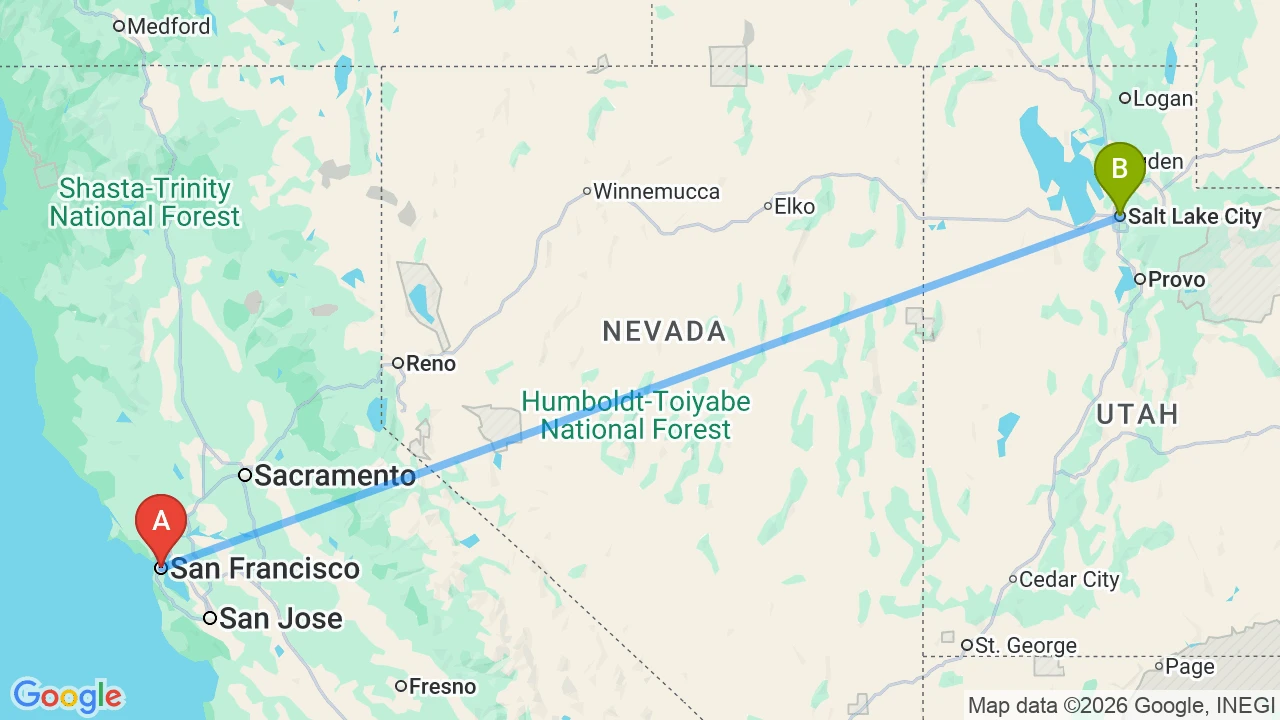
The move from San Francisco to Salt Lake City represents one of the sharper cost and lifestyle recalibrations in the Western U.S. relocation landscape. It’s not simply about lower prices—it’s about where financial pressure concentrates, how daily routines restructure around car dependence, and which household expenses shrink while others persist or grow in unexpected ways.
This guide explains how costs behave differently between these two cities, what changes in daily logistics and access patterns, and which types of movers tend to adapt most easily. It does not calculate savings or declare affordability thresholds. Instead, it clarifies where exposure shifts, helping you understand what to plan for rather than what to expect as a guaranteed outcome.
Cost Pressure Shifts: Where Money Moves
The most immediate financial change is housing. San Francisco’s median home value sits at $1,348,700, while Salt Lake City’s is $458,600—a dramatic reduction in entry barriers for buyers. Renters see a similar shift: San Francisco’s median gross rent is $2,316 per month, compared to $1,254 per month in Salt Lake City. For households carrying high rent burdens or struggling to save for a down payment, this move fundamentally alters the housing equation.
But the cost story doesn’t end with housing. Salt Lake City’s lower overall price environment—reflected in its regional price parity index of 96 compared to San Francisco’s 100—means that many everyday expenses also decline. Groceries, for example, show modest but consistent differences. In San Francisco, staples like ground beef run about $6.75/lb, eggs $2.58/dozen, and milk $4.10/half-gallon. In Salt Lake City, those same items typically cost $6.48/lb, $2.47/dozen, and $3.94/half-gallon respectively. (Derived estimate based on national baseline adjusted by regional price parity; not an observed local price.) These aren’t transformative differences on a per-item basis, but they compound across weekly shopping trips and annual household consumption.
Utilities present a more complex picture. Electricity in San Francisco costs 34.71¢/kWh, while Salt Lake City’s rate is 12.99¢/kWh—a substantial reduction that directly affects monthly bills, especially during Salt Lake City’s hot summers when air conditioning becomes essential. Natural gas follows a similar pattern: San Francisco’s $21.89/MCF versus Salt Lake City’s $10.21/MCF. For households heating larger spaces or running gas appliances year-round, this shift can meaningfully reduce ongoing obligations.
Transportation costs, however, move in the opposite direction in terms of lifestyle structure, even as fuel prices drop. Gasoline in San Francisco runs $4.64/gallon, compared to $2.79/gallon in Salt Lake City. That’s a clear per-gallon savings. But Salt Lake City’s urban form and transit infrastructure mean that car ownership shifts from optional to essential for most households. San Francisco’s work-from-home rate is 12.8%, while Salt Lake City’s is just 3.5%, signaling a more traditional commute culture. Average commute time drops from 31 minutes in San Francisco to 19 minutes in Salt Lake City, but the share of workers facing long commutes (over 45 minutes) falls from 53.1% to 19.4%. Shorter commutes are common, but they’re almost always by car, and households that previously relied on transit, biking, or walking will face new costs: vehicle purchase or lease, insurance, registration, maintenance, and parking.
Housing & Neighborhood Patterns
Housing affordability in Salt Lake City is not just about lower prices—it’s about the relationship between income and entry barriers. San Francisco’s median household income is $136,689 per year, while Salt Lake City’s is $72,357 per year. Even with lower home values and rents, the income-to-housing ratio in Salt Lake City can feel tighter for households whose earnings don’t transfer at full value, especially in industries where San Francisco wages reflect coastal premiums that don’t exist in Utah.
For buyers, the move often means transitioning from a market where ownership felt out of reach to one where it becomes plausible—but not automatic. Down payment requirements, mortgage approval, and ongoing property taxes and insurance still apply, and Salt Lake City’s housing market has seen significant appreciation in recent years, even if it remains far below San Francisco’s levels. Renters gain immediate breathing room, but should expect that Salt Lake City’s rental market, while less expensive, is also less dense and more car-dependent, meaning that neighborhood choice directly affects transportation costs and daily convenience.
Neighborhood form in Salt Lake City tends toward lower density, with more single-family homes, wider streets, and fewer mixed-use corridors than San Francisco’s compact, walkable districts. This affects more than just commute patterns—it shapes where you shop, how you access services, and how much time you spend in a car for routine errands. Families with children may appreciate larger yards and quieter streets, but households accustomed to walking to cafes, grocery stores, and transit stops will need to adjust expectations and routines.
Lifestyle & Daily Rhythms
Daily life in Salt Lake City operates at a different tempo and texture than San Francisco. The city’s layout and infrastructure prioritize car travel, and most residents structure their routines accordingly. Errands that might have been walkable or transit-accessible in San Francisco—picking up groceries, meeting friends, dropping off dry cleaning—now typically require driving. This isn’t necessarily a negative, but it does mean that time, convenience, and spontaneity shift. Planning becomes more deliberate, and proximity to specific amenities (grocery stores, parks, schools) carries more weight in neighborhood selection.
Climate exposure also changes significantly. San Francisco’s mild, marine-influenced weather—currently around 59°F—gives way to Salt Lake City’s more extreme continental climate, currently around 42°F but subject to hot, dry summers and cold, snowy winters. Air conditioning becomes a summer necessity rather than a rarity, and heating costs, while lower per unit due to cheaper natural gas, extend across a longer season. Households should budget for both cooling and heating as recurring, seasonal obligations, not occasional expenses.
Outdoor access and recreation patterns shift as well. Salt Lake City offers proximity to mountain recreation, skiing, hiking, and national parks—a major draw for many movers. But accessing these amenities almost always requires a car, and weekend trips that might have been spontaneous in San Francisco’s dense urban core now involve more planning, driving time, and vehicle-related costs.
Relocation Logistics & Practical Friction
The physical move from San Francisco to Salt Lake City is straightforward in distance terms—roughly 750 miles—but the logistical and emotional adjustment can be more complex. Movers should expect to navigate differences in housing availability, lease terms, and move-in timelines. Salt Lake City’s rental market is less competitive than San Francisco’s, but it’s also less flexible in terms of short-term leases or furnished options, which can complicate transitions for households relocating for work or testing the city before committing.
Vehicle registration, driver’s license transfer, and insurance adjustments are immediate tasks. Utah’s vehicle registration fees and insurance rates differ from California’s, and households adding a second vehicle (or buying their first) will face upfront costs that weren’t part of the San Francisco budget. Parking, however, is far less constrained—most housing includes dedicated parking, and street parking is generally available and free outside downtown.
Social and professional networks take time to rebuild. San Francisco’s density and industry concentration mean that professional communities, social scenes, and cultural institutions are often within walking distance or a short transit ride. Salt Lake City’s more dispersed layout means that building similar networks requires more intentional effort, more driving, and more time. This isn’t a cost in dollar terms, but it’s a real friction point for movers who underestimate the role that proximity and spontaneity played in their San Francisco routines.
Frequently Asked Questions
- Does Salt Lake City feel more or less expensive than San Francisco?
- Salt Lake City concentrates costs differently. Housing pressure drops sharply, and utilities and groceries cost less, but car dependence introduces new ongoing expenses. Households that previously minimized transportation costs through transit or walking will feel those new obligations most acutely, even as rent or mortgage payments decline.
- How do housing markets differ between San Francisco and Salt Lake City?
- San Francisco’s housing market is defined by extreme entry barriers and intense competition, while Salt Lake City offers lower prices but still requires careful income-to-housing planning. Renters gain immediate flexibility, but buyers should expect that affordability improvements don’t eliminate the need for down payments, stable income, and mortgage approval.
- What does daily life feel like after moving from San Francisco to Salt Lake City?
- Daily routines become more car-dependent and less spontaneous. Errands, socializing, and recreation require more planning and driving, and the city’s lower density means that proximity to specific amenities matters more in neighborhood selection. Climate exposure also intensifies, with hotter summers and colder winters requiring seasonal adjustments.
- When does the move from San Francisco to Salt Lake City tend to feel easiest?
- Moves tend to feel smoother for households that already own a vehicle, have flexible work arrangements, and prioritize outdoor recreation over urban walkability. Timing the move to avoid peak summer heat or winter snow can reduce immediate climate adjustment stress, but the logistical and social transition takes months regardless of season.
- What are the most common challenges when moving from San Francisco to Salt Lake City?
- The shift to car dependence surprises many movers, especially those who previously relied on transit or walking. Rebuilding social and professional networks takes longer in a more dispersed city, and households underestimate how much time they’ll spend driving for routine tasks. Climate adjustment—especially summer heat and winter cold—also requires planning and budgeting for utilities and seasonal gear.
- Who does this move work best for?
- This move tends to benefit households seeking lower housing costs, outdoor recreation access, and a slower pace of life, especially those with stable incomes that transfer well and who are comfortable with car-dependent routines. It’s more challenging for households that rely on transit, value walkability and spontaneous access to urban amenities, or whose incomes don’t scale proportionally to the lower cost environment.
Conclusion
The move from San Francisco to Salt Lake City reshapes cost exposure, daily routines, and lifestyle structure in ways that extend far beyond lower rent or home prices. Housing pressure declines sharply, utilities cost less, and groceries show modest savings, but car dependence introduces new ongoing obligations that affect time, convenience, and monthly budgets. Climate exposure intensifies, commute patterns shift, and social networks require more intentional effort to rebuild.
This move works best for households that prioritize lower housing costs, outdoor recreation, and a less frenetic pace, and who are prepared to structure their lives around driving. It’s more challenging for those who value walkability, transit access, and the spontaneous density of urban life. Neither outcome is guaranteed—what matters is understanding where pressure moves and how your household priorities align with Salt Lake City’s structure.
For deeper exploration of Salt Lake City’s cost patterns, housing markets, and neighborhood dynamics, visit the Salt Lake City hub on IndexYard. For broader comparisons and relocation planning tools, explore the IndexYard homepage.
How this article was built: In addition to public economic data, this article incorporates location-based experiential signals derived from anonymized geographic patterns—such as access density, walkability, and land-use mix—to reflect how day-to-day living actually feels in Salt Lake City, UT.