
Introduction: Understanding the Boston to Raleigh Move
The move from Boston, MA to Raleigh, NC represents one of the more common relocation corridors from the Northeast to the Sun Belt, driven by a mix of housing affordability, job opportunities in Raleigh’s growing tech and research sectors, and a shift toward a different pace of life. This isn’t a simple “cheaper vs. more expensive” comparison—it’s about understanding where cost pressure concentrates differently, how daily routines change, and which household types tend to feel relief versus new friction.
Boston’s regional price parity index sits at 108, while Raleigh’s is 98, reflecting that goods and services in Boston generally cost more relative to the national baseline. But that difference doesn’t translate uniformly across all spending categories. Housing entry barriers, utility exposure, transportation patterns, and climate-driven costs all shift in ways that affect households differently depending on income, family structure, and lifestyle priorities.
This guide explains how cost behavior changes between these two cities—not what you’ll spend in total, but where financial pressure moves, what surprises movers most, and how to think about tradeoffs before committing to the transition.
Cost Pressure Shifts: Where Money Works Differently
The most immediate financial shift when moving from Boston to Raleigh typically shows up in housing entry costs. Boston’s housing market—whether renting or buying—demands significantly higher upfront capital and monthly obligations. Raleigh’s housing market, while growing and competitive, generally presents lower barriers to entry for both renters securing an apartment and buyers making a down payment. This doesn’t mean Raleigh is universally “cheap,” but it does mean that the initial hurdle to establish housing tends to be more manageable.
However, lower housing entry costs don’t automatically translate to lower overall cost of living. The pressure simply redistributes. Raleigh’s car-dependent infrastructure means transportation costs—fuel, maintenance, insurance, and vehicle ownership itself—often consume a larger share of the household budget than they did in Boston, where transit access and walkable density reduce the need for constant driving. Gas prices currently sit at $2.94 per gallon in Boston and $2.67 in Raleigh, but the volume of driving required in Raleigh typically outweighs the per-gallon savings.
Utility costs shift dramatically in both structure and intensity. Electricity rates in Boston run at 31.37¢ per kWh, while Raleigh’s rate is 15.05¢ per kWh—less than half. But Raleigh’s long, hot, humid summers drive extended air conditioning use, often from May through September, which can push total cooling costs higher than expected despite the lower rate. Boston’s heating season is longer and more intense, with natural gas priced at $22.50 per MCF compared to Raleigh’s $25.54 per MCF, but the seasonal exposure patterns differ significantly. In Boston, winter heating dominates utility budgets; in Raleigh, summer cooling does.
Grocery costs also reflect the regional price difference. In Raleigh, derived estimates suggest bread runs around $1.75 per pound, eggs $2.80 per dozen, and ground beef $6.41 per pound, compared to Boston’s $1.93, $3.09, and $7.06 respectively. (Derived estimate based on national baseline adjusted by regional price parity; not an observed local price.) These differences add up over time, particularly for larger households, though they’re less dramatic than housing or transportation shifts.
The unemployment rate in Raleigh is 3.1%, compared to Boston’s 3.9%, signaling a relatively strong labor market in both cities, though Raleigh’s growth trajectory in research, tech, and healthcare sectors continues to attract professionals from higher-cost metros.
Housing and Neighborhood Patterns: Entry Barriers vs. Ongoing Obligations
Boston’s housing market is characterized by constrained supply, historic density, and intense competition, particularly in neighborhoods with transit access. Renters face high monthly costs and tight inventory; buyers confront steep home prices and bidding pressure. The tradeoff is proximity—to jobs, transit, walkable amenities, and cultural infrastructure. Many Boston residents accept high housing costs in exchange for reduced transportation needs and access to dense urban services.
Raleigh’s housing market operates differently. The metro area has expanded rapidly, with new construction in suburban and exurban neighborhoods offering more space and lower entry costs. However, this growth pattern comes with tradeoffs: longer commutes, greater car dependence, and neighborhoods where errands require planning rather than spontaneous walking. Homeownership in Raleigh often means managing property tax obligations, homeowners association fees, and maintenance costs for larger homes and yards—expenses that may not have been part of the budget in a Boston apartment.
For renters, Raleigh’s market is more accessible in terms of monthly cost, but lease terms, renewal increases, and the need for reliable transportation add layers of ongoing expense. The structure of housing costs shifts from “high fixed cost, low variable cost” in Boston to “lower fixed cost, higher variable cost” in Raleigh, particularly when factoring in transportation, utilities, and home maintenance.
Neighborhood form also affects daily costs in subtle ways. Boston’s density means many errands—groceries, pharmacy runs, takeout—can happen on foot or via short transit trips. Raleigh’s suburban layout typically requires driving for nearly every errand, which increases not just fuel costs but also wear on vehicles, insurance exposure, and time spent in transit. This isn’t a flaw of Raleigh; it’s a structural difference that affects how households allocate time and money.
Lifestyle and Daily Rhythms: How Place Structure Shapes Behavior
Daily life in Boston and Raleigh feels different not just because of cost, but because of how place structure shapes movement, access, and routine. Boston’s transit infrastructure—the MBTA subway, bus network, commuter rail—enables many residents to function without a car, or to use one sparingly. Errands, commutes, and social activities often happen within a compact geography, reducing the need for constant planning and vehicle dependence.
Raleigh operates on a different model. The city is a college town and a growing regional hub, but its infrastructure reflects a car-oriented development pattern. Most households need at least one vehicle, and many need two. Commutes are often longer in time and distance, even if traffic congestion is less severe than Boston’s. Errands require bundling—grocery shopping, picking up prescriptions, dropping off dry cleaning—because each trip involves driving, parking, and navigating dispersed retail centers.
How this article was built: In addition to public economic data, this article incorporates location-based experiential signals derived from anonymized geographic patterns—such as access density, walkability, and land-use mix—to reflect how day-to-day living actually feels in Raleigh, NC.
This shift affects household logistics in tangible ways. Families with young children may find Raleigh’s suburban neighborhoods offer more space and yard access, but school drop-offs, extracurriculars, and playdates all require driving. Single professionals or couples without children may miss the spontaneity and density of Boston’s urban fabric, where social plans and errands don’t require advance coordination and vehicle access.
Climate also reshapes daily routines and costs. Boston’s winters are cold, snowy, and long, requiring winter clothing, heating management, and occasional snow removal. Raleigh’s winters are mild, with rare freezing nights and minimal snow, reducing heating costs and winter-related friction. But Raleigh’s summers are hot, humid, and extended, with temperatures regularly reaching the 90s and heat indices climbing higher. Air conditioning isn’t optional—it’s a baseline cost from late spring through early fall. Outdoor activities shift to early mornings or evenings, and utility bills spike during peak cooling months.
The pace of life also differs. Boston’s density and transit culture create a faster, more compressed rhythm. Raleigh’s suburban layout and car dependence create a slower, more spread-out pattern. Neither is inherently better, but the shift can feel jarring—either as relief or as isolation—depending on what a household values.
Relocation Logistics and Practical Friction
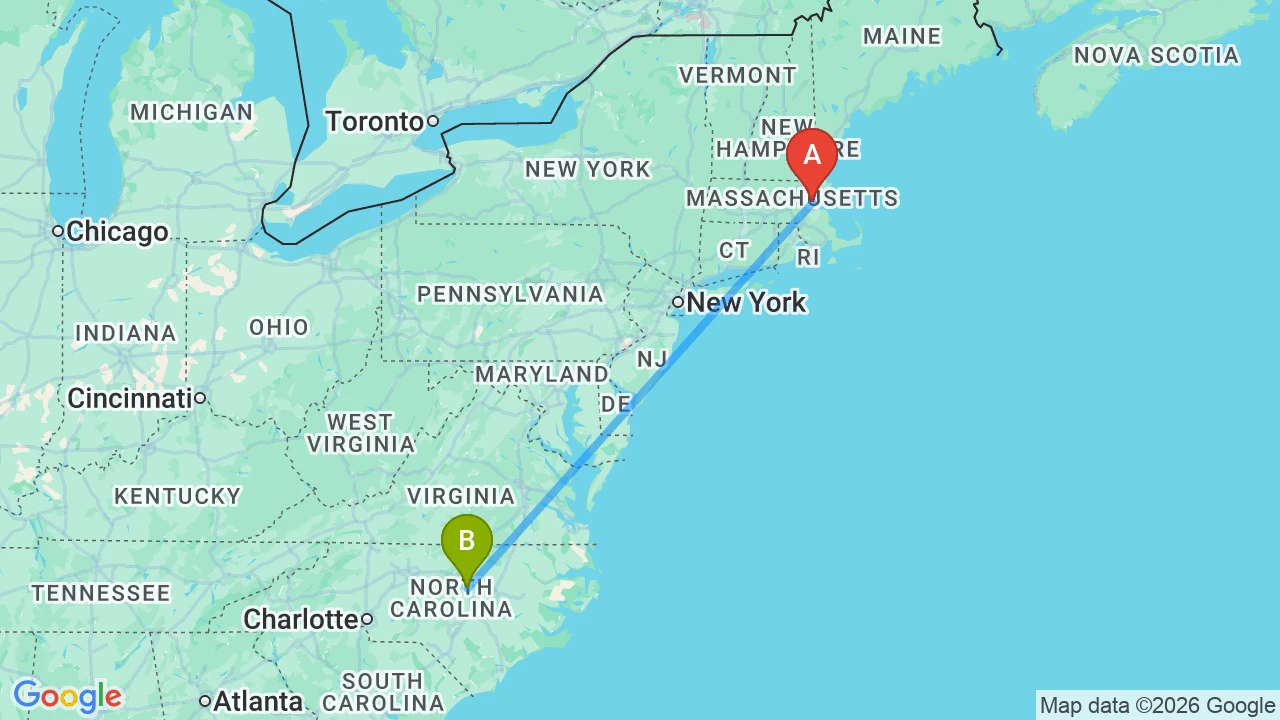
The physical act of moving from Boston to Raleigh involves roughly 630 miles, typically a 10- to 12-hour drive or a short flight. Most movers hire professional moving services or rent trucks, with costs varying based on volume, timing, and service level. Summer months tend to be the busiest and most expensive for moves, while late fall and winter may offer more flexibility and lower rates.
One of the most common surprises for Boston-to-Raleigh movers is the immediate need for a vehicle. In Boston, many households delay car ownership or manage with one vehicle because of transit access and walkability. In Raleigh, a car becomes essential almost immediately—for commuting, errands, and accessing services. This means budgeting not just for a vehicle purchase or lease, but for insurance, registration, maintenance, and fuel costs that may have been minimal or absent in Boston.
Utility setup in Raleigh also differs. Many Boston apartments include heat or hot water in the rent; in Raleigh, renters and homeowners typically pay separately for electricity, water, gas (if applicable), trash, and sometimes stormwater fees. Understanding how these costs stack—and how they fluctuate seasonally—takes time and can lead to budget surprises in the first few months.
Establishing new routines takes longer in a car-dependent city. Finding a preferred grocery store, pharmacy, gym, or coffee shop requires deliberate exploration rather than stumbling upon options during a walk. Social networks also take time to rebuild, particularly for movers without existing connections in Raleigh. The city’s growth means many residents are transplants, which can make it easier to meet people in similar situations, but it also means fewer established social anchors.
For families with school-age children, the transition involves navigating a new school system, understanding district boundaries, and managing the logistics of school commutes and extracurriculars—all of which typically require driving. Raleigh’s school options include public, charter, and private schools, with quality and access varying significantly by neighborhood.
Frequently Asked Questions
- Does Raleigh, NC feel more or less expensive than Boston, MA?
- Raleigh generally presents lower entry costs, particularly for housing, but the overall cost structure shifts rather than simply decreasing. Transportation, vehicle ownership, and cooling costs often consume a larger share of the budget in Raleigh, while housing and transit costs dominated in Boston. The move tends to feel more affordable for households prioritizing homeownership and space, but less so for those who valued walkability and low transportation overhead.
- How do housing markets differ between Boston and Raleigh?
- Boston’s housing market is constrained, competitive, and expensive, with high entry barriers for both renters and buyers but strong transit access and density. Raleigh’s market offers more space and lower entry costs, particularly in suburban neighborhoods, but requires greater car dependence and often involves higher variable costs like utilities, maintenance, and transportation. Ownership in Raleigh typically means managing property taxes, HOA fees, and larger homes, while Boston renters often face high fixed costs but fewer variable obligations.
- What feels different about daily life after moving from Boston to Raleigh?
- The most noticeable shift is car dependence. Nearly every errand, commute, and social activity in Raleigh requires driving, whereas Boston’s density and transit allowed for more spontaneous, walkable routines. The pace also slows—Raleigh’s suburban layout creates a more spread-out, planned rhythm compared to Boston’s compressed urban intensity. Climate exposure changes too: milder winters but longer, hotter, more humid summers that drive extended air conditioning use.
- When does the move from Boston to Raleigh tend to feel easiest or hardest?
- Spring and fall moves often feel smoother due to milder weather and less extreme utility costs during the adjustment period. Summer moves coincide with peak heat and higher cooling bills, while winter moves avoid the worst of Raleigh’s humidity but may still feel disorienting for those adjusting to a car-dependent routine. Timing around school calendars, job start dates, and lease cycles tends to matter more than seasonal weather, but avoiding peak summer heat can ease the initial transition.
- What are the most common adjustment pressures when moving from Boston to Raleigh?
- The immediate need for reliable transportation surprises many movers, as does the shift from bundled or minimal utilities to managing multiple separate bills that fluctuate seasonally. Social isolation can also be a challenge—rebuilding networks takes time, and the car-dependent layout makes spontaneous socializing harder. Families often underestimate the logistics of managing school commutes and extracurriculars, while singles and couples may miss the density and walkability that made Boston feel more connected.
- Who tends to benefit most from the Boston to Raleigh move, and who may struggle?
- Families seeking space, homeownership, and lower housing entry costs often benefit, particularly those with stable incomes and the ability to absorb higher transportation and utility costs. Professionals in Raleigh’s growing tech, research, and healthcare sectors may find strong job opportunities and a more affordable path to ownership. Those who valued Boston’s walkability, transit access, and urban density—particularly singles, young professionals, or households without cars—may struggle with Raleigh’s car dependence and suburban layout. Retirees or those on fixed incomes need to carefully assess how transportation and cooling costs will affect their budgets.
Conclusion: Tradeoffs, Not Totals
The move from Boston to Raleigh isn’t about swapping a high-cost city for a low-cost one—it’s about shifting where financial pressure concentrates and how daily life is structured. Housing entry barriers drop, but transportation and vehicle costs rise. Utility rates fall, but seasonal cooling exposure increases. Density and walkability give way to space and suburban infrastructure.
Households prioritizing homeownership, space, and a slower pace often find Raleigh’s tradeoffs worthwhile. Those who valued Boston’s transit access, urban density, and walkable routines may feel the loss more acutely. The key is understanding not just what costs change, but how place structure shapes daily behavior, logistics, and long-term financial exposure.
For deeper exploration of Raleigh’s cost structure, neighborhood patterns, and household budgets, visit the Raleigh cost of living hub on IndexYard. For Boston-specific context, see the Boston hub. Both offer granular breakdowns of housing, utilities, transportation, and lifestyle costs to help refine your decision.