
Moving from San Francisco to Phoenix: How Costs and Daily Life Really Change
The move from San Francisco to Phoenix represents one of the most dramatic relocations within the western United States—not just in distance, but in how daily costs concentrate, how neighborhoods function, and what kind of planning your household will need. This isn’t a simple “cheaper vs. more expensive” story. It’s about where financial pressure moves, how your routines reshape around different infrastructure, and which expenses shrink while others grow in ways that might surprise you.
This guide explains how cost behavior, housing market structure, and everyday logistics shift when you relocate from the Bay Area to the Valley of the Sun. It won’t tell you whether the move saves money overall—that depends entirely on your housing choices, household size, and how you adapt your routines. Instead, it clarifies where you’ll feel more pressure, where you’ll gain flexibility, and what kinds of households tend to navigate this transition most smoothly.
Where Cost Pressure Shifts
The most immediate change involves housing entry barriers. San Francisco’s median home value sits at $1,348,700, while Phoenix’s median is $340,200—a difference that fundamentally alters what’s accessible to buyers. Median gross rent follows a similar pattern: $2,316 per month in San Francisco compared to $1,322 per month in Phoenix. These aren’t small adjustments—they represent a structural shift in how much of your income gets claimed before you address any other expense.
But lower headline housing costs don’t mean Phoenix feels universally cheaper. The pressure redistributes rather than disappears. What you save on rent or mortgage payments often gets redirected into transportation, cooling costs, and the logistics of managing a more car-dependent daily routine. Phoenix’s sprawling metro form means errands that might have been walkable or transit-accessible in San Francisco now require driving, planning, and time. Gas prices are lower—$3.00 per gallon in Phoenix versus $4.24 in San Francisco—but you’ll use more of it. Average commute time drops slightly from 31 minutes to 25 minutes, yet fewer people work from home (6.1% in Phoenix compared to 12.8% in San Francisco), and the share facing long commutes remains substantial at 37.6%.
Electricity costs shift dramatically, both in rate structure and seasonal intensity. San Francisco’s electricity rate of 33.60¢/kWh is more than double Phoenix’s 15.55¢/kWh. That sounds like relief—until you account for Phoenix’s extended cooling season and triple-digit summer heat. Air conditioning isn’t optional; it’s a baseline cost that dominates household budgets from May through September. Homes are larger on average, and cooling a 2,000-square-foot house in 110°F heat requires sustained, heavy electricity use. The lower rate helps, but total consumption often exceeds what Bay Area households ever experience.
Natural gas pricing inverts slightly—$23.77/MCF in Phoenix versus $21.94/MCF in San Francisco—but heating demand is minimal in Phoenix. You’ll use gas primarily for water heating and cooking, not space heating, which means this cost fades into the background for most of the year.
Housing Markets and Neighborhood Patterns
San Francisco’s housing market operates under severe supply constraints, geographic limits, and entrenched demand. Inventory is tight, competition is fierce, and both renters and buyers face limited negotiating power. Phoenix’s market, by contrast, has expanded outward for decades across flat desert terrain. There’s more inventory, more neighborhood variety, and more ability to trade location for space or price.
For renters, this means Phoenix offers more flexibility in lease terms, unit types, and neighborhood choice. Rent pressure exists—Phoenix has seen significant increases in recent years—but the market doesn’t carry the same scarcity-driven intensity. You’re more likely to find concessions, move-in specials, or landlords willing to negotiate, especially outside peak moving season.
For buyers, the difference is even starker. A household priced out of ownership entirely in San Francisco may find entry-level single-family homes accessible in Phoenix’s outer suburbs. But “accessible” doesn’t mean simple. Property taxes, homeowners association fees, and ongoing maintenance costs in desert climates add layers of obligation. Pools require upkeep, landscaping faces water restrictions, and cooling system maintenance isn’t optional. Ownership in Phoenix often means managing a larger property with more systems and higher exposure to weather-related wear.
Neighborhood form also changes how costs accumulate. San Francisco’s density supports walkable errands, transit access, and proximity to services. Phoenix’s car-oriented layout means most daily tasks—groceries, pharmacy runs, school drop-offs—require driving. This isn’t just about gas; it’s about vehicle depreciation, insurance, maintenance intervals, and the time cost of managing a household where everything is fifteen minutes away by car instead of three blocks on foot.
How this article was built: In addition to public economic data, this article incorporates location-based experiential signals derived from anonymized geographic patterns—such as access density, walkability, and land-use mix—to reflect how day-to-day living actually feels in Phoenix, AZ.
Lifestyle and Daily Rhythms
Daily life in Phoenix revolves around heat management and car dependence in ways that reshape routines. Summer months dictate scheduling: you run errands early in the morning or after sunset, you park in shade or covered structures, and you plan around air conditioning availability. Outdoor activities shift to winter months when San Francisco residents might be layering up. The climate inversion means your “active season” flips, and costs follow—utility bills peak in summer, while winter feels mild and inexpensive by comparison.
Commuting patterns differ not just in duration but in texture. Phoenix’s freeway system handles high volumes, but congestion concentrates during peak hours, and alternative routes are limited by the grid’s scale. Transit exists but serves a small share of commuters. Most households operate as two-car families by necessity, which doubles registration fees, insurance premiums, and maintenance schedules. If you’re moving from a one-car or car-free household in San Francisco, this represents a significant operational shift.
The region’s sprawl also affects social and recreational costs. Entertainment, dining, and cultural activities are more dispersed. A night out often involves longer drives, and the informal “let’s walk to dinner” option largely disappears. This doesn’t make Phoenix less social, but it does require more planning and transportation overhead for spontaneous activities.
Phoenix does offer trade-offs that appeal to certain households. Space is abundant—both indoors and in terms of private outdoor areas. Housing layouts tend toward larger floor plans, and many properties include yards, patios, or pools. For families with children or remote workers needing dedicated home office space, this can meaningfully improve daily comfort. The cost is measured in maintenance time, cooling expense, and the logistical complexity of managing a larger property.
Income Context and Employment
Median household income in San Francisco stands at $136,689 per year, compared to $72,092 in Phoenix. This gap reflects both cost-of-living adjustments and differences in regional wage scales, particularly in tech, finance, and professional services. If you’re moving with a San Francisco salary—whether through remote work or a transferring role—you’ll find your income goes further in Phoenix’s housing market. But if you’re seeking local employment, expect wage offers to align with Phoenix’s lower income baseline.
Unemployment rates are slightly lower in Phoenix at 3.1% compared to San Francisco’s 3.9%, and the job market has diversified beyond traditional sectors like tourism and real estate into healthcare, education, and tech satellite offices. But career advancement timelines, networking density, and salary ceilings differ. San Francisco’s concentrated industry ecosystems offer faster mobility for certain professions; Phoenix’s market is broader but less specialized.
Relocation Logistics and Adjustment Friction
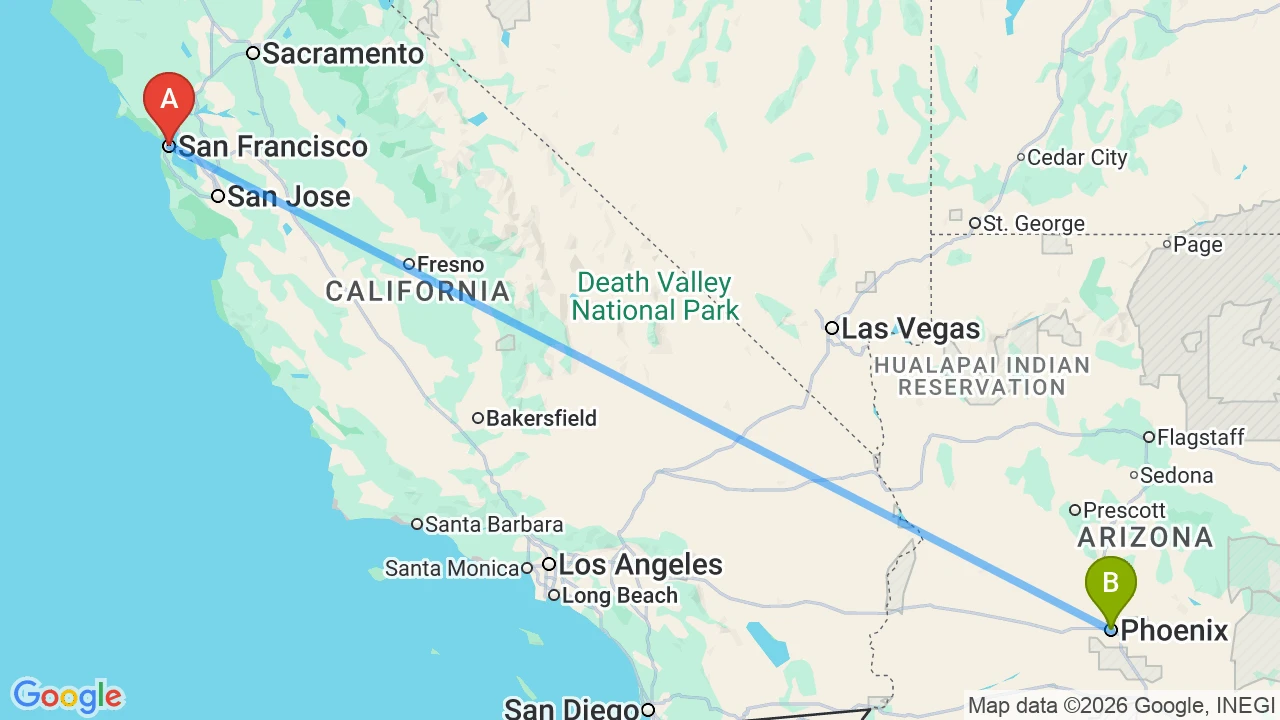
The physical move between San Francisco and Phoenix spans roughly 750 miles, typically a two-day drive or a short flight. Moving costs depend on household size and whether you hire full-service movers or rent a truck. Summer moves face extreme heat on both ends, which affects loading schedules, vehicle reliability, and comfort. Winter offers milder conditions but tighter availability as snowbirds and other seasonal movers flood the Phoenix market.
Once you arrive, adjustment friction centers on infrastructure familiarity. Phoenix’s grid system is logical but vast, and navigation takes time. Utility setup is straightforward, but understanding your electricity provider’s rate tiers and time-of-use plans matters—summer bills can shock newcomers who underestimate cooling costs. Vehicle registration transfers require emissions testing (depending on your car’s age and county), and Arizona’s MVD process differs from California’s DMV procedures.
Social adjustment varies by neighborhood. Phoenix’s metro area includes distinct communities—Scottsdale, Tempe, Mesa, Chandler—each with different demographics, amenities, and cost profiles. Transplants often cluster in certain areas, which can ease the transition but also create insular pockets. Building local networks takes intention, especially if you’re working remotely and lack built-in workplace connections.
Frequently Asked Questions
- Does Phoenix feel more or less expensive than San Francisco?
- Phoenix concentrates costs differently rather than simply costing less. Housing entry barriers drop dramatically, but transportation, cooling, and vehicle-related expenses rise. Households that adapt their routines around car dependence and seasonal heat tend to feel the financial relief most clearly, while those who struggle with sprawl or miss walkable urban infrastructure may find the savings less meaningful than expected.
- How do housing markets differ between San Francisco and Phoenix?
- San Francisco’s market is constrained by geography and regulation, creating intense competition and limited inventory. Phoenix’s market sprawls across available land with more units, more neighborhood types, and more negotiating room. Renters gain flexibility; buyers gain access. But Phoenix’s market also requires managing larger properties, HOA fees, and desert-specific maintenance that doesn’t exist in the same form in San Francisco.
- What feels different about daily life after moving to Phoenix?
- Daily routines become more car-dependent, more scheduled around heat, and more focused on private space rather than public amenities. Errands require driving, summer months limit outdoor activity to early morning or evening, and social plans involve more logistics. The trade-off is more indoor space, lower housing costs, and a slower overall pace—but only if your household adapts to the infrastructure and climate.
- When does this move tend to feel easiest or hardest?
- Moves during Phoenix’s mild winter months (November through March) avoid the worst heat and align with lower seasonal demand for housing. Summer moves face extreme temperatures, higher cooling costs immediately upon arrival, and the challenge of acclimating during the most intense season. Timing also matters for school-age families, as Arizona’s academic calendar and district enrollment processes differ from California’s systems.
- What are the most common adjustment challenges?
- Newcomers often underestimate summer electricity bills, the necessity of a second vehicle, and the time cost of car-dependent errands. The loss of walkable neighborhoods, transit options, and dense cultural amenities surprises those accustomed to San Francisco’s urban fabric. Social isolation can emerge for remote workers or retirees who lack built-in community structures, and the scale of Phoenix’s metro area makes spontaneous exploration harder than in a compact city.
- Who does this move work best for—and who might struggle?
- Households seeking homeownership, families needing more space, and remote workers with San Francisco-level income but flexible location tend to adapt most successfully. Retirees drawn to mild winters and lower property taxes also benefit, provided they can manage summer heat. The move challenges car-free individuals, those reliant on public transit, urbanists who value walkability, and anyone whose career depends on San Francisco’s concentrated industry networks. Single-income households moving into Phoenix’s local wage market may find the cost relief less dramatic than expected.
Making the Decision
Moving from San Francisco to Phoenix isn’t about escaping high costs—it’s about accepting a different cost structure, a different daily rhythm, and a different set of trade-offs. You’ll spend less on housing entry and possibly on rent, but more on transportation, cooling, and the operational complexity of a car-dependent lifestyle. You’ll gain space, access to ownership, and relief from San Francisco’s relentless housing competition. You’ll lose walkability, transit options, and the density that makes urban errands effortless.
The households that navigate this transition most smoothly are those who enter with realistic expectations about Phoenix’s infrastructure, climate, and market behavior. If you’re moving with income portability, a clear plan for vehicle logistics, and an appreciation for suburban sprawl’s trade-offs, Phoenix offers meaningful financial flexibility. If you’re expecting a cheaper version of San Francisco’s urban fabric, the adjustment will feel harder than the cost savings justify.
Use IndexYard’s Phoenix cost of living hub to explore housing markets, utility behavior, and neighborhood-specific expenses in greater depth. Understanding where your costs will concentrate—and where they’ll ease—makes the difference between a move that improves your financial position and one that simply relocates your pressure points.