
Moving from Denver, CO to Phoenix, AZ: What Changes in 2026
The Denver-to-Phoenix corridor has grown steadily as households weigh mountain winters against desert heat, altitude living against valley sprawl, and Colorado’s outdoor culture against Arizona’s sun-driven rhythms. This move typically reflects a blend of motivations: housing accessibility, climate preference, job opportunities in Phoenix’s expanding tech and healthcare sectors, and a desire to escape Denver’s rising cost pressures and seasonal weather extremes.
What changes most is not a single line item, but where cost pressure concentrates and how daily routines adapt. Phoenix offers different housing entry points, a car-dependent layout that contrasts with Denver’s growing transit options, and a climate that shifts utility exposure from winter heating to summer cooling. This guide explains how those shifts play out in practice—not whether Phoenix is “cheaper,” but where costs, access, and lifestyle friction move when you leave the Front Range for the Valley of the Sun.
This article focuses on cost behavior and practical adjustment, not total budgets or savings predictions. It’s designed to help you understand what feels different, who adapts easily, and where new pressures emerge.
Cost Pressure Shifts: Where Expenses Concentrate Differently
Denver and Phoenix distribute cost pressure differently across housing, utilities, transportation, and everyday expenses. Neither city is universally “cheaper”—instead, the question is where your household feels financial friction most acutely.
Housing costs in Phoenix tend to present a lower entry barrier for both renters and buyers compared to Denver, particularly in suburban areas like Mesa, Chandler, and Tempe. Denver’s housing market has experienced sustained upward pressure driven by limited inventory, geographic constraints, and high demand from both in-state and out-of-state movers. Phoenix’s sprawling valley layout and faster construction pace have historically kept housing supply more elastic, though rapid growth since 2020 has tightened availability in desirable neighborhoods.
Utility exposure shifts dramatically. Denver households face higher winter heating costs due to altitude, cold snaps, and older housing stock with variable insulation. Phoenix reverses that pattern: summer cooling dominates the utility budget, with multi-month stretches of triple-digit heat driving air conditioning costs well above national averages. Households moving from Denver often underestimate the duration and intensity of Phoenix’s cooling season, which can extend from May through September.
Transportation costs in Phoenix tend to run higher for most households. The metro area is designed around car ownership, with limited public transit coverage outside the light rail corridor connecting Tempe, downtown Phoenix, and a few northern suburbs. Denver offers more robust bus and light rail options, bike infrastructure, and walkable urban neighborhoods. In Phoenix, most errands, commutes, and social activities require driving, which increases fuel, insurance, maintenance, and vehicle depreciation expenses.
Grocery and everyday goods costs show rough parity between the two cities, though local price variation depends on neighborhood and store type. Both metros support a mix of budget chains, mid-tier grocers, and specialty markets. Phoenix’s larger population and distribution networks can create slight advantages in bulk goods and restaurant variety, but these differences are marginal for most households.
Housing and Neighborhood Patterns
Denver’s housing market is shaped by geographic limits—mountains to the west, plains to the east—and a constrained supply of buildable land close to job centers. This creates upward pressure on both rental and ownership costs, particularly in neighborhoods with good school access, walkability, or proximity to downtown and the Tech Center. Renters in Denver often face competitive application processes, rising lease renewals, and limited inventory in desirable areas. Buyers encounter bidding wars, especially for single-family homes under $600,000.
Phoenix’s housing market sprawls across a broad valley with fewer natural barriers, allowing for extensive suburban development in all directions. This geographic flexibility has historically kept entry costs lower, though rapid population growth since 2020 has tightened supply in central neighborhoods like Arcadia, Encanto, and parts of Tempe. Suburban areas—Mesa, Chandler, Gilbert, Surprise—still offer more accessible entry points for both renters and buyers compared to equivalent Denver suburbs.
Ownership in Phoenix often comes with HOA fees, particularly in newer subdivisions and master-planned communities. These fees can range from modest to significant, covering landscaping, community pools, and shared amenities. Denver has HOA communities as well, but the prevalence is lower outside of newer developments and condo buildings. Property taxes in Arizona tend to run lower than Colorado’s, though both states offer relatively moderate tax burdens compared to coastal metros.
Neighborhood form differs sharply. Denver’s older neighborhoods—Capitol Hill, Wash Park, Highland—offer walkable street grids, nearby parks, and mixed-use corridors. Phoenix’s core neighborhoods have pockets of walkability, but most residential areas are auto-oriented, with wide arterials, strip malls, and limited sidewalk connectivity. This affects daily costs indirectly: walkable Denver neighborhoods reduce car dependence, while Phoenix’s layout makes vehicle ownership nearly universal.
Lifestyle and Daily Rhythms
Daily life in Denver revolves around altitude, four-season weather, and access to mountain recreation. Winters bring snow, ice, and cold that require seasonal wardrobe shifts, snow tires or all-wheel drive, and occasional remote work days during storms. Summers are mild and dry, with frequent weekend trips to hiking trails, ski resorts, and mountain towns. The city’s growing light rail and bus network supports car-free living in select neighborhoods, though most residents still drive regularly.
Phoenix operates on a desert schedule shaped by extreme summer heat. From June through August, outdoor activity shifts to early morning or evening, and midday errands often feel punishing without air conditioning. The metro area is car-dependent by design: most daily tasks—commuting, grocery shopping, social visits—require driving. Public transit exists but serves a narrow corridor, and biking is practical only during cooler months. The upside is year-round access to outdoor activities in winter and spring, when temperatures are mild and desert landscapes bloom.
Social and cultural rhythms differ. Denver’s identity centers on outdoor recreation, craft beer culture, and a younger, transient population drawn by mountain access and tech jobs. Phoenix has a larger, more established population with strong ties to retiree communities, sprawling suburbs, and a slower-paced lifestyle outside the urban core. Both cities have growing food scenes, professional sports, and arts districts, but Phoenix’s scale and sprawl create a more fragmented sense of place.
Climate exposure is the most visceral shift. Denver’s altitude means intense sun, low humidity, and rapid temperature swings—70°F one day, snow the next. Phoenix offers relentless sunshine and heat, with summer highs regularly exceeding 110°F and minimal rainfall. Households moving from Denver often struggle with the length and intensity of Phoenix’s summer, the lack of seasonal variety, and the indoor-focused lifestyle that heat imposes.
Relocation Logistics and Practical Friction
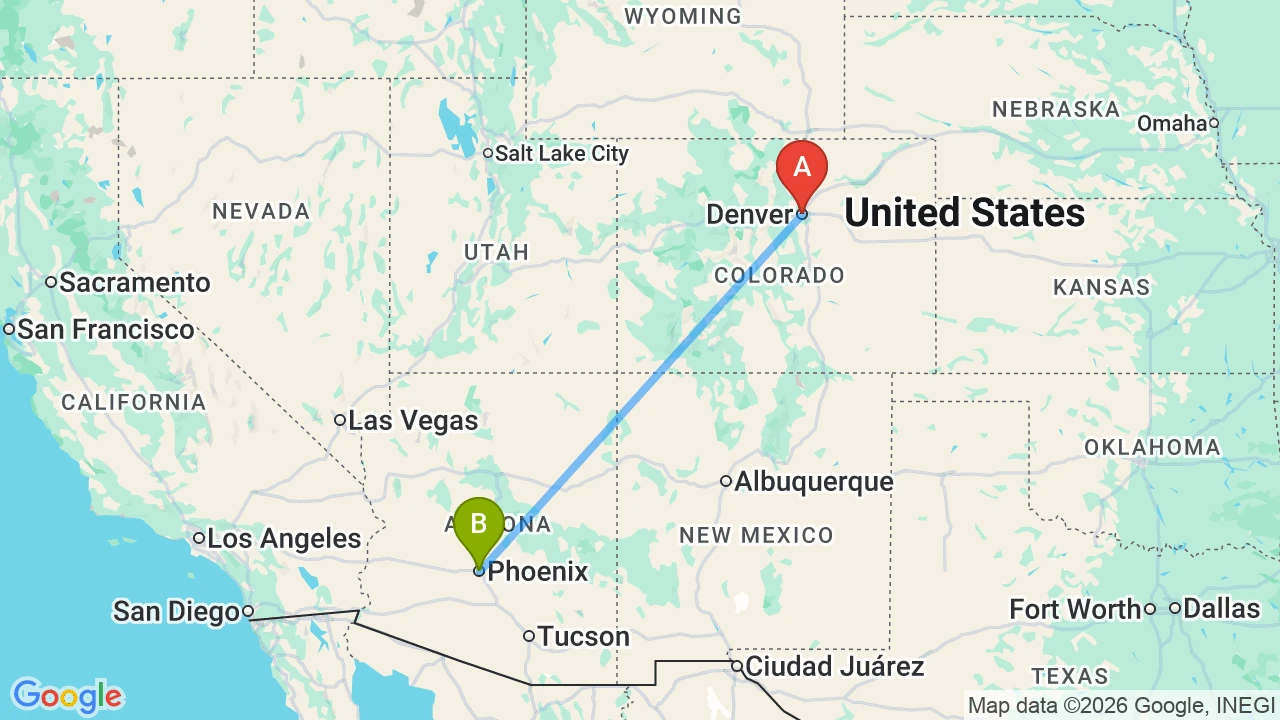
The Denver-to-Phoenix move is straightforward logistically: a roughly 12-hour drive or a 90-minute flight, with frequent moving truck routes and competitive pricing due to high corridor volume. Most movers choose late fall through early spring to avoid Phoenix’s summer heat and Denver’s winter storms. Summer moves are cheaper but physically taxing in Phoenix, where unloading a truck in 110°F heat is miserable.
Housing searches in Phoenix benefit from the metro’s size and inventory, but the sprawl requires clarity about work location and commute tolerance. Choosing a neighborhood without understanding Phoenix’s traffic patterns—especially the I-10, I-17, and Loop 101 corridors—can lead to long, frustrating commutes. Renters should budget time to visit neighborhoods in person, as online listings don’t convey the walkability, noise, or heat island effects that vary widely across the valley.
Utility setup in Phoenix often includes higher deposits for electricity due to the anticipated summer load. Some providers require credit checks or prepayment, especially for newcomers without Arizona utility history. Water bills in Phoenix are generally lower than in Denver, but electricity costs spike sharply in summer. Households accustomed to Denver’s moderate summer cooling needs often experience sticker shock with their first July or August bill in Phoenix.
Vehicle considerations shift. Denver requires winter-ready vehicles—snow tires, all-wheel drive, and cold-weather fluids. Phoenix demands functional air conditioning, sun protection (windshield shades, tinted windows), and tolerance for extreme interior heat when parked. Car insurance rates in Arizona can run higher due to uninsured driver rates and accident frequency on busy highways.
Social adjustment varies by personality. Denver’s outdoor culture and transient population make it easier to meet people through recreation and coworking spaces. Phoenix’s sprawl and car dependence can feel isolating for newcomers, especially those without established social networks or family ties. Retirees and families often adapt quickly, while younger singles and couples may find it harder to build community outside of work.
Frequently Asked Questions
- Is Phoenix, AZ cheaper than Denver, CO?
- Phoenix typically offers lower housing entry costs for both renters and buyers, but cost pressure shifts rather than disappears. Summer cooling bills in Phoenix often exceed Denver’s winter heating costs, and Phoenix’s car-dependent layout increases transportation expenses. Where you feel financial relief or strain depends on your housing needs, commute patterns, and tolerance for heat-driven utility spikes.
- How do housing markets differ between Denver, CO and Phoenix, AZ?
- Denver’s market is constrained by geography and limited inventory, creating upward pressure on prices and competitive bidding. Phoenix’s sprawling valley allows more construction and generally lower entry costs, though desirable central neighborhoods have tightened since 2020. Phoenix leans heavily on HOA communities and master-planned suburbs, while Denver offers more walkable, older neighborhoods with varied housing stock.
- What lifestyle differences do people notice when moving from Denver, CO to Phoenix, AZ?
- The shift from four-season mountain living to year-round desert heat is the most immediate change. Phoenix requires near-universal car dependence, reverses outdoor activity schedules to avoid summer heat, and lacks the seasonal variety and mountain access that define Denver life. Social rhythms slow, sprawl increases isolation for some, and the intensity of summer heat surprises most newcomers.
- When is the best time of year to move to Phoenix, AZ?
- Late fall through early spring offers the most comfortable conditions for moving and exploring neighborhoods, with mild temperatures and lower humidity. Summer moves are cheaper due to lower demand, but unloading trucks and apartment hunting in 110°F heat is physically draining. Avoid moving during Denver’s winter storm season if driving a loaded truck yourself.
- What are common challenges when relocating from Denver, CO to Phoenix, AZ?
- Underestimating summer heat duration and intensity is the most frequent adjustment issue. Many movers also struggle with Phoenix’s car dependence, longer commutes due to sprawl, and the loss of mountain access and seasonal variety. Utility bill shock in summer, difficulty building social networks in a sprawling metro, and adapting to a slower, more suburban pace challenge households accustomed to Denver’s compact, active lifestyle.
- Who tends to benefit most when moving from Denver, CO to Phoenix, AZ, and who may struggle?
- Families seeking larger homes, retirees prioritizing warmth and lower housing costs, and remote workers who can avoid peak commutes tend to adapt well. Outdoor enthusiasts who rely on mountain access, young professionals seeking walkable urban living, and anyone sensitive to extreme heat or car dependence often find the transition difficult. Households leaving Denver due to cost pressure should confirm that Phoenix’s lower housing entry offsets increased transportation and cooling expenses.
Conclusion
Moving from Denver to Phoenix trades mountain winters and altitude living for desert heat and valley sprawl. Housing entry costs typically ease, but utility exposure shifts from heating to cooling, and car dependence increases for nearly all households. The lifestyle change is profound: Phoenix’s year-round warmth and slower pace appeal to families, retirees, and those weary of snow, while Denver’s seasonal variety, walkable neighborhoods, and mountain access remain unmatched for outdoor enthusiasts and urban dwellers.
This move works best for households prioritizing housing affordability, warm winters, and suburban space—and who can tolerate extreme summer heat and car-centric routines. It challenges those who value four-season variety, walkability, and easy access to mountain recreation. Understanding where cost pressure and lifestyle friction shift, rather than chasing a single “cheaper” outcome, is the key to a successful relocation decision.
For deeper neighborhood comparisons, housing data, and cost breakdowns specific to your household size and priorities, explore the Denver and Phoenix metro guides available through IndexYard’s city hubs.