
Introduction: Understanding the Los Angeles to Frisco Move
The move from Los Angeles to Frisco represents one of the most dramatic relocations within the U.S.—not just in distance, but in how daily life is structured and where household budgets face pressure. People consider this move for many reasons: job transfers within corporate networks, pursuit of homeownership that feels out of reach in coastal California, family proximity in the Dallas metro, or simply exhaustion with Los Angeles traffic and density. Whatever the catalyst, this relocation fundamentally reshapes cost exposure, commute patterns, climate demands, and the texture of everyday errands.
This guide explains how cost behavior changes between these two cities—not whether one is “cheaper” in absolute terms, but where financial pressure concentrates, which expenses become more predictable, and which household types tend to feel relief versus new friction. We focus on decision-relevant patterns: how housing markets operate differently, what transportation actually costs in practice, how climate drives utility exposure, and how neighborhood form affects daily logistics.
This is not a savings calculator or affordability verdict. It’s a relocation signal map designed to help you understand what shifts, what stays hard, and who this move typically serves best.
Cost Pressure Shifts: Where Money Flows Differently
The most immediate financial shift involves housing entry barriers. In Los Angeles, the median home value sits at $822,600, while Frisco’s median is $531,400—a substantial difference in upfront capital required for ownership. For households priced out of Los Angeles homeownership, Frisco often represents the first realistic entry point into owning rather than renting. However, this lower entry cost doesn’t mean Frisco is universally “cheaper”—it means cost pressure relocates from entry barriers to ongoing obligations.
Median gross rent tells a more nuanced story: Los Angeles renters pay $1,791 per month, while Frisco renters pay $1,803 per month. Rental costs remain nearly identical on paper, but the experience differs significantly. Frisco’s rental market serves a smaller share of the population, and rental inventory tends to cluster in newer apartment complexes with bundled amenities. Los Angeles renters navigate a far more diverse housing stock—older buildings, rent-controlled units, accessory dwellings—which creates more variability in what that median represents.
Transportation costs shift dramatically in both direction and type. Gasoline in Los Angeles costs $4.34 per gallon compared to $2.47 per gallon in Frisco—a difference that matters greatly for households driving frequently. However, Frisco’s suburban form makes car ownership effectively mandatory for most households, while Los Angeles offers more (though still limited) flexibility. The average Los Angeles commute runs 31 minutes, with 52.1% of workers facing long commutes and only 13.1% working from home. Frisco commute data isn’t available in the feed, but the city’s role as a northern Dallas suburb means many residents face significant drives to employment centers in Dallas, Plano, or Richardson.
Utility costs follow opposite patterns. Electricity in Frisco costs 16.04¢/kWh compared to Los Angeles’ 31.91¢/kWh—nearly half the rate. Natural gas pricing reverses: Frisco pays $30.71/MCF while Los Angeles pays $21.94/MCF. These rate differences combine with climate exposure to create distinct seasonal cost rhythms. Frisco’s hot summers and occasional winter freezes drive both cooling and heating demand, while Los Angeles’ mild climate keeps year-round utility usage more stable and moderate.
Income context matters for interpreting these shifts. Frisco’s median household income is $144,567 per year—nearly double Los Angeles’ $76,244 per year. This income difference reflects Frisco’s role as an affluent suburban community within the Dallas metro, attracting higher-earning households in technology, finance, and corporate management. The unemployment rate in Frisco sits at 3.8% compared to Los Angeles’ 5.8%, suggesting tighter labor market conditions and potentially more competition for entry-level positions.
How this article was built: In addition to public economic data, this article incorporates location-based experiential signals derived from anonymized geographic patterns—such as access density, walkability, and land-use mix—to reflect how day-to-day living actually feels in Frisco, TX.
Housing & Neighborhood Patterns: Entry vs. Ongoing Obligations
The housing market transition from Los Angeles to Frisco involves more than price—it’s a shift in market structure, neighborhood form, and what homeownership actually entails. Los Angeles housing stock spans a century of development patterns: pre-war bungalows, mid-century ranch homes, 1970s condos, and modern infill construction. This diversity creates wide variation in maintenance obligations, energy efficiency, and retrofit costs. Frisco’s housing stock is overwhelmingly newer, with most homes built after 1990 in planned developments with homeowners associations.
Homeowners association fees represent a significant ongoing cost in Frisco that many Los Angeles transplants underestimate. While HOAs exist in Los Angeles (particularly in condo complexes), Frisco’s master-planned community model makes them nearly universal for single-family homes. These fees cover neighborhood amenities—pools, parks, landscaping—but also represent a fixed monthly obligation that doesn’t fluctuate with usage. Buyers accustomed to Los Angeles’ more individualized property ownership may find this collective cost structure unfamiliar.
Property taxes function differently between California and Texas due to fundamental state revenue models. California’s Proposition 13 caps property tax increases at 2% annually for existing owners, creating long-term predictability. Texas has no state income tax and relies heavily on property taxes for local revenue, resulting in higher effective rates that adjust with assessed values. Frisco homeowners should expect property tax bills that feel substantial compared to California equivalents, even on lower-priced homes.
Neighborhood form affects daily cost exposure in ways that don’t appear on a mortgage statement. Frisco’s suburban development pattern—wider lots, separated land uses, limited sidewalk connectivity—makes car dependency nearly absolute. Households need reliable vehicles for every errand: groceries, school pickup, medical appointments, social activities. Los Angeles, despite its car-centric reputation, offers more neighborhood-level retail and services within some communities, particularly older urban neighborhoods. This difference doesn’t necessarily make one city more expensive, but it does mean Frisco households face less flexibility in reducing transportation costs during tight budget months.
Climate stress on housing infrastructure differs significantly. Los Angeles homes rarely need robust heating systems, and cooling demands remain moderate in many neighborhoods due to coastal influence. Frisco homes require both effective air conditioning for extended summer heat and heating systems for winter cold snaps. This dual-system demand increases both installation costs for new homeowners and long-term maintenance obligations. HVAC replacement represents a major capital expense that Frisco homeowners face more frequently than their Los Angeles counterparts.
Lifestyle & Daily Rhythms: How Place Structure Shapes Routine
Daily life in Frisco operates at a fundamentally different rhythm than Los Angeles, shaped by suburban form, climate exposure, and the practical logistics of car-dependent living. Errands that might involve a short walk or single transit trip in denser Los Angeles neighborhoods require vehicle trips in Frisco. Grocery shopping, pharmacy runs, coffee meetings, and children’s activities all demand planning around drive time and parking rather than proximity.
This car dependency creates both relief and new friction. Frisco’s lower gas prices ($2.47/gal vs. $4.34/gal) reduce per-mile costs significantly, but the necessity of driving for every task means total mileage often increases. Households that successfully reduced car usage in Los Angeles—even modestly—will find that option largely unavailable in Frisco. Vehicle maintenance, insurance, and replacement cycles become non-negotiable budget items rather than flexible expenses.
Commute patterns shift in character if not always in duration. Los Angeles’ 31-minute average commute often involves stop-and-go traffic, unpredictable delays, and high-stress driving conditions. Frisco commutes—particularly for those working in northern Dallas suburbs—may involve similar time but more highway miles at consistent speeds. Some households find this less mentally taxing; others miss the option (however imperfect) of transit alternatives during vehicle breakdowns or high gas price periods.
Climate exposure creates distinct seasonal rhythms. Los Angeles maintains relatively stable year-round temperatures, currently 58°F with mild variation. Frisco experiences hot summers and genuine winter cold—currently 38°F, feeling like 34°F. This temperature swing drives seasonal cost pulses: high electricity bills during extended summer cooling periods, heating costs during winter freezes, and the need for seasonal wardrobes and home preparations that Los Angeles residents rarely consider. Outdoor activities shift from year-round accessibility to seasonal planning around heat and cold extremes.
The social and recreational landscape differs in texture. Los Angeles offers density-dependent amenities: walkable entertainment districts, diverse dining concentrated in neighborhoods, cultural institutions accessible via transit. Frisco’s amenities tend toward planned recreation—sports complexes, shopping centers with ample parking, chain restaurants with consistent experiences. Neither model is superior, but they serve different household preferences. Families with children often appreciate Frisco’s organized youth sports infrastructure and newer facilities. Adults accustomed to spontaneous urban exploration may find Frisco’s car-dependent access to activities less satisfying.
Work-from-home patterns provide some relief from commute demands. Los Angeles shows 13.1% of workers operating from home, while Frisco data isn’t available in the feed. However, Frisco’s role as a corporate suburban hub—hosting major employers in technology and finance—suggests potentially higher remote work availability for knowledge workers. This flexibility can significantly reduce transportation costs and time pressure for households able to negotiate hybrid arrangements.
Relocation Logistics & Practical Friction
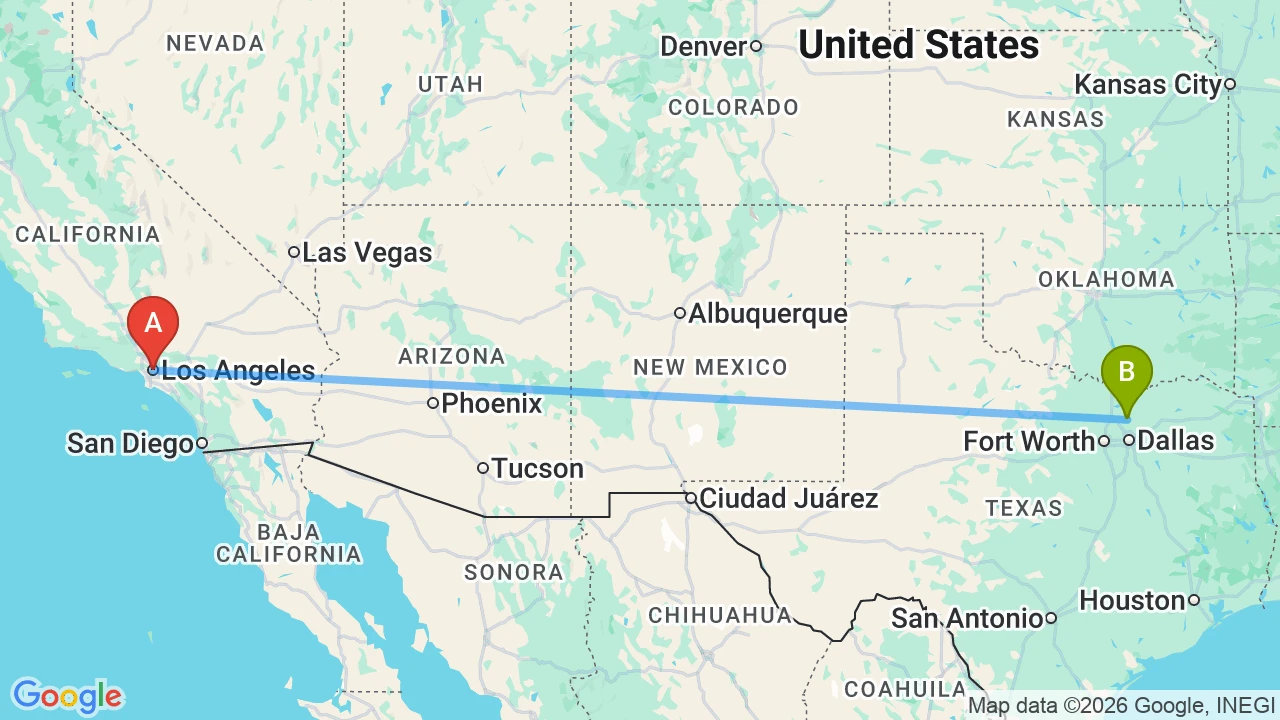
The physical move from Los Angeles to Frisco involves roughly 1,400 miles and crosses multiple climate zones, creating logistical complexity beyond typical metro-to-metro relocations. Professional moving costs vary widely based on household size and service level, but the distance alone places this move in the highest cost tier for interstate relocations. Households downsizing or willing to manage partial self-moves can reduce costs, but the distance makes multiple trips impractical for most.
Timing considerations extend beyond moving company availability. Los Angeles departures face year-round demand with modest seasonal variation, while Frisco arrivals peak during summer months when families relocate between school years. This timing mismatch can create scheduling challenges and price premiums. Additionally, Frisco’s summer heat makes move-in days physically demanding, while winter cold snaps—though less predictable—can complicate moving truck access and unloading.
Housing search logistics differ significantly between the markets. Los Angeles renters and buyers often navigate competitive bidding, limited inventory, and fast-moving opportunities requiring quick decisions. Frisco’s market moves differently—more inventory relative to demand in many segments, but also more uniformity in housing stock. Buyers accustomed to Los Angeles’ diverse architectural options may find Frisco’s newer suburban homes more similar to each other, requiring different evaluation criteria focused on HOA quality, school attendance zones, and commute access rather than building character.
Utility setup and provider navigation present new learning curves. Los Angeles utilities typically involve municipal providers or regulated monopolies with established processes. Texas’ deregulated electricity market means Frisco residents choose among competing retail electricity providers with varying rate structures, contract terms, and billing practices. This choice creates opportunity for cost optimization but also demands research and active management that California residents rarely encounter.
Vehicle registration and licensing requirements add administrative burden during the transition period. Texas requires new residents to register vehicles and obtain Texas driver’s licenses within 90 days of establishing residency. This process involves emissions testing (in applicable counties), title transfer, and fee payment that differs from California’s systems. Insurance costs may shift as well—sometimes lower due to different regulatory environments, sometimes higher based on local claim patterns and coverage requirements.
The most commonly underestimated friction involves social network rebuilding. Los Angeles transplants often maintain West Coast professional and personal connections that require ongoing travel or virtual coordination across time zones. Frisco’s position in Central Time creates modest but persistent scheduling friction for calls and meetings with California contacts. Building new local networks—finding doctors, dentists, hair stylists, trusted mechanics, and social communities—takes time and emotional energy that households rarely budget for during relocation planning.
Frequently Asked Questions
- Does Frisco, TX feel more or less expensive than Los Angeles, CA?
- Cost pressure relocates rather than disappears. Housing entry costs drop substantially—median home values of $531,400 in Frisco versus $822,600 in Los Angeles—making ownership more accessible. However, ongoing obligations shift: property taxes run higher in Texas’ no-income-tax model, HOA fees become nearly universal, and car dependency makes transportation a non-negotiable budget category. Renters see similar headline costs but different market structures. The experience depends heavily on whether you’re buying or renting and how your household uses transportation.
- How do housing markets differ between Los Angeles and Frisco?
- Los Angeles offers diverse, older housing stock with wide variation in condition, style, and cost structure, while Frisco’s market consists primarily of newer construction in master-planned communities with HOAs. California’s Prop 13 creates property tax predictability for existing owners; Texas’ system allows more frequent assessment increases. Los Angeles buyers navigate intense competition and limited inventory; Frisco buyers face more options but less architectural diversity. Rental markets serve different populations—Los Angeles renters span all income levels, while Frisco rentals concentrate in newer complexes serving a smaller market segment.
- What feels different about daily life after moving from LA to Frisco?
- Car dependency becomes absolute rather than negotiable—every errand requires driving, and households need reliable vehicles for all members who work or attend activities. Climate exposure shifts from year-round mildness to seasonal extremes requiring both cooling and heating preparation. Social rhythms change from spontaneous urban exploration to planned activities centered around organized recreation and chain retail. Commute character may shift from congested surface streets to highway miles, and the loss of even limited transit options removes flexibility during vehicle issues or budget constraints.
- When does this move tend to feel easiest or hardest?
- Families with school-age children often time moves for summer to align with academic calendars, though this creates competition for housing and moving services. Frisco’s extreme summer heat makes physical move-in challenging, while winter cold snaps—though less predictable—can complicate logistics. Career transitions work best when coordinated with Frisco’s strong corporate employment base rather than attempting remote work for Los Angeles employers long-term. The emotional adjustment tends to feel hardest for adults who valued Los Angeles’ urban amenities and don’t have built-in community through children’s activities or corporate networks.
- What challenges surprise people most after relocating?
- The mandatory nature of car ownership catches many off-guard—not just owning vehicles, but maintaining multiple reliable cars for household logistics. Property tax bills often shock former California homeowners despite lower purchase prices. HOA rules and fees feel intrusive to those accustomed to independent property control. The time required to rebuild service provider networks—doctors, specialists, trusted contractors—takes longer than expected. Climate preparation costs accumulate: seasonal wardrobes, HVAC maintenance, weatherization that wasn’t necessary in Los Angeles. Finally, the loss of casual urban exploration options affects quality of life more than many anticipate.
- Who does this move work best for—and who struggles?
- This relocation typically serves households pursuing homeownership that feels unattainable in Los Angeles, particularly families with children who value Frisco’s newer schools, organized youth activities, and planned community amenities. Higher-earning professionals transferring within corporate networks often adapt well, especially if they appreciate suburban predictability over urban spontaneity. Struggles emerge for households expecting dramatic cost-of-living relief without accounting for Texas property taxes and mandatory car expenses, adults who valued Los Angeles’ walkable neighborhoods and transit options, creative professionals whose industries cluster in coastal cities, and anyone who finds meaning in architectural diversity and urban texture rather than planned suburban uniformity.
Conclusion: Understanding Where Pressure Moves
The relocation from Los Angeles to Frisco represents a fundamental restructuring of how households experience cost, access, and daily rhythm. Housing entry barriers drop significantly, creating homeownership opportunities that feel impossible in coastal California. However, this relief comes with tradeoffs: higher property taxes, universal HOA obligations, absolute car dependency, and climate exposure requiring both heating and cooling infrastructure.
This move works best for households who value ownership access over urban amenities, appreciate planned community structure over architectural diversity, and can absorb the mandatory transportation costs that suburban form demands. It challenges households expecting dramatic overall cost reduction, those who successfully minimized car usage in Los Angeles, and adults whose professional or social identity connects to urban density and spontaneous access.
Neither city offers a universally “better” cost profile—they distribute financial pressure differently across housing, transportation, utilities, and lifestyle maintenance. Your household’s fit depends on which cost categories you can most easily absorb, which lifestyle tradeoffs feel acceptable, and whether Frisco’s suburban predictability or Los Angeles’ urban complexity better matches how you want to structure daily life.
For deeper exploration of specific cost categories, neighborhood comparisons, and household budget scenarios, visit the Frisco cost of living hub and Los Angeles cost of living hub on IndexYard.