
Moving from Chicago to Dallas: What Changes When You Relocate
The Chicago-to-Dallas corridor has become one of the busiest relocation routes in the country, driven by job transfers, housing market pressures, and lifestyle recalibration. This move typically involves trading Chicago’s dense urban fabric and four-season climate for Dallas’s sprawling metro, car-oriented infrastructure, and long, hot summers.
This guide explains how cost pressure, daily routines, and household logistics shift when you make this move. It’s not about whether Dallas is “cheaper” in total—it’s about understanding where costs concentrate differently, which expenses rise or fall, and how the structure of daily life changes in ways that affect your budget and time.
We’ll walk through housing dynamics, commute patterns, climate exposure, and the practical friction that catches many movers off guard. The goal is to help you anticipate where pressure moves, not to declare a financial winner.
Cost Pressure Shifts: Where Money Flows Differently
The most visible cost difference between Chicago and Dallas is housing entry cost. The median home value in Chicago is $304,500, compared to $270,700 in Dallas. For renters, the gap is narrower: Chicago’s median gross rent is $1,314 per month, while Dallas sits at $1,305 per month—a difference that feels negligible on paper but plays out differently depending on neighborhood type and lease structure.
What matters more than the headline numbers is how ongoing costs behave. Dallas has no state income tax, which changes the feel of take-home pay, especially for higher earners. But Texas relies heavily on property taxes to fund services, and those taxes are baked into both mortgage payments and rent (landlords pass them through). Chicago households face state income tax but often encounter lower property tax rates in comparable neighborhoods.
Utility exposure shifts significantly. Dallas electricity rates average 16.11¢/kWh, compared to Chicago’s 18.74¢/kWh. But Dallas summers are long, hot, and relentless, with extended periods of triple-digit heat. Air conditioning isn’t optional—it’s a baseline cost that runs from May through September and often into October. Chicago winters demand heating, but the seasonal intensity is more compressed. Natural gas prices in Dallas are notably higher—$30.71/MCF versus Chicago’s $15.48/MCF—though heating demand is far lower in Texas.
Transportation costs tilt in Dallas’s favor at the pump: gas prices average $2.40/gallon in Dallas versus $2.89/gallon in Chicago. But Dallas is a car-dependent metro. Public transit exists, but it’s limited in reach and frequency compared to Chicago’s CTA system. Most Dallas households need at least one vehicle, and many need two. Chicago offers more flexibility: some neighborhoods support car-free or car-light living, which can offset higher gas prices and parking costs.
Median household income in Chicago is $71,673 per year, compared to $63,985 in Dallas. That gap matters when evaluating how far your paycheck stretches, especially if you’re moving without a significant salary adjustment. The income difference doesn’t automatically make Dallas more affordable—it means you need to understand how your specific income translates into housing access, discretionary spending, and financial cushion in each city.
Housing and Neighborhood Patterns
Chicago’s housing stock reflects its history as a dense, transit-oriented city. You’ll find walkable neighborhoods with mixed-use corridors, older apartment buildings, and rowhouse blocks that support errand accessibility on foot or by transit. Parking is often separate, metered, or expensive. Homeownership in the city typically means older housing stock, higher maintenance exposure, and property tax bills that vary widely by neighborhood.
Dallas sprawls. The metro is built around highways, and most residential neighborhoods are single-family subdivisions with large lots, attached garages, and HOA-managed amenities. Walkability is rare outside a few pockets like Uptown or parts of East Dallas. Errands almost always require a car. Newer construction dominates, which can mean lower immediate maintenance costs but also higher HOA fees and property tax assessments on recently appraised values.
For renters, Dallas offers more space per dollar in suburban complexes, but lease terms can be rigid, and rent increases at renewal are common in high-demand areas. Chicago renters often face older buildings with quirks, but the rental market includes more small landlords and a wider range of lease flexibility.
Homebuyers moving from Chicago to Dallas often find they can afford more square footage or a newer build, but they also inherit higher property tax exposure and the expectation of HOA membership. Chicago homeowners moving to Dallas should expect to trade walkable access and transit proximity for yard space, garage parking, and car dependency.
Lifestyle and Daily Rhythms
Chicago’s average commute is 34 minutes, with 59.7% of workers experiencing long commutes (over 30 minutes). Dallas commutes average 26 minutes, with 40.2% in the long-commute category. But these numbers don’t tell the full story. Chicago commutes often involve a mix of transit, walking, and driving, with options to avoid highways during peak hours. Dallas commutes are almost entirely car-based, and traffic congestion on I-35, I-635, and the LBJ Freeway can be severe and unpredictable.
Work-from-home rates also differ: 14.6% of Chicago workers work from home, compared to just 7.2% in Dallas. This suggests that Dallas workplaces are more likely to expect in-person presence, which increases commute frequency and transportation costs.
Dallas’s climate dominates daily life in ways that Chicago’s doesn’t. Summers are long, hot, and humid, with heat advisories common from June through August. Outdoor activity shifts to early mornings or evenings. Cooling costs are a constant background expense. Chicago winters are cold and snowy, but the season is more defined, and spring and fall offer long stretches of mild, usable weather. Dallas has a shorter, milder winter, but the summer heat exposure is more intense and sustained.
Errands and daily logistics in Dallas require more planning. Grocery stores, pharmacies, and services are spread out, and most trips involve driving and parking. Chicago’s denser neighborhoods allow for more spontaneous errands on foot or by transit, which reduces the need for advance planning and batching trips.
How this article was built: In addition to public economic data, this article incorporates location-based experiential signals derived from anonymized geographic patterns—such as access density, walkability, and land-use mix—to reflect how day-to-day living actually feels in Dallas, TX.
Relocation Logistics and Practical Friction
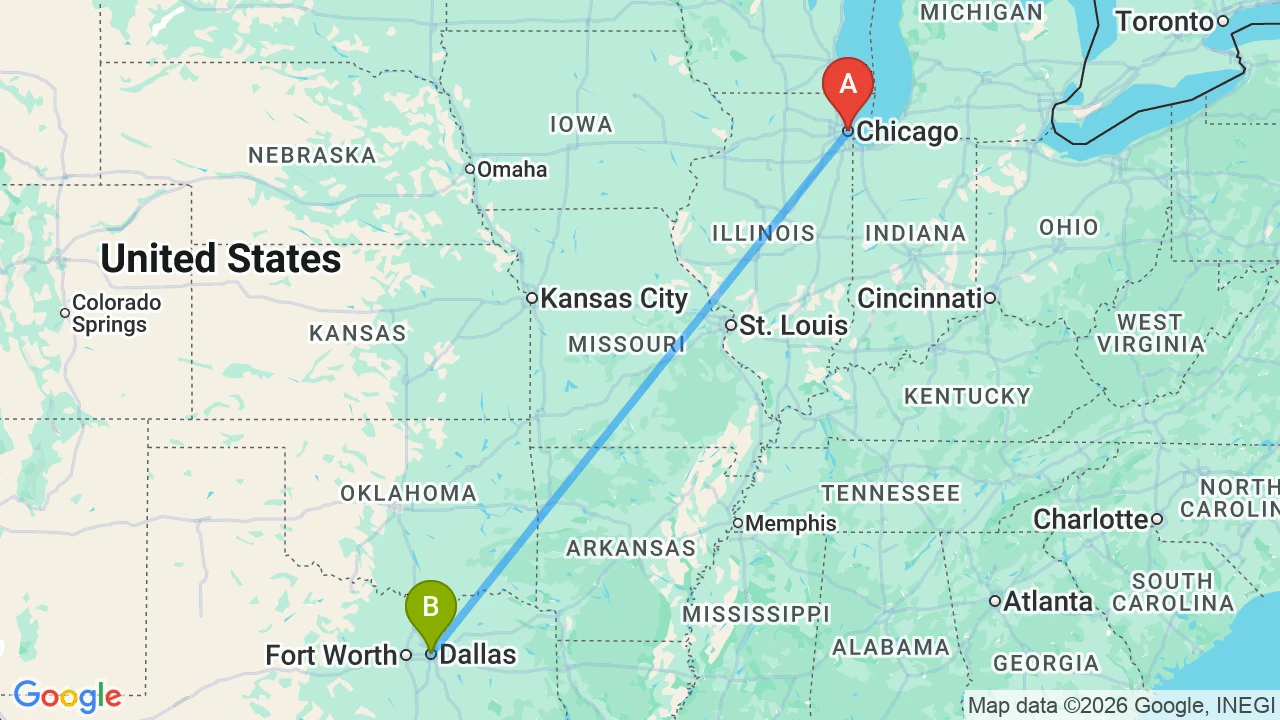
The move itself is straightforward in distance—about 1,000 miles—but the adjustment period can be longer than expected. Dallas’s sprawl means that finding the right neighborhood requires more research. Proximity to work matters more than in Chicago, where transit can offset distance. School quality, HOA rules, and flood zone status are critical variables that don’t always show up in initial housing searches.
Utility setup in Dallas often involves choosing an electricity provider in a deregulated market, which adds a decision layer that doesn’t exist in Chicago. Vehicle registration, inspection, and insurance requirements differ between Illinois and Texas, and Texas requires an annual vehicle inspection that Illinois doesn’t.
Social adjustment varies by household type. Families with school-age children often find Dallas’s suburban infrastructure more accommodating, with newer schools, larger yards, and organized youth activities. Young professionals and singles may feel isolated in car-dependent suburbs and gravitate toward the handful of walkable neighborhoods, where rent and competition are higher. Retirees moving to Dallas often appreciate the milder winter but need to plan for summer heat exposure and the necessity of driving for all errands.
One surprise for many Chicago movers: the lack of basements in Dallas. Most homes are built on slab foundations due to soil conditions, which changes storage options and household organization. Another adjustment: tornado awareness. While tornadoes are less frequent than stereotypes suggest, they’re a real seasonal risk that requires preparedness and attention to weather alerts.
Frequently Asked Questions
- Does Dallas feel more or less expensive than Chicago?
- It depends on where costs concentrate for your household. Dallas offers lower housing entry costs and no state income tax, but higher property taxes, car dependency, and extended cooling seasons shift pressure to transportation, utilities, and vehicle ownership. Chicago’s higher income tax and denser cost structure can feel more expensive upfront, but some households find they spend less on transportation and have more flexibility to live car-free or car-light. The key is understanding which cost categories dominate your budget and how those categories behave differently in each city.
- How do housing markets differ between Chicago and Dallas?
- Chicago’s housing market is older, denser, and more transit-oriented, with a mix of apartments, condos, and single-family homes in walkable neighborhoods. Dallas is newer, more sprawling, and car-dependent, with large single-family subdivisions, HOA-managed communities, and limited walkable housing stock. Renters in Dallas often get more space per dollar but face less lease flexibility. Homebuyers in Dallas encounter lower purchase prices but higher property taxes and HOA fees. Chicago homebuyers pay more upfront but often gain walkability and transit access.
- What feels different about daily life after moving to Dallas?
- Daily life in Dallas revolves around the car. Errands, socializing, and commuting all require driving, and traffic congestion is a constant factor. The climate dominates: summers are long, hot, and limit outdoor activity to early mornings or evenings. Chicago’s denser neighborhoods and transit options allow for more spontaneous, walkable routines, and the four-season climate offers more seasonal variety. Dallas feels more suburban and car-oriented, even in urban neighborhoods, while Chicago retains a denser, more pedestrian-friendly rhythm in many areas.
- When does the move from Chicago to Dallas feel easiest or hardest?
- Spring and fall are the most comfortable seasons for moving and adjusting to Dallas’s climate. Summer moves mean immediate exposure to intense heat, high cooling costs, and limited outdoor time. Winter moves avoid the worst weather but require quick adaptation to driving-based routines. The adjustment period is often longer than expected because finding the right neighborhood, setting up utilities, and building new routines in a car-dependent metro takes time and trial and error.
- What are the most common adjustment pressures after this move?
- Car dependency is the biggest surprise for Chicago movers used to walkable neighborhoods or transit access. The need to drive everywhere increases transportation costs, time spent in traffic, and household logistics complexity. Summer heat exposure is another adjustment—cooling costs are constant, and outdoor plans require more flexibility. Social isolation can be an issue in suburban areas, especially for singles or young professionals. Families often adjust more easily due to Dallas’s suburban infrastructure, but the lack of walkability can feel limiting for households used to Chicago’s denser, more spontaneous routines.
- Who tends to benefit from moving to Dallas, and who may struggle?
- Families with school-age children, homebuyers seeking more space, and households prioritizing lower housing entry costs often benefit from the move. Dallas’s suburban infrastructure, newer housing stock, and no state income tax appeal to these groups. Singles, young professionals, and households that value walkability, transit access, or car-free living may struggle with Dallas’s sprawl and car dependency. Retirees appreciate the milder winter but need to plan for summer heat and the necessity of driving for all errands. The move works best for households willing to embrace car-oriented living and prioritize space over density.
Conclusion
Moving from Chicago to Dallas shifts cost pressure from upfront housing entry and state income tax to property taxes, transportation, and extended cooling costs. Daily life becomes more car-dependent, errands require more planning, and summer heat exposure dominates household routines. The move often delivers more space per dollar and a milder winter, but it requires adapting to sprawl, traffic, and the loss of walkable, transit-oriented infrastructure.
This move works best for families, homebuyers seeking newer construction, and households comfortable with car-oriented living. It’s more challenging for singles, young professionals, and anyone who values walkability, transit access, or spontaneous urban routines. The key is understanding where your household’s cost pressure and lifestyle priorities align with each city’s structure—and being realistic about what you’re trading.
For deeper exploration of housing costs, neighborhood fit, and budget planning in both cities, visit the Chicago and Dallas city hubs on IndexYard.