
Households that rely heavily on public transit in cities with robust systems can save thousands of dollars annually compared to car ownership—but that reality doesn’t apply everywhere. In Moore, transportation works differently: the infrastructure here is built around driving, and while pockets of the city support walkable errands, getting to work, school, or appointments almost always means having a car. Understanding how people actually move through Moore—and what that means for daily logistics and cost exposure—is essential for anyone considering a move here.
How People Get Around Moore
Moore is a car-first suburb. The city’s layout, density, and development pattern all point to the same conclusion: most residents drive for most trips. That doesn’t mean the entire city is a featureless sprawl—there are neighborhoods with sidewalks, parks within walking distance, and clusters of shops and restaurants along key corridors. But those walkable pockets serve a specific role: they make it easier to grab groceries, pick up takeout, or take kids to a nearby playground without getting in the car every single time.
What they don’t do is replace the car. Commuting to Oklahoma City, running errands across town, getting kids to school or activities, reaching medical appointments—all of these tasks assume you’re driving. Newcomers sometimes expect suburban areas to offer “a little bit of transit” as a backup option, but in Moore, transit infrastructure is minimal to nonexistent. If you don’t own a car, daily life becomes significantly harder to manage.
The pedestrian-to-road ratio in parts of Moore exceeds typical suburban thresholds, meaning there are neighborhoods where sidewalks, crosswalks, and pathways are present and maintained. That’s a quality-of-life asset, especially for families with young children or adults who want the option to walk locally. But it’s important to understand what that infrastructure supports: it’s built for errands and recreation within a limited radius, not for replacing car dependency across the city.
Public Transit Availability in Moore
Public transit in Moore is not a primary transportation option for most residents. The city does not have the density, coverage, or service frequency that would make transit viable for daily commuting or household logistics. While regional bus service may extend into parts of the Oklahoma City metro area, Moore itself does not show the infrastructure patterns—such as concentrated stops, high-frequency routes, or transit-oriented development—that typically indicate usable public transportation.
This isn’t a gap that’s likely to surprise longtime residents, but it’s worth stating clearly for anyone relocating from a city where transit plays a central role. Moore’s transportation system is designed around cars, and the absence of robust transit reflects both the city’s density and its role as a suburban community within the broader metro. If you’re used to cities where you can rely on buses or trains for work commutes, errands, and evening plans, Moore will require a significant adjustment.
For households that cannot afford a car or prefer not to drive, this creates real friction. Reaching jobs outside Moore, accessing healthcare, or managing multi-stop errands without a vehicle requires either rideshare services (which add up quickly) or coordination with friends and family. Transit-dependent households face higher logistical complexity and fewer fallback options here than they would in denser, transit-rich cities.
Driving & Car Dependence Reality
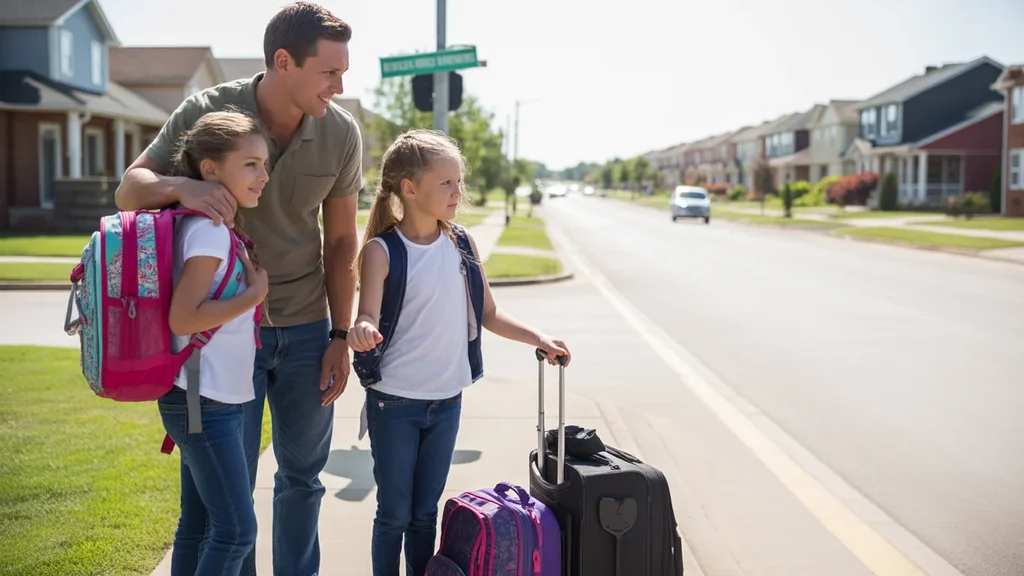
In Moore, owning a car isn’t just convenient—it’s structurally necessary. The city’s layout assumes that residents will drive to work, drive to school, drive to the grocery store, and drive to most appointments. Parking is abundant and free in most areas, which removes one of the friction points that makes driving expensive or stressful in denser cities. But the tradeoff is clear: if you don’t have a car, you’re working against the grain of how the city functions.
This car dependency shapes household costs in ways that aren’t always obvious upfront. Gas prices in Moore sit at $2.37 per gallon, which is relatively low compared to national averages, but fuel is still a recurring expense that scales with how much you drive. Insurance, maintenance, registration, and occasional repairs all add to the baseline cost of car ownership. For single-car households, any mechanical issue or accident can disrupt work commutes, school pickups, and errands all at once. Two-car households gain redundancy and flexibility, but they also double many of those fixed costs.
The structure of Moore rewards driving in some ways—commutes are often straightforward, traffic is lighter than in the urban core, and parking is rarely a problem—but it also means that households absorb transportation costs that would be lower or optional in transit-accessible cities. There’s no way to “opt out” of car ownership here without significantly limiting where you can work, shop, or access services.
Commuting Patterns & Daily Mobility
Most people who live in Moore commute to jobs outside the city, often in Oklahoma City or other parts of the metro. The city functions as a residential suburb, which means that daily mobility is shaped by the need to travel beyond Moore’s borders for work. Commutes are typically car-based, and while specific commute times aren’t captured in available data, the regional layout suggests that most workers are driving 20 to 40 minutes each way, depending on where their job is located and what time they leave.
For parents, daily mobility is more complex. School runs, after-school activities, playdates, and appointments all require coordination, and the lack of transit means that every trip is a driving trip. Families with multiple kids or overlapping schedules often find that managing logistics requires either flexible work hours or a second car. Single parents, in particular, face higher pressure: there’s no backup system if the car breaks down or if two kids need to be in different places at the same time.
Remote workers and retirees experience Moore differently. Without a daily commute, the walkable pockets and corridor-clustered errands accessibility become more useful. It’s possible to structure a week around local trips—grocery stores, pharmacies, and restaurants are accessible within a few miles—and save longer drives for less frequent needs. But even for these households, a car remains essential for medical appointments, visiting family, or accessing services that aren’t available locally.
Who Transit Works For — and Who It Doesn’t
Transit, as a practical transportation option, doesn’t work for most people in Moore. The infrastructure simply isn’t there. Households that rely on public transportation in other cities—whether by choice or necessity—will find that Moore requires a different approach. This has real implications for who can live here comfortably and who will face ongoing logistical strain.
Young professionals without cars may struggle unless they work remotely or have access to rideshare budgets. College students, service workers with variable schedules, and anyone whose job requires evening or weekend shifts will find that getting to work without a car is either impossible or prohibitively expensive. Families with one car can make it work, but they’ll need to coordinate schedules carefully, and any overlap—two parents working, one kid at practice, another at a doctor’s appointment—creates tension.
Older adults who can no longer drive face a different kind of challenge. In cities with strong transit networks, aging in place is more feasible because grocery stores, pharmacies, and medical offices remain accessible. In Moore, losing the ability to drive often means losing independence unless family members or paid services can fill the gap. This isn’t unique to Moore, but it’s more acute in car-dependent suburbs than in transit-rich urban areas.
On the other hand, households with reliable cars and predictable schedules benefit from Moore’s structure. Commutes are manageable, parking is easy, and the cost of driving—while not zero—is lower here than in cities with expensive parking, tolls, or congestion. For families who already own two cars and have flexibility in their work hours, Moore’s transportation reality is less of a burden and more of a known, stable cost.
Transportation Tradeoffs in Moore
Choosing to live in Moore means accepting that transportation will be car-based and that the costs and responsibilities of car ownership are unavoidable. The tradeoff is that driving here is relatively low-friction: gas is affordable, traffic is lighter than in the urban core, and parking is abundant. You’re not spending 20 minutes circling for a spot or paying $15 to park at work. But you are absorbing the fixed costs of owning, insuring, and maintaining a vehicle—and you’re giving up the flexibility that transit provides in other cities.
In transit-rich cities, a car is optional. You can choose to own one for convenience, but you’re not locked into it. In Moore, the car is mandatory, which means that any household financial stress—job loss, medical bills, unexpected repairs—can’t be relieved by cutting transportation costs. You can drive less, but you can’t eliminate the baseline expense of keeping a car on the road.
The walkable pockets in Moore do offer some relief. If you live in a neighborhood with sidewalks and nearby shops, you can reduce how often you drive for small errands. That doesn’t translate to major savings, but it does reduce wear on the vehicle and gives households more control over when and how they use the car. For families with young kids, it also means more opportunities for walking to parks or schools, which has lifestyle value even if it doesn’t show up in the budget.
The absence of transit also shapes where people can afford to live. In cities with strong public transportation, lower-income households can trade housing cost for commute time—they might live farther from the center but still reach jobs via bus or train. In Moore, that tradeoff doesn’t exist. If you can’t afford a car, your job options, housing options, and access to services all shrink. That’s not a moral judgment; it’s a structural reality that affects who can build a stable life here.
How this article was built: In addition to public economic data, this article incorporates location-based experiential signals derived from anonymized geographic patterns—such as access density, walkability, and land-use mix—to reflect how day-to-day living actually feels in Moore, OK.
FAQs About Transportation in Moore (2026)
Is public transit usable for daily commuting in Moore?
No. Moore does not have the transit infrastructure needed for daily commuting. The city is built around car travel, and most residents drive to work, school, and errands. Households that depend on public transportation in other cities will find Moore difficult to navigate without a car.
Do most people in Moore rely on a car?
Yes. Car ownership is essential for most households in Moore. The city’s layout, density, and lack of transit options all assume that residents will drive for the majority of trips. Even households that live in walkable neighborhoods still need a car for commuting, medical appointments, and errands outside their immediate area.
Which areas of Moore are easiest to live in without a car?
No area of Moore is truly easy to live in without a car. Some neighborhoods have better pedestrian infrastructure and closer access to grocery stores or restaurants, which can reduce how often you need to drive for small errands. But work commutes, school transportation, and accessing services across town all require a vehicle. Without a car, daily logistics become significantly more complex.
How does commuting in Moore compare to nearby cities?
Moore functions as a suburban commuter city within the Oklahoma City metro. Most residents commute to jobs outside Moore, typically by car. Compared to denser urban areas with transit options, Moore offers lighter traffic and easier parking, but it also requires car ownership as a baseline. Compared to other suburbs in the region, Moore’s commuting experience is similar: driving is the norm, and transit is not a viable alternative.
What happens if my car breaks down in Moore?
If your car breaks down in Moore, you’ll face immediate logistical challenges. There’s no transit system to fall back on, so you’ll need to rely on rideshare services, borrow a vehicle, or coordinate rides with family or friends. For households with only one car, a breakdown can disrupt work, school, and errands all at once. This is one reason why two-car households are common here—it provides redundancy when something goes wrong.
How Transportation Fits Into the Cost of Living in Moore
Transportation in Moore isn’t just a line item in a budget—it’s a structural requirement that shapes what a budget has to handle in Moore. Because car ownership is mandatory, households can’t reduce transportation costs the way they might in a city with strong transit. Gas, insurance, maintenance, and repairs are recurring expenses that don’t go away, even during tight financial months. That baseline cost affects how much flexibility households have when other expenses rise or income drops.
For families deciding whether Moore is the right fit, transportation should be part of the affordability calculation from the start. If you already own a reliable car and have stable work within a reasonable commute, Moore’s car-dependent structure is manageable. If you’re moving from a city where you didn’t need a car, or if you’re trying to make it work with one vehicle for a multi-person household, the logistics and costs will be higher than you expect.
Moore rewards households that can absorb the costs of car ownership and benefit from the lower-friction driving environment. It’s harder on households that are stretched thin financially, that depend on transit in their current city, or that are managing complex schedules without backup transportation. Understanding that reality upfront—before signing a lease or accepting a job—makes it easier to plan for what daily life will actually require.