
“I tried taking the bus for a week when my car was in the shop,” a Monroe resident shared recently. “It just didn’t line up with where I needed to go. I ended up borrowing a friend’s car by day three.”
That experience captures the transportation reality in Monroe, NC: this is a place where getting around almost always means driving. While some pedestrian infrastructure exists and a few areas support walking for short trips, the city’s layout, spread-out development, and limited density make car ownership the practical default for most households. Understanding transportation options in Monroe means recognizing that daily mobility here is shaped more by roads and parking lots than by bus routes or bike lanes.
How People Get Around Monroe
Monroe’s transportation landscape reflects its low-rise, suburban character. The city sprawls across a relatively flat geography with residential neighborhoods, commercial corridors, and employment centers separated by distances that make walking or biking impractical for most daily needs. While some streets feature sidewalks and the pedestrian-to-road ratio sits in a moderate range, the overall infrastructure leans heavily toward car travel.
Newcomers often underestimate how car-dependent Monroe is. The city doesn’t have the density or mixed-use development that supports frequent, spontaneous errands on foot. Food and grocery options are spread thin, and even when destinations are technically walkable, the time and effort required make driving the faster, more convenient choice. For most residents, a personal vehicle isn’t a luxury — it’s the baseline tool for managing daily life.
That said, Monroe isn’t entirely hostile to non-car travel. Certain pockets of the city offer better pedestrian conditions, and some residents do walk or bike for recreation or short trips within their immediate neighborhood. But these are exceptions, not the rule. The dominant pattern is clear: if you live in Monroe, you drive.
Public Transit Availability in Monroe
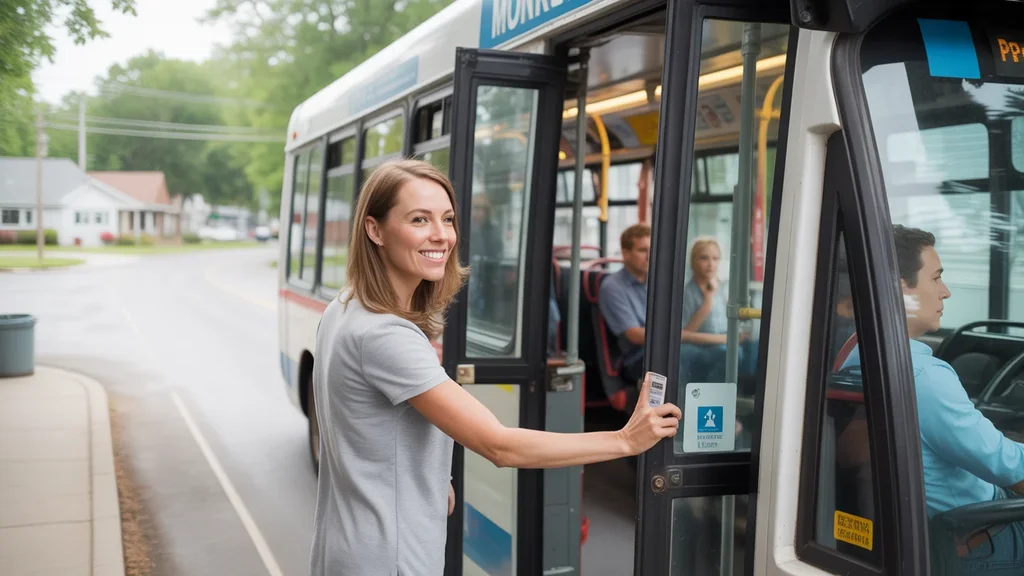
Public transit in Monroe plays a minimal role in daily mobility. The city’s development pattern — low-rise buildings, dispersed land uses, and limited commercial density — doesn’t support the kind of frequent, reliable transit service that makes buses or trains a practical alternative to driving. While regional transit connections may exist, they tend to serve specific corridors or commuter routes rather than providing comprehensive coverage across the city.
For residents who don’t own a car, this creates real friction. Errands that would take 10 minutes by car can require an hour or more of planning, waiting, and transfers if transit is involved at all. Late hours, weekends, and trips outside the city’s core become especially difficult. Transit may work for a narrow set of trips — commuting to a nearby city, accessing a specific employment center — but it doesn’t function as a general-purpose mobility tool for most Monroe households.
The lack of robust transit isn’t a failure of the system; it’s a reflection of the city’s structure. Monroe’s layout simply doesn’t generate the density or trip patterns that make transit viable at scale. For most residents, transit isn’t part of the daily equation.
Driving & Car Dependence Reality
In Monroe, driving isn’t just the most common way to get around — it’s the only practical option for the majority of households. The city’s geography and infrastructure are built around the assumption that residents have access to a car. Parking is abundant, roads are wide, and destinations are spaced in ways that favor vehicle travel over walking or transit.
This car dependence shapes daily life in concrete ways. Households need to account for vehicle ownership, maintenance, insurance, and fuel as baseline costs, not optional expenses. Families with multiple working adults often need multiple cars. Errands require planning around parking, traffic patterns, and drive times rather than bus schedules or walking routes.
For some, this setup offers real advantages: flexibility, control, and the ability to move quickly across the city without waiting for a bus or coordinating transfers. For others — particularly those who can’t drive, can’t afford a car, or prefer not to own one — Monroe’s car-first infrastructure creates barriers that are hard to work around.
Commuting Patterns & Daily Mobility
Commuting in Monroe typically means driving, whether to a job within the city or to a nearby employment center in the Charlotte metro area. The city’s position as a smaller community within a larger regional economy means many residents face regular trips beyond Monroe’s borders, and those trips almost always happen by car.
Daily mobility in Monroe isn’t just about the commute to work. It’s about managing a series of trips — dropping kids at school, stopping for groceries, picking up prescriptions, running errands — that are spread across different parts of the city. The sparse distribution of food and grocery options means even routine tasks often require multiple stops in different locations. Without a car, coordinating these trips becomes a significant logistical burden.
For households with flexible schedules or the ability to work from home, Monroe’s car-dependent structure is manageable. For those juggling rigid work hours, childcare, and limited vehicle access, the lack of alternative transportation options adds friction to everyday life.
Who Transit Works For — and Who It Doesn’t
Public transit in Monroe serves a narrow slice of the population. It may work for someone commuting to a specific job along a transit corridor, or for a resident who lives near one of the few areas with better pedestrian infrastructure and can walk to nearby destinations. But for most households — especially those in the city’s more spread-out neighborhoods — transit simply doesn’t align with daily needs.
Renters in Monroe face the same transportation reality as homeowners: car ownership is effectively required. Unlike denser cities where renters might trade housing costs for transit access, Monroe doesn’t offer that tradeoff. Living closer to the city’s core might reduce drive times slightly, but it doesn’t eliminate the need for a vehicle.
Families, in particular, find transit impractical. Coordinating school drop-offs, extracurriculars, and errands across Monroe’s dispersed geography requires the flexibility and cargo capacity that only a car provides. Single adults or couples without children might find limited situations where walking or transit works, but even then, it’s the exception rather than the rule.
Transportation Tradeoffs in Monroe
Choosing to rely on a car in Monroe means accepting the costs and responsibilities of vehicle ownership, but it also means gaining predictability and control. Driving lets you move on your own schedule, carry groceries or gear, and reach any part of the city without waiting or transferring. For most residents, that tradeoff is straightforward: the benefits of car ownership far outweigh the costs.
Attempting to live without a car in Monroe, on the other hand, means navigating a city that isn’t designed to support that choice. It means longer trip times, limited access to jobs and services, and constant logistical problem-solving. For households that can’t afford a car or prefer not to own one, Monroe presents real challenges.
The city’s cost structure reflects this reality. Transportation isn’t a variable expense you can optimize by choosing transit over driving — it’s a fixed baseline tied to vehicle ownership. The question isn’t whether to own a car, but how to manage the costs that come with it.
FAQs About Transportation in Monroe (2026)
Is public transit usable for daily commuting in Monroe?
Public transit plays a limited role in Monroe. The city’s low-density, spread-out layout doesn’t support frequent or comprehensive transit service. For most residents, driving is the only practical option for daily commuting and errands.
Do most people in Monroe rely on a car?
Yes. Monroe’s infrastructure, development pattern, and sparse commercial density make car ownership the baseline expectation for most households. Walking and transit are viable only in narrow situations or specific areas.
Which areas of Monroe are easiest to live in without a car?
Very few areas of Monroe support car-free living. Some neighborhoods with moderate pedestrian infrastructure may allow for short walking trips, but even these areas typically require a car for groceries, work, and most errands.
How does commuting in Monroe compare to nearby cities?
Monroe’s commuting reality is similar to other smaller cities in the Charlotte metro area: car-dependent, with limited transit alternatives. Residents who work in Charlotte or other nearby employment centers typically drive, as regional transit options are sparse.
Can I get by with one car in Monroe if I have a family?
It depends on your household’s schedule and employment situation. Many families in Monroe find that two cars are necessary to manage work commutes, school drop-offs, and errands, especially when both adults work outside the home.
How Transportation Fits Into the Cost of Living in Monroe
Transportation in Monroe isn’t just a line item in a budget — it’s a structural factor that shapes where you can live, how you manage time, and what kinds of tradeoffs you face. The city’s car-first infrastructure means vehicle ownership is a prerequisite for most households, and that baseline cost affects everything from housing choice to job access.
Understanding how Monroe’s transportation landscape works helps clarify what living here actually requires. It’s not a city where you can trade housing costs for transit access, or where walkability reduces your need for a car. It’s a place where driving is the default, and where daily mobility depends on having reliable access to a vehicle.
For a fuller picture of how transportation costs fit alongside housing, utilities, and other expenses, see Your Monthly Budget in Monroe: Where It Breaks. The goal isn’t to avoid car ownership — in Monroe, that’s rarely realistic — but to understand how it fits into the broader financial and logistical reality of living here.
How this article was built: In addition to public economic data, this article incorporates location-based experiential signals derived from anonymized geographic patterns—such as access density, walkability, and land-use mix—to reflect how day-to-day living actually feels in Monroe, NC.