
Residents who rely on public transit in Midwest City can save an estimated $9,000 to $12,000 annually compared to owning and operating a personal vehicle—but that savings only materializes if transit actually serves your daily routes, schedule, and household needs. For most people in Midwest City, transportation options in Midwest City still center on driving, shaped by suburban infrastructure, limited transit coverage, and the realities of how the city is laid out.
How People Get Around Midwest City
Midwest City functions primarily as a car-first suburb. Most residents drive for work, errands, and daily logistics because the city’s development pattern—low-density residential neighborhoods spread across a wide area—makes walking or transit impractical for many trips. That said, the city does have pockets where pedestrian infrastructure is more developed, and bus service exists along key corridors. These areas offer more flexibility, but they’re the exception rather than the rule.
What newcomers often misunderstand is that proximity doesn’t always mean accessibility. You might live a mile from a grocery store, but without sidewalks, safe crossings, or a direct bus route, that mile still requires a car. The city’s layout prioritizes road access over pedestrian or transit connectivity, which shapes how people structure their days and what kinds of trips feel manageable without driving.
Public Transit Availability in Midwest City
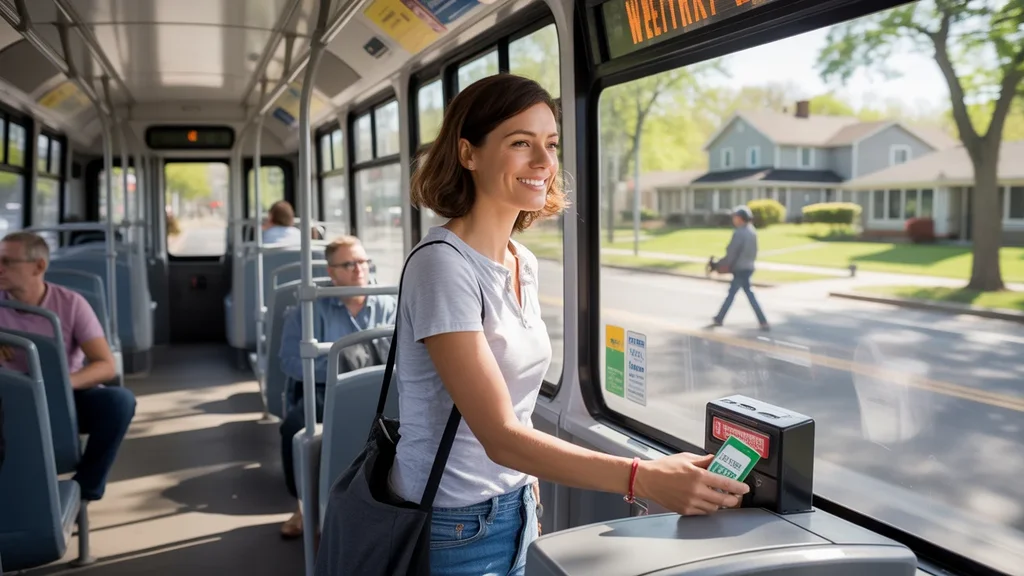
Public transit in Midwest City often centers around systems such as Embark, the regional transit provider serving the Oklahoma City metro area. Bus service is present and covers select corridors, but it doesn’t blanket the city. Transit tends to work best for residents living near established routes who commute to destinations that align with the network—typically jobs, schools, or services in denser parts of the metro.
Where transit falls short is in coverage breadth and schedule flexibility. Suburban neighborhoods on the edges of Midwest City see little to no service, and even in areas with routes, late-night or weekend options can be sparse. If your job, childcare, or errands require multi-stop trips or off-peak travel, transit quickly becomes a logistical puzzle rather than a practical solution.
Transit exists here, but it’s a tool that works for specific situations—not a universal alternative to driving.
Driving & Car Dependence Reality
For most households in Midwest City, driving isn’t optional—it’s the baseline. The city’s suburban layout means that jobs, schools, grocery stores, and services are often spread across different parts of town, and reaching them without a car requires either long waits, multiple transfers, or walking along roads not designed for pedestrians.
Parking is rarely a problem here, which reinforces car use. Homes typically include driveways or garages, and commercial areas offer ample surface lots. That convenience makes driving the default choice, even for short trips. The tradeoff is that car dependence locks households into vehicle ownership costs—insurance, maintenance, registration—and exposes them to fuel price swings, even when gas prices are relatively low.
Driving also offers flexibility that transit can’t match in Midwest City. You can leave when you want, stop where you need to, and adjust your route on the fly. For families managing school drop-offs, grocery runs, and work schedules, that control is often non-negotiable.
Commuting Patterns & Daily Mobility
Commuting in Midwest City typically means driving to a single job site, often in another part of the metro. The average commute is 22 minutes, which is manageable by regional standards, but that figure masks variation. About 28.7% of workers face longer commutes, often because their jobs are located in Oklahoma City proper or other metro employment centers.
Only 2.9% of residents work from home, which means the vast majority are on the road daily. For households with two working adults, that often means two cars, two commutes, and two sets of time and fuel costs. Multi-stop commutes—dropping kids at school, running errands on the way home—add complexity that transit can’t easily accommodate.
Daily mobility here isn’t just about getting to work. It’s about managing a web of trips across a spread-out area, and that structure favors driving almost by default.
Who Transit Works For — and Who It Doesn’t
Transit in Midwest City works best for a narrow slice of residents: those who live near bus routes, work along those same corridors, and have schedules that align with service hours. Renters in denser pockets near commercial corridors, students, and workers commuting to fixed-schedule jobs in the metro core are the most likely to benefit.
Transit doesn’t work well for families managing multiple stops, residents in peripheral neighborhoods, or anyone whose job requires evening or weekend shifts. It also struggles to serve households that need flexibility—last-minute errands, childcare pickups, or trips that don’t follow a predictable pattern.
Homeowners in quieter residential areas, especially those with children or multiple working adults, almost always rely on cars. The infrastructure just isn’t there to support transit as a primary mode for that lifestyle.
Transportation Tradeoffs in Midwest City
Choosing between transit and driving in Midwest City isn’t about cost alone—it’s about control, predictability, and access. Transit offers a fixed expense structure and eliminates vehicle ownership, but it limits where you can go, when you can leave, and how easily you can adapt to changes. Driving costs more upfront and exposes you to fuel price volatility (currently $2.35/gal), but it gives you full control over your schedule and destinations.
For households that can make transit work, the tradeoff is worth it—they gain predictability and avoid the friction of car ownership. For everyone else, driving isn’t a preference; it’s the only practical option given how the city is structured.
FAQs About Transportation in Midwest City (2026)
Is public transit usable for daily commuting in Midwest City?
It depends on where you live and work. If you’re near a bus route and your job is along that corridor, transit can be viable. For most residents, though, limited coverage and schedule constraints make driving the more practical choice.
Do most people in Midwest City rely on a car?
Yes. The city’s suburban layout, low transit density, and spread-out services mean that driving is the dominant mode for work, errands, and daily logistics.
Which areas of Midwest City are easiest to live in without a car?
Areas near established bus corridors and commercial clusters offer the best chance of reducing car dependence, but even in those pockets, most households still own at least one vehicle for flexibility.
How does commuting in Midwest City compare to nearby cities?
Midwest City’s average commute time is moderate, but the reliance on driving is higher than in denser metro cores with more robust transit networks. Proximity to Oklahoma City helps, but the commute still requires a car for most people.
Can I get by with one car in Midwest City?
Some households manage with one car, especially if work schedules align or one partner works from home. For most families with two working adults, though, two cars are necessary to handle day-to-day costs and logistics without constant coordination.
How Transportation Fits Into the Cost of Living in Midwest City
Transportation in Midwest City isn’t just a line item—it’s a structural factor that shapes where you can live, how much time you spend commuting, and how much flexibility you have in daily life. Car dependence is the norm here, which means most households absorb vehicle ownership costs, fuel exposure, and the time burden of driving as part of baseline living expenses.
Transit exists and works for some, but it’s not a universal solution. The city’s layout, limited coverage, and schedule constraints mean that for most residents, driving is the only way to access jobs, services, and the rhythms of daily life. That reality affects housing choices, household budgets, and the tradeoffs families make between proximity and affordability.
For a fuller picture of how transportation costs interact with housing, utilities, and other expenses, see Monthly Spending in Midwest City: The Real Pressure Points. Understanding how mobility shapes your options—and your exposure—helps you make decisions that fit your household’s needs, not just the city’s infrastructure.
How this article was built: In addition to public economic data, this article incorporates location-based experiential signals derived from anonymized geographic patterns—such as access density, walkability, and land-use mix—to reflect how day-to-day living actually feels in Midwest City, OK.