
“Mason feels like it’s trying to figure out what it wants to be — and honestly, that’s kind of the appeal for some of us. You get the suburban safety and space, but also bike lanes and a rail stop. Just don’t expect to walk to the grocery store.”
That tension — between traditional suburban comfort and emerging infrastructure that hints at something more connected — shapes much of the emotional experience of living in Mason, OH. It’s a city where median household income sits at $121,082 per year and median home values reach $375,000, signaling an affluent community with high expectations. But those expectations don’t always align neatly with what the city’s infrastructure delivers day-to-day, and that gap creates both opportunity and friction depending on what you’re looking for.
What It Feels Like to Live Here
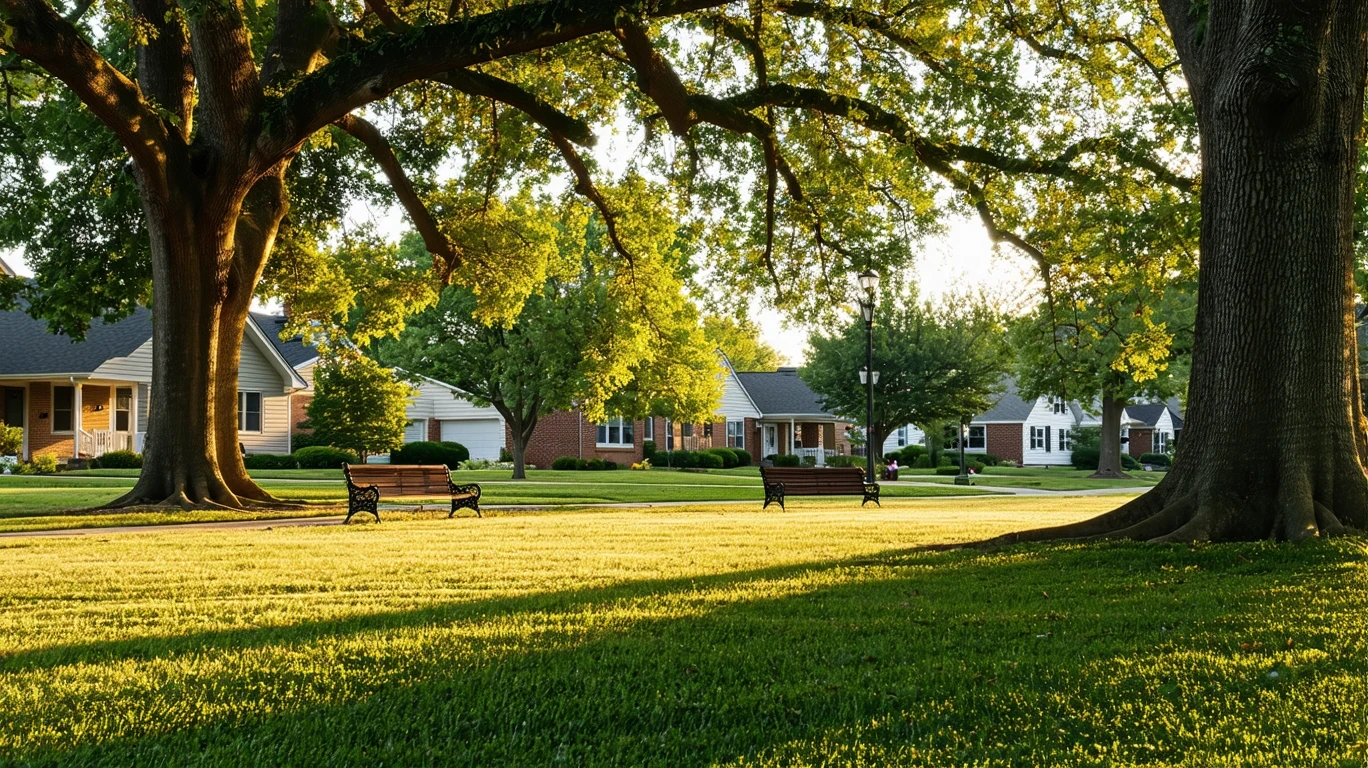
Mason tends to reward people who want suburban predictability with a few pleasant surprises. The presence of rail transit is unusual for a place of this size and character, and cycling infrastructure exceeds what you’d typically find in a car-oriented suburb. There are walkable pockets where pedestrian-to-road ratios feel generous, and parks with water features offer solid outdoor access. For families drawn to safe neighborhoods, good schools, and a sense of order, Mason delivers much of that foundation.
But the city also frustrates those who arrive expecting the convenience that usually accompanies affluence. Grocery density sits below typical thresholds, and food establishment access falls into a middle band — not absent, but not abundant either. School density is lower than many family-focused suburbs, which surprises newcomers who assume a place with this income profile would have educational infrastructure everywhere. And while clinics and pharmacies are present, there’s no hospital within city limits, meaning serious medical needs require a drive.
The result is a place that feels like it’s in transition. People who thrive here tend to be comfortable with planning their errands, driving when needed, but also appreciating the ability to bike or take transit when it makes sense. Those who struggle are often the ones who expected Mason to feel more complete — more walkable end-to-end, more errand-friendly, more like a self-contained town rather than a suburb still finding its footing.
Social Media Buzz in Mason
Conversations in local Facebook groups and regional subreddits often circle around growth, infrastructure, and identity. There’s pride in the rail connection and bike-friendly pockets, but also recurring frustration about grocery runs requiring a car and the sense that amenities haven’t kept pace with housing development. Tone varies widely depending on what people moved here expecting.
“We love the parks and the fact that our kids can bike safely in our neighborhood. But if you need to grab something last-minute, you’re getting in the car. It’s not the walkable suburb we thought it would be.”
“Honestly, the rail stop is a game-changer for us. We can get into Cincinnati without dealing with parking, and the bike lanes make it easy to get around locally. It’s not perfect, but it’s better than most suburbs.”
“Mason feels like it’s caught between being a bedroom community and trying to be something more. The infrastructure is there in pieces, but it doesn’t quite connect yet.”
The emotional tone tends toward cautious optimism mixed with impatience. Long-time residents often express protectiveness over the quiet, orderly character of the city, while newer arrivals push for more walkability, more dining options, and more of the texture that makes a place feel lived-in rather than just safe.
Local News Tone
Coverage of Mason tends to frame the city through the lens of growth management and evolving identity. Headlines and story themes often reflect the tension between preserving suburban character and accommodating change:
- “Community Debates What Growth Should Look Like”
- “New Bike Infrastructure Expands as Residents Weigh Tradeoffs”
- “Rail Access Draws Commuters, But Errands Still Require Driving”
- “Families Drawn to Safety and Space, But Some Amenities Lag”
- “Parks and Green Space Remain Key Draw as Development Continues”
The framing is rarely negative, but it’s also rarely celebratory. Instead, it reflects a city that’s functional and affluent but still working out what kind of place it wants to be. There’s little coverage of crisis or decline, but also little sense of arrival or completion.
Review-Based Public Perception
On platforms like Google Reviews, Yelp, and Nextdoor-style forums, Mason earns consistent praise for safety, parks, and the quality of its residential neighborhoods. Families with young children often highlight the sense of security and the ability to let kids play outside. Cyclists and outdoor enthusiasts appreciate the trail access and green space that feels integrated rather than tacked on.
But complaints cluster around convenience and completeness. Grocery shopping requires driving to specific corridors, and the lack of a hospital means medical emergencies involve leaving the city. Dining and entertainment options are described as limited, and while there are pockets of walkability, they don’t connect into a cohesive network. Newer planned areas tend to feel more polished but also more isolated, while older pockets offer more character but fewer amenities.
Expectation matching plays a huge role in satisfaction. People who wanted a quiet, safe suburb with good parks and easy highway access tend to feel Mason delivers exactly that. People who wanted a walkable, errand-friendly town with urban texture tend to feel let down, even if they acknowledge the positives.
Comparison to Nearby Cities
| Attribute | Mason, OH | West Chester, OH | Lebanon, OH |
|---|---|---|---|
| Overall Vibe | Affluent suburb with transit and bike infrastructure, but sparse errands | Denser suburban hub with more commercial activity and dining | Smaller-town feel, historic character, fewer modern amenities |
| Walkability | Pockets of strong pedestrian infrastructure, not citywide | More consistent walkability in commercial corridors | Walkable downtown core, car-dependent outskirts |
| Errands & Groceries | Sparse, requires planning and driving | Broadly accessible, more options | Limited but concentrated in town center |
| Transit Access | Rail present, unusual for suburbs | Bus service only | Minimal transit options |
| Family Appeal | High income, safe, but school density lower than expected | Strong family infrastructure, more schools | Quieter, older demographic, fewer family amenities |
Mason sits in an interesting middle ground. It’s more transit-friendly and bike-oriented than most suburbs, but less errand-accessible than West Chester. It’s more affluent and polished than Lebanon, but lacks the historic texture and small-town cohesion. For someone who values rail access and outdoor space but can tolerate driving for groceries, Mason makes sense. For someone who wants dense walkable errands or a true town center, West Chester or Lebanon might feel more complete depending on priorities.
What Locals Are Saying
“We moved here for the schools and the safety, and we got that. But I didn’t realize how much I’d miss being able to walk to a coffee shop or grab groceries on the way home. Everything requires a plan.”
“The rail stop is honestly the reason we’re still here. My partner commutes into the city, and not having to drive makes a huge difference. The bike lanes are a bonus — our teenagers actually use them.”
“Mason feels like it’s trying to be progressive with the bike infrastructure and transit, but the grocery situation is stuck in the 1990s. You’d think a place with this much money would have better options.”
“I love the parks. We’re out there every weekend, and the water features make it feel special. It’s quiet, it’s clean, and our kids are happy. That’s what we came for.”
“If you’re okay with suburban life and driving everywhere, Mason is great. If you want walkable urbanism or a vibrant downtown, you’ll be disappointed. It’s not trying to be that.”
“We’re retirees, and honestly, the lack of a hospital is a concern. The clinics are fine for routine stuff, but knowing we’d have to drive for anything serious makes us think twice about staying long-term.”
“It’s a nice place, but it feels incomplete. Like they built the bones of something interesting and then stopped halfway. Maybe it’ll get there, but right now it’s just… fine.”
Does Mason Feel Like a Good Fit?
Mason tends to work for people who value suburban safety, outdoor access, and the unusual bonus of rail transit and cycling infrastructure, and who are comfortable driving for most errands. It rewards those who appreciate what’s emerging — the bike lanes, the parks, the rail connection — without expecting the city to function like a dense, walkable town. Families with stable incomes, professionals who commute but want space at home, and outdoor-oriented households often find Mason delivers what they need, even if it doesn’t deliver everything they might want.
It tends to frustrate people who expected affluence to translate into convenience, or who assumed a family-friendly suburb would have schools and groceries everywhere. The gaps in errand accessibility, school density, and healthcare infrastructure create friction for those who value spontaneity and walkable self-sufficiency. And for anyone seeking urban texture, nightlife, or a cohesive town center, Mason will feel too scattered and car-dependent to satisfy.
Ultimately, Mason’s emotional profile is one of partial transformation. It’s not a traditional car-only suburb, but it’s not a walkable town either. It’s affluent but not always convenient. It’s safe and orderly, but still figuring out what kind of place it wants to be. Whether that feels like opportunity or incompleteness depends entirely on what you’re hoping to find.
If you’re considering Mason, it’s worth exploring what a budget has to handle in Mason to understand how housing, transportation, and what makes life feel tight in Mason might shape your day-to-day experience. And if you’re weighing what drives housing costs in Mason, understanding the tradeoffs between space, access, and infrastructure can help clarify whether this city’s particular mix aligns with your priorities.
How this article was built: In addition to public economic data, this article incorporates location-based experiential signals derived from anonymized geographic patterns—such as access density, walkability, and land-use mix—to reflect how day-to-day living actually feels in Mason, OH.
The perspectives shown reflect commonly expressed local sentiment and recurring themes in public discussion, rather than individual accounts.