
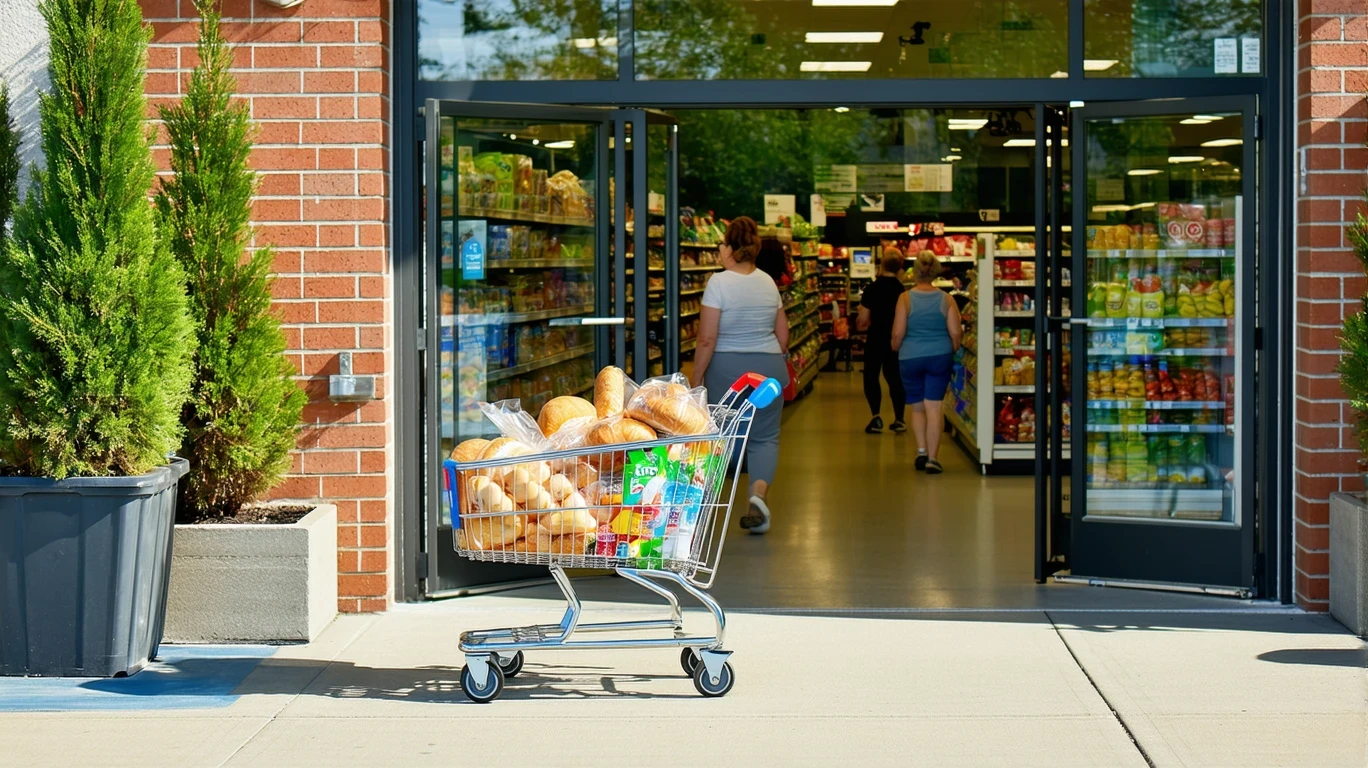
How Grocery Costs Feel in Mason
Grocery prices in Mason, OH sit slightly below the national baseline, reflecting the area’s regional price parity index of 94. For households earning near the median income of $121,082 per year, staple food costs register as manageable but not invisible—especially for families managing multiple mouths to feed or retirees on fixed budgets. The price environment here doesn’t shock, but it does require attention. Singles and young professionals typically notice grocery line items less acutely than households with children, where volume and frequency compound even modest per-item differences into meaningful monthly pressure.
What shapes the grocery experience in Mason isn’t just the price on the shelf—it’s how you get to that shelf in the first place. The city’s grocery infrastructure sits sparse, with grocery establishment density falling below typical thresholds and food options clustered in moderate concentrations rather than spread evenly across neighborhoods. This means routine food shopping often requires intentional trips rather than quick, convenient errands. You’re not grabbing milk on the way home from work unless you’ve planned the route. For families running multiple grocery runs per week, that access friction adds invisible time cost on top of the dollar cost, turning what might be a simple errand elsewhere into a logistics task here.
The result is a grocery landscape where price sensitivity and access planning intersect. High-earning couples absorb the cost variability with relative ease, but the sparse density still nudges them toward bulk shopping or consolidated weekly trips. Families with children feel both the per-item price pressure and the access burden most acutely—more frequent needs, fewer convenient options, and higher total volume. Singles and retirees, meanwhile, face different friction: smaller baskets mean less leverage on bulk discounts, and sparse access limits the ability to comparison-shop across multiple stores without burning time and fuel.
Grocery Price Signals (Illustrative)
These prices illustrate how staple items tend to compare locally—not a full shopping list or a snapshot of any single store’s shelf. They’re anchors for understanding relative cost positioning in Mason, derived from regional adjustments rather than observed checkout data. Treat them as directional signals, not guarantees.
| Item | Price |
|---|---|
| Bread | $1.74/lb |
| Cheese | $4.40/lb |
| Chicken | $1.93/lb |
| Eggs | $2.35/dozen |
| Ground Beef | $6.33/lb |
| Milk | $3.78/half-gallon |
| Rice | $1.01/lb |
Protein costs—chicken at $1.93/lb and ground beef at $6.33/lb—anchor the weekly basket for most households. Dairy and eggs sit in moderate territory, neither bargain-bin cheap nor premium-priced. Pantry staples like rice and bread land on the lower end, offering some relief for households stretching budgets through volume cooking. The spread across categories matters more than any single line item: families cooking from scratch can leverage the lower-cost staples, while convenience-oriented shoppers relying on prepared foods or premium cuts feel the pressure more sharply.
These numbers don’t account for store-level variation, which in Mason becomes a meaningful variable given the sparse grocery density. The difference between discount-tier and premium-tier pricing on the same item can shift a household’s effective food cost by a margin that compounds quickly across a month of meals. Without abundant nearby options, the store you choose often determines your baseline more than your shopping list does.
Store Choice & Price Sensitivity
Grocery price pressure in Mason varies more by store tier than by any single “average” experience. Discount-tier grocers—regional chains and value-focused formats—offer the lowest shelf prices but may require driving farther or accepting narrower selection. Mid-tier stores, including familiar national chains, balance convenience and cost, often landing closest to the illustrative prices above. Premium-tier grocers—specialty markets, organic-focused retailers, or upscale formats—command higher prices in exchange for selection, ambiance, or perceived quality. In a city where grocery density sits low, the tier you default to often reflects proximity as much as preference.
For high-income households in Mason, premium-tier shopping feels frictionless: the higher per-item cost barely registers against a six-figure income, and the convenience of one-stop shopping for specialty items justifies the premium. Families with children, however, face a sharper tradeoff. Feeding multiple people amplifies every per-item difference, making discount-tier shopping attractive—but sparse access means the nearest discount option might sit 15 or 20 minutes away, turning cost savings into time cost. Singles and young professionals often split the difference, shopping mid-tier for convenience and selectively visiting discount stores for high-volume staples when schedules allow.
The side-by-side reality between chain grocers and local or independent markets adds another layer. Chain stores offer predictable pricing and broad inventory, but local grocers sometimes provide niche products, seasonal produce, or community connection that chains don’t replicate. In Mason, where access is already sparse, the presence of a local grocer can feel like a differentiator—but only if it’s geographically accessible and competitively priced. For households prioritizing cost above all else, chain discounters win. For those valuing variety or supporting local commerce, the calculus shifts, but the sparse density means fewer households have both options within easy reach.
What Drives Grocery Pressure Here
Income interaction shapes how grocery costs feel in Mason more than the prices themselves. At a median household income of $121,082 per year, most dual-income couples absorb food costs without restructuring their budgets. But that median masks variation: single-earner households, retirees on fixed incomes, and younger renters earning below the median feel grocery pressure more acutely. The same $200 weekly grocery bill that barely registers for a high-earning couple becomes a meaningful budget line for a household earning $60,000 or living on retirement savings.
Household size sensitivity compounds the pressure. A single professional buying for one can keep weekly grocery costs low through selective shopping and minimal waste. A family of four or five, however, faces relentless volume: more meals, more snacks, more milk gallons, more everything. Even modest per-item price differences scale quickly when you’re buying three boxes of cereal instead of one, or restocking chicken breasts twice a week instead of once a month. In Mason, where grocery density is low, families can’t easily hop between stores to cherry-pick deals, so the baseline tier they choose often locks in their cost structure for the month.
Regional distribution and access patterns introduce friction that other cities avoid. In denser metro areas, households might pass three or four grocery options on a typical commute, making comparison shopping effortless. In Mason, sparse grocery access means most households anchor to one primary store and visit others only occasionally. That reduces competitive pressure on pricing and limits households’ ability to respond to weekly sales or seasonal deals. The result is less price volatility but also less opportunity to optimize.
Seasonal variability in produce and protein costs exists here as it does everywhere, but without abundant store options nearby, Mason households have less ability to chase the lowest seasonal price. When strawberries or tomatoes peak locally, you benefit only if your primary store stocks them competitively. If not, switching stores for one item rarely justifies the trip, so you either pay the premium or skip the item. That dynamic mutes some of the seasonal savings other households capture through flexible shopping patterns.
Practical Ways People Manage Grocery Costs
Households in Mason manage grocery pressure through planning and intentionality rather than spontaneous deal-chasing. Sparse access rewards the weekly bulk trip over the daily quick stop, so many families consolidate shopping into one or two major runs per week, building meal plans around what’s already in the pantry and minimizing mid-week top-ups. This approach reduces both per-trip cost and the time burden of multiple store visits, though it requires more upfront planning than grab-and-go shopping.
Store loyalty becomes a practical strategy when access is limited. Rather than hopping between three stores to capture every sale, many households pick one primary grocer and learn its pricing rhythms—when meat gets marked down, when produce turns over, when private-label items restock. That familiarity reduces decision fatigue and allows households to optimize within a single store’s ecosystem rather than across a fragmented landscape. It’s not the lowest possible cost, but it’s the lowest friction path to consistent savings.
Cooking from scratch leverages the lower-cost staples visible in the illustrative prices above. Rice at $1.01/lb, chicken at $1.93/lb, and bread at $1.74/lb form the backbone of budget-conscious meal planning. Households willing to invest time in prep and cooking stretch those staples across multiple meals, avoiding the premium that convenience foods and pre-prepped ingredients command. Families with children often batch-cook on weekends, turning one large grocery haul into a week’s worth of dinners without additional trips.
Seasonal and bulk buying works when storage space allows. Households with pantry room and freezer capacity stock up on non-perishables during sales or buy proteins in bulk when prices dip, smoothing cost volatility across months rather than absorbing it week by week. In Mason, where grocery trips require intentionality, buying in volume reduces frequency and locks in lower per-unit costs, though it demands upfront capital and space that not all households—especially renters or smaller homes—can spare.
Groceries vs Eating Out (Directional)
The tradeoff between cooking at home and dining out hinges on time, convenience, and cost tolerance. Cooking from scratch in Mason delivers lower per-meal cost, especially when leveraging staples like rice, chicken, and pantry basics. A home-cooked dinner for four might run $15 to $25 in ingredients, depending on protein and sides, while the same meal at a mid-tier restaurant easily doubles or triples that outlay once tax and tip land. For families managing tight budgets or high meal frequency, cooking at home remains the clear cost winner.
But dining out buys time and eliminates friction—no planning, no prep, no cleanup. For dual-income couples working long hours, the premium for restaurant meals often feels justified, especially when sparse grocery access means even a “quick” grocery run involves intentional routing. Singles and young professionals tend to split their habits: cooking staples at home during the week and dining out socially on weekends, balancing cost control with convenience and lifestyle preferences.
The cost gap between groceries and dining widens with household size. A single person eating out three or four times a week might spend less than the time cost of planning, shopping, and cooking every meal. A family of four or five, however, faces exponential dining costs that make restaurant meals occasional treats rather than routine solutions. In Mason, where food establishment density sits in the medium band, dining options exist but aren’t ubiquitous, so the convenience advantage of eating out competes with the access friction of finding nearby restaurants that fit budget and taste.
FAQs About Grocery Costs in Mason (2026)
Is it cheaper to shop in bulk in Mason? Bulk buying reduces per-unit cost and trip frequency, which matters in a city where grocery density is low and intentional shopping trips are the norm. Households with storage space and upfront capital benefit most, locking in lower prices and avoiding mid-week top-ups.
Which stores in Mason are best for low prices? Discount-tier grocers and value-focused chains offer the lowest shelf prices, though they may require driving farther given sparse grocery access. Mid-tier national chains balance cost and convenience, while premium grocers command higher prices for specialty selection.
How much more do organic items cost in Mason? Organic and specialty items typically carry premiums over conventional equivalents, though exact margins vary by store tier and product category. In a sparse-access environment, premium grocers stock more organic inventory but at higher baseline prices, while discount stores offer limited organic selection.
How do grocery costs for two adults in Mason tend to compare to nearby cities? Mason’s regional price parity sits slightly below the national baseline, suggesting grocery costs run modestly lower than high-cost metros but remain comparable to similar suburban markets in the region. Sparse grocery density, however, introduces access friction that denser cities avoid.
How do households in Mason think about grocery spending when cooking at home? Most households anchor to one primary store and plan weekly trips to minimize frequency, leveraging lower-cost staples and batch cooking to stretch budgets. High-income households absorb variability easily, while families and fixed-income retirees feel pressure from volume and limited comparison-shopping options.
Does Mason’s grocery access affect how often people eat out? Sparse grocery density nudges some households toward dining out more frequently, especially when quick grocery runs aren’t geographically convenient. Families, however, still favor home cooking due to cost scaling, while singles and couples balance dining out with planned grocery trips.
Are there farmers markets or local food options in Mason? Local grocers and seasonal markets can provide niche products and community connection, though availability and competitive pricing vary. Households prioritizing local sourcing or specialty produce may find options, but sparse overall access means fewer households have both chain and local stores within easy reach.
How Groceries Fit Into the Cost of Living in Mason
Grocery costs in Mason occupy a moderate but persistent slice of household budgets, sitting below housing and often comparable to transportation in monthly weight. For high-income households, food spending feels manageable and flexible—a category where quality and convenience matter more than strict cost control. For families with children or single earners below the median income, groceries become a more active budget line, requiring planning, intentionality, and tradeoffs between cost, time, and access.
The sparse grocery density here introduces friction that denser cities avoid, turning routine food shopping into a task that rewards planning over spontaneity. That friction doesn’t make groceries unaffordable, but it does shift the experience: fewer nearby options mean less competitive pricing pressure, less ability to chase weekly deals, and more reliance on a single primary store to anchor your food budget. For households accustomed to abundant grocery access, Mason’s landscape feels constrained. For those prioritizing other cost factors—like housing or commute time—it’s a tradeoff worth managing.
Understanding how groceries interact with housing, utilities, and transportation requires looking at the full monthly picture. A household spending $1,200 on groceries might feel pressure if rent or mortgage consumes 40% of income, but the same grocery bill feels trivial if housing costs sit comfortably below 25%. For a complete breakdown of what a budget has to handle in Mason, including how food costs layer with other essentials, the Monthly Budget article walks through the full structure and tradeoffs households face here.
Grocery costs don’t exist in isolation—they’re one lever among many that households pull to balance income, expenses, and lifestyle. In Mason, that lever requires intentionality: choosing the right store tier, planning trips to minimize frequency, and cooking from scratch to leverage lower-cost staples. The households that thrive here treat grocery shopping as a planned task rather than a spontaneous errand, and they anchor their expectations to the access reality rather than fighting it. The price environment won’t shock you, but the access friction will shape how you shop—and how much time you spend doing it.
How this article was built: In addition to public economic data, this article incorporates location-based experiential signals derived from anonymized geographic patterns—such as access density, walkability, and land-use mix—to reflect how day-to-day living actually feels in Mason, OH.