
When Jasmine moved to Maryland Heights for a new job at Westport Plaza, she assumed she’d find the same kind of transit network she’d relied on in Chicago. Her first Monday morning, standing at the corner of Dorsett Road and McKelvey, she realized the reality was different. No train rumbled past. No digital board counted down bus arrivals. Just a simple shelter and a printed schedule taped inside. Understanding public transportation costs in Maryland Heights means first understanding what’s actually available—and what trade-offs come with suburban transit in the St. Louis region.
With a cost of living index of 95.8, overall living costs in Maryland Heights trend slightly below the U.S. average, which often extends to transit and commuting. Most residents here rely on MetroBus service operated by Metro Transit (Bi-State Development), connecting Maryland Heights to downtown St. Louis, Clayton, and other employment hubs. A standard one-way MetroBus fare costs $2.50, while a 30-day pass runs $78. For occasional riders, a two-hour pass is available for $2.50, allowing transfers within that window. These fares align closely with regional norms across midsize Midwest metro areas, though service frequency and coverage are more limited than in urban cores.
The cost structure is straightforward, but the real question for Maryland Heights residents isn’t just what transit costs—it’s whether it fits your commute pattern, schedule, and lifestyle. With gas prices hovering around $2.79 per gallon in 2025, even modest transit use can compete with driving costs, especially when parking fees and vehicle wear enter the equation.
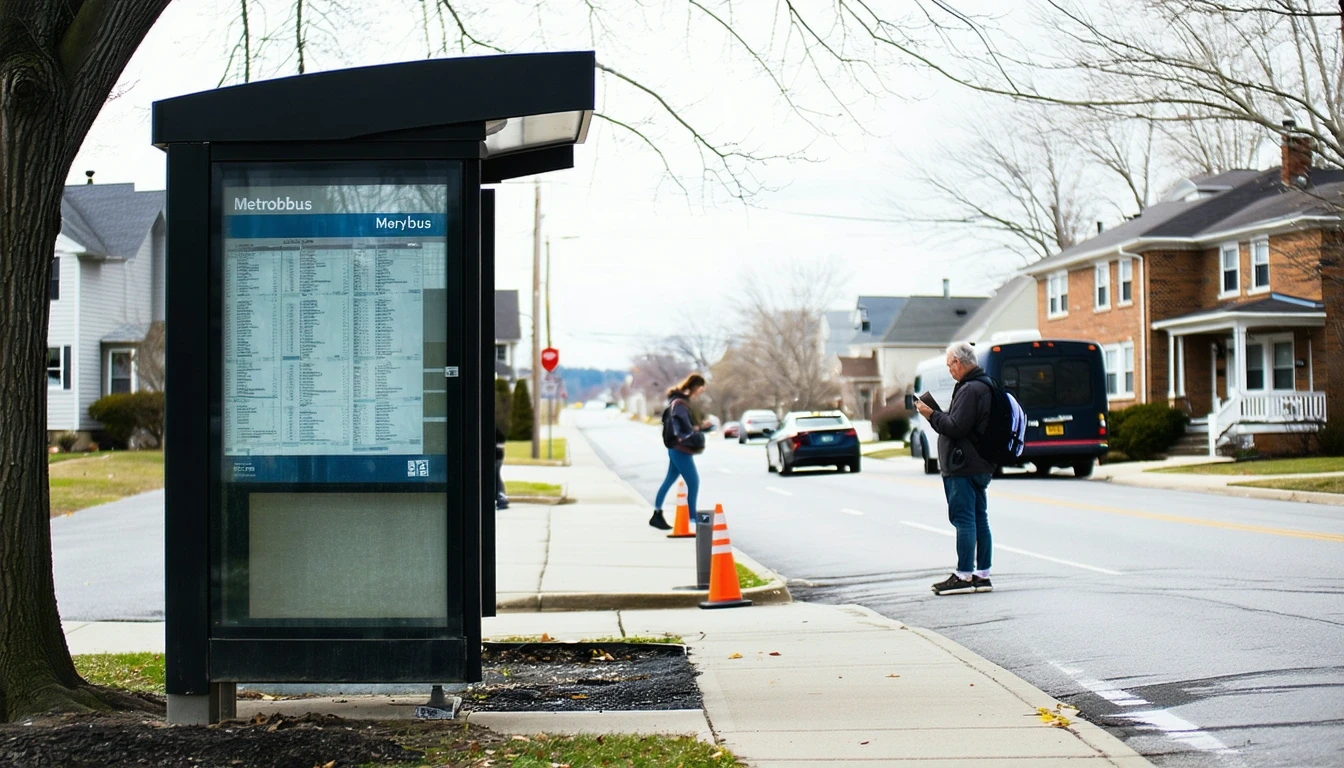
How to Get Around Maryland Heights
Maryland Heights sits in the northwest corner of St. Louis County, a suburban landscape built primarily around car travel. Maryland Heights does not have direct light rail or MetroLink service; the nearest MetroLink station is North Hanley, roughly 4 miles southeast, accessible by connecting bus routes. Most public transit here means MetroBus, with several key routes threading through commercial districts, apartment complexes, and park-and-ride lots.
The primary provider is Metro Transit, which operates regional bus and light rail across St. Louis City and County. In Maryland Heights specifically, routes like the #49 Lindbergh and #95 Dorsett provide weekday service connecting residential areas to Westport Plaza, St. Louis Galleria, and MetroLink stations. Service is less frequent on weekends, and evening options are limited. For commuters heading downtown or to Clayton, expect at least one transfer and travel times that can stretch 45–60 minutes depending on your starting point.
- MetroBus local routes: Connect Maryland Heights neighborhoods to nearby commercial centers and MetroLink stations
- Express and park-and-ride options: Limited in Maryland Heights; most express service originates further west in St. Charles County
- MetroLink light rail: Not directly accessible; requires bus connection to North Hanley or other stations
- Ride-sharing and employer shuttles: Common supplements, especially for Westport Plaza office workers
If your daily commute involves predictable hours and a route served by MetroBus, the system can work. But if you need flexibility, late shifts, or weekend mobility, most Maryland Heights residents find a personal vehicle necessary.
Monthly Cost Breakdown
Understanding what you’ll actually spend depends on how often you ride. Here’s a realistic comparison of three common commuting profiles in Maryland Heights, based on 2025 MetroBus fares:
| Commuter Profile | Rides per Month | Monthly Cost |
|---|---|---|
| 5-day weekly commuter (work only) | ~40 rides | $78 (30-day pass) |
| Weekend-only user | ~8 rides | $20 (pay-per-ride) |
| Heavy daily commuter (work + errands) | ~60 rides | $78 (30-day pass) |
Methodology note: Estimates reflect 2025 MetroBus fares for standard adult riders. Monthly pass pricing assumes unlimited rides within 30 days. Pay-per-ride costs use the $2.50 standard fare. Actual costs may vary depending on discounts, pass types, and commuting frequency. Senior, disabled, and youth riders qualify for reduced fares.
For anyone commuting five or more days per week, the 30-day pass is the clear winner. But if you only ride occasionally—weekend errands, an occasional trip to the airport via MetroLink connection—paying per ride makes more financial sense. The break-even point is roughly 32 rides per month, or about 16 round trips.
Is Public Transit Worth It in Maryland Heights?
The honest answer depends on where you live, where you work, and what you value. The average commute time by public transit in the St. Louis metro area is approximately 48 minutes, though Maryland Heights riders connecting to downtown or Clayton often experience longer trips due to transfers. By comparison, driving the same route during off-peak hours might take 20–25 minutes. During rush hour, that gap narrows, but transit still rarely beats the car for speed in this suburban context.
Where transit wins is cost predictability. A monthly budget built around a $78 pass is easier to manage than fluctuating gas prices, parking fees, and unexpected car repairs. If you work near Westport Plaza or along a direct bus route, and your schedule aligns with service hours, MetroBus can be a financially smart choice. Add in the ability to read, work, or relax during your commute, and the value proposition improves.
But service frequency is a real limitation. Most MetroBus routes in Maryland Heights run every 30–60 minutes during weekdays, with reduced weekend schedules. Miss your bus, and you’re waiting. Need to run an errand after work? You might find yourself stranded until the next hourly departure. For families, shift workers, or anyone needing flexible mobility, a car remains the practical default. In Maryland Heights, public transit works best as a commuter tool for predictable schedules, not as a full replacement for car ownership.
Ways to Save on Transit
Even with modest base fares, there are several strategies to reduce what you spend on public transportation in Maryland Heights. Metro Transit offers discount programs that can cut costs significantly for eligible riders, and employer-sponsored benefits can stretch your transit dollar even further.
Reduced fare programs are available for seniors (65+), people with disabilities, and youth riders, typically offering 50% off standard fares. Medicare cardholders also qualify for reduced rates. If you’re a student at a participating college or university, check whether your institution offers a discounted or free U-Pass program—some St. Louis-area schools provide unlimited MetroBus and MetroLink access as part of tuition.
- Buy a 30-day pass if you commute regularly: Breaks even at just 16 round trips, saving frequent riders up to 40% monthly
- Use free transfers within the two-hour window: One $2.50 fare covers multiple trips if completed within 120 minutes
- Check for employer-subsidized passes: Many larger employers in Westport Plaza and surrounding business parks offer pre-tax commuter benefits or partial pass reimbursement
- Leverage park-and-ride lots: Free parking at select Metro Transit lots lets you drive partway, then ride the rest—saving gas and downtown parking fees
- Download the Metro Transit app: Real-time tracking helps you avoid long waits and plan trips more efficiently, reducing wasted time and missed connections
🏆 Tip: In Maryland Heights, using a 30-day pass instead of daily fares can save frequent commuters up to $42 per month compared to paying $2.50 each way twice daily. Over a year, that’s more than $500 back in your budget.
FAQs About Transit in Maryland Heights
What is the cheapest way to get around Maryland Heights in 2025?
For regular commuters, a 30-day MetroBus pass at $78 offers the best value, covering unlimited rides. Occasional riders save more by paying the $2.50 per-ride fare and using free two-hour transfers when possible.
Does Maryland Heights offer park-and-ride or express bus options for commuters?
Park-and-ride options are limited within Maryland Heights itself, though nearby Metro Transit lots (such as North Hanley MetroLink station) provide free parking for transit users. Express bus service is minimal; most routes are local with multiple stops.
How does the cost of public transportation in Maryland Heights compare to driving?
With gas at $2.79 per gallon and average commutes of 25–30 minutes each way, driving costs roughly $120–$180 monthly in fuel alone, not counting parking, insurance, or maintenance. A $78 transit pass is cheaper, but only if routes and schedules fit your needs.
What discounts are available for students, seniors, or low-income riders in Maryland Heights?
Metro Transit offers 50% reduced fares for seniors (65+), people with disabilities, and Medicare cardholders. Some area colleges provide discounted or free U-Pass programs, and income-qualified riders may access reduced-fare programs through partnering social service agencies.
Is public transit in Maryland Heights considered reliable for daily work commutes?
Reliability depends on your route and schedule. Weekday service on major corridors like Dorsett Road is generally consistent, but frequency (30–60 minutes between buses) and limited weekend/evening service make it less flexible than driving. For predictable 9-to-5 commutes, it can work well.
Getting Around Smarter in Maryland Heights
Public transportation in Maryland Heights isn’t a one-size-fits-all solution, but for the right commuter, it’s a cost-effective and stress-reducing option. If your daily routine aligns with MetroBus schedules and you work near a well-served corridor, plan on $78 per month for unlimited access via a 30-day pass. Occasional riders should budget $20–$40 monthly depending on trip frequency, while those relying on transit for both commuting and errands might still need a car for flexibility.
The real trade-off isn’t just dollars—it’s time and convenience. With gas at $2.79 per gallon, even a modest transit system can be cheaper than driving daily, especially when parking and vehicle depreciation enter the equation. But if your job requires irregular hours, frequent stops, or weekend availability, the limited service in Maryland Heights may push you back toward car dependency.
For newcomers and budget-conscious residents, the smartest approach is hybrid: use transit for predictable commutes, and keep a car for everything else. That way, you capture the cost savings where they exist without sacrificing mobility when you need it. Want to see how transit costs fit into your overall spending? Explore our guide to monthly expenses and budget planning to build a complete financial picture of life in Maryland Heights.