

Picture this: You’re standing in a Madison grocery store, comparing the $2.47 dozen eggs and $4.27 half-gallon of milk against your monthly rent—unknown but likely manageable. Then you drive fifteen minutes south to Brentwood, where the same eggs and milk sit on the shelf at identical prices, but the median rent is $2,459 per month and the median home value is $842,400. Same metro, same utility rates, same gas price at $3.93/gal—but the cost experience feels completely different depending on where your housing dollar lands and what your household actually needs day-to-day.
Madison and Brentwood both sit within the Nashville metro, share the same regional price environment (RPP index of 105), and deal with similar climate exposure. Yet the financial pressure points diverge sharply. Brentwood’s housing market creates a steep entry barrier that dominates the budget before groceries or gas even enter the equation. Madison’s housing costs remain less documented in available data, but the absence of high median figures suggests a lower threshold for entry. Meanwhile, both cities show sparse food and grocery establishment density, meaning car dependency shapes daily logistics regardless of where you settle. The decision between them hinges not on which is “cheaper overall,” but on which cost structure aligns with your household’s income stability, healthcare needs, and tolerance for trade-offs between housing access and service infrastructure.
For households comparing these two Nashville-area suburbs in 2026, the question isn’t whether one city costs less—it’s whether you’re more exposed to housing entry costs or ongoing logistical friction, and whether access to hospital care or cycling infrastructure offsets the pressure elsewhere.
Housing Costs: Entry Barrier vs. Accessibility
Housing dominates the cost conversation between Madison and Brentwood, but the pressure shows up in fundamentally different ways. Brentwood’s median home value of $842,400 and median gross rent of $2,459 per month create a front-loaded financial hurdle that shapes every other decision. For renters, that monthly obligation consumes a substantial share of gross income before utilities, groceries, or transportation enter the picture. For prospective buyers, the down payment and mortgage qualification thresholds eliminate many households before they even tour a property. This isn’t just a “premium” market—it’s a market where housing access itself functions as a gatekeeper.
Madison’s housing costs remain less quantified in available data, but the absence of high median figures suggests a materially lower entry threshold. Renters and first-time buyers face less upfront pressure, which creates breathing room for households managing student loans, childcare costs, or irregular income. The trade-off isn’t invisible—Madison may offer fewer luxury finishes, smaller lot sizes, or older housing stock—but for households prioritizing access over amenity, that trade-off preserves flexibility elsewhere in the budget. The difference isn’t about which city offers “better value”; it’s about whether your household can absorb a high fixed cost in exchange for Brentwood’s infrastructure, or whether Madison’s lower barrier allows you to redirect resources toward transportation, healthcare, or savings.
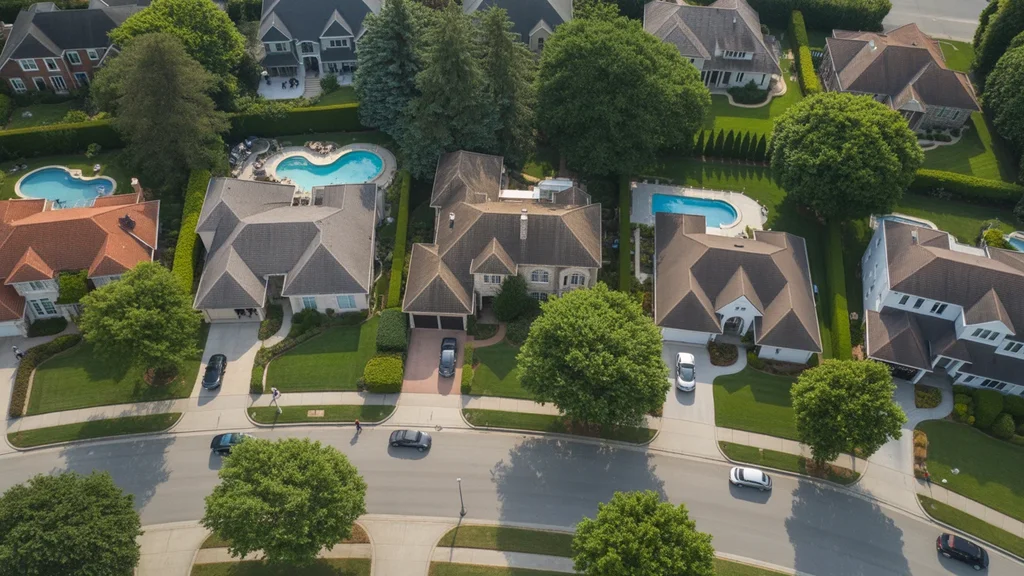
Both cities sit within the same regional price environment, meaning construction costs, labor rates, and land availability pressures are comparable. What differs is the housing stock itself: Brentwood skews toward newer, larger single-family homes in planned developments, while Madison’s mix includes older builds, smaller lots, and a broader range of housing types. For families prioritizing space, Brentwood’s housing stock aligns with that need—but the cost is steep and ongoing. For single adults or couples willing to trade square footage for lower monthly obligations, Madison’s housing landscape offers more entry points without requiring six-figure household income to qualify.
| Housing Type | Madison | Brentwood |
|---|---|---|
| Median Gross Rent | Data not available; likely lower barrier | $2,459 per month |
| Median Home Value | Data not available; likely lower barrier | $842,400 |
| Typical Housing Stock | Mixed age, varied types, smaller lots | Newer builds, larger single-family, planned developments |
For renters, Brentwood’s $2,459 median rent translates to a recurring monthly obligation that limits flexibility in other categories—groceries, transportation, and discretionary spending all compete for what remains. In Madison, the lower (though unquantified) rent threshold means renters retain more control over how they allocate the rest of their income. For prospective homeowners, Brentwood’s $842,400 median home value requires substantial down payment reserves, strong credit, and high stable income. Madison’s lower entry point (reflected in the absence of high median data) allows first-time buyers to enter the market sooner, though potentially with trade-offs in home age, size, or neighborhood amenities.
Housing takeaway: Brentwood’s housing costs create a high, front-loaded barrier that favors households with significant income stability and savings. Madison’s lower entry threshold (evidenced by missing high median figures) favors households prioritizing access and flexibility over premium finishes or larger square footage. The decision depends on whether your household can absorb Brentwood’s ongoing housing obligation in exchange for newer stock and planned community infrastructure, or whether Madison’s lower barrier preserves budget flexibility for other priorities.
Utilities and Energy Costs: Shared Rates, Different Exposure
Madison and Brentwood share identical utility rate structures: electricity costs 13.10¢/kWh and natural gas runs $11.23/MCF. This means the price per unit of energy is the same whether you live in a Madison duplex or a Brentwood single-family home. Yet the cost experience diverges sharply based on housing type, home age, and square footage. In Brentwood, where newer, larger single-family homes dominate, total energy consumption skews higher simply because there’s more space to heat and cool. A 2,500-square-foot home with vaulted ceilings and large windows will consume more electricity during Nashville’s hot, humid summers than a 1,200-square-foot apartment in Madison, even if both households set the thermostat to the same temperature.
Nashville’s climate drives significant cooling demand from late spring through early fall, with extended periods of heat and humidity that make air conditioning non-negotiable rather than optional. Heating needs are more moderate but still present during winter months, particularly during cold snaps. For households in older Madison housing stock, this seasonal exposure can intensify if insulation, windows, or HVAC systems haven’t been updated. Drafty windows and aging furnaces increase energy waste, which translates directly to higher bills even at identical per-unit rates. In Brentwood, newer construction typically includes better insulation, modern HVAC systems, and energy-efficient windows—but the larger square footage offsets much of that efficiency gain, leaving total consumption elevated.
Household size and daily routines further shape utility costs. A single adult working from home in a small Madison apartment may see predictable, modest bills year-round, with cooling costs rising in summer but remaining manageable due to limited square footage. A family of four in a Brentwood home faces higher baseline usage—more laundry, more hot water, more lighting, more simultaneous device charging—compounded by the energy demands of a larger structure. The result is greater volatility and higher total exposure, even though the per-unit rate is identical. For households sensitive to budget predictability, smaller housing in Madison offers more control; for households prioritizing space and modern systems, Brentwood’s higher consumption comes with the trade-off of comfort and reduced maintenance friction.
Utility billing structures in the Nashville area typically separate electricity, gas, water, and trash, meaning households manage multiple monthly obligations rather than a single bundled bill. This creates more administrative friction but also more visibility into where consumption spikes occur. Time-of-use pricing or off-peak incentives may be available through local providers, allowing households to shift energy-intensive tasks (laundry, dishwashing, EV charging) to lower-rate periods. However, these programs require schedule flexibility and active management—easier for single adults or couples without rigid childcare or work constraints, harder for families managing school drop-offs, meal prep, and bedtime routines.
Utility takeaway: Madison and Brentwood share identical energy rates, but exposure diverges based on housing size, age, and household composition. Brentwood’s larger, newer homes consume more energy overall, creating higher total bills despite modern efficiency features. Madison’s smaller, older housing stock may experience inefficiency-driven spikes but benefits from lower baseline consumption. Households prioritizing predictability and lower total exposure fit better in Madison’s smaller housing; households willing to absorb higher consumption in exchange for space and modern systems fit better in Brentwood.
Groceries and Daily Expenses: Sparse Access, Shared Prices
Both Madison and Brentwood show sparse food and grocery establishment density, meaning neither city offers the convenience of walkable, neighborhood-scale grocery access. Derived grocery estimates—$2.47/dozen for eggs, $4.27/half-gallon for milk, $7.04/lb for ground beef—reflect the same regional price baseline (RPP index 105) and apply equally to both cities. The cost of filling a cart doesn’t change based on your zip code; what changes is how much time, fuel, and planning it takes to get that cart home, and how much flexibility you have to shop strategically rather than reactively.
Sparse grocery density means both cities require car-dependent shopping trips. There’s no “quick walk to the corner store” for a forgotten ingredient or last-minute gallon of milk. Instead, households plan around weekly or bi-weekly trips to larger grocery chains, warehouse clubs, or big-box retailers. This planning burden affects different households unevenly. Single adults and couples can batch errands efficiently, consolidating grocery runs with other tasks and minimizing redundant trips. Families with young children face more friction: forgotten items mean another 20-minute round trip, and impulse purchases at convenience stores (priced higher than grocery staples) become a recurring budget leak when time pressure overrides cost discipline.
Dining out and convenience spending introduce another layer of cost variability. Brentwood’s higher median household income ($181,576 per year) supports a restaurant and takeout landscape that skews toward full-service dining and premium casual options. Madison’s income data is unavailable, but the absence of high median figures suggests a different spending pattern—more fast-casual, more counter-service, fewer $50-per-person dinners. For households managing tight budgets, this difference matters. In Brentwood, social and professional norms may create pressure to participate in higher-cost dining, while Madison’s landscape allows for lower-cost socializing without feeling out of step. Neither city offers dense, walkable access to daily errands, but Brentwood’s higher-income context can subtly increase spending on prepared foods and convenience purchases.
Price sensitivity plays out differently depending on household size and income stability. A single adult earning a stable salary can absorb occasional takeout or premium grocery purchases without destabilizing the monthly budget. A family of four managing irregular income or high childcare costs feels every incremental price difference—switching from name-brand to store-brand staples, skipping pre-cut vegetables, avoiding prepared meals. In both cities, the sparse grocery landscape means fewer opportunities to comparison-shop or take advantage of competitive pricing. You’re more likely to shop where it’s convenient (near your commute route or close to home) rather than where prices are lowest, which reduces flexibility for cost-conscious households.
Groceries takeaway: Madison and Brentwood share sparse grocery density and identical regional pricing, meaning the cost of food staples is the same in both cities. The difference lies in convenience spending patterns, dining norms, and the time cost of car-dependent errands. Families and budget-sensitive households face more friction in both cities due to sparse access, but Brentwood’s higher-income context can subtly increase spending on takeout and premium options. Single adults and dual-income couples with schedule flexibility can manage sparse access more easily, but neither city rewards households seeking walkable, low-friction daily errands.
Taxes and Fees: Shared State Structure, Local Variation
Tennessee imposes no state income tax, which removes one major variable from the cost comparison between Madison and Brentwood. Both cities benefit equally from this absence, meaning households keep more of their gross earnings compared to states with progressive income tax structures. However, Tennessee compensates through higher reliance on sales taxes and property taxes, and local fee structures introduce meaningful differences in how ongoing costs accumulate.
Property taxes in both cities depend on assessed home values and local millage rates. Brentwood’s median home value of $842,400 creates a high baseline for property tax calculations, even if the effective rate is moderate. A household owning a home near that median will face annual property tax bills in the thousands, payable either as a lump sum or escrowed into monthly mortgage payments. For renters, property taxes are embedded in rent, but the landlord’s obligation to cover those taxes influences the rent level itself—part of why Brentwood’s $2,459 median rent sits where it does. Madison’s property tax exposure is less quantified due to missing home value data, but lower home values (implied by the absence of high medians) translate to lower annual tax bills for owners and less tax-driven upward pressure on rent.
Sales taxes apply uniformly to most purchases, meaning groceries, dining, and retail spending incur the same percentage regardless of city. This shifts the tax burden toward consumption rather than income, which affects high-spending households more than high-earning households. For families managing large grocery bills, frequent dining out, or significant retail purchases, the cumulative sales tax burden adds up quickly. For households keeping discretionary spending lean, the impact is more contained. Neither Madison nor Brentwood offers a structural advantage here—the difference is driven by spending volume, not location.
Local fees—trash collection, water, sewer, stormwater management—vary by municipality and housing type. Single-family homeowners in both cities typically pay these fees directly, either monthly or quarterly. Apartment renters may see some fees bundled into rent, while others appear as separate line items. Brentwood’s planned developments sometimes include HOA fees that bundle landscaping, common area maintenance, and amenity access (pools, parks, clubhouses). These fees can range from modest to substantial, adding another fixed monthly cost that renters and owners must account for. Madison’s housing stock includes fewer HOA-governed communities, meaning fewer households face mandatory monthly fees beyond basic utilities and trash service.
Taxes and fees takeaway: Both cities benefit from Tennessee’s absence of state income tax, but Brentwood’s higher home values create greater property tax exposure for owners and upward rent pressure for renters. Sales taxes apply equally, shifting the burden toward high-consumption households. Brentwood’s prevalence of HOA fees adds another layer of fixed monthly costs, while Madison’s housing landscape includes fewer mandatory fee structures. Homeowners planning to stay long-term in Brentwood face higher ongoing tax and fee obligations; renters and owners in Madison face lower baseline exposure but fewer bundled amenities.
Transportation & Commute Reality
Both Madison and Brentwood show sparse food and grocery density, which signals car dependency for daily errands regardless of where you live. Walkable pockets exist in both cities—pedestrian-to-road ratios exceed high thresholds—but these pockets don’t translate to car-free living. Instead, they offer pleasant walking environments within neighborhoods, while trips to grocery stores, medical appointments, and most services still require a vehicle. Gas prices sit at $3.93/gal in both cities, meaning the per-gallon cost is identical. What differs is how often you need to fill the tank, and how much time you spend behind the wheel managing household logistics.
Brentwood shows some cycling infrastructure (bike-to-road ratio in the medium band), which offers an option for recreational rides or short errands within certain corridors. Madison does not show a bike presence signal, meaning cycling infrastructure is either absent or too sparse to register. For households with active lifestyles or teenagers seeking car-free mobility, Brentwood’s cycling infrastructure adds a layer of flexibility that Madison lacks. However, neither city supports bike-dependent commuting or daily errands at scale—cars remain the primary tool for managing work, school, groceries, and appointments.
Commute data is unavailable for both cities, but their positions within the Nashville metro suggest different commute patterns. Madison sits closer to downtown Nashville, which likely shortens commute times for households working in the urban core. Brentwood sits farther south, which may extend commute distances for downtown workers but shortens trips for households employed in southern suburbs or corporate campuses along I-65. The time cost of commuting affects household logistics differently depending on work location, schedule flexibility, and whether both adults in a dual-income household commute in the same direction.
For single adults, commute time translates directly to personal time lost or gained—less time in the car means more time for exercise, meal prep, or rest. For families, commute friction compounds: longer drives mean earlier wake-ups, tighter morning routines, and less flexibility for handling sick days or school events. Households with one working adult and one stay-at-home parent can absorb commute variability more easily; dual-income families with rigid schedules feel every extra minute on the road.
Transportation takeaway: Both cities require car dependency for daily errands due to sparse grocery and food density. Brentwood offers some cycling infrastructure for recreation or short trips; Madison does not. Commute patterns likely differ based on work location within the Nashville metro, with Madison favoring downtown commuters and Brentwood favoring southern suburb employment. Households sensitive to commute time should prioritize proximity to their workplace over city choice; households seeking cycling infrastructure for recreation or teen mobility fit better in Brentwood.
Where Cost Pressure Concentrates
Housing dominates the cost experience in Brentwood. The $842,400 median home value and $2,459 median rent create a front-loaded financial hurdle that shapes every other decision. For renters, that monthly obligation consumes a substantial share of gross income before utilities, groceries, or transportation enter the picture. For prospective buyers, the down payment and mortgage qualification thresholds eliminate many households before they even tour a property. Once housing is secured, the ongoing property tax exposure and potential HOA fees add predictable but significant fixed costs. Households choosing Brentwood absorb this pressure in exchange for newer housing stock, hospital access, and cycling infrastructure—but the trade-off is steep and ongoing.
Madison’s cost structure remains less quantified due to missing housing and income data, but the absence of high median figures suggests a lower entry barrier and reduced ongoing housing pressure. This creates breathing room for households managing student loans, childcare costs, or irregular income. However, Madison’s sparse grocery density and absence of hospital facilities introduce logistical friction and potential healthcare travel costs. Households choosing Madison trade lower housing costs for greater planning burden in daily errands and reliance on nearby cities for hospital care. The decision isn’t about which city costs less overall—it’s about whether your household is more exposed to housing entry barriers or ongoing logistical friction.
Utilities introduce similar volatility in both cities due to identical energy rates (13.10¢/kWh electricity, $11.23/MCF natural gas), but exposure diverges based on housing size and age. Brentwood’s larger, newer homes consume more energy overall, creating higher total bills despite modern efficiency features. Madison’s smaller, older housing stock may experience inefficiency-driven spikes but benefits from lower baseline consumption. For households prioritizing predictability and lower total utility exposure, Madison’s smaller housing offers more control. For households willing to absorb higher consumption in exchange for space and modern systems, Brentwood’s trade-off makes sense.
Transportation patterns matter more in terms of time cost than cash cost. Both cities require car dependency for daily errands, and gas prices are identical at $3.93/gal. The difference lies in commute friction and cycling infrastructure. Brentwood offers some bike-to-road infrastructure for recreation or short trips; Madison does not. Commute patterns likely differ based on work location within the Nashville metro, with Madison favoring downtown commuters and Brentwood favoring southern suburb employment. Households sensitive to commute time should prioritize proximity to their workplace over city choice.
Groceries and daily expenses show sparse access in both cities, meaning car-dependent shopping trips and limited walkable errands. Derived grocery prices—$2.47/dozen eggs, $4.27/half-gallon milk, $7.04/lb ground beef—apply equally to both cities. The difference lies in convenience spending patterns and dining norms. Brentwood’s higher median household income ($181,576 per year) supports a restaurant landscape that skews toward full-service dining and premium casual options, which can subtly increase spending for households participating in social or professional dining. Madison’s income data is unavailable, but the absence of high median figures suggests a different spending pattern—more fast-casual, fewer $50-per-person dinners. For households managing tight budgets, Madison’s lower-cost dining landscape offers more flexibility.
The better choice depends on which costs dominate your household. For households sensitive to housing entry barriers and ongoing fixed costs, Madison offers lower thresholds and more budget flexibility. For households prioritizing hospital access, cycling infrastructure, and newer housing stock—and able to absorb high monthly housing obligations—Brentwood’s trade-offs align better. Neither city is “cheaper overall”; each concentrates cost pressure differently, and the fit depends on your household’s income stability, healthcare needs, and tolerance for logistical friction.
How the Same Income Feels in Madison vs Brentwood
Single Adult
Housing becomes the first non-negotiable cost, and Brentwood’s $2,459 median rent claims a much larger share of gross monthly income than Madison’s lower (though unquantified) threshold. In Brentwood, a single adult must prioritize housing stability over discretionary spending, leaving less room for dining out, travel, or savings. In Madison, the lower rent threshold preserves flexibility for other priorities—building an emergency fund, paying down debt, or absorbing irregular expenses without destabilizing the budget. Both cities require car dependency for errands, so transportation costs remain similar, but Brentwood’s higher housing obligation reduces the cushion available for unexpected car repairs or medical bills. Commute friction matters more in Madison if the workplace sits downtown; Brentwood favors southern suburb employment.
Dual-Income Couple
Two incomes create more capacity to absorb Brentwood’s high housing costs, but the trade-off is less flexibility for one partner to reduce hours, pursue further education, or take parental leave. In Madison, lower housing costs allow dual-income couples to redirect earnings toward retirement savings, home down payments, or lifestyle upgrades without feeling stretched. Both cities show sparse grocery density, meaning meal planning and bulk shopping become routine rather than optional. Brentwood’s cycling infrastructure offers recreational options for active couples; Madison does not. Dining and convenience spending can creep higher in Brentwood due to social norms and higher-cost restaurant options, while Madison’s landscape supports lower-cost socializing. Couples planning to buy a home face a steep entry barrier in Brentwood ($842,400 median home value); Madison’s lower threshold allows earlier homeownership.
Family with Kids
Childcare, school proximity, and healthcare access become non-negotiable, and Brentwood’s hospital presence offers a significant advantage over Madison’s clinic-only access. Families in Madison must plan for hospital trips to nearby cities, which adds time cost and logistical friction during emergencies or routine specialist care. Brentwood’s higher housing costs ($2,459 rent or $842,400 home value) squeeze other categories—groceries, extracurriculars, and savings—forcing families to prioritize housing and healthcare over discretionary spending. Madison’s lower housing threshold preserves budget flexibility for childcare, school supplies, and unexpected expenses, but families must manage sparse grocery access and longer healthcare trips. Both cities show family infrastructure (schools, playgrounds) in moderate density, meaning neither offers a clear advantage in day-to-day family logistics. Commute friction compounds for dual-income families managing school drop-offs and pickups; proximity to work and school matters more than city choice.
Decision Matrix: Which City Fits Which Household?
| Decision Factor | If You’re Sensitive to This… | Madison Tends to Fit When… | Brentwood Tends to Fit When… |
|---|---|---|---|
| Housing entry + space needs | Down payment size, monthly rent burden, qualification thresholds | You prioritize lower entry barriers and budget flexibility over square footage and premium finishes | You can absorb high fixed housing costs in exchange for newer builds, larger homes, and planned community amenities |
| Transportation dependence + commute friction | Daily drive time, fuel costs, schedule rigidity | Your workplace sits closer to downtown Nashville or you value shorter commute times over cycling infrastructure | Your workplace sits in southern Nashville suburbs or you value recreational cycling options despite car dependency for errands |
| Utility variability + home size exposure | Seasonal bill spikes, total energy consumption, HVAC efficiency | You prefer smaller housing with lower baseline consumption and more predictable bills despite potential inefficiency in older stock | You’re willing to absorb higher total consumption in exchange for modern systems, larger square footage, and reduced maintenance friction |
| Grocery strategy + convenience spending creep | Time cost of errands, impulse purchases, dining norms | You can manage sparse grocery access through disciplined planning and prefer lower-cost dining options without social pressure | You can absorb higher convenience spending and premium dining norms in exchange for cycling infrastructure and hospital proximity |
| Fees + friction costs (HOA, services, upkeep) | Mandatory monthly fees, bundled services, administrative burden | You prefer fewer mandatory fees and more control over which services you pay for, even if amenities are less bundled | You value bundled amenities (pools, landscaping, common areas) and are willing to pay HOA fees for reduced individual maintenance burden |
| Time budget (schedule flexibility, errands, logistics) | Healthcare travel time, errand consolidation, emergency response | You can manage clinic-only healthcare and plan hospital trips to nearby cities without destabilizing your schedule | You prioritize hospital access within city limits and value reduced healthcare travel time despite higher housing costs |