
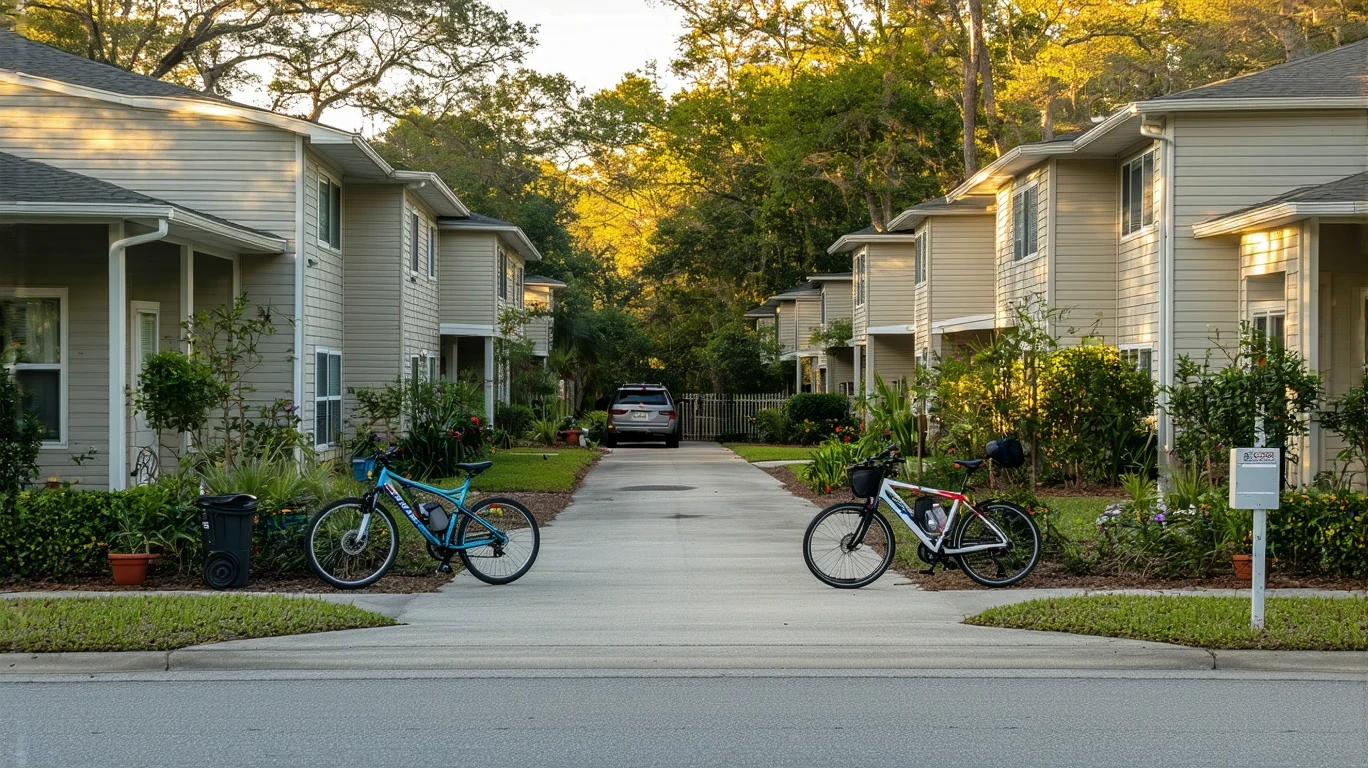
Lutz and Plant City sit within the same Tampa metro area, share the same regional price environment, and face the same unemployment rate—but the way cost pressure shows up in daily life differs sharply between them. Lutz attracts higher-income households drawn to newer suburban development and car-oriented convenience, while Plant City offers lower housing entry barriers and a more traditional small-town structure with walkable pockets in parts of the city. For families, young professionals, and retirees weighing a move in 2026, the decision hinges less on which city costs more overall and more on which cost structure aligns with household income, commute patterns, and lifestyle priorities.
Both cities benefit from Florida’s lack of state income tax, but the tradeoffs emerge quickly once you look at housing stock, transportation dependence, and how errands and healthcare access play out day-to-day. Lutz skews toward single-family homes on larger lots with minimal pedestrian infrastructure, while Plant City mixes low-rise and medium-height buildings with better pedestrian-to-road ratios in select areas. These structural differences don’t just shape where you live—they determine how much flexibility you have when income tightens, how predictable your monthly obligations feel, and whether your household can absorb volatility in utilities or transportation without restructuring your budget.
This comparison explains where costs concentrate, which households feel pressure first, and how the same gross income can produce very different financial experiences depending on which city you choose. It’s not about declaring a winner—it’s about understanding which cost levers matter most for your situation and how each city’s infrastructure, housing market, and daily logistics align with your household’s tolerance for trade-offs.
Housing Costs
Housing dominates the cost experience in both cities, but the entry barrier and ongoing obligations differ dramatically. Lutz reports a median home value of $403,200, while Plant City’s median sits at $225,700—a structural difference that shapes who can buy, what kind of financing households need, and how much equity risk they’re taking on. For renters, Lutz’s median gross rent stands at $1,562 per month compared to Plant City’s $1,232 per month. These aren’t just price tags—they’re indicators of market tightness, housing stock age, and the type of household each city’s inventory serves.
In Lutz, the higher home values reflect newer construction, larger lots, and proximity to employment corridors that attract dual-income professional households. The housing stock skews toward single-family homes in low-rise neighborhoods, which means renters often face limited apartment inventory and higher per-unit costs when availability is tight. Homeownership in Lutz requires substantial down payments and mortgage capacity, but it also delivers predictability: once you’re in, your principal and interest stay fixed (assuming a conventional loan), and your main exposure shifts to property taxes, insurance, and maintenance on larger homes. For households earning near or above Lutz’s median household income of $101,159 per year, the entry cost is manageable, and the long-term obligation feels stable.
Plant City’s lower home values open the door to first-time buyers, single-income families, and households with median income closer to $62,015 per year. The housing stock includes more varied building heights—average building levels fall in the medium band rather than strictly low-rise—which suggests a mix of older single-family homes, duplexes, and small multifamily buildings. This diversity creates more rental options and moderates competition, but it also means older housing stock with higher maintenance needs and less energy efficiency. Renters in Plant City face lower monthly obligations, but they’re more exposed to variability in unit quality, landlord responsiveness, and turnover-driven rent adjustments. Buyers get in with smaller mortgages, but they inherit properties that may require more frequent repairs and updates.
Housing takeaway: Lutz fits households with higher incomes who can absorb the front-loaded cost of entry in exchange for newer housing stock and long-term payment predictability. Plant City fits households prioritizing lower entry barriers and monthly obligations, accepting trade-offs in housing age, maintenance exposure, and the need to budget for variability in unit condition. The difference isn’t about which city is cheaper—it’s about whether your household is more constrained by the ability to get in or the ability to stay stable once you’re there.
Utilities and Energy Costs
Utility costs in both cities reflect Florida’s extended cooling season, high humidity, and minimal heating needs, but the way those costs show up depends on housing type, home age, and how much square footage you’re conditioning. Lutz’s electricity rate sits at 15.02¢/kWh, while Plant City’s rate is slightly higher at 15.78¢/kWh. Natural gas pricing follows a similar pattern: Lutz at $23.62/MCF and Plant City at $25.39/MCF. These differences are modest, but they interact with housing stock in ways that amplify or dampen overall exposure.
In Lutz, newer single-family homes typically feature better insulation, modern HVAC systems, and energy-efficient windows, which reduce baseline cooling loads even as square footage increases. Larger homes mean higher absolute usage, but the cost per square foot often stays competitive because the building envelope performs better. Households in Lutz face predictable seasonal spikes—summer months drive the highest bills as air conditioning runs continuously through triple-digit heat—but the volatility is manageable if the home was built in the last 15 years. Older homes or properties with deferred maintenance see sharper swings, especially if ductwork leaks or insulation has degraded.
Plant City’s mixed building stock introduces more variability. Older single-family homes and smaller multifamily units may lack modern weatherization, leading to higher cooling costs per square foot despite smaller total footprints. Renters in older buildings face less control over efficiency upgrades, which means they absorb seasonal volatility without the ability to invest in improvements. The slightly higher electricity rate compounds this exposure, particularly for households running window units or central systems that haven’t been serviced recently. On the other hand, apartments and smaller homes in Plant City often have lower absolute usage simply because there’s less space to cool, which can offset rate differences for budget-conscious renters.
Utility takeaway: Lutz households experience more predictable utility costs if they’re in newer construction, but they’re conditioning larger spaces, which raises baseline exposure. Plant City households face more volatility due to older housing stock and slightly higher rates, but smaller unit sizes can keep absolute costs lower for renters and single adults. The key difference is control: Lutz homeowners can invest in efficiency and stabilize costs over time, while Plant City renters are more dependent on landlord decisions and building age—factors they can’t change without moving.
Groceries and Daily Expenses
Grocery and daily spending pressure in both cities reflects the same regional price environment—both Lutz and Plant City share a regional price parity index of 103—but access patterns and shopping infrastructure create different friction costs. Lutz shows sparse food and grocery establishment density, with food density below the low threshold and grocery density in the medium band. Plant City’s food and grocery density both fall in the medium band, concentrated along commercial corridors rather than distributed evenly across neighborhoods. These structural differences don’t change what items cost on the shelf, but they do change how much time, fuel, and planning households invest to keep pantries stocked.
In Lutz, car-oriented development and minimal pedestrian infrastructure mean nearly every grocery trip requires driving. Big-box stores and chain supermarkets dominate, offering competitive pricing on bulk staples but requiring households to plan around larger, less frequent shopping trips. This works well for families with storage space, reliable transportation, and the ability to buy in volume, but it penalizes smaller households, single adults, or anyone without a car who needs to restock quickly. Convenience spending—grabbing a gallon of milk, picking up a forgotten ingredient, or stopping for coffee—often means driving several miles, which adds time cost and fuel expense even if the item itself is inexpensive.
Plant City’s corridor-clustered grocery access means that some neighborhoods enjoy walkable or short-drive access to smaller grocers, discount chains, and local markets, while others remain car-dependent. The presence of walkable pockets in parts of the city creates opportunities for households to reduce transportation friction on routine errands, particularly for retirees, single adults, or couples without kids who can shop more frequently in smaller volumes. Families managing larger grocery loads still benefit from car access, but the corridor layout often means shorter drive times to multiple store types, which increases price flexibility and reduces the penalty for forgetting an item.
Grocery takeaway: Lutz fits households with cars, storage, and the ability to plan around bulk shopping trips; sparse access penalizes spontaneity and raises time costs for smaller, frequent purchases. Plant City fits households who value shorter drive times to varied store types and can take advantage of corridor-clustered access to mix discount and specialty options. The cost difference isn’t in prices—it’s in how much friction you’re willing to accept to access them.
Taxes and Fees
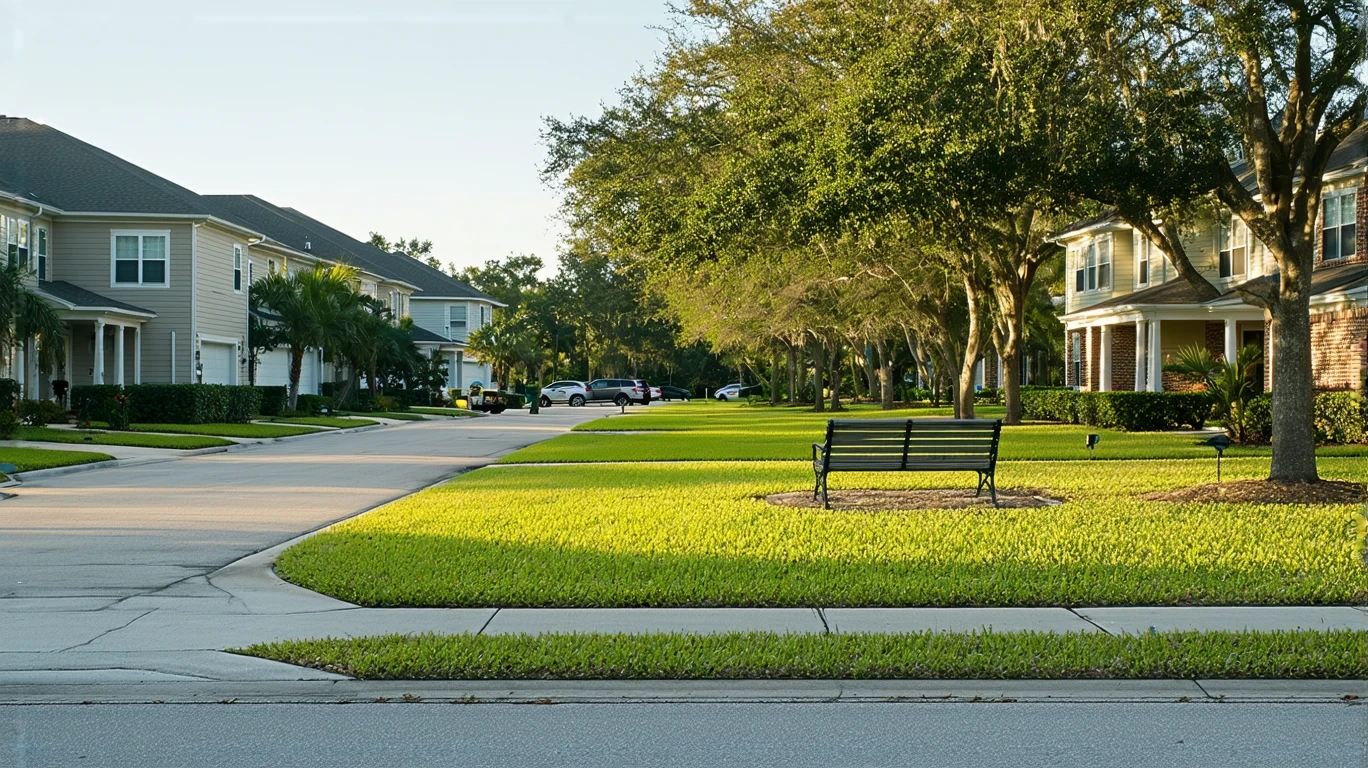
Both Lutz and Plant City benefit from Florida’s lack of state income tax, which removes one of the largest ongoing obligations that households in other states face. Property taxes, however, remain the primary revenue mechanism for local services, and the way those taxes interact with home values creates different burdens depending on which city you choose. Lutz’s higher median home value of $403,200 means that even at identical millage rates, homeowners face larger absolute tax bills than their Plant City counterparts, whose median home value sits at $225,700. This isn’t a difference in tax policy—it’s a difference in the asset base being taxed.
For homeowners in Lutz, higher property taxes fund newer infrastructure, better-maintained roads, and services that align with a higher-income tax base. The predictability is strong: once you know your assessed value and millage rate, your annual obligation is fixed unless reassessment or voter-approved levies change the baseline. Homeowners also benefit from Florida’s Save Our Homes cap, which limits annual assessment increases for primary residences, providing long-term stability for households planning to stay several years. The trade-off is that the entry-level tax obligation is higher, which compounds the front-loaded cost of homeownership in Lutz.
Plant City homeowners face lower absolute property tax bills due to lower home values, which reduces the ongoing cost of ownership and makes it easier for single-income families or retirees on fixed incomes to stay in place. The lower tax base also means that revenue for infrastructure, schools, and services is more constrained, which can show up as deferred road maintenance, older public facilities, or fewer recreational amenities. Renters in both cities don’t pay property taxes directly, but they absorb them indirectly through rent pricing—landlords in Lutz pass through higher tax costs, while Plant City landlords face lower obligations that can moderate rent growth over time.
Beyond property taxes, both cities see typical Florida fees for utilities, trash collection, and stormwater management, often billed separately rather than bundled. HOA fees are more common in Lutz’s newer subdivisions, where they can range from modest landscaping assessments to several hundred dollars monthly for gated communities with pools, fitness centers, and common area maintenance. Plant City’s older housing stock includes fewer HOA-governed neighborhoods, which reduces recurring fees but also means homeowners handle all exterior maintenance and landscaping themselves.
Taxes and fees takeaway: Lutz homeowners face higher absolute property taxes due to higher home values, but they gain predictability and access to better-funded services; HOA fees add another layer of obligation in newer neighborhoods. Plant City homeowners benefit from lower tax bills that ease ongoing costs, but they trade off some infrastructure quality and take on more direct maintenance responsibility. Renters in both cities absorb these differences indirectly, with Lutz rents reflecting higher landlord obligations and Plant City rents benefiting from lower tax pass-through.
Transportation & Commute Reality
Transportation costs in both cities are shaped by car dependence, regional commute patterns, and the availability—or absence—of practical alternatives to driving. Lutz shows car-oriented mobility texture with pedestrian infrastructure below the low threshold and minimal bike-to-road ratio. Plant City, by contrast, exhibits walkable pockets with a pedestrian-to-road ratio exceeding the high threshold in parts of the city, though car dependence still dominates for most households. Both cities offer bus service, but neither has rail transit, which means that households relying on public transportation face limited frequency, coverage, and schedule flexibility.
In Lutz, nearly every trip—commute, errands, school drop-off, recreation—requires a car. Gas prices sit at $2.90/gal, and the lack of pedestrian infrastructure means that even short trips within the same neighborhood often aren’t walkable. For dual-income households commuting to Tampa or surrounding employment centers, transportation costs concentrate in fuel, vehicle maintenance, insurance, and the time cost of sitting in traffic during peak hours. Single-car households face scheduling friction, particularly when adults work different shifts or kids need to be in multiple places. The car-oriented layout also means that younger drivers and retirees without cars experience significant mobility constraints, relying on family members or ride-hailing services for access to groceries, healthcare, and social activities.
Plant City’s walkable pockets create opportunities for some households to reduce car dependence on routine errands, particularly in neighborhoods near commercial corridors where food, pharmacies, and services cluster. Gas prices are slightly lower at $2.84/gal, and the mixed building height and land-use patterns mean that some daily needs are accessible on foot or by bike for households willing to prioritize proximity over space. Bus service exists, but coverage and frequency remain limited, making it a backup option rather than a primary commute solution for most workers. Households commuting to Tampa or other regional employment centers still depend on cars, but the shorter distances within Plant City for local errands can reduce weekly mileage and fuel costs compared to Lutz’s more dispersed layout.
Transportation takeaway: Lutz fits households with reliable cars, tolerance for car-dependent logistics, and the income to absorb fuel, insurance, and maintenance as non-negotiable costs. Plant City fits households who can take advantage of walkable pockets for some errands and value slightly lower gas prices and shorter intra-city distances, though car ownership remains essential for commuting and most activities. The difference is less about total transportation cost and more about how much flexibility you have to reduce mileage and whether your daily routine can adapt to a less car-intensive layout in parts of the city.
Cost Structure Comparison
Housing pressure dominates the cost experience in both cities, but the nature of that pressure differs sharply. Lutz concentrates cost at the entry point: higher home values and rents create a steep threshold that filters for higher-income households, but once you’re in, the obligations are predictable and the housing stock is newer. Plant City spreads pressure across entry and ongoing maintenance: lower home values and rents make it easier to get in, but older housing stock introduces variability in repair costs, utility efficiency, and landlord responsiveness. For renters, Lutz’s higher monthly obligations buy access to newer units and better amenities, while Plant City’s lower rents come with trade-offs in unit age and the likelihood of needing to move when leases end or conditions deteriorate.
Utilities introduce more volatility in Plant City due to older housing stock and slightly higher electricity rates, even though smaller unit sizes can keep absolute usage lower. Lutz households condition larger spaces but benefit from better insulation and modern HVAC systems that stabilize seasonal swings. The difference matters most for renters, who can’t invest in efficiency upgrades and must absorb whatever performance the building delivers. Homeowners in both cities face Florida’s extended cooling season, but Lutz owners have more control over long-term efficiency improvements, while Plant City owners inherit buildings that may require retrofits to achieve comparable performance.
Groceries and daily errands reflect the same regional pricing, but access friction differs. Lutz’s sparse food and grocery density penalizes households without cars or those who prefer frequent, smaller shopping trips. Plant City’s corridor-clustered access shortens drive times and creates opportunities for walkable errands in select neighborhoods, which reduces time cost and fuel expense for households who can structure their routines around proximity. Families managing large grocery volumes still depend on cars in both cities, but Plant City’s layout offers more flexibility for mixing store types and reducing the penalty for spontaneous purchases.
Transportation patterns matter more in Lutz, where car dependence is absolute and every household member’s schedule depends on vehicle access. Plant City’s walkable pockets don’t eliminate car dependence, but they create opportunities to reduce weekly mileage for households living near commercial corridors. The slightly lower gas price in Plant City compounds this advantage, though the difference is modest. For households sensitive to commute friction, time cost, and the logistics of managing multiple drivers, Lutz’s car-oriented layout raises the baseline complexity of daily life, while Plant City’s mixed infrastructure offers selective relief in parts of the city.
The better choice depends on which costs dominate your household’s decision-making. Households with higher incomes, stable employment, and the ability to absorb front-loaded housing costs may prefer Lutz’s predictability, newer stock, and access to well-funded services. Households prioritizing lower entry barriers, tolerance for maintenance variability, and the ability to reduce transportation friction in select neighborhoods may find Plant City’s cost structure more workable. Neither city is universally cheaper—each concentrates pressure in different places, and the fit depends on whether your household is more constrained by the ability to get in or the ability to stay flexible once you’re there.
How the Same Income Feels in Lutz vs Plant City
Single Adult
In Lutz, a single adult’s income goes first to housing—whether renting a one-bedroom apartment or buying a small condo, the entry cost is steep and leaves less room for discretionary spending. Car ownership becomes non-negotiable, which locks in fuel, insurance, and maintenance as fixed monthly obligations. Flexibility exists in dining out and entertainment, but grocery shopping requires planning around bulk purchases and driving to big-box stores. In Plant City, the same income stretches further on housing, freeing up cash for savings or lifestyle spending, but older rental units may require more frequent moves or tolerance for deferred landlord maintenance. Walkable pockets near commercial corridors offer opportunities to reduce car dependence on some errands, which lowers weekly mileage and creates scheduling flexibility that car-dependent Lutz doesn’t provide.
Dual-Income Couple
In Lutz, a dual-income couple can more easily clear the housing entry barrier, particularly if both partners commute to Tampa or surrounding employment centers. The predictability of newer housing stock and fixed mortgage payments creates stability, but the household absorbs higher property taxes, larger utility bills from conditioning bigger spaces, and the need for two reliable cars to manage independent schedules. Flexibility appears in the ability to invest in efficiency upgrades, bulk grocery shopping, and long-term equity building. In Plant City, the same combined income faces lower housing costs, which accelerates savings or debt paydown, but older housing stock introduces maintenance surprises and higher utility volatility. The couple gains flexibility from lower monthly obligations and the option to live near walkable corridors, reducing the friction of managing two-car logistics and creating more room for discretionary spending or emergency reserves.
Family with Kids
In Lutz, a family’s income is dominated by housing costs—whether buying a single-family home with space for kids or renting a larger unit, the entry cost is substantial and the ongoing obligation is high. Car dependence means every school run, activity drop-off, and errand requires driving, which multiplies fuel and vehicle costs as kids age and schedules diverge. Flexibility exists in access to newer schools, parks, and family-oriented infrastructure, but the household has little room to absorb income shocks without restructuring the budget. In Plant City, the same family income supports lower housing costs, which creates breathing room for childcare, activities, and savings, but older housing stock may require more frequent repairs and school density falls below thresholds. The family trades off some infrastructure quality for lower monthly obligations and the ability to live near commercial corridors, which shortens errands and reduces the time cost of managing household logistics in a car-dependent region.
Decision Matrix: Which City Fits Which Household?
| Decision factor | If you’re sensitive to this… | Lutz tends to fit when… | Plant City tends to fit when… |
|---|---|---|---|
| Housing entry + space needs | You need predictable payments and newer stock but can absorb high entry costs | Your income supports front-loaded costs and you value long-term stability in a low-rise neighborhood | You prioritize lower entry barriers and accept trade-offs in housing age and maintenance exposure |
| Transportation dependence + commute friction | You need flexibility to reduce car dependence or manage multi-driver logistics | You accept absolute car dependence and can absorb fuel and insurance as non-negotiable costs | You can take advantage of walkable pockets for some errands and value shorter intra-city distances |
| Utility variability + home size exposure | You want predictable seasonal bills and control over efficiency improvements | You’re buying newer construction and can invest in long-term efficiency to stabilize cooling costs | You’re renting or buying smaller units and can tolerate volatility from older building stock |
| Grocery strategy + convenience spending creep | You want short drive times to varied store types and flexibility to mix bulk and quick trips | You can plan around bulk shopping and accept sparse access that penalizes spontaneous purchases | You value corridor-clustered access that shortens drive times and reduces friction for frequent errands |
| Fees + friction costs (HOA, services, upkeep) | You want to minimize recurring fees and handle maintenance yourself | You accept higher property taxes and potential HOA fees in exchange for better-funded services | You prefer lower tax bills and fewer HOA obligations even if it means more direct maintenance responsibility |
| Time budget (schedule flexibility, errands, logistics) | You need to reduce time cost and scheduling friction in daily routines | You have reliable cars and tolerance for car-dependent logistics that require advance planning | You can structure routines around walkable pockets and shorter distances for local errands |
Lifestyle Fit
Lutz and Plant City offer distinct lifestyle textures shaped by infrastructure, development patterns, and the way daily routines unfold. Lutz’s car-oriented layout and low-rise neighborhoods create a suburban rhythm where most activities—school, work, recreation, socializing—require driving. The city’s sparse food and grocery density means that errands cluster into planned trips rather than spontaneous stops, which works well for households with predictable schedules and the ability to batch tasks. Hospital access is strong, with a hospital and pharmacies present, which reduces friction for families managing chronic conditions or routine medical needs. Parks and water features provide moderate green space access, though reaching them typically requires a car. The lack of walkable infrastructure limits opportunities for casual outdoor activity like evening strolls or biking to coffee shops, which may feel isolating for households accustomed to more pedestrian-friendly environments.
Plant City’s mixed urban form and walkable pockets in parts of the city create opportunities for a less car-intensive daily rhythm, particularly for households living near commercial corridors. The presence of both residential and commercial land use in the same areas means that some errands—grabbing groceries, picking up prescriptions, stopping for lunch—can happen on foot or with short drives. Hospital access matches Lutz, with a hospital and pharmacies present, ensuring that medical needs don’t require long trips. Parks and water features offer moderate green space access, and the pedestrian-to-road ratio in select neighborhoods supports walking as a practical option for some households. The city’s medium building height mix and corridor-clustered food access create a more traditional small-town feel, though car dependence remains the norm for commuting and activities outside the walkable core.
For families, Lutz offers newer housing stock and access to well-funded services, but school and playground density fall below thresholds in both cities, which means that family infrastructure is limited regardless of which city you choose. Plant City’s lower housing costs free up income for childcare and activities, but the trade-off comes in older housing stock and the need to manage maintenance variability. Retirees and single adults may find Plant City’s walkable pockets and lower cost of entry more appealing, particularly if they value the ability to reduce car dependence on routine errands and prefer a slower-paced environment. Lutz fits households with higher incomes who prioritize newer construction, predictable costs, and the convenience of car-oriented access to big-box retail and employment centers.
Frequently Asked Questions
Is Lutz or Plant City more affordable for renters in 2026?
Plant City offers lower median gross rent at $1,232 per month compared to Lutz’s $1,562 per month, which reduces the monthly obligation and makes it easier for single adults, couples, and families to qualify for leases. The trade-off comes in housing stock age—Plant City’s rental inventory includes more older buildings with higher maintenance variability and less energy efficiency, which can raise utility costs and increase the likelihood of needing to move when landlords defer repairs. Lutz renters pay more monthly but typically access newer units with better insulation, modern appliances, and more predictable performance, which stabilizes utility bills and reduces turnover friction.
How do transportation costs differ between Lutz and Plant City in 2026?
Both cities require car ownership for most households, but the intensity of car dependence differs. Lutz’s car-oriented layout and sparse pedestrian infrastructure mean that every trip—commute, errands, school, recreation—requires driving, which raises fuel, insurance, and maintenance costs as non-negotiable monthly obligations. Plant City’s walkable pockets in parts of the city create opportunities to reduce weekly mileage on routine errands for households living near commercial corridors, and the slightly lower gas price at $2.84/gal compared to Lutz’s $2.90/gal compounds this advantage. The difference isn’t about eliminating car costs—it’s about whether your household can structure daily routines to reduce mileage and scheduling friction.
Which city has lower utility bills, Lutz or Plant City, in 2026?
Utility bills depend more on housing stock age and square footage than on rate differences. Lutz’s electricity rate sits at 15.02¢/kWh compared to Plant City’s 15.78¢/kWh, but Lutz’s newer single-family homes typically feature better insulation and modern HVAC systems that reduce cooling loads per square foot. Plant City’s older housing stock and slightly higher rate create more volatility, particularly for renters in buildings without recent efficiency upgrades. Smaller unit sizes in Plant City can keep absolute usage lower, which offsets rate differences for budget-conscious renters, but homeowners in both cities face Florida’s extended cooling season and the need to budget for summer spikes.
Do Lutz and Plant City have similar grocery costs in 2026?
Both cities share the same regional price parity index of 103, which means that grocery prices on the shelf are comparable. The difference shows up in access friction and shopping patterns. Lutz’s sparse food and grocery density requires car trips to big-box stores and chain supermarkets, which works well for bulk shopping but penalizes households needing quick, small purchases. Plant City’s corridor-clustered grocery access shortens drive times and creates opportunities to mix discount and specialty stores, which increases price flexibility and reduces the time cost of managing routine restocks. The cost difference isn’t in prices—it’s in how much planning, driving, and time you invest to access them.
Which city is better for families comparing Lutz vs Plant City in 2026?
Families face trade-offs in both cities. Lutz offers newer housing stock, predictable costs, and access to well-funded services, but school and playground density fall below thresholds, and the car-oriented layout raises transportation complexity as kids age and schedules diverge. Plant City’s lower housing costs free up income for childcare and activities, but older housing stock introduces maintenance variability and utility volatility. Both cities have hospitals and pharmacies present, which ensures medical access, but neither offers strong family infrastructure density. The better fit depends on whether your household prioritizes lower monthly obligations and flexibility (Plant City) or predictable housing costs and newer construction (Lutz).
Conclusion
Lutz and Plant City sit in the same metro, share the same regional price environment, and face the same unemployment rate, but the way cost pressure concentrates differs sharply between them. Lutz fits households with higher incomes who can absorb steep housing entry costs in exchange for newer construction, predictable monthly obligations, and access to well-funded