
Is Lutz expensive to live in? Lutz is considered moderately priced in 2026, with a median home value of $403,200 and median rent of $1,562 per month. The value proposition depends on housing entry cost versus car dependence, as the area’s structure requires vehicle ownership for daily errands and commuting.
Overall Cost of Living Snapshot
Lutz operates at 103 on the regional price parity index, meaning the overall cost structure runs about 3% above the national baseline. That modest premium doesn’t tell the full story—what matters more is where costs concentrate and how household structure amplifies or dampens exposure.
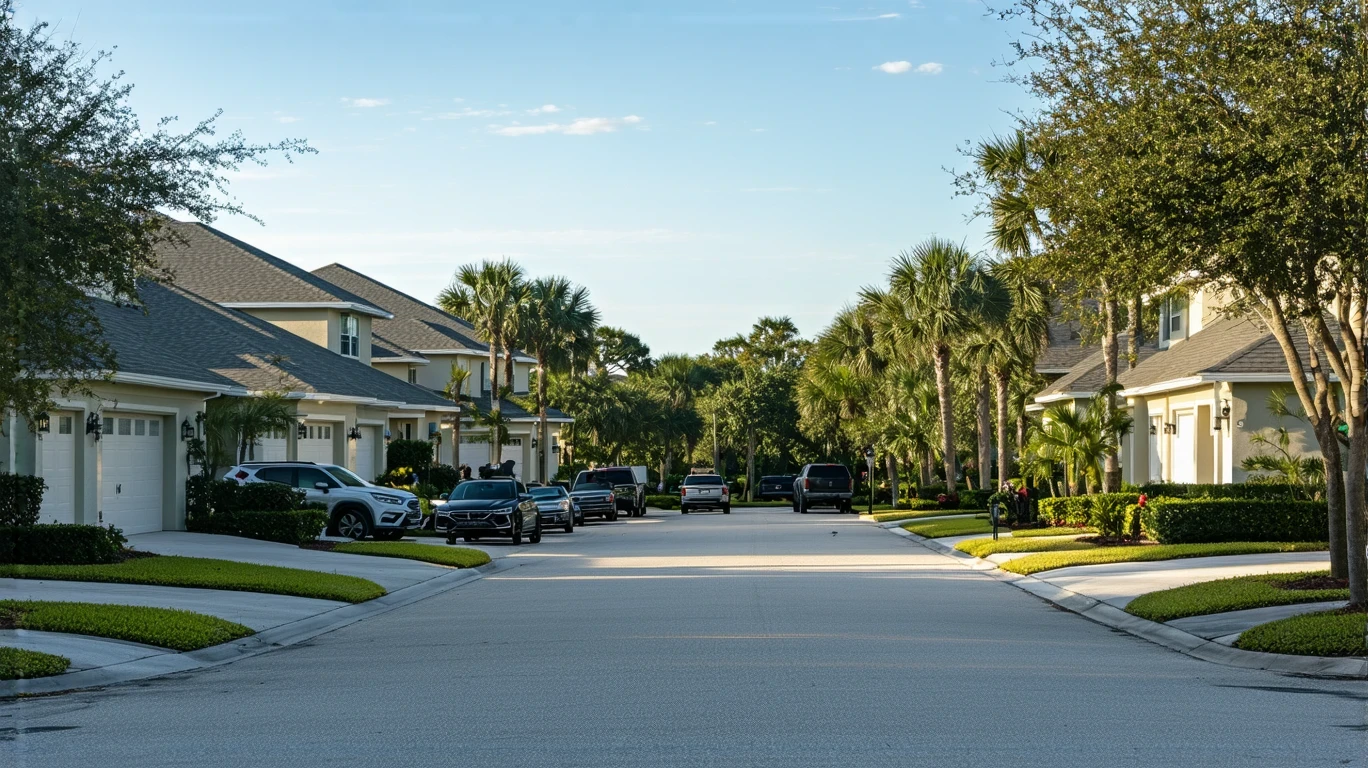
Housing dominates the cost equation here, particularly the upfront capital required to buy. Median home values sit just above $400,000, which translates to significant down payment and mortgage obligations for buyers. Renters face a different pressure point: monthly outlays that compete with ownership costs but without equity accumulation. The second major driver is transportation. Lutz’s built environment is car-oriented, with minimal pedestrian infrastructure and sparse food establishment density. That means households here don’t just need a car—they depend on it structurally for errands, healthcare access, and commuting. Fuel, insurance, and maintenance become recurring fixed costs, not optional conveniences.
Utilities add moderate seasonal volatility, driven by Florida’s extended cooling season and triple-digit summer heat. Electricity rates run 15.02¢ per kilowatt-hour, and air conditioning dominates summer bills. Natural gas, priced at $23.62 per thousand cubic feet, plays a smaller role but can spike during the rare cold snaps. Groceries track slightly above the national average, reflecting the regional price environment, but they’re not the primary cost surprise for newcomers.
Driver verdict: Housing entry cost and car dependency dominate financial pressure in Lutz. Surprises come from the structural necessity of vehicle ownership and the logistics burden of running errands across a dispersed, low-density layout.
Housing Costs (Primary Driver)
The housing pressure in Lutz centers on ownership. With a median home value of $403,200, buyers face substantial capital requirements—down payments, closing costs, and monthly mortgage obligations that exceed $2,000 before property taxes, insurance, and HOA fees. For households with stable income and long-term plans, ownership builds equity and locks in predictable principal and interest payments, though taxes and insurance remain exposed to annual increases.
Renters encounter a different calculus. Median gross rent stands at $1,562 per month, a figure that includes some utilities in certain properties but often excludes electricity, internet, and renter’s insurance. That monthly outlay approaches the lower end of ownership costs without the wealth-building component, making renting a transitional or flexibility-driven choice rather than a long-term cost advantage. For households prioritizing mobility or avoiding maintenance risk, renting preserves optionality. For those planning to stay, buying becomes the financially durable path—if the upfront barrier can be cleared.
Lutz functions as a buying-dominant market. The rent-to-value ratio and the area’s suburban character favor ownership for settled households, while renters tend to be in transition, testing the area, or prioritizing liquidity over equity.
| Housing Type | Cost Anchor | What That Buys You |
|---|---|---|
| Median Home Purchase | $403,200 | Equity-building ownership with fixed mortgage base, exposure to tax/insurance increases, maintenance responsibility |
| Median Rental | $1,562/month | Flexibility and mobility, no maintenance burden, no equity accumulation, exposure to annual lease increases |
Utilities & Energy Risk
Electricity is the dominant utility expense in Lutz, driven by Florida’s long cooling season and persistent heat. At 15.02¢ per kilowatt-hour, a household using 1,000 kWh per month—typical for a home running air conditioning from May through October—would see an illustrative bill around $150 before taxes and fees. That’s a baseline; larger homes, poor insulation, or older HVAC systems push usage higher, and summer peaks can stretch bills well beyond that threshold.
Natural gas, priced at $23.62 per thousand cubic feet (roughly equivalent to 100 therms), plays a smaller role. Most heating demand in Lutz is minimal, limited to occasional cold snaps in winter. Homes with gas water heaters or ranges see modest, steady usage rather than the seasonal spikes common in colder climates. Gas volatility exists but doesn’t drive household budgets the way electricity does.
Water and sewer costs vary by provider and usage tier but generally add $50 to $100 monthly. Trash collection is often bundled into HOA fees in planned communities or billed separately in older neighborhoods.
Risk classification: moderate. Electricity exposure is predictable in direction—summer will cost more—but the magnitude depends on home efficiency and household cooling tolerance. Gas and water remain minor line items. The primary risk is underestimating summer cooling costs during the first year, especially for newcomers unfamiliar with Florida’s humidity and heat duration.
Groceries & Daily Costs
Grocery costs in Lutz track slightly above the national baseline, reflecting the regional price environment captured in the 103 regional price parity index. Derived estimates suggest staples like bread run around $1.90 per pound, eggs $2.65 per dozen, and ground beef $6.95 per pound—figures that align with the modest cost premium seen across the Tampa metro area.
The financial impact of groceries depends less on per-item pricing and more on household size and dietary patterns. A single-person household buying minimally processed staples will see moderate weekly outlays, while larger families or those prioritizing organic, specialty, or prepared foods face meaningfully higher totals. The area’s sparse food establishment density—evidenced by low food and moderate grocery density in location-based patterns—means fewer nearby options for price comparison or last-minute runs, which can push households toward less frequent, larger shopping trips or reliance on specific chains.
Dining out and convenience purchases add variability. Lutz has some restaurant and retail presence, but the dispersed layout and limited walkable commercial corridors mean eating out often involves intentional trips rather than spontaneous stops. That structure can either suppress discretionary spending (fewer impulse purchases) or increase it (longer trips encourage bundled errands and meals).
Transportation Reality
Transportation in Lutz is a structural cost, not a discretionary one. The area’s car-oriented layout, with minimal pedestrian infrastructure and low walkability, makes vehicle ownership essential for daily life. Errands, healthcare visits, school drop-offs, and commuting all require a car. Bus service exists, but without rail transit and with limited route density, public transportation functions as a supplementary option rather than a primary mobility solution for most households.
Fuel costs reflect that dependency. At $2.90 per gallon, a household driving 25 miles round-trip daily for work—using a vehicle averaging 25 miles per gallon—would burn roughly one gallon per day, or about $87 monthly in fuel alone for that single commute. Add errands, school runs, and weekend trips, and fuel becomes a recurring fixed expense in the $150 to $250 range for single-car households. Multi-car households, common in suburban layouts like Lutz, double that exposure.
Insurance, maintenance, registration, and depreciation layer on top. Florida’s insurance environment tends toward higher premiums due to weather risk and uninsured driver rates, and routine maintenance (oil changes, tires, brakes) adds several hundred dollars annually per vehicle. For households accustomed to walkable urban environments or robust transit systems, the shift to car dependency represents both a financial and logistical adjustment.
The transportation burden in Lutz isn’t about distance alone—it’s about the necessity of owning, insuring, fueling, and maintaining at least one vehicle, and often two, just to function. That makes transportation a primary cost driver alongside housing, particularly for households stretching to afford entry into the area.
Cost Exposure Profiles
Cost pressure in Lutz varies sharply based on housing entry point, vehicle count, and household logistics. The dominant exposures are housing capital requirements and transportation dependency, with utilities adding moderate seasonal swings.
Low-exposure situations: Homeowners who bought years ago with locked-in mortgage rates, single-car households with short commutes, and individuals working from home face the lightest recurring cost load. Their fixed housing costs remain stable, transportation expenses stay contained, and the area’s moderate grocery and utility environment doesn’t impose severe month-to-month volatility. For these households, Lutz offers predictability and manageable overhead.
High-exposure situations: First-time buyers stretching to meet the $403,200 median home price, renters facing annual lease increases without equity offsets, and multi-car households with long commutes encounter compounding pressure. The upfront capital required for ownership, combined with the structural necessity of maintaining two vehicles, creates a high fixed-cost baseline before discretionary spending even begins. Add childcare logistics in an area with limited family infrastructure density—low school and playground availability—and the time and fuel costs of ferrying kids to activities or distant schools amplify the burden.
Seasonal utility spikes during summer months add variability but rarely tip the balance compared to housing and transportation. The real differentiator is whether a household has already cleared the housing entry barrier and minimized vehicle dependency through remote work or proximity to essential services. Those who haven’t face a cost structure that demands both capital and ongoing liquidity, with limited ability to substitute public transit or walkable errands for car-based logistics.
Frequently Asked Questions
Is Lutz more affordable than Tampa in 2026? Lutz’s median home value of $403,200 and rent of $1,562 per month generally position it as comparable to or slightly below some Tampa neighborhoods, but affordability depends on whether you’re buying or renting and how much you’ll spend on transportation given the car-dependent layout.
What does a typical cost profile look like in Lutz? Housing dominates, followed closely by transportation due to the area’s car-oriented structure. Utilities add moderate seasonal costs, and groceries track slightly above the national average but remain a smaller share of total household spending.
Do utilities cost more in Lutz than in nearby areas? Electricity rates at 15.02¢ per kWh are in line with the broader Tampa metro region, and natural gas at $23.62 per thousand cubic feet is typical for Florida. The cost burden comes more from usage intensity during the long cooling season than from rate premiums.
What costs tend to surprise newcomers in Lutz? The three biggest surprises are the structural necessity of owning at least one car (and often two), the upfront capital required to buy a home in the $400,000 range, and the summer electricity bills driven by extended air conditioning use in Florida’s heat and humidity.
Are property taxes higher in Lutz than in other Florida suburbs? Property tax rates vary by county and municipality, but Lutz falls within Hillsborough County’s structure. Taxes are a function of assessed home value and local millage rates, so higher home values generally mean higher absolute tax bills even if rates are comparable to nearby areas.
Is Lutz a good value for families? Lutz offers suburban space and homeownership opportunities, but families should account for limited nearby school and playground density, which may require longer drives for activities and education. The value proposition depends on whether the housing and space tradeoffs outweigh the transportation and logistics costs.
How does car dependency affect monthly costs in Lutz? Car dependency translates to recurring expenses for fuel, insurance, maintenance, and registration—often $300 to $500 monthly per vehicle. Multi-car households, common here, face doubled exposure, making transportation a primary fixed cost alongside housing.
Can you live in Lutz without a car? Practically, no. The area’s minimal pedestrian infrastructure, sparse food establishment density, and limited transit options make daily errands, healthcare access, and commuting extremely difficult without a personal vehicle. Bus service exists but doesn’t substitute for car ownership in this layout.
How this article was built: In addition to public economic data, this article incorporates location-based experiential signals derived from anonymized geographic patterns—such as access density, walkability, and land-use mix—to reflect how day-to-day living actually feels in Lutz, FL.
—