
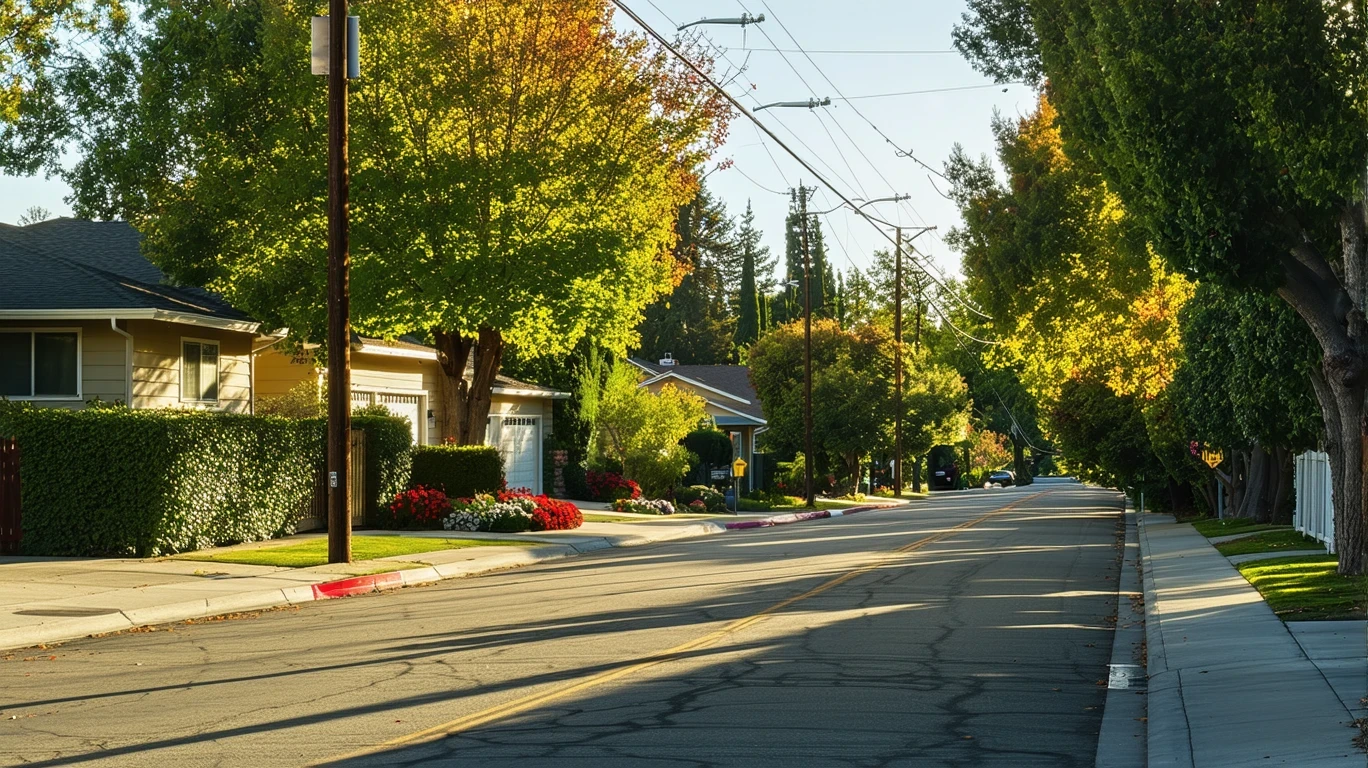
Here’s the myth: Sunnyvale is “the affordable alternative” to Los Altos because the median home value is lower. Here’s the reality: where cost pressure shows up matters more than any single number. Los Altos and Sunnyvale sit in the same Silicon Valley metro, share similar commute times, and face the same regional price environment—but the structure of daily costs differs in ways that make the same gross income feel stable in one city and tight in the other. In 2026, the decision between these two cities isn’t about which is cheaper overall; it’s about which cost pressures your household can absorb, which tradeoffs you’re willing to make, and how the physical layout of each place shapes your day-to-day spending, time, and flexibility.
Both cities attract tech workers, families seeking good schools, and professionals who value proximity to the Valley’s job centers. But Los Altos offers a different cost-of-living texture: higher housing entry costs paired with walkable pockets, integrated green space, and broadly accessible errands that reduce car dependency and convenience spending creep. Sunnyvale, meanwhile, presents a lower housing barrier but requires more intentional planning around transportation, grocery strategy, and utility volatility. This article explains where costs concentrate differently, how the same income behaves in each city, and which households feel the structural differences most acutely—without declaring a winner or calculating totals.
Housing Costs
Housing is the dominant cost driver in both cities, but the entry barrier and ongoing obligation differ substantially. In Los Altos, the median home value is $2,000,001, and the median gross rent is $3,501 per month. In Sunnyvale, the median home value is $1,680,700, and the median gross rent is $2,990 per month. These aren’t small gaps—they represent different levels of front-loaded financial commitment for buyers and different levels of monthly cash flow pressure for renters. Los Altos housing costs reflect a market where single-family homes dominate, lot sizes are larger, and competition for inventory is intense. Sunnyvale’s housing stock includes more multifamily options, attached homes, and condos, which creates more entry points for households willing to trade space for lower monthly obligations.
For renters, the $511 monthly difference between Los Altos and Sunnyvale translates to different levels of flexibility in other spending categories. Renters in Los Altos face higher baseline housing costs but gain access to neighborhoods with walkable errands infrastructure and integrated parks, which can reduce transportation and convenience spending. Renters in Sunnyvale absorb lower monthly rent but may face higher transportation costs if their housing location requires more driving for groceries, services, or recreation. For buyers, the difference in median home value affects down payment requirements, mortgage approval thresholds, and property tax exposure—even though neither city’s property tax rate is provided in the data, the higher assessed value in Los Altos means higher annual property tax bills for equivalent tax rates.
Families prioritizing space, yard access, and established neighborhoods may find Los Altos worth the premium if they can clear the entry barrier. Dual-income professionals seeking lower monthly obligations and more liquidity for other goals may prefer Sunnyvale’s housing market. First-time buyers and single adults often find Sunnyvale more accessible, while households with significant equity or high savings may prioritize Los Altos for its walkability, errands density, and green space integration. The housing decision in these two cities isn’t about which is “cheaper”—it’s about which structure of cost exposure aligns with your household’s income stability, savings position, and lifestyle priorities.
| Housing Type | Los Altos | Sunnyvale |
|---|---|---|
| Median Home Value | $2,000,001 | $1,680,700 |
| Median Gross Rent | $3,501/month | $2,990/month |
Housing takeaway: Los Altos imposes a higher entry barrier and ongoing housing obligation, but delivers walkable infrastructure and errands accessibility that reduce other cost pressures. Sunnyvale offers a lower housing entry point with similar regional access, making it more feasible for households prioritizing liquidity and flexibility over neighborhood walkability. Renters sensitive to monthly cash flow and buyers with limited down payment capacity face less pressure in Sunnyvale; households willing to absorb higher housing costs in exchange for reduced car dependency and integrated green space may find Los Altos worth the premium.
Utilities and Energy Costs
Utility costs in Los Altos and Sunnyvale are shaped by similar climate exposure—both cities experience warm, dry summers and mild winters typical of the Silicon Valley region—but small differences in rates and housing stock create different levels of predictability and volatility. Los Altos electricity rates are 31.91¢/kWh, while Sunnyvale rates are 33.60¢/kWh. Natural gas prices are nearly identical: $21.89/MCF in Los Altos and $21.94/MCF in Sunnyvale. These rate differences are modest, but they interact with home size, age, and cooling needs to produce different cost experiences for different household types.
In both cities, cooling dominates summer utility bills. Larger single-family homes—more common in Los Altos—require more energy to cool during extended warm periods, which amplifies the impact of electricity rates. Smaller homes, townhomes, and apartments—more prevalent in Sunnyvale—use less total energy for cooling, which reduces exposure to rate volatility even when the per-kWh rate is slightly higher. Older housing stock in both cities may lack modern insulation and efficient HVAC systems, which increases baseline usage and makes households more sensitive to rate changes. Newer construction, where present, tends to reduce cooling costs through better building envelopes and more efficient systems, but this advantage is distributed unevenly across both cities.
Households in Los Altos with larger homes face higher absolute utility bills despite slightly lower rates, because square footage and building age drive usage more than marginal rate differences. Families with kids, remote workers, and retirees who occupy homes during peak heat hours experience more cooling exposure. In Sunnyvale, smaller housing units reduce total usage, but the slightly higher electricity rate means households in older apartments or townhomes without efficient cooling may still face meaningful summer bill spikes. Single adults and couples in newer multifamily buildings experience the most predictable utility costs in both cities, because smaller footprints and shared-wall construction reduce heating and cooling needs year-round.
Utility takeaway: Los Altos households in larger single-family homes face higher absolute utility costs due to square footage and cooling needs, despite slightly lower electricity rates. Sunnyvale households in smaller units experience lower total usage but slightly higher per-unit rates, which matters most in older housing stock. Families and remote workers in larger homes feel more utility volatility in Los Altos; single adults and couples in newer, smaller units experience more predictable costs in Sunnyvale. The primary driver of utility pressure in both cities is home size and age, not rate differences.
Groceries and Daily Expenses
Grocery and daily spending pressure in Los Altos and Sunnyvale is shaped less by price differences—both cities sit in the same regional price environment—and more by access patterns, convenience infrastructure, and household habits. Los Altos shows high food and grocery establishment density, with broadly accessible options that reduce the need for long drives or bulk-shopping trips. This infrastructure supports frequent, smaller shopping trips and reduces reliance on convenience spending when households run out of staples. Sunnyvale’s grocery landscape includes big-box stores and chain supermarkets, but access density varies by neighborhood, which can push households toward less frequent, larger shopping trips or higher reliance on takeout and delivery when time is tight.
For families managing larger grocery volumes, the difference in access patterns affects both time cost and cash cost. In Los Altos, walkable errands infrastructure and high grocery density mean families can restock frequently without dedicating weekend hours to bulk shopping. In Sunnyvale, households in neighborhoods farther from grocery clusters may spend more time per trip or rely more heavily on convenience options—prepared foods, delivery fees, or last-minute purchases at higher-priced stores—when schedules don’t align with grocery runs. Single adults and couples face less pressure in both cities, because smaller household sizes reduce the frequency and volume of grocery trips, but those in Los Altos may still benefit from the ability to walk or bike for daily essentials.
Dining out and convenience spending also differ structurally. Los Altos’ mixed land use and walkable pockets mean restaurants, cafes, and takeout options are integrated into residential areas, which can increase spontaneous spending but also reduce the friction cost of accessing meals when cooking isn’t feasible. Sunnyvale’s dining options are more concentrated along commercial corridors, which requires more intentional planning and car trips but may reduce the temptation for frequent, unplanned spending. Households sensitive to convenience spending creep—especially dual-income professionals and parents managing tight schedules—may find Los Altos’ accessibility both a benefit (less friction) and a risk (more spending triggers). Households in Sunnyvale who plan meals and shopping trips in advance face fewer spontaneous spending opportunities but more time cost when access requires driving.
Groceries takeaway: Los Altos’ high grocery density and walkable errands infrastructure reduce time cost and convenience spending pressure for families and frequent shoppers, but integrated dining options may increase spontaneous spending. Sunnyvale’s grocery access varies by neighborhood, pushing some households toward bulk shopping or convenience spending when time is tight. Families managing large grocery volumes feel the access difference most acutely; single adults and couples experience less pressure in both cities. The primary difference is access friction and time cost, not grocery prices.
Taxes and Fees
Property taxes, sales taxes, and local fees shape ongoing cost obligations in both Los Altos and Sunnyvale, but the structure of these costs differs in ways that affect homeowners, renters, and long-term residents differently. While specific property tax rates aren’t provided in the data, Los Altos’ higher median home value means homeowners face higher annual property tax bills for equivalent tax rates. A home assessed at $2,000,001 generates significantly more property tax liability than a home assessed at $1,680,700, even if the millage rate is identical. This difference is front-loaded and predictable—homeowners know the obligation when they buy—but it compounds over time and affects households’ ability to absorb other cost increases.
Sales taxes in both cities reflect California’s statewide base rate plus local add-ons, but the exact rates aren’t specified in the data. In practice, sales tax exposure depends more on household spending patterns than rate differences. Families with kids, who spend more on goods subject to sales tax (clothing, household items, electronics), feel sales tax pressure more acutely than single adults or couples who spend proportionally more on services and housing. Renters in both cities face sales tax exposure without the offsetting property tax deduction available to homeowners, which can make consumption taxes feel more burdensome relative to income.
Local fees—trash collection, water, sewer, and parking—vary by jurisdiction and housing type. Single-family homeowners in both cities typically pay these fees directly, while renters may have some fees bundled into rent or paid separately. HOA fees are more common in Sunnyvale’s multifamily and attached housing stock, where they may cover landscaping, exterior maintenance, and shared amenities. In Los Altos, single-family homes dominate, so HOA fees are less prevalent, but homeowners bear the full cost of property maintenance, landscaping, and repairs. These structural differences mean predictability vs. variability in ongoing obligations: HOA fees are fixed and predictable but inflexible; direct maintenance costs are variable but controllable.
Taxes and fees takeaway: Los Altos homeowners face higher property tax exposure due to higher assessed home values, even at equivalent tax rates. Sunnyvale homeowners and renters in HOA-governed properties experience more predictable fees but less control over cost increases. Families with high goods consumption feel sales tax pressure more in both cities; long-term homeowners in Los Altos absorb higher cumulative property tax obligations. The primary difference is magnitude and predictability, not structure.
Transportation & Commute Reality
Commute patterns and transportation costs in Los Altos and Sunnyvale are shaped by similar regional access—both cities sit in the heart of Silicon Valley with comparable average commute times—but differences in car dependency, transit viability, and walkability create different cost and time pressures for different households. Los Altos shows an average commute time of 22 minutes, with 3.1% of workers working from home and 27.8% facing long commutes. Sunnyvale shows an average commute time of 23 minutes, with 5.0% working from home and 32.2% facing long commutes. These differences are modest, but they interact with local infrastructure to produce different transportation experiences.
Los Altos offers walkable pockets with a high pedestrian-to-road ratio, bus service, and some cycling infrastructure. This means households in well-connected neighborhoods can reduce car trips for errands, school drop-offs, and local services, which lowers gas consumption, parking costs, and vehicle wear. Gas prices in Los Altos are $4.59/gal, compared to $4.22/gal in Sunnyvale—a difference that matters most for households making frequent, long-distance commutes or multiple daily car trips. Sunnyvale’s higher percentage of long commuters (32.2% vs. 27.8%) suggests more residents face extended drives, which amplifies the impact of gas prices and vehicle maintenance costs over time.
For families with kids, the difference in walkability and errands accessibility affects daily logistics complexity. In Los Altos, integrated parks, schools, and grocery density mean some households can manage school runs, errands, and recreation without multiple car trips per day. In Sunnyvale, households in less walkable neighborhoods may require more driving for the same activities, which increases both time cost and cash cost. Single adults and couples without school-age children face less transportation pressure in both cities, but those in Los Altos may still benefit from the ability to walk or bike for daily needs, reducing reliance on a second vehicle or ride-hailing services.
Transportation takeaway: Los Altos’ walkable pockets and errands accessibility reduce car dependency for some households, offsetting higher gas prices for those who can manage daily logistics without constant driving. Sunnyvale’s higher percentage of long commuters and lower walkability increase transportation costs for households in less connected neighborhoods. Families managing school runs and errands feel the infrastructure difference most; single adults and remote workers face less pressure in both cities. The primary difference is car dependency and logistics complexity, not commute time.
Cost Structure Comparison
Housing dominates the cost experience in both Los Altos and Sunnyvale, but the magnitude and structure of that dominance differ in ways that shape which households feel pressure most acutely. Los Altos imposes a higher entry barrier and ongoing housing obligation, but delivers walkable infrastructure, integrated green space, and broadly accessible errands that reduce transportation costs, convenience spending, and daily logistics friction. Sunnyvale offers a lower housing entry point with similar regional job access, but households face more car dependency, higher transportation exposure for long commuters, and more variability in errands accessibility depending on neighborhood. The decision between these two cities isn’t about which is cheaper—it’s about which cost pressures your household can absorb and which tradeoffs align with your income stability, time budget, and lifestyle priorities.
Utilities introduce modest differences in predictability and volatility, driven more by home size and age than by rate differences. Los Altos households in larger single-family homes face higher absolute utility costs due to cooling needs, while Sunnyvale households in smaller units experience lower total usage but slightly higher per-unit rates. Families and remote workers in larger homes feel more utility volatility in Los Altos; single adults and couples in newer, smaller units experience more predictable costs in Sunnyvale. Grocery and daily spending pressure differs more by access friction and time cost than by prices. Los Altos’ high grocery density and walkable errands infrastructure reduce the need for bulk shopping trips and convenience spending, while Sunnyvale’s more dispersed grocery access pushes some households toward less frequent, larger trips or higher reliance on takeout when time is tight.
Transportation patterns matter more in Sunnyvale, where a higher percentage of long commuters and lower walkability increase gas consumption, vehicle wear, and daily logistics complexity. Los Altos’ walkable pockets and integrated parks reduce car dependency for households in well-connected neighborhoods, offsetting higher gas prices for those who can manage errands and school runs without constant driving. Taxes and fees reflect Los Altos’ higher home values, which translate to higher property tax obligations for homeowners, while Sunnyvale’s more prevalent HOA fees create predictable but inflexible ongoing costs for multifamily residents. The better choice depends on which costs dominate your household: housing-sensitive households may prefer Sunnyvale’s lower entry barrier; transportation-sensitive households may prefer Los Altos’ walkability and errands density; families managing tight schedules may value Los Altos’ reduced logistics friction despite higher housing costs.
How this article was built: In addition to public economic data, this article incorporates location-based experiential signals derived from anonymized geographic patterns—such as access density, walkability, and land-use mix—to reflect how day-to-day living actually feels in Los Altos, CA.
How the Same Income Feels in Los Altos vs Sunnyvale
Single Adult
For a single adult, housing becomes the first non-negotiable cost, and the difference between Los Altos and Sunnyvale is substantial. In Los Altos, rent absorbs a larger share of gross monthly income, leaving less flexibility for discretionary spending, savings, or unexpected expenses. In Sunnyvale, lower rent creates more breathing room, but transportation costs may rise if the neighborhood requires more driving for errands, dining, or recreation. Walkability in Los Altos reduces the need for a car or frequent ride-hailing, which can offset some of the housing premium for single adults who value convenience and time savings. In Sunnyvale, single adults with stable commutes and lower housing costs may find more financial flexibility, but those in less walkable neighborhoods face higher time costs for daily logistics.
Dual-Income Couple
For a dual-income couple, the housing difference between Los Altos and Sunnyvale becomes more manageable relative to combined gross income, but the tradeoff shifts to time cost vs. cash cost. In Los Altos, higher housing costs are offset by reduced transportation needs, fewer grocery trips, and integrated errands infrastructure that lowers daily logistics friction. In Sunnyvale, lower housing costs create more liquidity for savings, travel, or other goals, but couples may spend more time driving for errands, managing longer commutes, or coordinating schedules around less accessible services. Couples prioritizing walkability, green space access, and reduced car dependency may find Los Altos worth the housing premium; those prioritizing financial flexibility and liquidity may prefer Sunnyvale’s lower entry barrier and ongoing obligation.
Family with Kids
For families with kids, the cost structure difference between Los Altos and Sunnyvale becomes most acute in daily logistics complexity and time budget pressure. In Los Altos, higher housing costs are paired with walkable school access, integrated parks, and high grocery density, which reduce the number of car trips required for school runs, errands, and recreation. This infrastructure lowers both time cost and transportation costs, even though housing absorbs more of the monthly budget. In Sunnyvale, lower housing costs create more financial flexibility, but families in less walkable neighborhoods face more driving for the same activities, which increases gas consumption, vehicle wear, and schedule coordination challenges. Families with tight schedules and multiple daily logistics demands may find Los Altos’ reduced friction worth the housing premium; those prioritizing lower monthly obligations and more liquidity may prefer Sunnyvale’s housing market despite higher transportation and time costs.
Decision Matrix: Which City Fits Which Household?
| Decision factor | If you’re sensitive to this… | Los Altos tends to fit when… | Sunnyvale tends to fit when… |
|---|---|---|---|
| Housing entry + space needs | You need lower upfront costs or more liquidity for other goals | You can absorb higher housing costs in exchange for walkability and errands density | You prioritize lower monthly obligations and more financial flexibility |
| Transportation dependence + commute friction | You want to reduce car trips, gas costs, and daily driving time | You live in a walkable pocket and can manage errands without constant driving | You have a stable commute and don’t mind driving for errands and services |
| Utility variability + home size exposure | You want predictable monthly bills and lower cooling costs | You’re in a smaller or newer home with efficient systems | You’re in a smaller multifamily unit with lower total usage |
| Grocery strategy + convenience spending creep | You want to avoid frequent, unplanned spending or long shopping trips | You value frequent, walkable access to groceries and dining without driving | You plan meals in advance and prefer bulk shopping with fewer spontaneous spending triggers |
| Fees + friction costs (HOA, services, upkeep) | You want predictable, bundled costs or prefer control over maintenance spending | You’re buying a single-family home and want control over maintenance timing and costs | You’re in an HOA-governed property and value predictable, bundled fees |
| Time budget (schedule flexibility, errands, logistics) | You have tight schedules, multiple daily logistics demands, or limited time for errands | You value reduced logistics friction and walkable access to schools, parks, and services | You have flexible schedules and don’t mind driving for errands and activities |
Lifestyle Fit
Los Altos and Sunnyvale offer different lifestyle textures shaped by urban form, access patterns, and community character. Los Altos presents a more residential, low-density environment with walkable pockets, integrated parks, and mixed land use that supports frequent, short trips for errands and recreation. The city’s high grocery and food establishment density means households can manage daily needs without long drives, and the presence of green space and water features creates more opportunities for outdoor activity close to home. Families with kids benefit from school access and playground density, while single adults and couples may appreciate the ability to walk or bike for coffee, groceries, or casual dining. The tradeoff is higher housing costs and a quieter, more suburban character that may feel less dynamic for those seeking urban energy or nightlife.
Sunnyvale offers a more varied urban form, with pockets of higher-density multifamily housing, commercial corridors, and single-family neighborhoods that create different lifestyle experiences depending on location. The city’s higher percentage of long commuters and lower walkability mean households in some neighborhoods rely more heavily on cars for daily logistics, but the lower housing entry barrier creates more financial flexibility for other priorities. Sunnyvale’s tech industry presence and proximity to major employers make it a practical choice for professionals prioritizing job access and liquidity over walkability. The city’s dining and recreation options are more concentrated along commercial corridors, which requires more intentional planning but may reduce spontaneous spending for households managing tight budgets.
Both cities benefit from Silicon Valley’s mild climate, with warm, dry summers and limited heating needs in winter. This climate pattern reduces utility volatility compared to regions with extreme seasonal swings, but it also means cooling costs dominate summer bills for households in larger or older homes. Los Altos’ integrated green space and park density create more opportunities for outdoor recreation without driving, which can reduce entertainment spending and support active lifestyles. Sunnyvale’s proximity to regional parks and open space offers similar benefits, but access may require more driving depending on neighborhood. Quick fact: Los Altos shows a 22-minute average commute, slightly lower than Sunnyvale’s 23 minutes, but the difference is less meaningful than the walkability and errands infrastructure within each city. Quick fact: Los Altos has a lower percentage of long commuters (27.8%) compared to Sunnyvale (32.2%), suggesting more residents work closer to home or have more flexible schedules.
Frequently Asked Questions
Is Sunnyvale actually cheaper than Los Altos in 2026, or is that just a myth?
Sunnyvale has a lower housing entry barrier—both for renters and buyers—but “cheaper” depends on which costs dominate your household. Los Altos imposes higher housing costs but delivers walkable errands infrastructure, integrated green space, and reduced car dependency that lower transportation and convenience spending. Sunnyvale’s lower rent and home values create more financial flexibility, but households in less walkable neighborhoods may face higher transportation costs and more time spent driving for errands. The better choice depends on whether you’re more sensitive to housing costs or transportation and logistics friction.
How do grocery costs and daily expenses compare between Los Altos and Sunnyvale in 2026?
Grocery prices in Los Altos and Sunnyvale are similar because both cities sit in the same regional price environment, but access patterns and convenience infrastructure differ in ways that affect spending. Los Altos’ high grocery density and walkable errands infrastructure reduce the need for bulk shopping trips and lower convenience spending pressure for families and frequent shoppers. Sunnyvale’s grocery access varies by neighborhood, pushing some households toward less frequent, larger trips or higher reliance on takeout when time is tight. The primary difference is access friction and time cost, not prices.
Which city has lower transportation costs in 2026: Los Altos or Sunnyvale?
Transportation costs depend more on car dependency and commute patterns than on gas prices alone. Los Altos has higher gas prices ($4.59/gal vs. $4.22/gal in Sunnyvale), but walkable pockets and high errands density reduce car trips for households in well-connected neighborhoods. Sunnyvale has a higher percentage of long commuters (32.2% vs. 27.8% in Los Altos), which increases gas consumption and vehicle wear for those facing extended drives. Families managing school runs and errands feel the infrastructure difference most; single adults and remote workers face less pressure in both cities.
Do utilities cost more in Los Altos or Sunnyvale in 2026?
Utility costs are shaped more by home size and age than by rate differences. Los Altos has slightly lower electricity rates (31.91¢/kWh vs. 33.60¢/kWh in Sunnyvale), but larger single-family homes—more common in Los Altos—require more energy for cooling, which increases absolute utility bills. Sunnyvale’s smaller multifamily units use less total energy, which reduces exposure to rate volatility even when the per-kWh rate is slightly higher. Families and remote workers in larger