
A software engineer earning $180,000 stood in a Los Altos rental, calculator open on her phone, trying to make the numbers work. The apartment was clean, the neighborhood walkable, groceries nearby. But the rent alone—before utilities, before her car, before anything else—would take nearly 40% of her gross pay. She’d budgeted carefully for the move, accounted for California’s reputation, even padded her estimates. What she hadn’t expected was how quickly “comfortable” would become “constantly calculating.”
Living comfortably in Los Altos isn’t about hitting a magic number. It’s about whether your income gives you room to breathe—or whether every decision, from turning on the heat to choosing where to park, becomes a negotiation with your budget.
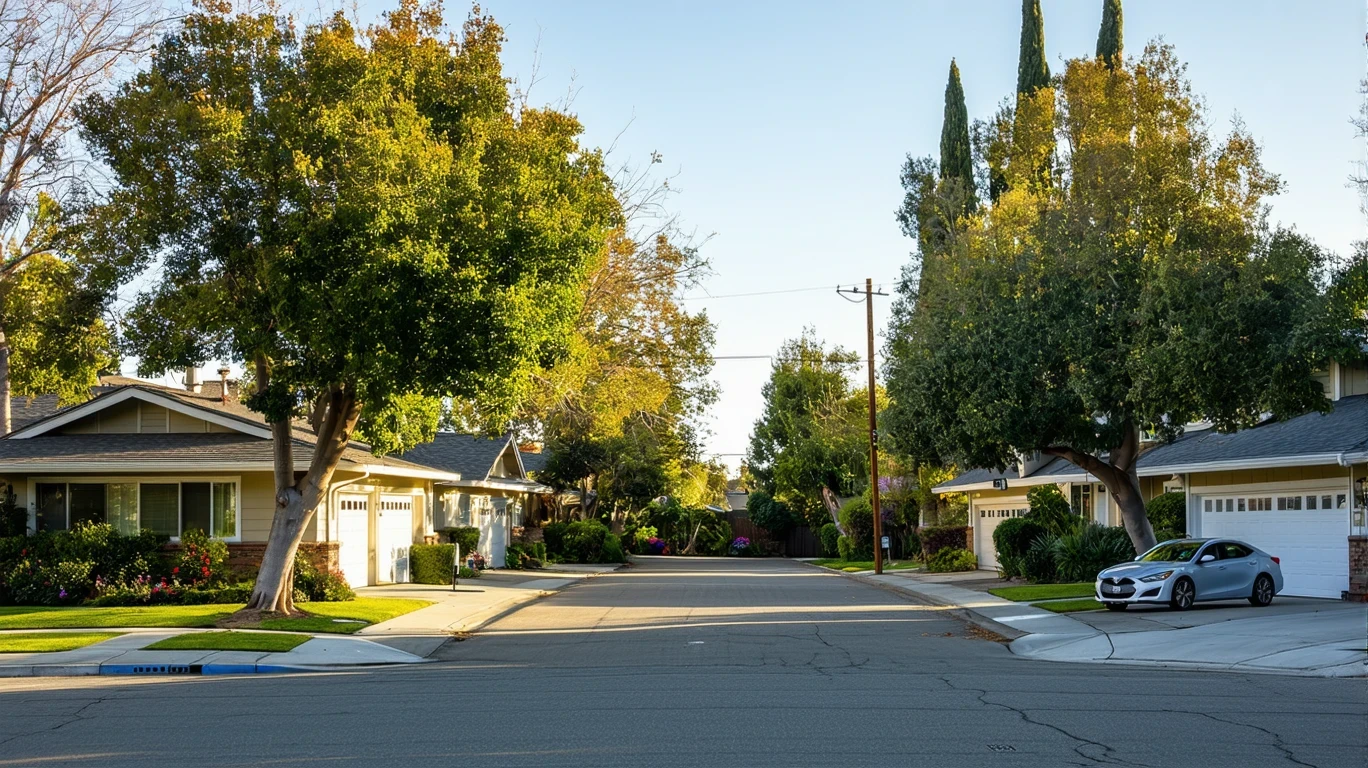
What “Living Comfortably” Means in Los Altos
Comfort here doesn’t mean luxury. It means your housing doesn’t crowd out everything else. It means you can absorb a surprise utility bill without rearranging your month. It means you’re not weighing every grocery run or calculating whether it’s worth driving somewhere twice.
In Los Altos, comfort also means accepting the context. This is Silicon Valley—a place where median household income exceeds $250,000 and median home values top $2,000,000. Rent for a typical apartment runs over $3,500 per month. Those aren’t outliers. They’re the baseline. Expectations around space, quality, and convenience are shaped by that reality, and the cost structure reflects it.
Comfort is relative. What feels spacious in one city feels cramped here. What feels like a reasonable commute elsewhere might be your best-case scenario. And what feels like “getting by” in Los Altos might look enviable from the outside—but still leave you feeling stretched.
Where Income Pressure Shows Up First
Housing is the dominant force. Whether you’re renting or buying, it claims a larger share of income than almost anywhere else in the country. Even households earning well into six figures find themselves making tradeoffs: smaller space, older buildings, or longer commutes to surrounding areas. The pressure isn’t subtle. It’s the first thing you feel, and it shapes every other decision.
Utilities add a secondary layer of volatility. Electricity rates in Los Altos run over 31¢ per kilowatt-hour—significantly above national norms. That means running air conditioning during warm stretches or heating during cooler months (even mild ones) produces bills that swing unpredictably. It’s not catastrophic, but it’s another line item that doesn’t compress easily.
Transportation costs are more moderate, but they’re not trivial. Gas prices hover around $4.59 per gallon, and while average commutes are relatively short at 22 minutes, fewer than 4% of workers operate from home. That means most people are driving regularly. The city’s layout includes walkable pockets and broadly accessible grocery and food options, which reduces some errands-related driving. But car ownership remains typical, and the costs—insurance, maintenance, fuel—don’t disappear just because you can walk to the store occasionally.
For families, pressure multiplies. Space needs grow. School quality becomes non-negotiable. Family infrastructure is present—schools and parks exist—but competition for access and quality is intense. Integrated green space helps with recreation, but it doesn’t offset the financial weight of raising children in a high-cost environment.
How the Same Income Feels Different by Household
A single adult earning $120,000 might find Los Altos manageable, though not easy. Rent still dominates, but a smaller space is easier to cool and heat. The city’s mixed land use and walkable pockets mean errands don’t always require a car, which trims some transportation costs. There’s less pressure around schools or needing multiple bedrooms. The challenge is whether that income leaves room for saving, for flexibility, for anything beyond covering the essentials and maintaining a baseline quality of life.
A couple earning $180,000 combined faces a different equation. Housing costs are shared, but they’re still severe. Dual income helps, but it also means coordinating two commutes—and with fewer than 4% working from home, both partners are likely driving regularly. There’s more flexibility around space-versus-location tradeoffs, and the ability to absorb occasional cost spikes improves. But the margin for error is still thin. One job loss, one major repair, one unexpected expense, and the balance tips quickly.
Families earning $220,000 often feel the most pressure, even though that income would provide comfort in many other places. Space needs are non-negotiable, and that pushes housing costs even higher. Family infrastructure is present, but access to quality schools and programs is competitive. Integrated parks and green space help with daily life, but they don’t reduce the financial load. Nearly 28% of workers here have long commutes, and for families trying to balance work, school, and logistics, time becomes as constrained as money. The income is high, but so is the burn rate—and the gap between “getting by” and “comfortable” can feel impossibly wide.
The Comfort Threshold (Qualitative)
There’s a point where income stops dictating every choice. Where housing is covered without panic. Where a high utility bill is annoying, not destabilizing. Where you can say yes to plans without checking your account first. Where saving becomes plausible, not aspirational.
That threshold isn’t a number. It’s the point where tradeoffs ease. Where you’re not constantly weighing time against money, or space against location, or quality against cost. Where your income gives you options, not just coverage.
In Los Altos, that threshold is high. Higher than most people expect. And it varies dramatically by household size, by commute, by how much space you need, by how much volatility you can tolerate. Some households reach it at $200,000. Others don’t feel it until $300,000 or more. The difference isn’t lifestyle creep—it’s structure. It’s how many people you’re supporting, how far you’re driving, how much housing you need, and how much margin you require to feel secure.
Why Online Cost Calculators Get Los Altos Wrong
Most cost-of-living calculators produce a total: “You’ll need $X per month to live in Los Altos.” The number looks authoritative. It’s almost always wrong.
The problem isn’t the math. It’s the assumptions. Calculators assume average household size, average commutes, average utility usage, average expectations. But “average” doesn’t describe anyone’s actual life. A single person in a studio uses utilities differently than a family in a three-bedroom house. A couple with one car and short commutes spends differently than a family with two vehicles and long drives. A household that prioritizes walkable errands experiences day-to-day costs differently than one that drives everywhere.
Calculators also miss the texture. They’ll tell you the median rent, but they won’t explain that finding a place at that price might mean compromising on space, age, or location. They’ll estimate transportation costs, but they won’t capture how much time and flexibility you’re trading. They’ll include a line for utilities, but they won’t explain how much seasonal swings can vary or how electricity rates here compare to other places.
People feel surprised after moving because the total didn’t prepare them for the tradeoffs. The number said it was doable. The reality is more complicated.
How to Judge Whether Your Income Fits Los Altos
Instead of asking “Is my income enough?”, ask these:
How sensitive are you to housing tradeoffs? Can you live in a smaller space, an older building, or a less central location? Or do you need specific conditions to feel settled? Housing will dominate your budget. If you can’t flex on it, your income needs to be higher.
Can you absorb seasonal utility swings? Electricity rates here are high, and bills fluctuate with temperature. If a $50 or $100 surprise in a given month would stress your budget, you’re operating without enough margin.
Is time or money your limiting factor? Shorter commutes are common here, and the city’s layout supports some walkable errands and accessible daily needs. But if your job or household requires long drives, or if you value proximity over cost savings, your transportation expenses—and time costs—will climb. Which constraint do you manage better?
How much flexibility do you expect month to month? Comfort isn’t just about covering bills. It’s about having room to say yes—to plans, to opportunities, to changes. If your budget only works when everything goes right, it doesn’t work.
What does “enough space” mean to you? For families especially, space isn’t optional. But space here is expensive, and the tradeoff between size and cost is steep. If you need multiple bedrooms, outdoor access, or room to spread out, your income threshold moves significantly higher.
These aren’t pass/fail questions. They’re calibration. The goal is to understand where your income will feel tight, where it will feel adequate, and where it might give you breathing room.
How Day-to-Day Living Actually Works in Los Altos
The city’s structure shapes how people move and manage logistics in ways that affect both time and money. Grocery stores and food options are broadly accessible—density is high, and you’re rarely far from what you need. That reduces some of the friction around errands. You’re not driving across town for basics.
Walkable pockets exist, especially in areas with mixed residential and commercial land use. The pedestrian-to-road ratio is higher than in many suburban areas, and some people do walk or bike for nearby errands. But transit is limited to bus service, and car ownership remains typical. The layout supports convenience, not car-free living.
For families, the infrastructure is present—schools, parks, playgrounds—but it’s not abundant. Park density is integrated enough to support regular outdoor access, and school density is moderate. That’s enough to make daily life functional, but it also means competition for quality and access is real. You’re not scrambling, but you’re not swimming in options either.
Healthcare access is routine. Clinics and pharmacies are available locally, though there’s no hospital within city limits. For regular care, you’re covered. For specialist or emergency care, you’ll travel.
The building height profile is mixed—not uniformly low-rise, not high-density urban. It’s a middle texture that supports a range of housing types without feeling either sprawling or vertical. That affects both the rental market and the ownership market: there’s variety, but not endless supply.
What this means in practice: daily logistics are manageable. You’re not spending hours on errands or fighting infrastructure. But the convenience doesn’t translate to affordability. Accessible grocery stores don’t mean cheap groceries. Walkable blocks don’t mean low rent. The structure makes life easier to navigate—it doesn’t make it cheaper to live.
Frequently Asked Questions About Living Comfortably in Los Altos
Is $150,000 a year enough to live comfortably in Los Altos?
For a single person, possibly—but with limited margin. For a couple, it’s tight. For a family, it’s not enough to avoid constant tradeoffs. Housing alone will claim a large share, and there won’t be much room for volatility, saving, or flexibility. You’ll cover expenses, but comfort requires more cushion than that income provides here.
Why does it feel like everyone here earns so much?
Because median household income exceeds $250,000. That’s not an exaggeration—it’s the actual middle. The cost structure reflects that. Housing, services, and expectations are all calibrated to a high-income population. If your income is below that median, you’re not imagining the gap. It’s real, and it affects how far your money goes.
Can you live in Los Altos without a car?
Technically, yes—bus service exists, and some areas are walkable. Practically, it’s difficult. Fewer than 4% of workers operate from home, and most people drive regularly. The city’s layout supports some errands on foot, but car ownership remains the norm. If you’re committed to going car-free, it’s possible, but it will limit your options and require planning.
Do families really need $300,000+ to feel comfortable here?
Many do. Space needs are non-negotiable for most families, and that pushes housing costs higher. Add in childcare, school-related expenses, and the logistical complexity of managing multiple schedules, and the burn rate climbs quickly. Some families make it work on less, but they’re making significant tradeoffs—and they’re often not building savings or absorbing surprises easily.
Is Los Altos worth it if you’re stretching to afford it?
That depends on what you’re stretching for. If it’s a job opportunity that significantly raises your earning trajectory, maybe. If it’s proximity to family, schools, or a specific community, maybe. But if you’re stretching just to be here—if the income pressure is constant and the tradeoffs feel unsustainable—it’s worth asking whether the cost matches the return. Stretching doesn’t always lead somewhere better. Sometimes it just leads to more stretching.
How this article was built: In addition to public economic data, this article incorporates location-based experiential signals derived from anonymized geographic patterns—such as access density, walkability, and land-use mix—to reflect how day-to-day living actually feels in Los Altos, CA.
Los Altos can work well for some households—but only if expectations match reality. The income threshold for comfort here is high, the tradeoffs are real, and the margin for error is thin. If your income gives you room to absorb housing costs, handle volatility, and still save, you’ll likely find it livable. If it doesn’t, the pressure won’t ease just because the neighborhood is pleasant.