
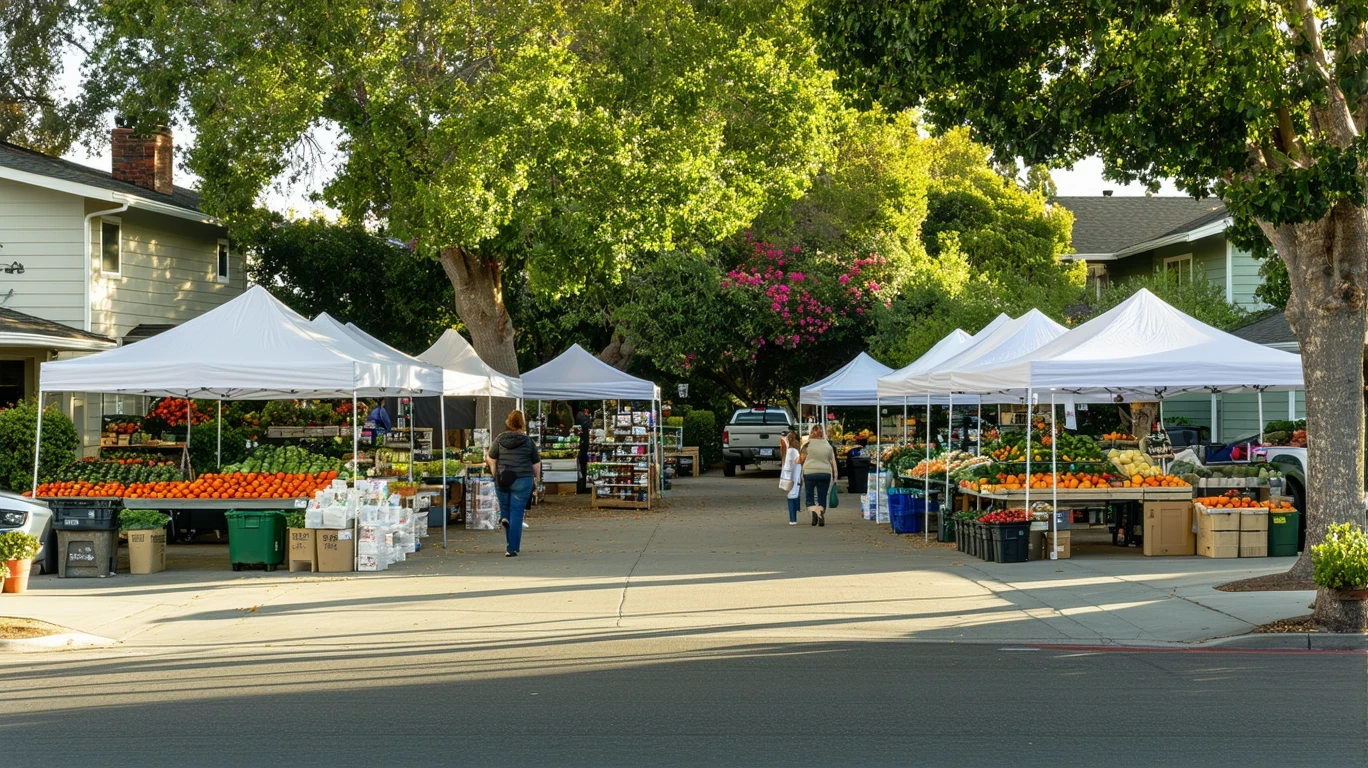
How Grocery Costs Feel in Los Altos
Grocery shopping in Los Altos reflects the broader cost structure of Silicon Valley: prices tend to run higher than many U.S. markets, store options skew toward premium and specialty formats, and the baseline expectation is convenience over bargain hunting. For households earning near or above the city’s $250,001 median household income, weekly grocery runs may feel routine. But for younger professionals, single earners, or service workers living here, food costs can become a persistent pressure point—one that requires intentional store selection and shopping discipline to manage.
Los Altos sits in a region where grocery infrastructure is abundant but not uniformly affordable. The city and its immediate surroundings offer dense access to food retailers, farmers’ markets, and specialty grocers, which means convenience is high. But that convenience comes with a price premium baked into the local market. Regional price parity data shows Los Altos aligning closely with broader Bay Area cost structures, and grocery pricing follows that pattern. Items like ground beef at $6.75/lb or cheese at $4.84/lb illustrate how staple costs in Los Altos compare to what you’d find in less expensive metros—often 20–30% higher for the same products.
Who feels grocery costs most acutely depends on household income and size. A tech household with two earners and discretionary income may not track per-pound pricing closely. A single professional renting a one-bedroom and managing student loans will. Families with multiple children feel the multiplier effect: every price difference compounds across gallons of milk, dozens of eggs, and weekly produce hauls. In Los Altos, grocery costs don’t break budgets outright for most residents, but they do create a steady undertow that separates financially comfortable households from those operating on tighter margins.
Grocery Price Signals (Illustrative)
These prices illustrate how staple items tend to compare locally—not a full shopping list. They’re derived estimates based on national baselines adjusted by regional price parity, and they reflect typical pricing patterns rather than store-specific or week-specific snapshots. Use them as anchors for understanding relative cost positioning, not as checkout-accurate figures.
| Item | Price |
|---|---|
| Bread | $1.84/lb |
| Cheese | $4.84/lb |
| Chicken | $2.04/lb |
| Eggs | $2.58/dozen |
| Ground Beef | $6.75/lb |
| Milk | $4.10/half-gallon |
| Rice | $1.06/lb |
What stands out is the consistency of the premium. Protein costs—chicken, beef—run higher than in most non-coastal markets. Dairy follows the same pattern. Even pantry staples like rice, which tend to be relatively flat across regions, carry a modest markup here. The takeaway isn’t that any single item is unaffordable; it’s that the cumulative effect across a full week of meals adds up faster in Los Altos than in peer suburbs outside high-cost metros.
These numbers also underscore the importance of store choice. The prices above reflect a blended regional view, but the actual experience varies significantly depending on whether you’re shopping at a discount grocer, a mid-tier chain, or a premium organic market. In Los Altos, the default store format leans toward the latter two, which means households need to be deliberate about where they shop if cost control matters.
Store Choice & Price Sensitivity
Grocery price pressure in Los Altos varies more by store tier than by any single “average” cost. The city’s retail landscape includes premium grocers with curated selections, mid-tier chains offering conventional formats, and discount options that require a short drive but deliver meaningfully lower per-item costs. How much you spend on groceries here depends less on what you buy and more on where you buy it.
Premium grocers dominate the immediate Los Altos area. These stores emphasize organic produce, specialty proteins, prepared foods, and high-margin convenience items. They’re designed for households that prioritize quality, variety, and speed over price optimization. Shopping exclusively at premium formats can push weekly grocery costs 30–40% higher than discount alternatives, and that gap compounds quickly for families. For high-income households, that premium buys time and aligns with lifestyle preferences. For cost-conscious renters or single earners, it’s a structural disadvantage that requires either driving farther or accepting a tighter food budget.
Mid-tier chains offer a more balanced value proposition. These stores carry recognizable national brands, seasonal promotions, and loyalty programs that soften the per-unit cost without requiring the trip to a discount warehouse. They’re the default for many Los Altos households—convenient enough to access regularly, affordable enough to avoid sticker shock on every trip. The tradeoff is selection: mid-tier stores won’t match the breadth of premium grocers or the rock-bottom pricing of discount formats, but they occupy a practical middle ground for families managing both time and budget.
Discount grocers and warehouse clubs sit outside Los Altos proper but within a 10–15 minute drive. These formats strip out ambiance and curation in favor of volume pricing and no-frills efficiency. Households willing to buy in bulk, plan meals around what’s on sale, and tolerate limited selection can cut their grocery costs significantly. The friction is logistical: discount shopping requires more planning, more storage space, and a willingness to drive past closer options. For some households, that friction isn’t worth the savings. For others—especially larger families or those stretching a single income—it’s the difference between grocery costs feeling manageable or oppressive.
In practice, many Los Altos households mix formats. They’ll buy proteins and pantry staples at a discount grocer, pick up produce and dairy mid-week at a nearby mid-tier chain, and occasionally shop premium for specialty items or convenience. That hybrid approach requires more intentionality than defaulting to the closest store, but it’s how cost-conscious households navigate a market where proximity and affordability don’t always align.
What Drives Grocery Pressure Here
Grocery costs in Los Altos don’t exist in isolation—they’re shaped by income distribution, household composition, regional supply chains, and the structural realities of living in a high-cost metro. Understanding what drives food price pressure here helps explain why some households barely notice grocery costs while others feel them acutely.
Income is the most obvious lever. A household earning $250,000 or more can absorb premium grocery pricing without adjusting behavior. Groceries become a small percentage of monthly outflow, and the focus shifts to convenience and quality rather than cost per pound. But Los Altos also includes younger professionals, service workers, and single-income households for whom groceries represent a much larger share of discretionary spending. For these households, every decision—store choice, brand selection, meal planning—carries financial weight. The city’s high median income creates an affordability mirage: the market assumes deep pockets, but not every resident has them.
Household size amplifies grocery sensitivity in predictable ways. A single professional might spend modestly on groceries even at premium stores, because volume stays low. A family of four or five, by contrast, burns through milk, eggs, produce, and proteins at a pace that makes per-unit pricing critical. In Los Altos, where housing costs already claim a large share of income for many families, grocery expenses can tip a budget from comfortable to stretched. The difference between shopping discount and shopping premium might be $200–$300 per month for a larger household—a gap that compounds into thousands annually.
Regional distribution patterns also play a role. Silicon Valley’s grocery market is served by supply chains optimized for affluent consumers, which means premium products move efficiently while budget-focused formats remain underrepresented. Los Altos benefits from high grocery density—food and grocery establishment availability exceeds regional thresholds—but that density skews toward higher-margin store formats. The result is convenience without affordability: you’re never far from a grocery store, but you might be far from a cheap one.
Seasonality affects grocery costs more subtly here than in regions with extreme weather. California’s year-round growing season keeps produce prices relatively stable, but certain items—berries, stone fruits, specialty greens—still fluctuate with harvest cycles and demand spikes. Protein costs can shift with supply chain disruptions or feed price volatility, and dairy prices occasionally spike due to regional production constraints. These fluctuations don’t create the dramatic swings seen in colder climates, but they do mean that grocery costs in Los Altos aren’t perfectly static month to month.
Practical Ways People Manage Grocery Costs
Managing grocery costs in Los Altos requires intentionality, not extreme frugality. The strategies that work here focus on reducing friction, avoiding impulse spending, and leveraging the few structural advantages available in a high-cost market. None of these tactics eliminate the regional price premium, but they do help households control what they can.
Store format rotation is the most effective lever. Households that split shopping across discount, mid-tier, and premium formats can capture the pricing advantages of each without sacrificing too much convenience. Buying shelf-stable staples, frozen proteins, and bulk pantry items at a discount grocer once or twice a month reduces baseline costs. Filling in fresh produce, dairy, and last-minute needs at a mid-tier chain keeps the routine manageable. Reserving premium stores for specialty items or time-constrained trips prevents overspending from becoming habitual. This approach requires more planning than shopping exclusively at the nearest store, but it’s how cost-conscious households in Los Altos keep grocery spending in check.
Meal planning reduces waste and impulse purchases, both of which inflate grocery costs in high-price markets. Households that plan meals around what’s on sale, batch-cook proteins, and use leftovers strategically stretch their grocery dollars further without eating poorly. In Los Altos, where a single unplanned premium-store run can easily hit $80–$100, planning creates predictability. It won’t make groceries cheap, but it prevents them from spiraling into a budget problem.
Loyalty programs and digital coupons offer modest savings at mid-tier chains. These programs won’t transform your grocery bill, but they do soften the per-unit cost on frequently purchased items. Households that shop consistently at one or two chains can accumulate points, access member pricing, and occasionally unlock meaningful discounts on higher-ticket items like proteins or specialty products. The savings aren’t dramatic, but they add up over time—especially for families making multiple grocery trips per week.
Buying in bulk works for households with storage space and predictable consumption patterns. Warehouse clubs outside Los Altos offer significant per-unit savings on non-perishables, frozen goods, and household staples. The tradeoff is upfront cost and logistical overhead: you need the cash flow to buy in volume, the space to store it, and the discipline to avoid waste. For larger families or dual-income households with time constraints, bulk buying can reduce both cost and trip frequency. For singles or smaller households, it’s often not worth the friction.
Avoiding prepared foods and pre-cut produce is another quiet cost saver. Premium grocers in Los Altos stock extensive prepared food sections—rotisserie chickens, pre-marinated proteins, chopped vegetables, meal kits—that carry significant markups over raw ingredients. These items buy convenience, and for time-starved professionals, that convenience has value. But for households managing grocery costs closely, cooking from scratch and doing your own prep work can cut weekly spending noticeably without requiring extreme sacrifice.
Groceries vs Eating Out (Directional)
The tradeoff between cooking at home and eating out in Los Altos isn’t purely financial—it’s also about time, energy, and lifestyle alignment. But from a cost perspective, the gap between grocery spending and restaurant spending is wide enough that it shapes how households think about food budgets.
Cooking at home, even with Los Altos grocery prices, remains significantly cheaper per meal than dining out in Silicon Valley. A home-cooked dinner for two might cost $15–$25 in ingredients at a mid-tier grocer; the same meal at a casual restaurant runs $60–$80 before tip. For families, the multiplier effect is even starker. A week of home-cooked dinners might cost $100–$150 in groceries; eating out the same number of times could easily exceed $400–$500. The savings from cooking at home aren’t marginal—they’re structural.
That said, the time cost of cooking matters in a region where professional demands run high and commutes consume hours. Many Los Altos households treat restaurant meals not as indulgences but as time-saving necessities. The calculus isn’t “can we afford this?”—it’s “is our time worth more than the cost difference?” For high-income households, the answer is often yes. For households operating on tighter margins, the answer is no, which means grocery shopping and meal prep become non-negotiable budget disciplines.
Takeout and delivery occupy a middle ground. They’re more expensive than cooking but cheaper than full-service dining, and they eliminate the time cost of meal prep without requiring you to leave home. In Los Altos, where delivery infrastructure is robust and restaurant density is high, takeout becomes a frequent fallback for busy households. The risk is that convenience creeps into habit, and what starts as an occasional time-saver becomes a recurring budget leak. Households that track their food spending often find that takeout costs rival or exceed their grocery bills, even when they’re cooking most nights.
The broader point is that grocery costs in Los Altos exist within a larger food-spending ecosystem. Cooking at home offers the clearest path to controlling costs, but it requires time, planning, and energy that not every household has in surplus. The financial advantage of groceries over restaurants is real, but it’s not automatic—it only materializes if you actually cook.
How Groceries Fit Into Day-to-Day Life in Los Altos
Los Altos offers a grocery shopping experience shaped by density, convenience, and choice—but not by affordability. The city’s food retail landscape reflects Silicon Valley’s broader cost structure: access is excellent, store quality is high, and prices are elevated. For households navigating this environment, the experience of buying groceries depends heavily on income, household size, and willingness to shop strategically across multiple formats.
The city’s infrastructure makes grocery shopping logistically easy. Food and grocery establishment density exceeds regional thresholds, meaning most residents live within a short drive or even a walk of multiple store options. Both residential and commercial land use are present throughout the area, creating a mixed-use environment where errands and daily needs can often be handled without long trips. Pedestrian infrastructure in parts of the city supports walkable access to nearby grocers, though car-based shopping remains the norm for larger hauls or discount-format trips outside the immediate area. This combination of density and accessibility means that running out of milk or picking up dinner ingredients rarely requires significant planning—you’re never far from a store.
But convenience and affordability don’t align here. The same density that makes grocery shopping easy also concentrates premium-format stores, which raises baseline costs for households that default to proximity over price. The result is a bifurcated experience: high-income households enjoy seamless access to quality food retailers without worrying about per-pound pricing, while cost-conscious households must actively manage store choice, trip frequency, and purchasing behavior to keep grocery spending under control. The city’s structure supports both patterns, but it rewards the former and penalizes the latter.
For a fuller picture of how grocery costs interact with housing, utilities, transportation, and other expenses, see Your Monthly Budget in Los Altos: Where It Breaks. That article walks through the complete cost structure and helps you understand where food spending fits relative to other household obligations. Grocery costs in Los Altos are manageable for many households, but they’re not trivial—and they’re one piece of a larger financial puzzle that requires intentional planning to navigate successfully.
FAQs About Grocery Costs in Los Altos (2026)
Is it cheaper to shop in bulk in Los Altos? Bulk shopping at warehouse clubs outside Los Altos can reduce per-unit costs significantly, especially for non-perishables, frozen goods, and pantry staples. The tradeoff is upfront cost, storage space, and the need to drive farther than neighborhood grocers. For larger families or households with predictable consumption patterns, bulk buying often makes financial sense.
Which stores in Los Altos are best for low prices? Discount grocers and warehouse formats offer the lowest per-item pricing, but they’re typically located outside the immediate Los Altos area. Mid-tier chains provide a more accessible balance between cost and convenience. Premium grocers, while abundant locally, carry the highest markups. Store tier choice drives grocery costs more than any other single factor.
How much more do organic items cost in Los Altos? Organic products generally carry a premium over conventional equivalents, and that gap tends to be wider in high-cost markets like Silicon Valley. The exact difference varies by item and store format, but households prioritizing organic selections should expect meaningfully higher grocery bills. Mid-tier chains often offer organic options at lower markups than premium specialty stores.
How do grocery costs for two adults in Los Altos tend to compare to nearby cities? Los Altos grocery costs align closely with broader Silicon Valley pricing, which runs higher than most U.S. markets. Nearby cities with similar income profiles and store formats show comparable food costs. Moving to less expensive metros outside the Bay Area would likely reduce grocery spending noticeably, but within the region, price variation is modest.
How do households in Los Altos think about grocery spending when cooking at home? Many households view grocery costs as controllable through store choice, meal planning, and format rotation. Cooking at home remains significantly cheaper than dining out, even with elevated local prices. High-income households may prioritize convenience and quality over cost optimization, while budget-conscious households treat strategic grocery shopping as a non-negotiable discipline.
Do grocery costs in Los Altos fluctuate seasonally? Seasonal variation is less pronounced here than in regions with extreme weather, thanks to California’s year-round growing season. Some produce items fluctuate with harvest cycles, and protein or dairy costs can shift due to supply chain factors, but overall grocery pricing remains relatively stable month to month. The regional premium persists regardless of season.
Can you save money by shopping at farmers’ markets in Los Altos? Farmers’ markets offer fresh, locally grown produce and can sometimes provide competitive pricing on seasonal items, but they’re not universally cheaper than grocery stores. The value proposition is more about quality, variety, and supporting local growers than pure cost savings. For households prioritizing organic or specialty produce, farmers’ markets can be a worthwhile complement to regular grocery shopping, but they won’t necessarily reduce overall food spending.
How this article was built: In addition to public economic data, this article incorporates location-based experiential signals derived from anonymized geographic patterns—such as access density, walkability, and land-use mix—to reflect how day-to-day living actually feels in Los Altos, CA.