
What does it actually feel like to live in Leon Valley? Not the facts and figures—the emotional texture of daily life. The sense of whether this place fits your rhythm, your expectations, your version of “home.” For a small city tucked into the northwest corner of San Antonio, Leon Valley occupies an interesting middle ground: close enough to the metro’s amenities to feel connected, but distinct enough to maintain its own low-rise, suburban identity. The question isn’t whether Leon Valley is objectively “good”—it’s whether it aligns with what you’re looking for.
According to recent sentiment surveys, 74 out of 100 residents say they’re happy in Leon Valley. That’s a solid majority, but it’s not universal—and the gap tells us something important. The people who thrive here tend to value proximity, affordability, and a quieter residential base near a larger city. The people who feel friction often wanted more walkable urbanism, denser amenities, or less reliance on driving. Leon Valley works well for certain household types, and less well for others. Understanding which camp you fall into requires looking past the averages and into the tradeoffs.
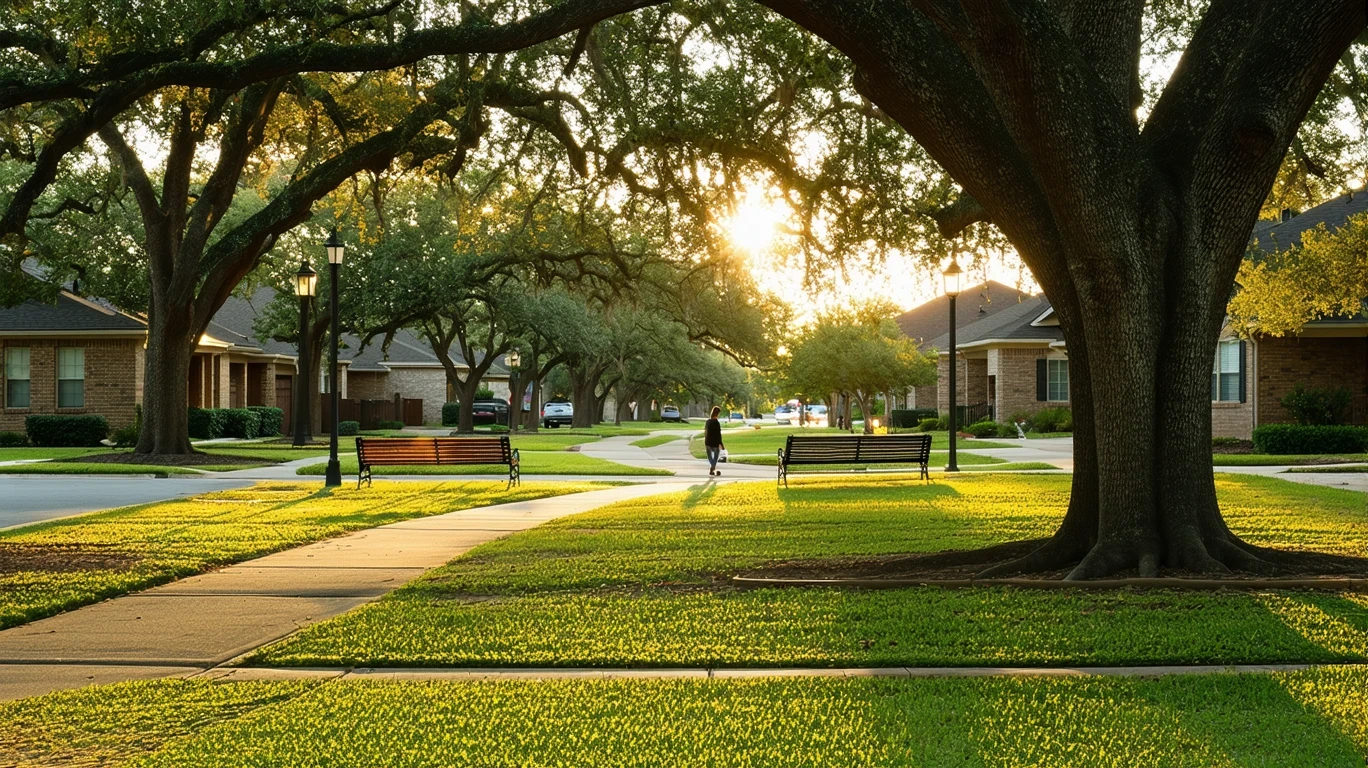
The Emotional Landscape of Leon Valley
Leon Valley’s vibe is shaped by its structure: low-rise residential neighborhoods with pockets of walkability, corridor-clustered commercial areas, and bus service that connects to San Antonio but doesn’t eliminate car dependence. The pedestrian-to-road ratio is higher than you might expect in parts of the city, meaning some streets feel more walkable than the typical suburban grid. But that walkability isn’t evenly distributed—it exists in pockets, not across the entire city. If you live near one of those pockets, daily life can feel surprisingly pedestrian-friendly. If you don’t, you’ll likely drive for most errands.
This creates a split experience. Some residents describe Leon Valley as “convenient but not walkable,” while others say “I can walk to a few things, but I still need my car for most trips.” Both are true, depending on where you live and what you’re comparing it to. The city’s food and grocery options are concentrated along certain corridors, which means errands require some planning—you’re not stumbling upon a corner store on every block. For households comfortable with that rhythm, it’s a non-issue. For those who wanted spontaneous, doorstep-level access, it’s a source of low-grade friction.
Parks and green space are present in moderate density, and water features add some visual relief. Schools are available, though playground density is more limited. Healthcare access is routine and local—clinics and pharmacies are present, but there’s no hospital within city limits. For everyday needs, that’s usually sufficient. For emergencies or specialized care, you’re heading into San Antonio.
Social Media Buzz in Leon Valley
On platforms like Facebook and neighborhood forums, Leon Valley residents tend to discuss a few recurring themes: affordability relative to other parts of the San Antonio metro, proximity to jobs and amenities, and the tension between growth and identity. The tone is generally pragmatic rather than passionate—people appreciate what the city offers, but they’re also clear-eyed about what it doesn’t.
Common refrains include:
- “It’s a good place to land if you work in San Antonio but don’t want to pay downtown prices.”
- “You’re close to everything, but you still have to drive to get there.”
- “It’s quiet and affordable, but don’t expect a ton of local character or nightlife.”
There’s also a protective streak—longtime residents sometimes push back when newcomers compare Leon Valley unfavorably to denser, more walkable parts of San Antonio. The subtext: this city was never trying to be that. If you moved here expecting urban texture, you misread the assignment. If you moved here for suburban comfort with metro access, you’re probably satisfied.
Local News Tone
Coverage of Leon Valley tends to frame the city through a few recurring lenses: growth and development, infrastructure updates, and debates over what the city should become as the metro expands. Headlines and story topics often sound like this:
- “New Retail Development Brings Familiar Chains to Leon Valley Corridor”
- “Residents Weigh Convenience Against Neighborhood Character”
- “City Council Discusses Future of Mixed-Use Development”
- “Leon Valley Balances Affordability with Growing Demand”
- “Commuters Appreciate Proximity, But Traffic Concerns Linger”
The tone is rarely celebratory or alarmist—it’s more observational, reflecting a city in transition. Leon Valley isn’t booming, but it’s not stagnant either. It’s adjusting, and residents are watching to see whether that adjustment preserves what they value or erodes it.
Review-Based Public Perception
On Google, Yelp, and Nextdoor-style platforms, Leon Valley’s reviews reflect a city that meets basic expectations without exceeding them. Positive reviews tend to emphasize:
- Affordability compared to central San Antonio
- Short commute times to jobs in the metro
- Quiet, low-rise neighborhoods with some green space
- Access to familiar retail and dining chains along main corridors
Critical reviews—usually mild rather than harsh—focus on:
- Limited walkability outside specific pockets
- Lack of local dining variety or independent businesses
- Dependence on driving for most errands
- Feeling more like a pass-through than a destination
Neighborhood variation exists, though it’s often described in broad terms: newer planned areas versus older, more established pockets. The former tend to feel more uniform and car-oriented; the latter sometimes offer more mature trees and slightly better pedestrian infrastructure. But even in the more walkable areas, you’re still driving for groceries, healthcare, and most services—it’s just that the walk to a park or a neighbor’s house feels more pleasant.
Comparison to Nearby Cities
| Dimension | Leon Valley | Balcones Heights | Castle Hills |
|---|---|---|---|
| Overall Vibe | Affordable suburban base, corridor-clustered errands | Compact, denser, more commercial energy | Quieter, more residential, slightly more upscale |
| Walkability | Pockets of walkability, not citywide | More walkable due to density and mixed use | Low walkability, car-dependent |
| Proximity to San Antonio | Very close, easy metro access | Very close, embedded in metro fabric | Close, but more insulated from metro intensity |
| Housing Affordability | Moderate, accessible entry point | Slightly higher due to density and location | Higher, more established neighborhoods |
| Local Amenities | Corridor-based, requires some planning | More concentrated, easier spontaneous access | Limited, relies on nearby areas |
Leon Valley sits between Balcones Heights’ denser, more commercial energy and Castle Hills’ quieter, more residential character. If you want more walkable density and don’t mind paying a bit more, Balcones Heights might feel more aligned. If you want even more insulation from metro activity and are willing to sacrifice some convenience, Castle Hills could be a better fit. Leon Valley offers a middle path: affordable, accessible, and functional, but not particularly distinctive in any one direction.
What Locals Are Saying
“We moved here because we could afford a house and still get to work in under half an hour. It’s not exciting, but it’s stable, and that’s what we needed.”
— Young family, recent buyers
“I like that it’s quiet, but I do wish there were more local spots—coffee shops, breakfast places, things you could walk to on a Saturday morning.”
— Remote worker, renting
“For the price, you can’t beat it. We’re close to everything San Antonio offers, but we’re not paying San Antonio prices.”
— Longtime resident, homeowner
“It’s fine if you have a car and don’t mind driving everywhere. If you’re trying to live car-light, this isn’t the place.”
— Single professional, considering a move
“The schools are decent, parks are nearby, and we feel safe. It’s not flashy, but it works for us.”
— Family with school-age kids
“I thought being this close to San Antonio would mean more walkable access, but you still drive for almost everything. It’s suburban, not urban.”
— Newcomer from a denser city
“It’s a good starter city. You get your footing, save some money, and then decide if you want to stay or move closer to the action.”
— Young couple, first-time renters
Does Leon Valley Feel Like a Good Fit?
Leon Valley works best for households who value proximity to San Antonio without the intensity or cost of living in the metro core. It’s a functional, affordable base with some walkable pockets and corridor-based errands that require a car but don’t demand long commutes. The city’s low-rise character and mixed land use create a suburban feel with occasional urban touches, but it’s not trying to be a walkable neighborhood in the traditional sense.
This tends to work for:
- Families seeking affordable housing tradeoffs near good schools and parks
- Commuters who prioritize short drive times and lower costs over walkable urbanism
- Households comfortable with car-dependent errands clustered along main corridors
- Residents who want a quieter residential base while staying connected to metro amenities
This tends to frustrate:
- Urbanists seeking dense, walkable neighborhoods with spontaneous access to amenities
- Households without reliable vehicles or those trying to minimize driving
- Residents expecting comprehensive transit, rail access, or hospital-level healthcare locally
- Those looking for distinctive local character, independent businesses, or nightlife
Leon Valley isn’t a city that inspires passionate loyalty or intense frustration—it’s a city that works quietly for the people it fits. If you’re looking for an affordable suburban base with metro access and you’re comfortable with the tradeoffs that come with corridor-clustered errands and selective walkability, Leon Valley delivers. If you’re looking for urban texture, walkable daily life, or a strong sense of local identity, you’ll likely find yourself driving into San Antonio more often than you’d like—and wondering whether it makes sense to just live there instead.
The city’s emotional profile is pragmatic, not passionate. It’s a place where people land, settle, and build routines. Whether those routines feel comfortable or constraining depends entirely on what you were hoping to find. For more insight into how these tradeoffs play out financially, explore monthly spending patterns and lifestyle requirements in Leon Valley.
How this article was built: In addition to public economic data, this article incorporates location-based experiential signals derived from anonymized geographic patterns—such as access density, walkability, and land-use mix—to reflect how day-to-day living actually feels in Leon Valley, TX.
The perspectives shown reflect commonly expressed local sentiment and recurring themes in public discussion, rather than individual accounts.