
Can you live in Lawrenceburg without a car? For most households, the answer is no — and understanding why requires looking at how the city is actually built, not just what transportation options appear on a map. Lawrenceburg’s layout, density, and infrastructure create a mobility environment where driving isn’t just convenient; it’s structurally necessary for most daily routines. This article explains how people actually get around Lawrenceburg, what role public transit plays (or doesn’t), and which household types can realistically reduce car dependence.
How People Get Around Lawrenceburg
Lawrenceburg operates as a car-first environment with pockets of moderate pedestrian infrastructure. The pedestrian-to-road ratio sits in a middle band, meaning sidewalks and walkable routes exist in some areas, but they don’t form a continuous network that supports car-free living. Most residents drive for nearly all trips — groceries, healthcare, work, and errands — because the city’s low-rise, spread-out form makes distances too great and destinations too dispersed to walk or bike reliably.
Newcomers often assume that a small city means everything is close by. In practice, Lawrenceburg’s layout requires a car to access daily necessities efficiently. Food establishments are below density thresholds, and grocery options, while present at moderate density, are not distributed in a way that supports frequent, spontaneous errands on foot. The result is a transportation pattern built around personal vehicles, with walking reserved for recreation or hyper-local trips within a single neighborhood.
Public Transit Availability in Lawrenceburg
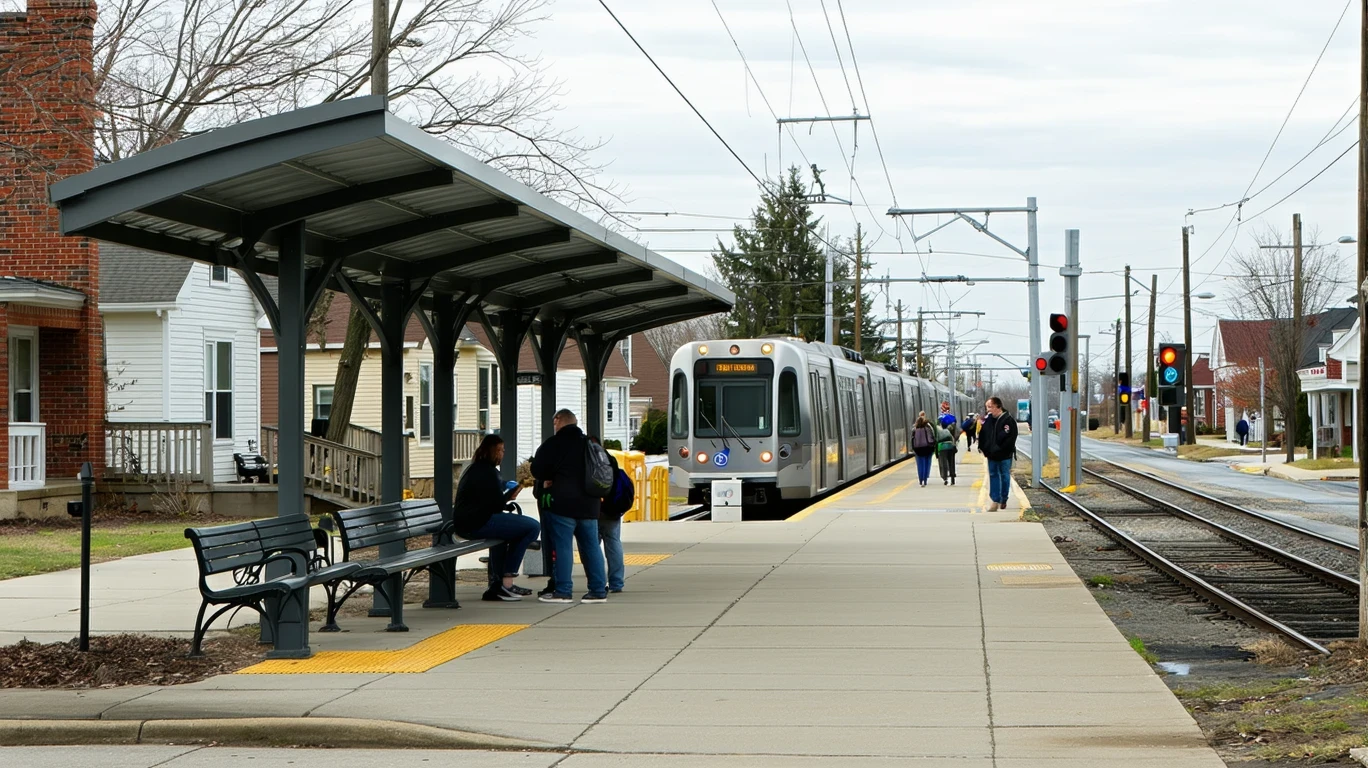
Public transit does not play a meaningful role in daily mobility for Lawrenceburg residents. No detectable bus stops or rail infrastructure were identified in the city’s core or surrounding areas, and the absence of transit signals indicates that scheduled public transportation is either unavailable or too limited to serve as a practical option for commuting or errands.
This is not unusual for a city of Lawrenceburg’s size and density. Without a critical mass of riders or a compact urban core, transit systems struggle to offer the frequency and coverage needed to compete with driving. Residents who rely on public transportation in other cities will find that Lawrenceburg does not offer a comparable alternative. For those without access to a personal vehicle, mobility becomes a significant logistical challenge, often requiring coordination with others or reliance on rideshare services.
Driving & Car Dependence Reality
Driving in Lawrenceburg is not a lifestyle preference — it’s a structural requirement. The city’s low-rise building character and sparse distribution of daily services mean that nearly every household task, from picking up prescriptions to buying groceries, involves a car trip. Parking is generally abundant and free, which removes one of the friction points that might otherwise encourage alternative transportation modes in denser cities.
Car dependence also shapes where people choose to live. Proximity to work, schools, or grocery stores becomes a primary consideration, because even short distances can feel burdensome without a vehicle. Households with multiple drivers gain flexibility; those with one car or none face daily coordination challenges that affect employment options, childcare logistics, and healthcare access.
Commuting Patterns & Daily Mobility
Most Lawrenceburg residents structure their days around single-destination commutes, typically to a workplace outside walkable or bikeable range. The lack of transit options and the sparse accessibility of daily errands mean that trips are consolidated — people run multiple errands in a single car trip rather than making frequent, spontaneous stops on foot.
This pattern creates time efficiency for those with reliable vehicles but introduces vulnerability for those without. A car breakdown or maintenance issue doesn’t just delay a commute; it can disrupt access to groceries, medical appointments, and childcare. The city’s layout offers little redundancy for households that lose access to a vehicle, even temporarily.
Who Transit Works For — and Who It Doesn’t
Public transit, in any meaningful sense, does not work for anyone in Lawrenceburg. The infrastructure simply isn’t present. Walkability exists in isolated pockets, which means a very small subset of residents — those living within a few blocks of their workplace, a grocery store, and other daily needs — might reduce car trips. But even these households typically keep a vehicle for errands that fall outside their immediate radius.
Renters in Lawrenceburg’s more walkable areas may experience slightly less car dependence than those in peripheral neighborhoods, but the difference is marginal. Families with school-age children, in particular, will find that school locations, extracurricular activities, and healthcare appointments all require driving. Retirees or remote workers who can consolidate errands into fewer weekly trips may feel less burdened by car dependence, but they still need access to a vehicle.
Transportation Tradeoffs in Lawrenceburg
The tradeoff in Lawrenceburg is not between transit and driving — it’s between accepting car dependence or facing severe mobility constraints. Driving offers control, predictability, and access to the full range of services and employment opportunities in and around the city. It also introduces costs: fuel, insurance, maintenance, and the need to own or finance a reliable vehicle.
For households weighing monthly expenses, transportation is not optional. The question is not whether to own a car, but how many cars a household needs and how much driving each member will do. Families with two working adults almost always need two vehicles. Single-person households can often manage with one, but only if their work, home, and errands align geographically.
FAQs About Transportation in Lawrenceburg (2026)
Is public transit usable for daily commuting in Lawrenceburg?
No. Public transit infrastructure is not present in a form that supports daily commuting. Residents rely on personal vehicles for nearly all trips.
Do most people in Lawrenceburg rely on a car?
Yes. The city’s layout, low density, and sparse distribution of daily services make car ownership a practical necessity for the vast majority of households.
Which areas of Lawrenceburg are easiest to live in without a car?
Very few. Some neighborhoods with moderate pedestrian infrastructure may allow occasional walking trips, but even these areas require a car for groceries, healthcare, and most employment.
How does commuting in Lawrenceburg compare to nearby cities?
Lawrenceburg’s commuting reality is shaped by its small size and lack of transit options. Nearby cities with denser cores or regional transit systems may offer more flexibility, but Lawrenceburg itself is car-dependent by design.
Can I reduce transportation costs by living closer to work in Lawrenceburg?
Proximity to work can reduce fuel costs and commute time, but it won’t eliminate the need for a vehicle. Daily errands, healthcare, and other services are dispersed enough that most households still drive frequently, even if they live near their workplace.
How Transportation Fits Into the Cost of Living in Lawrenceburg
Transportation in Lawrenceburg is not a variable expense you can optimize away — it’s a structural cost that shapes housing decisions, employment options, and daily routines. Households must plan for vehicle ownership, fuel, insurance, and maintenance as non-negotiable elements of living here. The city’s car-dependent layout means that transportation costs are tightly linked to household size, work locations, and the number of drivers.
Understanding how mobility constraints interact with housing affordability, healthcare access, and daily logistics is essential for anyone considering a move to Lawrenceburg. This article focuses on access and structure; for a fuller picture of how transportation costs fit into overall household budgets, see the monthly budget breakdown for Lawrenceburg.
Lawrenceburg rewards households that can absorb the cost and logistics of car ownership. For those who can, the city offers low housing costs, manageable traffic, and abundant parking. For those who can’t, the lack of transit and walkable infrastructure creates barriers that are difficult to work around.
How this article was built: In addition to public economic data, this article incorporates location-based experiential signals derived from anonymized geographic patterns—such as access density, walkability, and land-use mix—to reflect how day-to-day living actually feels in Lawrenceburg, KY.
—