
Do you really need a car to live in Lawrence? For most people, the answer is yes — but the reasons why reveal a lot about how this Indianapolis-area city is actually structured. Lawrence has bus service and pockets of walkable infrastructure, but the way daily errands, work commutes, and household logistics play out here makes driving the default for nearly everyone.
Understanding transportation in Lawrence isn’t just about whether a bus runs near your apartment. It’s about whether you can get groceries without a 20-minute detour, whether your job is reachable without two transfers, and whether the places you need to go regularly align with the routes that exist. For newcomers weighing a move to Lawrence, getting the mobility picture right shapes everything from where you rent to how much control you have over your weekly schedule.
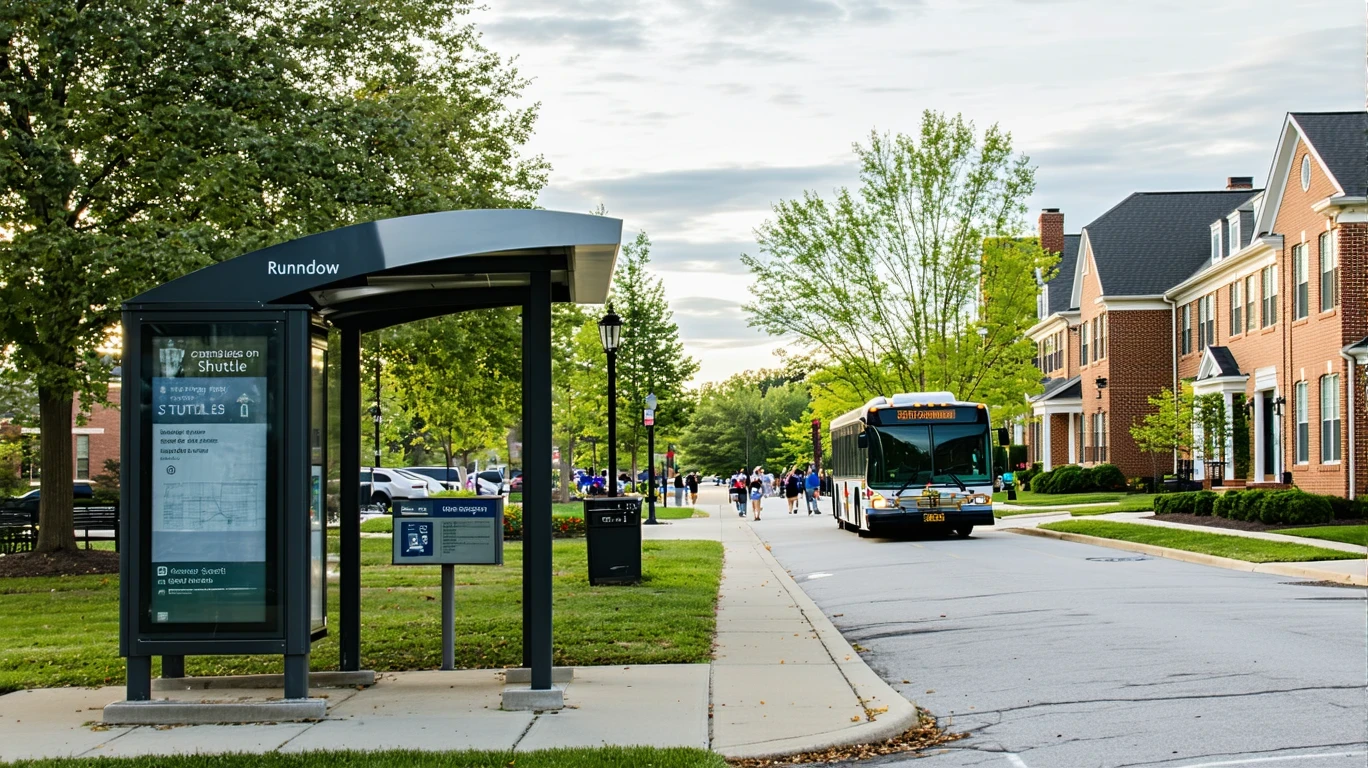
How People Get Around Lawrence
Lawrence sits in a mobility middle ground. It’s not a dense urban core where you can walk to everything, and it’s not a completely car-only exurb with no alternatives. The city has residential neighborhoods with decent pedestrian infrastructure in certain areas — sidewalks, crossings, and a street layout that supports walking within those pockets. But the overall development pattern still assumes most people drive most of the time.
What newcomers often misunderstand is that walkability and transit access don’t always overlap. You might live in a neighborhood where it’s pleasant to walk around the block or to a nearby park, but if the grocery store is two miles away and there’s no bus route connecting you, that walkability doesn’t reduce your car dependence. In Lawrence, the pedestrian-friendly zones tend to be residential enclaves, not mixed-use corridors where you can handle daily errands on foot.
The result is a transportation landscape where most households rely on a car as their primary tool, even if they occasionally walk locally or catch a bus for specific trips. The infrastructure exists to support some non-driving activity, but it’s not structured to replace the car for most people’s daily needs.
Public Transit Availability in Lawrence
Lawrence has bus service, which gives it more transit presence than many suburban communities in the Indianapolis metro. The system connects parts of Lawrence to regional destinations and provides an alternative for residents who don’t drive or prefer not to for certain trips. But transit here plays a supplemental role, not a foundational one.
Public transit in Lawrence often centers around systems such as IndyGo, though coverage varies by area. Bus routes tend to work best for people whose origins and destinations both fall along established corridors — commuters heading into Indianapolis, students traveling to institutional anchors, or residents making planned trips to specific nodes. For those trips, transit can be a practical option.
Where it falls short is in coverage breadth and errand flexibility. If your daily routine involves multiple stops — dropping off kids, picking up groceries, stopping at a pharmacy — transit becomes harder to use efficiently. The sparse density of food and grocery establishments in Lawrence means that even if you live near a bus stop, the places you need to reach regularly might not be. Late hours and weekend service also tend to be lighter, which limits transit’s usefulness for shift workers or anyone with non-standard schedules.
Transit works in Lawrence, but it works for specific people in specific situations. It’s not a citywide solution, and it’s not designed to be.
Driving & Car Dependence Reality
For most Lawrence residents, driving isn’t a preference — it’s a structural necessity. The city’s layout, the spacing of essential services, and the limited reach of transit all point toward car ownership as the baseline assumption for independent mobility.
Errands are the clearest driver of car dependence here. Grocery stores, pharmacies, and other daily-needs destinations are spread out, and the density of these establishments falls below thresholds that would make car-free living practical for most households. Even in neighborhoods with good pedestrian infrastructure, you’re often looking at a drive to handle weekly shopping or pick up household essentials.
Parking pressure in Lawrence is generally low, which makes car ownership less burdensome than in denser cities. You’re not circling blocks or paying monthly garage fees. But that ease comes with a tradeoff: the city’s design assumes you have a car, so the alternatives remain underdeveloped. Sprawl isn’t extreme here, but the distances involved are enough that walking or biking for errands becomes impractical for most people, most of the time.
Commute flexibility also hinges on driving. If your job is in Lawrence and close to home, a car gives you control over timing and routing. If you’re commuting into Indianapolis or another part of the metro, driving lets you avoid transfer delays and schedule constraints. That flexibility has value, especially for households juggling multiple work schedules or school pickups.
Who Transit Works For — and Who It Doesn’t
Transit in Lawrence is viable for a narrow slice of residents: those who live near bus routes, work or study along those same routes, and don’t need to make frequent multi-stop trips. Students commuting to a campus, workers heading to a fixed job site in Indianapolis, or individuals without access to a car can make transit work if their geography aligns.
For families, transit becomes harder. Daycare pickups, grocery runs, and after-school activities don’t fit neatly into fixed-route schedules. For renters in peripheral neighborhoods, transit might not reach you at all, or the nearest stop might be far enough that you’d need a car just to access the bus. For homeowners who chose Lawrence partly for space and yard access, the tradeoff usually includes car dependence — the neighborhoods that offer those qualities are rarely the ones with the densest transit service.
Transit doesn’t work well for anyone whose daily life requires flexibility, multiple stops, or destinations outside the established corridors. That describes most households in Lawrence, which is why car ownership remains the norm.
Commuting Patterns & Daily Mobility
Commuting in Lawrence often means navigating a mix of local and regional trips. Some residents work within the city and face short, predictable commutes. Others work in Indianapolis or elsewhere in the metro, which introduces more variability in travel time, routing, and exposure to congestion.
For those commuting out of Lawrence, driving offers the most control. You can leave when you need to, adjust your route if traffic builds, and handle errands on the way home. Transit can work for fixed commutes into Indianapolis, but it requires that your job location and schedule align with available routes and frequencies. For anyone with irregular hours or job sites not served directly by transit, driving becomes the only practical option.
Daily mobility in Lawrence also involves a lot of multi-purpose trips. Stopping for gas, picking up groceries, dropping off dry cleaning — these errands are easier to chain together by car. The sparse accessibility of food and grocery options means you’re often driving to a commercial corridor rather than walking to a neighborhood shop. That pattern reinforces car dependence even for people who might prefer to drive less.
Proximity matters more than speed here. If you live close to work, school, and a grocery store, your transportation burden drops significantly. If any of those pieces are far apart, you’re absorbing more time, more planning, and more fuel exposure, regardless of whether you’re driving or trying to patch together transit connections.
Transportation Tradeoffs in Lawrence
Choosing between transit and driving in Lawrence isn’t really a choice for most people — it’s a question of whether your circumstances allow transit to work at all. But for those who do have the option, the tradeoffs are worth understanding.
Transit offers predictability in one sense: you’re not paying for gas, maintenance, or parking. But it introduces unpredictability in another: you’re dependent on schedules, coverage, and whether your trip fits the available routes. If your commute is straightforward and your errands are minimal, that tradeoff can work. If your life involves variability — shift work, kid logistics, multi-stop errands — transit becomes a source of friction rather than convenience.
Driving gives you control and flexibility, but it also means you’re fully exposed to fuel prices, maintenance costs, and the time cost of longer commutes if you live far from work. In Lawrence, where gas prices sit around $3.19 per gallon, that exposure is moderate but not negligible. The tradeoff is that you’re not constrained by someone else’s schedule or route map.
For households trying to minimize transportation friction, the real lever isn’t mode choice — it’s location choice. Living close to work, school, and a grocery store reduces your transportation burden whether you drive or take the bus. In Lawrence, that kind of proximity is possible, but it requires intentional housing decisions. The city’s layout doesn’t automatically deliver it.
How this article was built: In addition to public economic data, this article incorporates location-based experiential signals derived from anonymized geographic patterns—such as access density, walkability, and land-use mix—to reflect how day-to-day living actually feels in Lawrence, IN.
FAQs About Transportation in Lawrence (2026)
Is public transit usable for daily commuting in Lawrence?
It can be, but only if your home and work both fall along existing bus routes and your schedule aligns with service hours. For commuters heading into Indianapolis on a fixed schedule, transit is a viable option. For anyone making multi-stop trips, working irregular hours, or living in areas with limited coverage, driving remains far more practical.
Do most people in Lawrence rely on a car?
Yes. The spacing of grocery stores, schools, and workplaces — combined with limited transit coverage — makes car ownership the baseline for most households. Even residents in walkable neighborhoods typically drive for errands and longer trips.
Which areas of Lawrence are easiest to live in without a car?
Areas near bus routes and within walking distance of grocery stores or other daily-needs destinations offer the best chance of reducing car dependence. But even in those areas, most residents find that a car is necessary for flexibility and convenience. True car-free living in Lawrence is rare and requires very specific housing and employment alignment.
How does commuting in Lawrence compare to nearby cities?
Lawrence sits between denser parts of Indianapolis, where transit is more robust, and outer suburbs where driving is the only option. Commutes here tend to be car-dominant but shorter and less congested than in farther-out communities. If you’re commuting into Indianapolis, expect moderate drive times and limited but usable transit alternatives depending on your route.
Can you get by with one car in a two-person household in Lawrence?
It depends on your work locations, schedules, and errand patterns. If both people work near home or have flexible schedules, one car can work. If you’re commuting in opposite directions, working different shifts, or managing school and daycare logistics, a second car usually becomes necessary. The city’s layout doesn’t make single-car households easy, but it’s not impossible with the right setup.
How Transportation Fits Into the Cost of Living in Lawrence
Transportation in Lawrence isn’t just about what a budget has to handle — it’s about how much control you have over your time, your schedule, and your daily logistics. The city’s structure pushes most households toward car ownership, which means fuel, insurance, and maintenance become recurring costs you can’t easily avoid.
But transportation also shapes where you can afford to live and how much friction you absorb in daily life. Choosing housing close to work or along a bus route can reduce your transportation burden, even if it doesn’t eliminate it. The tradeoff is that proximity often costs more in rent or purchase price, and the neighborhoods that offer it may not align with other priorities like space, schools, or quiet streets.
For newcomers evaluating Lawrence, the transportation question isn’t whether you’ll need a car — you almost certainly will. The real question is how much driving you’ll do, how predictable those trips will be, and whether your housing choice sets you up to minimize time and cost exposure. In Lawrence, mobility is manageable, but it’s not automatic. It requires planning, and it rewards proximity.