
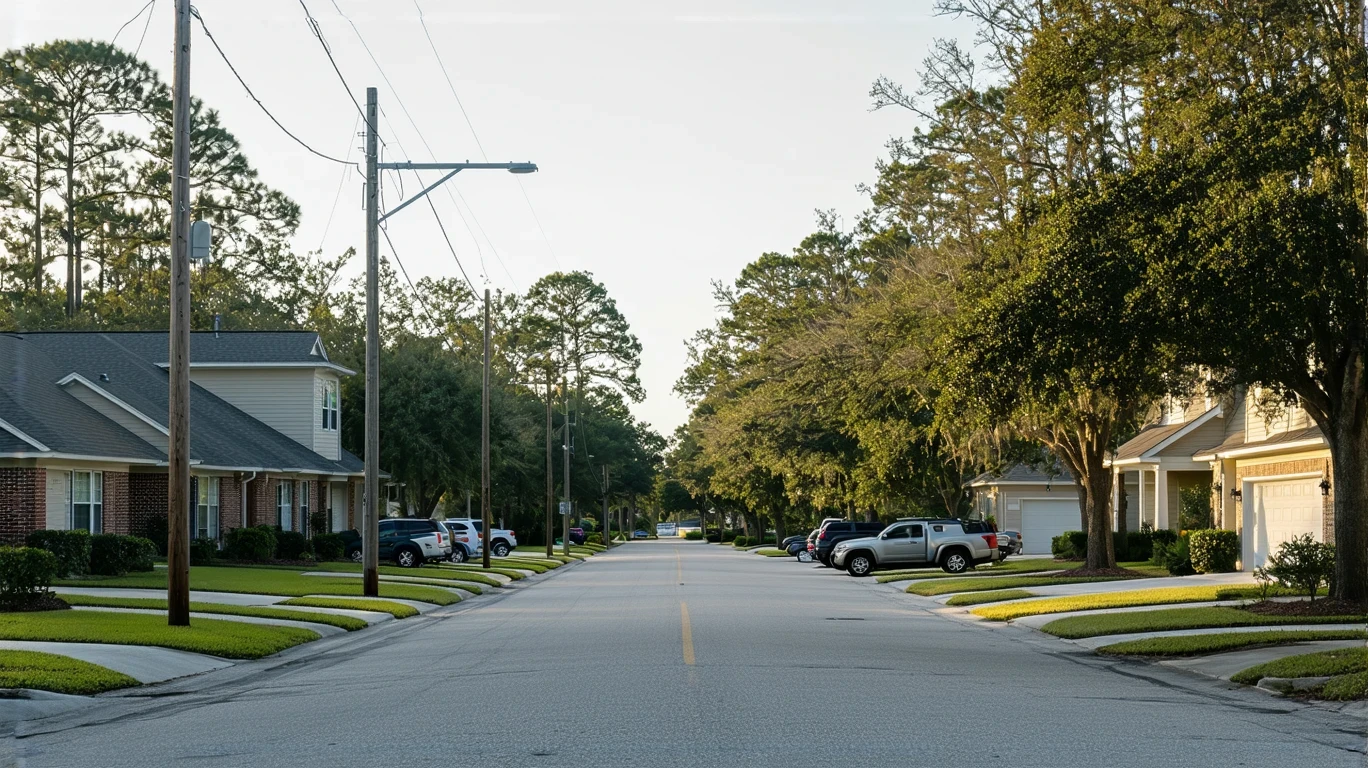
Which city gives you more for your money? For households weighing a move within the Tampa metro in 2026, the choice between Land O Lakes and Plant City isn’t about finding the “cheaper” option—it’s about understanding where cost pressure shows up and which trade-offs match your household’s priorities. Both cities sit in the same regional economy, share identical regional price levels, and face similar energy and transportation costs. But the way those costs interact with daily life—commute patterns, errands accessibility, healthcare proximity, and housing form—differs in ways that matter for renters, families, and car-dependent households.
Land O Lakes offers moderate pedestrian infrastructure and mixed mobility texture, with some cycling presence and bus service. Grocery and food options remain sparse, and family infrastructure is limited. Plant City, by contrast, features walkable pockets with higher pedestrian-to-road ratios, corridor-clustered food and grocery access, and a hospital facility. Both cities show present green space access and mixed land use, but their urban form diverges: Land O Lakes skews low-rise, while Plant City exhibits mixed building heights. These structural differences shape how households experience the same income, the same gas price, and the same utility rates.
This comparison explains where costs concentrate, which households feel pressure most acutely, and how lifestyle factors—commute friction, errands logistics, and healthcare access—turn identical line items into different financial realities.
Housing Costs
Plant City reports a median home value of $225,700 and median gross rent of $1,232 per month, providing concrete entry points for both buyers and renters. Land O Lakes lacks published median figures, but the housing market reflects newer suburban development with single-family homes dominating the landscape. The absence of numeric benchmarks doesn’t mean housing is inaccessible—it signals a market shaped more by availability, lot size, and housing type than by dense rental inventory or established resale comparables.
For renters, Plant City’s documented median rent offers predictability: you know the baseline obligation before you search. Land O Lakes rental stock skews toward single-family homes and townhomes rather than large apartment complexes, which can mean more space but less pricing transparency and fewer lease-term options. Families prioritizing yard space and newer construction may find Land O Lakes appealing despite the lack of published rent data, while renters seeking walkable access to errands and healthcare may prefer Plant City’s corridor-clustered structure and established rental market.
For buyers, Plant City’s median home value sits below many Tampa metro comparables, making it an accessible entry point for first-time buyers willing to navigate a mixed building height environment and limited family infrastructure. Land O Lakes attracts buyers seeking low-rise suburban form, moderate green space access, and newer housing stock that may reduce maintenance and utility volatility. The trade-off: Plant City offers more walkable pockets and hospital proximity, while Land O Lakes requires more car dependency but delivers suburban predictability and mixed mobility texture.
Housing takeaway: Renters sensitive to pricing transparency and walkability may find Plant City’s documented rent and corridor-clustered errands more manageable. Buyers prioritizing newer construction, low-rise form, and suburban green space may prefer Land O Lakes despite the lack of published home value data. Families must weigh Plant City’s hospital access against Land O Lakes’ moderate outdoor environment, knowing both cities show limited school and playground density.
Utilities and Energy Costs
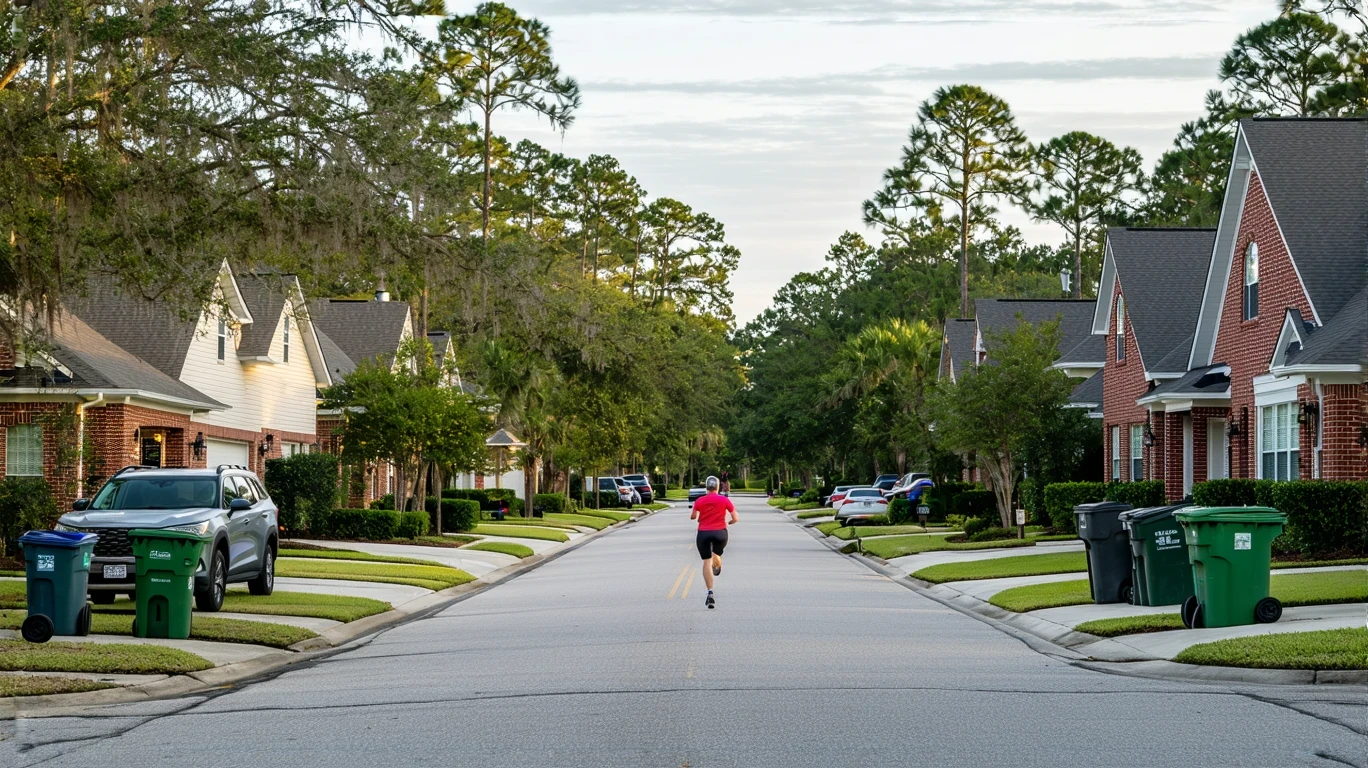
Both cities face identical utility rate structures: 15.78¢/kWh for electricity and $25.39/MCF for natural gas. Florida’s extended cooling season dominates utility exposure, with air conditioning driving the majority of household energy costs from late spring through early fall. Heating needs remain minimal, with only occasional cold snaps requiring natural gas or electric heat. The real differentiator isn’t the rate—it’s how housing stock, building age, and home size amplify or dampen that exposure.
Land O Lakes’ newer suburban housing stock tends toward better insulation, modern HVAC systems, and energy-efficient windows, which can reduce cooling intensity even during triple-digit summer heat. Single-family homes with larger square footage still face higher baseline usage, but predictability improves when systems are newer and maintenance is current. Plant City’s mixed building heights and older housing stock introduce more variability: older single-family homes may experience higher cooling costs due to dated insulation and less efficient systems, while newer construction or smaller units in mixed-use areas may see lower bills despite similar usage patterns.
Household size and housing type drive exposure differently in each city. In Land O Lakes, larger single-family homes mean higher cooling loads, but newer construction mitigates volatility. Families in older, larger homes face the highest exposure, while couples or single adults in townhomes or smaller units enjoy more predictable bills. In Plant City, renters in older apartments or single-family homes face higher volatility, especially in units with poor insulation or aging HVAC. Homeowners in newer construction or smaller footprints gain more control, but the corridor-clustered urban form means less uniformity in housing age and energy performance across neighborhoods.
Utility takeaway: Households in Land O Lakes experience more predictable utility costs when occupying newer, low-rise single-family homes, though larger square footage increases baseline exposure. Plant City households face more variability depending on building age and housing type, with older homes and larger units seeing higher cooling costs. Both cities share the same rate structure, so the primary cost driver is housing form and system efficiency, not geographic or climatic differences.
Groceries and Daily Expenses
Grocery and everyday spending pressure diverges sharply between Land O Lakes and Plant City, driven not by price differences—both cities share the same regional price parity—but by access structure and errands friction. Land O Lakes shows sparse food and grocery density, with options concentrated in fewer locations and requiring more intentional trips. Plant City’s corridor-clustered accessibility means food and grocery establishments line key routes, reducing the need for dedicated errands runs and offering more flexibility for quick stops.
In Land O Lakes, sparse grocery access means households plan larger, less frequent shopping trips, often driving to big-box stores or regional grocery chains. This reduces impulse spending and convenience purchases but increases time cost and car dependency. Families managing larger volumes benefit from bulk buying and predictable routines, while single adults or couples may feel the friction of fewer quick-stop options for fresh items, prepared foods, or last-minute needs. Dining out and takeout options remain limited, which can lower overall food spending but also reduces flexibility for busy schedules.
Plant City’s corridor-clustered structure supports more frequent, smaller grocery runs and easier access to dining options, coffee shops, and convenience stores. This flexibility benefits households with variable schedules or those who prefer fresh shopping over bulk storage, but it also increases exposure to convenience spending creep—grabbing takeout, stopping for coffee, or picking up prepared foods becomes easier and more frequent. Families with kids may appreciate the walkable pockets and hospital proximity for errands logistics, while single adults and couples gain more dining variety and spontaneity.
Groceries takeaway: Households in Land O Lakes experience lower convenience spending but higher time cost and car dependency for groceries and errands. Plant City households gain flexibility and corridor access but face more exposure to convenience spending creep. Price-sensitive families who plan ahead may prefer Land O Lakes’ structure, while households valuing errands accessibility and dining variety may find Plant City’s clustered options worth the trade-off.
Taxes and Fees
Both Land O Lakes and Plant City operate under Florida’s tax structure: no state income tax, reliance on property taxes and sales taxes, and local fees for services like trash, water, and stormwater management. The absence of income tax benefits all households equally, but property tax exposure and recurring fees differ based on housing type, ownership status, and neighborhood structure.
Property taxes in both cities reflect assessed home values and local millage rates, with homeowners bearing the primary burden. Plant City’s documented median home value of $225,700 provides a baseline for estimating annual property tax obligations, though actual bills depend on exemptions, school district levies, and special assessments. Land O Lakes’ newer suburban development often includes HOA fees that bundle services like landscaping, common area maintenance, and sometimes trash or water, which can add predictability but also increase monthly obligations. Plant City’s older, more established neighborhoods may have lower or no HOA fees, reducing recurring costs but requiring homeowners to manage services independently.
Renters in both cities avoid direct property tax bills, but those costs are embedded in rent. Plant City’s documented rent median reflects this pass-through, while Land O Lakes renters in single-family homes or townhomes may face higher rents that include property tax exposure plus HOA fees. Sales tax applies equally to both cities, affecting all households based on consumption patterns. Families with higher spending on goods face more sales tax pressure, while households minimizing purchases or focusing on services see less impact.
Taxes and fees takeaway: Homeowners in Land O Lakes face property tax exposure plus potential HOA fees that bundle services but increase predictability. Plant City homeowners benefit from documented home values and fewer HOA obligations, though they must manage services independently. Renters in both cities see tax costs embedded in rent, with Land O Lakes’ single-family rental stock potentially including higher pass-through costs. Long-term residents planning to stay several years should weigh HOA predictability against fee-free flexibility.
Transportation and Commute Reality
Both Land O Lakes and Plant City share the same gas price—$2.84/gal—and both rely heavily on personal vehicles for daily mobility. But the way households experience transportation costs differs based on pedestrian infrastructure, transit presence, and commute patterns. Land O Lakes shows moderate pedestrian-to-road ratios and mixed mobility texture, with some cycling infrastructure and bus service present. Plant City exhibits walkable pockets with higher pedestrian infrastructure density, bus service, and corridor-clustered errands that reduce the need for every trip to require a car.
In Land O Lakes, car dependency dominates. Sparse grocery and food density means most errands require driving, and the low-rise suburban form spreads destinations across wider distances. Households with one or two cars face predictable fuel costs but limited flexibility: walking or biking for daily needs isn’t practical for most residents, and bus service provides baseline coverage without frequent routes or extensive reach. Families with multiple drivers manage transportation logistics more easily, while single adults or couples with one vehicle may feel constrained by the need to drive for every errand.
Plant City’s walkable pockets and corridor-clustered structure allow some households to reduce car trips for errands, dining, or short-distance needs. Bus service provides similar baseline coverage, but the higher pedestrian infrastructure density means walking or biking becomes viable for certain trips, especially in neighborhoods near food and grocery corridors. This doesn’t eliminate car dependency—most households still need a vehicle for commuting or regional travel—but it reduces the frequency of short, high-friction trips that add up over time. Families with kids benefit from hospital proximity and more accessible errands, while single adults or couples gain more flexibility for car-free days.
Transportation takeaway: Land O Lakes requires consistent car use for nearly all trips, with sparse errands access and mixed mobility texture increasing time cost and fuel exposure. Plant City’s walkable pockets and corridor-clustered errands reduce short-trip car dependency for some households, though most still rely on vehicles for commuting and regional travel. Households sensitive to transportation flexibility and errands friction may find Plant City’s structure more forgiving, while those prioritizing suburban predictability and newer housing may accept Land O Lakes’ higher car reliance.
Cost Structure Comparison
Housing pressure concentrates differently in each city. Plant City’s documented median rent and home value provide clear entry points, making it easier for renters and first-time buyers to assess affordability before committing. Land O Lakes lacks published housing medians, but its newer suburban stock and low-rise form appeal to households prioritizing space, green access, and predictable utility performance. Renters seeking transparency and walkability lean toward Plant City; buyers prioritizing newer construction and suburban form lean toward Land O Lakes.
Utilities introduce more volatility in Plant City due to mixed building heights and older housing stock, while Land O Lakes benefits from newer construction that dampens cooling cost unpredictability. Both cities face identical rates, so housing age and system efficiency drive the difference. Families in larger, older homes experience the highest exposure in either city, but Plant City’s variability across neighborhoods makes utility budgeting less uniform.
Daily living and groceries create more friction in Land O Lakes, where sparse food density requires planned trips and consistent car use. Plant City’s corridor-clustered accessibility reduces errands friction and supports more spontaneous shopping, but it also increases exposure to convenience spending. Households sensitive to time cost and errands logistics may find Plant City’s structure more forgiving, while those who plan ahead and minimize impulse spending may prefer Land O Lakes’ lower convenience temptation.
Transportation patterns matter more in Land O Lakes, where mixed mobility texture and sparse errands access mean every trip requires a car. Plant City’s walkable pockets and higher pedestrian infrastructure allow some households to reduce short-trip car dependency, though most still need vehicles for commuting. Households with one car or those prioritizing transportation flexibility may feel less constrained in Plant City, while those with multiple vehicles and suburban routines may not notice the difference.
The better choice depends on which costs dominate your household. For renters and first-time buyers sensitive to housing transparency and errands accessibility, Plant City’s documented medians and corridor-clustered structure offer more predictability. For families prioritizing newer housing, lower utility volatility, and suburban green space, Land O Lakes delivers more control despite higher car dependency and sparse errands access. Neither city is “cheaper overall”—each concentrates cost pressure in different categories, and the right fit depends on which trade-offs align with your priorities.
How the Same Income Feels in Land O Lakes vs Plant City
Single Adult
For a single adult, non-negotiable costs start with housing and transportation. In Plant City, documented rent medians and walkable pockets mean you can budget housing predictably and occasionally skip car trips for errands or dining. Flexibility exists in dining variety and corridor-clustered convenience, but convenience spending creep becomes a real risk. In Land O Lakes, housing costs remain less transparent, and car dependency eliminates flexibility for short trips—every errand requires fuel and time. Utility predictability improves in newer housing, but sparse food access and limited dining options reduce spontaneity. The same income feels more flexible in Plant City if you value walkability and hospital proximity, but more stable in Land O Lakes if you prioritize newer housing and lower convenience temptation.
Dual-Income Couple
For a couple, housing entry and commute friction become primary cost drivers. In Plant City, documented home values and rent medians clarify the entry barrier, and walkable pockets reduce the need for two-car logistics on some days. Corridor-clustered errands mean one partner can handle groceries or quick stops without dedicated trips, but older housing stock increases utility volatility. In Land O Lakes, newer construction and low-rise form deliver more predictable utility costs, but sparse errands access and mixed mobility texture mean both partners likely need cars for daily routines. Flexibility disappears when every trip requires driving, but predictability improves when housing stock is newer and maintenance is current. The same income feels more exposed to convenience spending in Plant City, but more exposed to transportation and time cost in Land O Lakes.
Family with Kids
For families, non-negotiable costs expand to include healthcare access, school proximity, and errands logistics. In Plant City, hospital presence and corridor-clustered food access reduce friction for medical needs and daily shopping, but limited school and playground density mean family infrastructure remains weak. Walkable pockets help with short trips, but older housing and mixed building heights increase utility unpredictability. In Land O Lakes, newer housing and moderate green space access improve outdoor environment and utility control, but sparse errands access and limited family infrastructure mean more car trips and longer errands runs. Flexibility exists in housing form and outdoor space, but time cost increases when every trip requires driving. The same income feels more exposed to healthcare and errands friction in Land O Lakes, but more exposed to utility volatility and convenience spending in Plant City.
Decision Matrix: Which City Fits Which Household?
| Decision factor | If you’re sensitive to this… | Land O Lakes tends to fit when… | Plant City tends to fit when… |
|---|---|---|---|
| Housing entry + space needs | Predictable rent or home value, yard space, newer construction | You prioritize newer low-rise housing and suburban green space over documented pricing transparency | You need documented rent or home value medians and accept mixed building heights and older stock |
| Transportation dependence + commute friction | Car reliance, fuel costs, time spent driving for errands | You accept consistent car use for all trips in exchange for suburban predictability and moderate transit presence | You value walkable pockets and corridor access that reduce short-trip car dependency for some errands |
| Utility variability + home size exposure | Cooling cost predictability, housing age, system efficiency | You prioritize newer construction and low-rise form that dampens utility volatility despite larger square footage | You accept mixed building heights and older housing stock that may increase utility variability depending on unit age |
| Grocery strategy + convenience spending creep | Errands friction, impulse purchases, dining variety | You plan bulk shopping trips and minimize convenience spending in exchange for sparse food density and limited dining options | You value corridor-clustered food access and dining variety but must manage convenience spending exposure |
| Fees + friction costs (HOA, services, upkeep) | Predictable monthly obligations, bundled services, maintenance control | You accept potential HOA fees that bundle services and increase predictability in newer suburban neighborhoods | You prefer lower or no HOA fees and manage services independently in older, more established neighborhoods |
| Time budget (schedule flexibility, errands, logistics) | Errands accessibility, healthcare proximity, walkability for short trips | You prioritize suburban routines and moderate green space over walkability and accept higher time cost for errands | You value hospital proximity, walkable pockets, and corridor-clustered errands that reduce logistics friction |
Lifestyle Fit
Land O Lakes and Plant City offer distinct lifestyle textures shaped by mobility infrastructure, errands accessibility, and healthcare proximity. Land O Lakes delivers moderate pedestrian infrastructure and mixed mobility texture, with some cycling presence and bus service providing baseline transit coverage. The low-rise suburban form and present green space access appeal to households seeking outdoor environment and newer housing stock, though sparse food density and limited family infrastructure mean most daily activities require intentional car trips. Plant City’s walkable pockets and higher pedestrian-to-road ratios create more flexibility for short trips, with corridor-clustered food and grocery options reducing errands friction. Hospital presence and mixed building heights support more urban-adjacent routines, though limited school and playground density remain a constraint for families with kids.
Recreation and outdoor access differ subtly but meaningfully. Both cities show present green space with moderate park density and water features, but Land O Lakes’ suburban form and newer development often include neighborhood parks, walking trails, and larger yards that support private outdoor use. Plant City’s corridor-clustered structure and mixed land use mean parks and outdoor spaces may be more accessible on foot or bike for households in walkable pockets, though the overall density remains moderate. Families prioritizing yard space and private outdoor access may prefer Land O Lakes, while those valuing walkable park access and hospital proximity may find Plant City’s structure more convenient.
Cultural and community character reflect each city’s development timeline and urban form. Land O Lakes skews newer and more suburban, with residential neighborhoods designed around car access and single-family housing. This creates a quieter, more predictable daily rhythm but limits spontaneous social interaction and dining variety. Plant City’s older, more established character and mixed building heights support more corridor-based community activity, with food, dining, and errands concentrated along key routes. This structure increases convenience and social texture but also introduces more variability in housing age, utility performance, and neighborhood character. Households seeking suburban predictability and newer construction lean toward Land O Lakes; those valuing walkability, hospital access, and corridor-clustered convenience lean toward Plant City.
Quick facts: Land O Lakes offers moderate green space access, mixed mobility texture, and newer low-rise housing with sparse errands density. Plant City provides walkable pockets, corridor-clustered food access, hospital presence, and mixed building heights with limited family infrastructure.
Frequently Asked Questions
Is Land O Lakes or Plant City cheaper for renters in 2026?
Plant City offers documented median rent of $1,232 per month, providing pricing transparency for renters. Land O Lakes lacks published rent medians, with rental stock skewing toward single-family homes and townhomes that may offer more space but less pricing predictability. Renters sensitive to budgeting clarity and walkable errands access may find Plant City more manageable, while those prioritizing newer housing and suburban form may prefer Land O Lakes despite the lack of documented rent data.
Which city has lower transportation costs, Land O Lakes or Plant City?
Both cities share the same gas price of $2.84/gal, but transportation costs differ based on car dependency and errands friction. Land O Lakes requires consistent car use for nearly all trips due to sparse food density and mixed mobility texture, increasing fuel and time costs. Plant City’s walkable pockets and corridor-clustered errands reduce short-trip car dependency for some households, though most still need vehicles for commuting. Households with one car or those prioritizing transportation flexibility may feel less constrained in Plant City.
Do utilities cost more in Land O Lakes or Plant City in 2026?
Both cities face identical utility rates—15.78¢/kWh for electricity and $25.39/MCF for natural gas—so the cost difference comes from housing age and system efficiency, not geography. Land O Lakes’ newer construction and low-rise form deliver more predictable cooling costs, while Plant City’s mixed building heights and older housing stock introduce more variability. Households in newer, smaller units experience lower utility exposure in either city, but Land O Lakes offers more uniformity across neighborhoods.
Which city is better for families with kids, Land O Lakes or Plant City?
Both cities show limited family infrastructure, with low school and playground density. Plant City offers hospital presence and corridor-clustered errands that reduce healthcare and shopping friction, but walkable pockets don’t fully offset the lack of family amenities. Land O Lakes provides moderate green space access and newer housing with lower utility volatility, but sparse errands density and limited family infrastructure mean more car trips for daily logistics. Families must weigh hospital proximity and walkability against suburban predictability and outdoor space access.
How does the same household income feel different in Land O Lakes vs Plant City?
The same income feels more exposed to transportation and time cost in Land O Lakes due to sparse errands access and consistent car dependency, but more predictable in utility costs and housing performance. In Plant City, the same income gains flexibility through walkable pockets and corridor-clustered convenience, but faces more exposure to convenience spending creep and utility variability. Single adults and couples may prefer Plant City’s walkability and hospital access, while families prioritizing newer housing and suburban routines may find Land O Lakes more stable.
Conclusion
Land O Lakes and Plant City sit in the same metro, share identical regional price levels, and face the same utility rates and gas prices—but the way those costs interact with daily life diverges sharply. Plant City offers documented housing medians, walkable pockets, corridor-clustered errands, and hospital presence, making it a stronger fit for renters, single adults, and households prioritizing transportation flexibility and healthcare proximity. Land O Lakes delivers newer low-rise housing, moderate green space access, and more predictable utility costs, appealing to families and buyers seeking suburban form, lower convenience spending exposure, and newer construction despite higher car dependency and sparse errands access.
Neither city is “cheaper overall.” The better choice depends on which costs dominate your household and which trade-offs align with your priorities. If you value housing transparency, walkability, and reduced errands friction, Plant City’s structure fits. If you prioritize newer housing, utility predictability, and suburban routines, Land O Lakes delivers more control. Both cities offer present green space, bus service, and mixed land use, but their mobility texture, errands accessibility, and healthcare infrastructure create different financial and lifestyle realities for the same income in 2026.
How this article was built: In addition to public economic data, this article incorporates location-based experiential signals derived from anonymized geographic patterns—such as access density, walkability, and land-use mix—to reflect how day-to-day living actually feels in Land O Lakes, FL.