
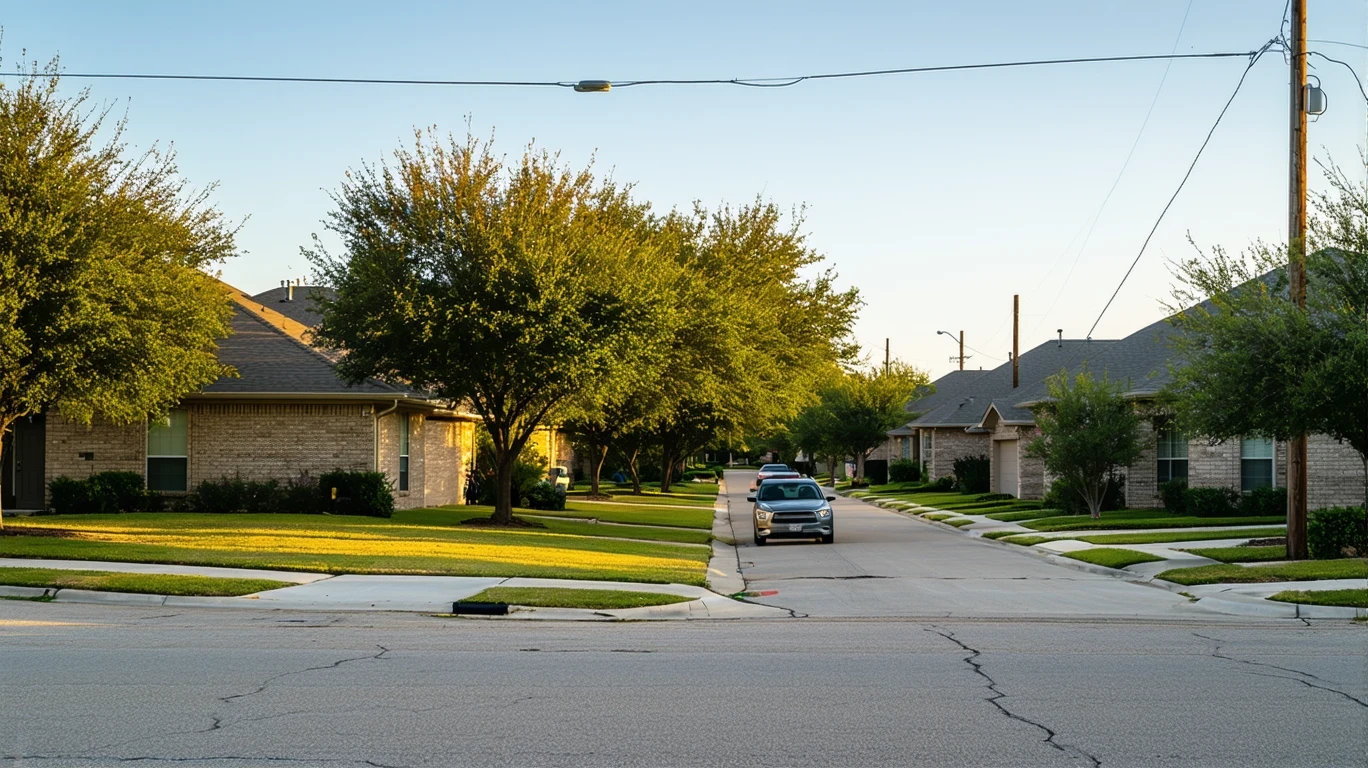
Which city gives you more for your money? For families and professionals weighing a move within the Austin metro in 2026, Kyle and Round Rock represent two distinct cost structures wrapped in similar regional economics. Both cities sit in the same price parity zone, share exposure to Texas heat and utility seasonality, and serve as bedroom communities for Austin commuters. Yet the way costs show up—and which households feel pressure first—differs in meaningful ways. The decision isn’t about finding the cheaper city overall; it’s about understanding where your household’s specific cost sensitivities will encounter the most friction, and where you’ll gain the most control.
Kyle offers a lower housing entry point and emerging suburban infrastructure, with trade-offs in errands accessibility and a car-dependent daily rhythm. Round Rock presents higher upfront housing costs but benefits from more established city-scale amenities and documented commute patterns that reflect its role as a regional employment hub. Neither city is universally better—each fits different household priorities depending on whether you’re more exposed to housing entry barriers, ongoing transportation friction, or the logistics of daily errands in a sprawling metro.
Housing Costs
Housing represents the most visible structural difference between Kyle and Round Rock in 2026. Kyle’s median home value stands at $271,000, while Round Rock’s reaches $337,500—a gap that shapes who can enter each market and what type of housing stock dominates. For first-time buyers or households stretching to leave Austin proper, Kyle’s lower entry threshold creates more immediate access to ownership, though it often means accepting newer subdivisions farther from established infrastructure. Round Rock’s higher median reflects a more mature housing market with greater proximity to employment centers, retail corridors, and long-standing neighborhoods, but that maturity comes with a steeper upfront cost that filters out households without substantial savings or dual incomes.
Rental markets in both cities show near-parity, with Kyle’s median gross rent at $1,572 per month and Round Rock’s at $1,586 per month. This narrow difference suggests that renters face similar ongoing obligations regardless of which city they choose, though the housing stock available at that price point may differ. Kyle’s rental inventory skews toward newer apartment complexes and single-family subdivisions built in the last decade, often with modern finishes but less walkable surroundings. Round Rock’s rental market includes a broader mix of older townhomes, garden-style apartments, and single-family homes in established neighborhoods, offering more variety in layout and location but sometimes requiring trade-offs in unit age or amenity quality.
The housing decision between Kyle and Round Rock hinges on whether your household is more constrained by entry costs or by long-term predictability. Buyers prioritizing lower down payments and newer construction may find Kyle’s market more accessible, especially if they’re willing to accept a car-dependent lifestyle and longer drives to amenities. Households with higher incomes or those prioritizing proximity to jobs, schools, and retail may justify Round Rock’s higher entry costs in exchange for a more established neighborhood fabric and shorter distances to daily needs. Renters face similar monthly obligations in both cities, but the choice often comes down to whether you value newer construction and space (Kyle) or location flexibility and neighborhood maturity (Round Rock).
| Housing Type | Kyle | Round Rock |
|---|---|---|
| Median Home Value | $271,000 | $337,500 |
| Median Gross Rent | $1,572/month | $1,586/month |
| Typical Buyer Profile | First-time buyers, families seeking space | Established households, dual-income professionals |
| Renter Considerations | Newer apartments, car-dependent access | Mixed-age stock, more location variety |
Housing takeaway: Kyle’s lower entry costs favor households where upfront savings matter more than proximity to established amenities. Round Rock’s higher home values reflect a market where location, commute access, and neighborhood maturity command a premium. Renters face nearly identical monthly obligations, but the trade-off lies in housing age, layout variety, and how far you’ll drive for daily errands.
Utilities and Energy Costs
Utility costs in Kyle and Round Rock follow nearly identical rate structures, reflecting their shared position in the Austin metro’s energy grid and similar exposure to Texas heat. Kyle’s electricity rate sits at 15.87¢/kWh, while Round Rock’s reaches 16.11¢/kWh—a difference too narrow to meaningfully affect monthly bills for most households. Both cities experience the same extended cooling season, where air conditioning dominates summer energy use and drives the year’s highest utility expenses. Natural gas pricing shows more variation: Kyle’s rate of $19.31/MCF contrasts with Round Rock’s $30.71/MCF, a gap that matters primarily during the brief winter heating season when older homes or larger square footage increase gas consumption.
The real utility pressure in both cities comes from housing stock and household size rather than rate differences. Newer homes in Kyle’s subdivisions often feature better insulation and modern HVAC systems, reducing baseline cooling costs even as larger floor plans increase total usage. Round Rock’s mix of older and newer housing creates more variability—established neighborhoods may include homes built before current energy codes, leading to higher cooling and heating loads, while newer construction offers efficiency gains similar to Kyle’s. Single-family homes in both cities face greater exposure to utility volatility than apartments, where shared walls and smaller square footage naturally limit consumption. Families managing larger homes and multiple occupants will feel seasonal swings more acutely, regardless of which city they choose.
Households sensitive to utility predictability should focus on housing age and size rather than city-level rate differences. Kyle’s newer housing stock may offer slightly lower baseline usage due to modern construction standards, but that advantage disappears if you’re comparing similar-age homes across both cities. Round Rock’s higher natural gas rate becomes relevant only for households heating larger homes during winter months, a cost that remains secondary to the dominant summer cooling load both cities share. Renters in newer apartment complexes face similar exposure in both cities, while owners of older single-family homes should budget for higher seasonal volatility regardless of location.
Utility takeaway: Electricity rates differ by less than a quarter-cent per kWh, making housing age and size the primary drivers of utility costs in both cities. Kyle’s newer construction may offer marginal efficiency gains, while Round Rock’s higher natural gas rate matters most for households heating older, larger homes. The extended cooling season dominates utility budgets in both cities, with predictability depending more on your home’s insulation and square footage than on which city you choose.
Groceries and Daily Expenses
Grocery and daily spending pressure in Kyle and Round Rock reflects access patterns more than price differences. Both cities share the same regional price parity index, meaning baseline grocery costs for staples like bread, milk, and eggs track closely across the metro. However, Kyle’s sparse grocery accessibility—documented through lower food and grocery establishment density—means households often drive farther to reach full-service supermarkets or rely on convenience stores for fill-in trips, which quietly increases spending through higher per-unit prices and impulse purchases. Round Rock’s larger city scale and more established retail corridors suggest broader access to big-box grocers, discount chains, and specialty stores, giving households more flexibility to shop strategically and avoid premium pricing.
The difference in daily spending shows up most clearly in how much planning each city requires. In Kyle, households that batch grocery trips and stick to shopping lists can keep costs predictable, but the sparse accessibility means last-minute needs often get filled at gas stations or small markets where prices run higher. Families managing larger grocery volumes—multiple kids, frequent meal prep—feel this friction more acutely, as the time cost of driving to a full-service store competes with the financial cost of paying convenience premiums. Round Rock’s denser retail environment reduces that friction, allowing households to comparison-shop, hit multiple stores in one trip, or grab forgotten items without a 20-minute detour.
Dining out and convenience spending follow similar patterns. Kyle’s emerging restaurant scene concentrates along major corridors, with fewer walkable neighborhood options, which can push households toward takeout or delivery when cooking feels like too much effort—adding fees and tips that compound costs. Round Rock’s more established dining infrastructure offers more variety at different price points, from fast-casual chains to local spots, giving households more control over how often they eat out and what they spend when they do. Single adults and couples may find Kyle’s limited options easier to navigate, while families juggling schedules and preferences may value Round Rock’s broader access to affordable, quick dining.
Grocery and daily spending takeaway: Price parity means staple costs track closely, but Kyle’s sparse grocery accessibility increases friction for households that can’t batch-shop or plan every trip. Round Rock’s denser retail environment offers more flexibility, lower convenience premiums, and easier comparison shopping. Families managing larger volumes or unpredictable schedules feel Kyle’s access gaps more acutely, while single adults or disciplined planners can keep costs predictable in either city.
Taxes and Fees
Property taxes and local fees shape long-term housing costs in both Kyle and Round Rock, though specific rates aren’t documented in available data. Texas cities rely heavily on property taxes to fund schools, infrastructure, and services, meaning homeowners in both cities face ongoing obligations that rise with assessed home values and local budget needs. Kyle’s lower median home value translates to a lower baseline property tax bill for equivalent housing, but newer subdivisions often include municipal utility districts or special assessments that add fees for water, drainage, and road maintenance—costs that can surprise first-time buyers who budget only for the advertised tax rate. Round Rock’s higher home values mean higher absolute property tax bills, but the city’s more established infrastructure may result in fewer special assessments or MUD fees, depending on the neighborhood.
Homeowners Association fees add another layer of variability. Kyle’s newer developments frequently include HOAs that bundle landscaping, amenity access, and exterior maintenance, with fees ranging from modest to substantial depending on the subdivision’s amenities. These fees introduce predictability—you know what you’ll pay each month—but they also reduce flexibility, as you can’t opt out even if you don’t use the pool or clubhouse. Round Rock’s housing stock includes both HOA-governed communities and older neighborhoods without mandatory fees, giving buyers more choice in whether they want bundled services or prefer to handle maintenance independently. Renters in both cities typically see HOA costs embedded in rent, but owners must budget for them as a separate, non-negotiable line item.
Sales taxes and consumption-based fees affect all households but hit differently depending on spending patterns. Texas state sales tax applies uniformly, but local add-ons can vary slightly between cities. Households that spend heavily on goods—furniture, electronics, home improvement—feel sales tax pressure more acutely, while those prioritizing experiences or services see less impact. Utility connection fees, trash collection, and water/sewer charges also vary by provider and neighborhood, with newer developments sometimes charging higher rates to cover infrastructure buildout. Long-term residents in established neighborhoods may see more stable fee structures, while recent movers into new construction should expect fees to adjust as development matures.
Taxes and fees takeaway: Kyle’s lower home values reduce baseline property tax exposure, but newer subdivisions often add MUD fees and HOA costs that narrow the gap. Round Rock’s higher home values mean higher property taxes, but more established infrastructure may reduce special assessments. Homeowners planning to stay several years should investigate total tax and fee obligations beyond the advertised rate, as HOAs, MUDs, and utility fees can shift the true cost structure significantly.
Transportation & Commute Reality
Transportation costs in Kyle and Round Rock hinge on commute patterns and car dependence rather than fuel prices alone. Kyle’s gas price sits at $2.60/gal, while Round Rock’s drops to $2.46/gal—a difference that matters only for households driving long distances regularly. Round Rock documents an average commute time of 25 minutes, with 33.8% of workers facing long commutes and just 5.3% working from home, painting a picture of a city where most residents drive daily to jobs in Austin or other metro employment centers. Kyle lacks comparable commute data, but its position farther south in the metro and sparse errands accessibility suggest similar or longer drive times for households commuting north toward Austin’s core.
Car dependence defines daily life in both cities. Kyle’s documented walkable pockets and medium bike presence offer limited relief—you might walk within your subdivision or to a nearby park, but groceries, healthcare, and most errands require driving. Round Rock’s larger scale and more established infrastructure likely provide more retail and service options within shorter distances, though without experiential signals it’s difficult to confirm how much that reduces car reliance in practice. Both cities lack robust public transit, meaning households must budget for vehicle ownership, insurance, maintenance, and fuel as non-negotiable costs. Families managing multiple drivers—teens, dual-income couples—face compounded transportation exposure, as each vehicle adds insurance premiums, registration fees, and repair costs that stack quickly.
The transportation decision between Kyle and Round Rock comes down to commute tolerance and how much you value proximity to daily needs. Kyle’s lower housing costs may appeal to households willing to accept longer drives in exchange for more space or newer construction, but that trade-off assumes you’re comfortable spending significant time in the car each week. Round Rock’s documented commute patterns and slightly lower gas prices favor households already working in the northern metro or those prioritizing shorter distances to retail and services. Neither city offers a low-car lifestyle, but Round Rock’s infrastructure maturity may reduce the frequency of long drives for non-work errands.
Transportation takeaway: Both cities require car ownership, but Kyle’s sparse accessibility and southern metro position may increase total drive time for households commuting to Austin or running daily errands. Round Rock’s documented 25-minute average commute and denser retail environment suggest slightly less transportation friction, though long commutes still affect a third of workers. Gas price differences matter less than commute distance and how often you’re forced into the car for non-work trips.
Cost Structure Comparison
Housing dominates the cost experience in both Kyle and Round Rock, but the pressure shows up differently. Kyle’s lower median home value creates a more accessible entry point, favoring first-time buyers or households stretching to leave Austin’s rental market. Round Rock’s higher home values reflect a market where location and infrastructure maturity command a premium, filtering for households with stronger income capacity or dual earners. Renters face nearly identical monthly obligations, but Kyle’s newer construction and Round Rock’s neighborhood variety create different trade-offs in layout, age, and proximity to amenities.
Utilities introduce similar exposure in both cities, with electricity rates differing by less than a quarter-cent per kWh and both cities sharing the same extended cooling season. Kyle’s newer housing stock may offer marginal efficiency gains, while Round Rock’s higher natural gas rate matters primarily for households heating older, larger homes during brief winter months. The real driver of utility volatility isn’t city-level rates but housing age, square footage, and household size—factors that transcend location and depend more on which specific home you choose.
Groceries and daily spending reveal a structural difference in access friction. Kyle’s sparse grocery and food establishment density means households drive farther for full-service shopping or pay convenience premiums for last-minute needs, a cost that compounds for families managing larger volumes or unpredictable schedules. Round Rock’s denser retail environment reduces that friction, offering more flexibility to comparison-shop and avoid premium pricing. The difference isn’t about prices—both cities share regional price parity—but about how much planning and drive time you’re willing to accept to keep costs predictable.
Transportation patterns matter more in Round Rock, where documented commute times and long-commute percentages highlight the city’s role as a bedroom community for Austin metro employment. Kyle’s southern metro position and sparse accessibility suggest similar or greater car dependence, but without commute data it’s harder to quantify. Both cities require vehicle ownership, but Round Rock’s infrastructure maturity may reduce non-work drive frequency, while Kyle’s layout assumes you’re comfortable spending significant time in the car each week.
The better choice depends on which costs dominate your household. Households sensitive to housing entry barriers may prefer Kyle’s lower median home value, especially if they’re willing to trade proximity for space. Households prioritizing commute efficiency and retail access may justify Round Rock’s higher housing costs in exchange for shorter distances to jobs and services. For renters, the decision is less about monthly rent—which tracks closely—and more about whether you value newer construction and space (Kyle) or neighborhood variety and location flexibility (Round Rock).
How the Same Income Feels in Kyle vs Round Rock
Single Adult
For a single adult, housing becomes the first non-negotiable cost, and Kyle’s lower entry point offers more flexibility to save or allocate income elsewhere. Flexibility disappears quickly in errands and transportation, as Kyle’s sparse accessibility forces frequent drives that consume both time and fuel. Round Rock’s higher housing costs tighten the budget upfront, but denser retail and shorter distances to daily needs reduce the friction of managing life without a partner to split logistics. The role of commute friction matters less for singles who can optimize their schedule, but Kyle’s car-dependent rhythm assumes you’re comfortable planning every trip in advance.
Dual-Income Couple
For dual-income couples, housing costs in Round Rock become more manageable with two paychecks, and the higher entry point buys proximity to jobs and amenities that reduce time spent commuting or running errands. Flexibility exists in dining out and convenience spending, where Round Rock’s broader restaurant and retail options allow couples to control how often they cook versus eat out. Kyle’s lower housing costs free up income for other priorities, but the sparse accessibility means couples must coordinate grocery trips and errands more carefully, and the time cost of driving farther for daily needs can strain schedules when both partners work full-time.
Family with Kids
For families, housing costs become non-negotiable first, and Kyle’s lower median home value offers more space for the same monthly obligation, a trade-off that matters when managing multiple bedrooms and yard space. Flexibility disappears in transportation and errands, as Kyle’s sparse grocery accessibility and car-dependent layout force parents to plan every trip, and the time cost of driving farther for school, activities, and shopping compounds quickly. Round Rock’s higher housing costs consume more income upfront, but the denser infrastructure reduces the logistics burden of managing a family’s daily schedule, and shorter distances to schools, retail, and services offer more predictability when juggling multiple kids’ needs.
Decision Matrix: Which City Fits Which Household?
| Decision factor | If you’re sensitive to this… | Kyle tends to fit when… | Round Rock tends to fit when… |
|---|---|---|---|
| Housing entry + space needs | Down payment size, square footage per dollar, new construction | You prioritize lower entry costs and accept car-dependent surroundings for more space | You value proximity to jobs and retail over lower upfront costs and can afford higher home values |
| Transportation dependence + commute friction | Daily drive time, fuel costs, vehicle wear, schedule flexibility | You’re comfortable with longer drives and can batch errands to reduce trip frequency | You work in the northern metro or prioritize shorter distances to daily needs and services |
| Utility variability + home size exposure | Seasonal bill swings, cooling costs, home age, square footage | You choose newer construction with modern insulation to reduce baseline usage | You accept higher natural gas rates in exchange for neighborhood maturity and location flexibility |
| Grocery strategy + convenience spending creep | Planning burden, last-minute trips, comparison shopping, dining out frequency | You batch-shop and plan meals in advance to avoid convenience premiums from sparse access | You value flexibility to comparison-shop and reduce friction from denser retail access |
| Fees + friction costs (HOA, services, upkeep) | Predictability vs flexibility, bundled services, special assessments | You accept HOA fees and MUD costs in newer subdivisions for bundled amenities and maintenance | You prefer neighborhood variety that includes non-HOA options and more established fee structures |
| Time budget (schedule flexibility, errands, logistics) | Coordination burden, drive time for non-work trips, household logistics complexity | You have schedule flexibility to plan trips and tolerate longer drives for daily needs | You juggle tight schedules and value shorter distances to reduce logistics friction |
Lifestyle Fit
Kyle and Round Rock offer distinct lifestyle textures shaped by their infrastructure maturity and position in the Austin metro. Kyle’s newer subdivisions and emerging retail corridors create a suburban rhythm where most activities require driving, but the trade-off is modern housing stock, newer parks, and a sense of growth and possibility. The city’s documented walkable pockets allow for some pedestrian movement within neighborhoods, and medium bike presence suggests limited cycling infrastructure in parts of the city, though these features don’t reduce car dependence for most daily needs. Round Rock’s larger scale and established infrastructure provide more variety in dining, shopping, and recreation, with a broader mix of chain retailers, local restaurants, and long-standing community spaces that reflect decades of development.
Commute times and work patterns differ meaningfully between the cities. Round Rock’s documented 25-minute average commute and 33.8% long-commute percentage highlight its role as a bedroom community for Austin metro jobs, with most residents driving daily to employment centers. Kyle’s position farther south in the metro suggests similar or longer commute times for households working in Austin’s core, though the lack of commute data makes direct comparison difficult. Both cities see low work-from-home percentages, reflecting their suburban character and reliance on traditional commuting patterns. Families prioritizing shorter drives to work may find Round Rock’s northern metro position advantageous, while those willing to accept longer commutes in exchange for lower housing costs may prefer Kyle’s entry point.
Recreation and outdoor access follow similar patterns in both cities, with parks and green space available but requiring intentional trips rather than walkable access. Kyle’s documented park density sits in the moderate range, with water features present that add variety to outdoor options. Round Rock’s larger city scale likely offers more developed park systems and recreational facilities, though without experiential signals it’s difficult to confirm how accessible those amenities feel in daily life. Both cities benefit from proximity to Austin’s broader cultural and entertainment offerings, but reaching them requires driving and planning rather than spontaneous access. Kyle’s median household income of $85,199 per year reflects a mix of young families and professionals, while Round Rock’s $91,888 per year suggests slightly higher earning capacity among residents.
Lifestyle takeaway: Kyle fits households prioritizing newer construction, lower entry costs, and willingness to drive for most activities, with a suburban rhythm that rewards planning and car ownership. Round Rock fits households valuing infrastructure maturity, broader retail and dining variety, and slightly shorter commutes to northern metro jobs, with a more established city feel that reduces some daily logistics friction. Neither city offers a walkable, transit-rich lifestyle, but Round Rock’s scale and maturity provide more flexibility in how you spend time outside work and home.
Frequently Asked Questions
Is Kyle or Round Rock cheaper for renters in 2026?
Rental costs track nearly identically, with Kyle’s median gross rent at $1,572 per month and Round Rock’s at $1,586 per month. The difference isn’t about monthly rent but about what you get for that price—Kyle offers newer apartment complexes and single-family rentals in emerging subdivisions, while Round Rock provides more variety in housing age, layout, and neighborhood character. Renters sensitive to location flexibility and proximity to retail may prefer Round Rock, while those prioritizing modern finishes and space may find Kyle’s newer stock more appealing.
Which city has lower upfront costs for first-time homebuyers comparing Kyle and Round Rock?
Kyle’s median home value of $271,000 creates a lower entry barrier compared to Round Rock’s $337,500, making it more accessible for first-time buyers or households with limited savings for down payments. However, Kyle’s newer subdivisions often include HOA fees and municipal utility district costs that add to monthly obligations, while Round Rock’s higher home values reflect more established neighborhoods with potentially fewer special assessments. The decision depends on whether you’re more constrained by upfront savings or by long-term monthly predictability.
Do utility bills cost more in Kyle or Round Rock in 2026?
Utility rates differ minimally—Kyle’s electricity rate sits at 15.87¢/kWh versus Round Rock’s 16.11¢/kWh, a gap too narrow to meaningfully affect monthly bills. Natural gas pricing shows more variation, with Kyle at $19.31/MCF and Round Rock at $30.71/MCF, but this matters primarily during brief winter heating months. The real driver of utility costs is housing age and size, not city-level rates. Newer homes in Kyle may offer slightly better insulation and efficiency, while Round Rock’s mix of older and newer housing creates more variability in baseline usage.
How does commute time compare between Kyle and Round Rock for Austin metro workers?
Round Rock documents an average commute time of 25 minutes, with 33.8% of workers facing long commutes, reflecting its role as a northern metro bedroom community. Kyle lacks comparable commute data, but its southern metro position suggests similar or longer drive times for households working in Austin’s core. Both cities require car ownership and daily commuting for most residents, but Round Rock’s infrastructure and northern location may offer shorter distances to jobs in the northern metro employment centers.
Which city between Kyle and Round Rock offers better access to groceries and daily errands?
Kyle’s sparse grocery and food establishment density means households drive farther for full-service shopping or pay convenience premiums at smaller stores, a friction that compounds for families managing larger volumes or unpredictable schedules. Round Rock’s larger scale and more established retail corridors suggest broader access to big-box grocers, discount chains, and specialty stores, reducing the planning burden and allowing more comparison shopping. The difference isn’t about prices—both cities share regional price parity—but about how much drive time and planning you’re willing to accept to keep costs predictable.
Conclusion
Kyle and Round Rock offer two distinct cost structures within the same regional economy, and the better choice depends on which pressures your household can absorb most easily. Kyle’s lower housing entry costs and newer construction appeal to first-time buyers and families prioritizing space over proximity, but the sparse grocery accessibility and car-dependent layout require tolerance for longer drives and careful planning. Round Rock’s higher home values and established infrastructure fit households with stronger income capacity or dual earners who value shorter commutes, denser retail access, and reduced logistics friction, even if it means paying more upfront for housing.
Neither city is cheaper overall—both require car ownership, both share similar utility exposure, and both serve as bedroom communities for Austin metro employment. The decision comes down to whether you’re more sensitive to housing entry barriers, transportation friction, or the daily logistics of running errands in a sprawling metro. Kyle rewards households that can plan ahead and accept driving as a fact of life, while Round Rock rewards those who value infrastructure maturity and proximity to jobs and services enough to justify higher housing costs. The right fit depends on which trade-offs align with your household’s income, schedule, and priorities in 2026.
How this article was built: In addition to public economic data, this article incorporates location-based experiential signals derived from anonymized geographic patterns—such as access density, walkability, and land-use mix—to reflect how day-to-day living actually feels in Kyle, TX.