
The Housing Market in Kirkwood Today
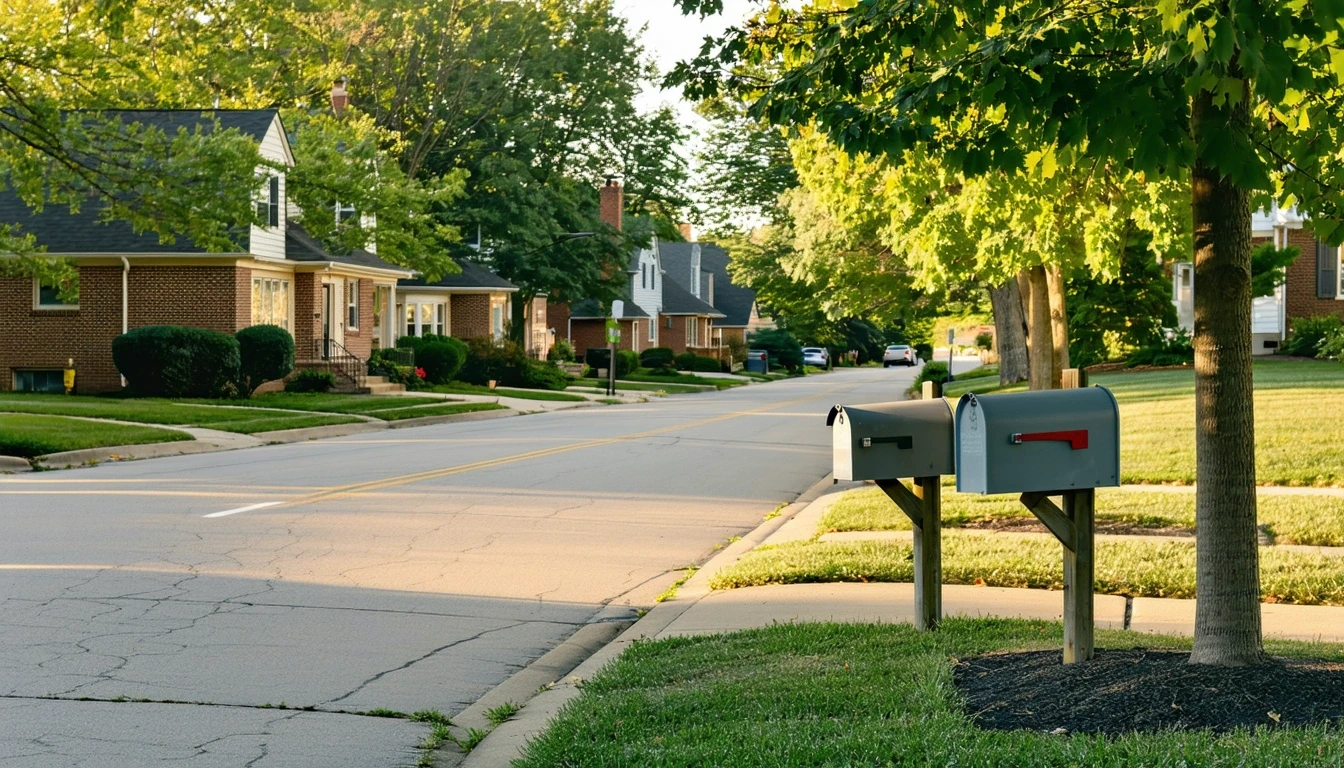
Kirkwood stands as one of St. Louis County’s most established inner-ring suburbs, where housing costs in Kirkwood reflect both its historic character and strong school reputation. The city’s housing market operates in a sweet spot—close enough to downtown St. Louis for an easy commute, yet far enough west to offer larger lots and tree-lined streets that feel distinctly suburban. Unlike newer developments in St. Charles County or further west in Wildwood, Kirkwood’s housing stock includes a significant number of pre-war homes and mid-century properties that command premium prices due to their craftsmanship and established neighborhoods.
The local market is driven primarily by families seeking access to the Kirkwood School District, which consistently ranks among the best in the metro area. This creates persistent demand that keeps home values stable even during broader market fluctuations. Major employers like Mercy Hospital South and the proximity to Clayton’s business district mean many professionals choose Kirkwood for its balance of residential charm and employment access. The city’s Meacham Park neighborhood has seen particular investment and revitalization in recent years, adding diversity to the housing options available.
Compared to Webster Groves immediately to the east, Kirkwood offers slightly more affordable entry points while maintaining similar amenities and school quality. Moving west to Des Peres or Sunset Hills, you’ll find newer construction but often at higher price points and with mandatory HOA fees. Kirkwood’s established infrastructure—including its walkable downtown, Farmers’ Market, and Amtrak station—adds value that newer suburbs can’t replicate, making it a competitive market where well-maintained homes rarely sit long.
Renting in Kirkwood: Typical Costs and Trends
Rental inventory in Kirkwood skews toward single-family homes and smaller apartment complexes rather than large multifamily developments. A one-bedroom apartment typically ranges from $950 to $1,300 per month, while two-bedroom units run $1,200 to $1,700 depending on location and amenities. The higher end of these ranges applies to newer construction near downtown Kirkwood or properties within walking distance to the Kirkwood Metrolink station, which provides direct access to Clayton, the Central West End, and downtown St. Louis.
The renter demographic in Kirkwood includes young professionals working in Clayton or downtown who prefer suburban quiet without sacrificing transit access, empty-nesters downsizing from larger homes but wanting to stay in the community, and families using rental as a trial period before committing to purchase in the school district. Areas south of Manchester Road and near Kirkwood Park tend to offer more affordable rental options, while properties north of the railroad tracks and closer to downtown command premium rents due to walkability to restaurants, shops, and the train station.
Commute patterns significantly influence rental demand. Properties within a half-mile of the Kirkwood Metrolink station can command $100-200 more monthly than comparable units requiring a car for all trips. Access to Interstate 44 and Highway 270 also factors into pricing, as these corridors connect residents to major employment centers throughout the metro area. Unlike university-adjacent neighborhoods, Kirkwood doesn’t experience the dramatic seasonal rental fluctuations tied to academic calendars, maintaining steadier pricing year-round.
Owning a Home in Kirkwood: Prices, Taxes, and HOA Fees
The median home price in Kirkwood currently sits around $385,000, though this varies considerably by neighborhood and home age. Well-preserved historic homes in the central neighborhoods near downtown can exceed $500,000, while smaller ranch homes south of Manchester or in Meacham Park may start in the $250,000-$300,000 range. The city’s housing stock is predominantly single-family detached homes, with limited townhome or condominium options compared to neighboring municipalities.
Property taxes represent a significant consideration for Kirkwood homeowners. The combined property tax rate in Kirkwood is approximately 3.8-4.2% of assessed value, which reflects St. Louis County’s rates plus the Kirkwood School District levy. On a $385,000 home assessed at 19% of market value (Missouri’s residential assessment ratio), annual property taxes typically run $7,300-$7,800, or roughly $610-$650 monthly. This rate is higher than outer suburbs like Eureka or Pacific but comparable to other inner-ring communities with strong school districts like Clayton or Ladue.
HOA fees are relatively uncommon in Kirkwood’s traditional neighborhoods. The city’s housing development predates the HOA-heavy era of suburban growth, meaning most single-family homes have no monthly association fees. Where HOAs do exist—primarily in newer townhome developments or condominium complexes built in the past two decades—fees typically range from $150 to $300 monthly and cover:
- Exterior building maintenance and insurance for attached properties
- Landscaping and snow removal for common areas
- Trash collection and sometimes water/sewer for multi-unit buildings
- Maintenance of shared amenities like pools or clubhouses where present
Most Kirkwood homeowners budget for direct municipal services instead—the city provides trash collection, but homeowners handle their own landscaping, snow removal, and exterior maintenance. This gives owners more control but also more responsibility compared to HOA-managed properties.
Apartment vs House in Kirkwood: Side-by-Side Costs
Understanding the full picture of monthly expenses requires looking beyond just rent or mortgage payments. The following comparison uses realistic estimates for a two-bedroom apartment versus a three-bedroom house in Kirkwood:
| Monthly Expense | Apartment (2BR) | House (3BR) |
|---|---|---|
| Rent/Mortgage Payment | $1,450 | $2,150 (assuming $385k purchase, 20% down, 7% rate) |
| Property Tax | N/A (included in rent) | $640 |
| Utilities (electric, gas, water) | $120 | $210 |
| Insurance | $20 (renter’s) | $140 (homeowner’s) |
| HOA Fees | N/A | $0 (most neighborhoods) |
| Maintenance Reserve | $0 | $200 |
| Monthly Total | $1,590 | $3,340 |
Methodology: Housing estimates for 2025 in Kirkwood use published rent and sale price data from St. Louis County real estate sources, local property tax rates from the St. Louis County Assessor, and typical utility costs for Missouri’s climate. Mortgage calculations assume conventional financing with 20% down payment at current interest rates. HOA fees reflect the reality that most Kirkwood neighborhoods have no mandatory associations. All totals are rounded and expressed as monthly costs. Actual expenses vary depending on neighborhood, housing type, and household size.
The nearly $1,750 monthly difference reflects not just the cost of ownership but also the difference in living space—most three-bedroom houses in Kirkwood offer 1,500-2,000 square feet compared to 900-1,100 for two-bedroom apartments. Renters avoid maintenance surprises and property tax increases, while owners build equity and gain stability against rent increases. The cost of living in Kirkwood requires weighing these tradeoffs against your financial situation and long-term plans.
Utility & Upkeep Differences
Missouri’s continental climate means Kirkwood residents face both heating and cooling costs throughout the year. Apartment dwellers benefit from shared walls that reduce temperature loss, with typical combined utility bills (electric, gas, water) running $100-140 monthly for a two-bedroom unit. Many apartment complexes include water and trash in the rent, further reducing variable costs. House owners face higher bills due to greater square footage and standalone construction—expect $180-250 monthly for utilities in an average three-bedroom home, with spikes during July-August air conditioning season and December-February heating months.
Maintenance represents the largest hidden cost difference between renting and owning in Kirkwood. Apartment residents call the landlord when the furnace fails or the roof leaks; homeowners write checks. Kirkwood’s housing stock includes many homes built in the 1920s-1960s, which means charm and craftsmanship but also aging systems. Financial advisors typically recommend budgeting 1-2% of home value annually for maintenance and repairs—on a $385,000 home, that’s $320-640 monthly set aside for eventual roof replacement, HVAC service, plumbing issues, and other upkeep. Some years you’ll spend nothing; others you’ll face a $12,000 roof replacement or $6,000 furnace installation.
Yard maintenance adds another consideration. Kirkwood’s established neighborhoods feature mature trees and substantial lots—beautiful but requiring regular mowing, leaf removal, and occasional tree service. Homeowners can expect to spend $50-100 monthly on lawn care if hiring services, or invest time doing it themselves. Apartment renters avoid this entirely, with grounds maintenance handled by property management. Winter snow removal falls to individual homeowners in most of Kirkwood, while apartment complexes typically clear parking lots and walkways as part of management services.
5-Year Rent vs Buy Outlook
Evaluating whether to rent or buy in Kirkwood requires projecting costs over a meaningful timeframe. Consider a five-year scenario starting in 2025. A renter paying $1,450 monthly for a two-bedroom apartment will likely see 3-4% annual increases, pushing rent to approximately $1,700 by year five. Over 60 months, total rent paid would reach roughly $95,000 with no equity built. Add renter’s insurance and utilities, and the five-year cost approaches $105,000.
A buyer purchasing a $385,000 home with 20% down ($77,000) takes on a $308,000 mortgage. At 7% interest over 30 years, monthly principal and interest equals $2,050. Adding property taxes ($640), insurance ($140), utilities ($210), and maintenance reserves ($200) brings the monthly total to $3,240. Over five years, the buyer pays approximately $194,400 in housing costs. However, roughly $35,000 of mortgage payments go toward principal, building equity. If Kirkwood home values appreciate even modestly at 2% annually, the home’s value increases to about $425,000, adding another $40,000 in equity beyond principal paydown.
The math suggests buying costs more monthly but builds roughly $75,000 in equity over five years, while renting costs less monthly but builds zero equity. The breakeven depends on how long you stay—buyers who sell within three years often lose money to transaction costs, while those staying seven-plus years typically come out ahead. Kirkwood’s stable market and strong schools suggest home values will continue appreciating, favoring buyers with longer time horizons. Renters gain flexibility to relocate for career opportunities or life changes without the friction of selling property.
Market conditions matter too. If mortgage rates drop to 5-6%, buying becomes more attractive as monthly payments decrease. If Kirkwood sees unexpected job losses or school district challenges, appreciation could stall. Most financial analysis suggests that in stable, desirable suburbs like Kirkwood, buying makes sense if you plan to stay at least five years and can comfortably afford the higher monthly costs without stretching your budget dangerously thin.
FAQs About Housing Costs in Kirkwood
How much are HOA fees in Kirkwood? Most single-family homes in Kirkwood have no HOA fees because the neighborhoods developed before homeowner associations became standard practice. The few townhome and condominium developments that do have HOAs typically charge $150-$300 monthly, covering exterior maintenance, landscaping, and shared amenities. Always verify HOA status before purchasing, as fees add significantly to monthly housing costs.
What is the property tax rate in Kirkwood? The combined property tax rate in Kirkwood is approximately 3.8-4.2% of assessed value, which includes St. Louis County taxes and the Kirkwood School District levy. Missouri assesses residential property at 19% of market value, so a $385,000 home has a taxable assessed value around $73,000, resulting in annual taxes of $7,300-$7,800. This rate is higher than outer suburbs but typical for inner-ring communities with strong school districts.
Is renting cheaper than buying long-term in Kirkwood? Renting costs less monthly but builds no equity, while buying costs more monthly but builds wealth through principal paydown and appreciation. Over five years, a renter might spend $105,000 with nothing to show for it, while a buyer spending $194,400 builds roughly $75,000 in equity. If you plan to stay in Kirkwood five-plus years and can afford the higher monthly costs, buying typically makes more financial sense. Shorter stays favor renting due to transaction costs when selling.
Do houses have higher utility costs than apartments? Yes, significantly. Apartments benefit from shared walls and smaller square footage, keeping utilities around $120 monthly. Houses average $210 monthly due to greater size, standalone construction, and full exposure to weather. Older Kirkwood homes with original windows and insulation may see even higher costs until energy efficiency upgrades are completed. Budget an extra $80-100 monthly for utilities when moving from an apartment to a house.
What’s the monthly cost difference between apartments and houses in Kirkwood? Based on current market conditions, expect to pay roughly $1,750 more monthly for a three-bedroom house versus a two-bedroom apartment when accounting for mortgage, property taxes, insurance, utilities, and maintenance. This difference buys more space, outdoor areas, and equity building, but requires significantly higher income to manage comfortably. Most financial advisors recommend keeping total housing costs below 30% of gross income.
Making Smart Housing Choices in Kirkwood
Deciding between renting and buying in Kirkwood ultimately depends on your timeline, financial stability, and lifestyle priorities. The city’s strong schools, established neighborhoods, and proximity to both downtown St. Louis and west county employment centers create consistent housing demand that supports property values. If you’re planning to stay in the area for at least five years, have stable employment, and can comfortably manage the higher monthly costs of ownership, buying builds wealth while locking in predictable housing expenses against future rent increases.
Renting makes more sense if you’re new to the St. Louis area and still exploring neighborhoods, if your career might require relocation within a few years, or if you’re not yet financially positioned to handle unexpected maintenance costs. The flexibility to move when your lease ends without worrying about selling property has real value, especially for professionals whose careers might take them elsewhere. Kirkwood’s rental market offers quality options, particularly near the Metrolink station for those who value transit access.
The property tax burden in Kirkwood is real and should factor heavily into your decision. That $640 monthly tax bill doesn’t build equity—it’s a perpetual cost of ownership that renters avoid. However, those taxes fund the schools and services that make Kirkwood desirable, creating a self-reinforcing cycle that protects property values. Before committing to either path, consider whether pods vs trucks better suits your situation if you’re relocating to the area, as moving costs can impact your available down payment or security deposit funds. Understanding the full financial picture helps you choose the housing path that aligns with both your current budget and long-term goals in this established St. Louis suburb.