
Housing in Katy sits at the center of a suburban Houston market shaped by strong household incomes, long commutes, and a development pattern that spreads residential neighborhoods across a low-rise landscape. The median home value of $359,800 and median rent of $1,444 per month reflect a market where ownership remains accessible to dual-income households, but where the full cost of housing extends well beyond the purchase price or lease signature. What distinguishes Katy is not just the price of shelter, but the structure of exposure that comes with it—property taxes that adjust with appraisals, utility bills driven by extended cooling seasons, and a car-dependent layout that makes errand logistics a recurring cost in time and fuel.
For newcomers weighing what shapes the cost of living in Katy, the housing decision carries long-term implications that compound over time. Ownership in Katy means taking on volatility in taxes, insurance, and maintenance, while renting trades equity accumulation for flexibility and predictable monthly outlays. Neither path eliminates exposure—both require understanding how Katy’s infrastructure, climate, and commuter orientation shape the experience of living here.
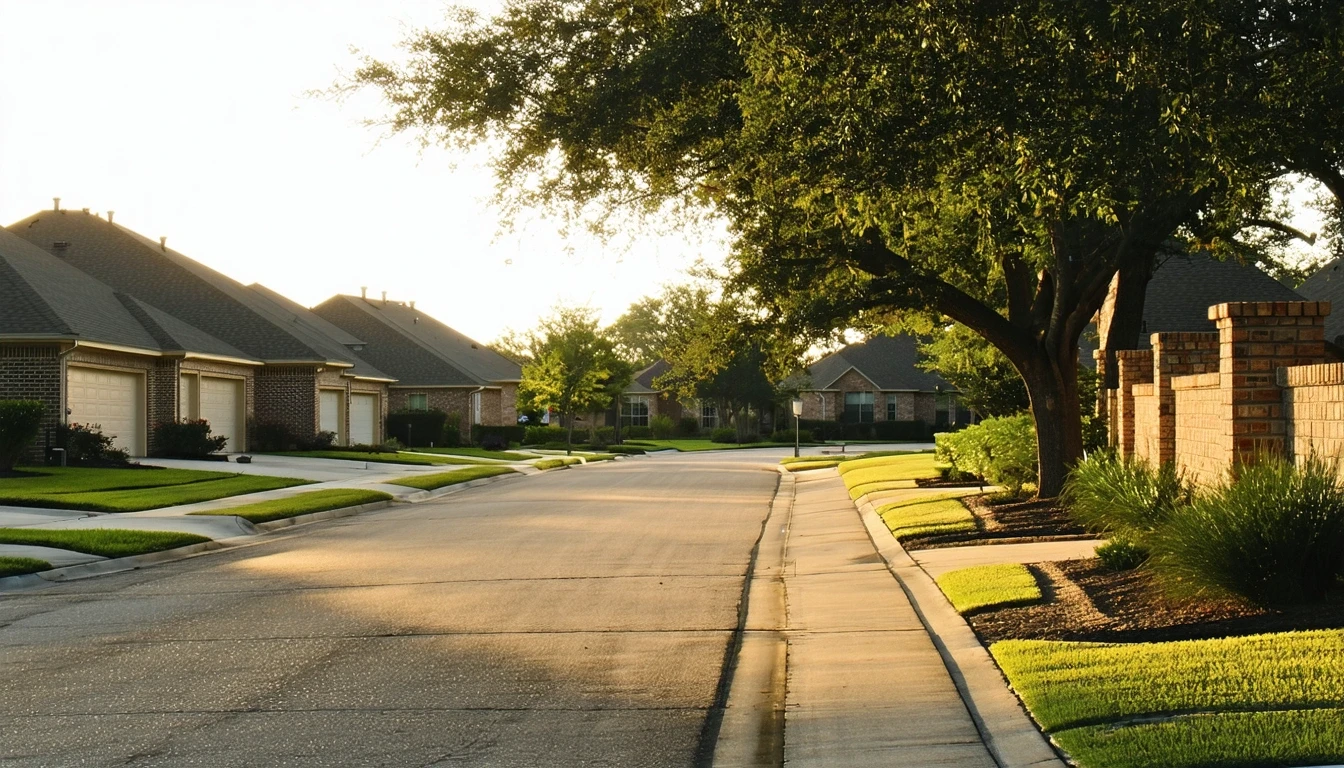
The Housing Market in Katy Today
Katy’s housing market operates within the gravitational pull of Houston’s broader metro economy, but with a distinctly suburban character. The $359,800 median home value positions Katy as accessible to households earning the area’s median income of $114,917 per year, particularly those with two earners. This is not a market defined by scarcity or rapid price escalation, but by steady demand from families and commuters seeking space, newer construction, and proximity to employment corridors that radiate west and south from Houston’s core.
What shapes Katy’s housing costs is not density or walkability, but the logistics of suburban life. The city’s layout reflects a low-rise, car-oriented development pattern where residential subdivisions cluster around commercial corridors rather than integrating with them. Errands and daily needs are corridor-clustered—grocery stores, pharmacies, and services concentrate along major roads rather than distributing evenly across neighborhoods. This means housing location determines not just commute time, but the friction involved in managing household errands. A home closer to these corridors reduces drive time; a home deeper in a subdivision adds planning burden.
The market also reflects Katy’s role as a commuter suburb. With an average commute of 29 minutes and 48.4% of workers facing long commutes, housing choice here is often a tradeoff between home size, newness, and proximity to employment. Buyers and renters who prioritize space or newer construction often accept longer drives; those who prioritize commute time pay a premium for location. The relatively low work-from-home percentage (13.5%) suggests that most households still structure their housing decisions around daily travel, not remote flexibility.
Renting in Katy
Renting in Katy at a median of $1,444 per month offers predictability in monthly housing costs, but it does not eliminate the broader cost structure of living here. Rent covers shelter, but it does not reduce the need for a vehicle, shorten the commute, or change the fact that errands require planning and drive time. For renters, the primary advantage is flexibility—freedom from property tax adjustments, maintenance surprises, and the long-term capital commitment of ownership.
Rental availability in Katy follows the same corridor-clustered pattern as commercial services. Apartment complexes and rental homes concentrate near major roads and intersections, where access to grocery stores, pharmacies, and commuter routes is more direct. Renters who prioritize convenience over space or privacy often choose these locations; those seeking larger floor plans or single-family rentals typically move deeper into subdivisions, accepting longer drive times for daily errands.
The rental experience in Katy is shaped by the same car dependency that defines ownership. Even renters in well-located complexes face drive times for most errands, and the limited family infrastructure—school and playground density both fall below typical thresholds—means households with children often find themselves driving to parks, schools, and activities despite Katy’s integrated green space access. Renting here works best for households who value mobility, who expect their income or employment to change, or who prefer to avoid the volatility that comes with ownership in a market where property taxes and insurance adjust frequently.
Owning a Home in Katy
Ownership in Katy at a median home value of $359,800 is within reach for households earning near or above the area’s median income, but the decision to buy introduces exposure that renting avoids. The purchase price is only the entry point. Property taxes in Texas operate without a state income tax, meaning local governments rely heavily on property assessments to fund schools, infrastructure, and services. These taxes adjust with appraisals, and in a market where home values have risen steadily, ownership means accepting that your tax bill will grow even if your income does not.
Homeowners in Katy also face climate-driven maintenance and insurance exposure. The hot, humid Gulf Coast climate imposes stress on roofs, HVAC systems, and exterior materials. Cooling dominates utility bills for much of the year, and the extended air conditioning season accelerates wear on mechanical systems. Insurance costs reflect both climate risk and the replacement value of newer construction, and these premiums adjust annually based on regional loss experience, not individual claims history.
Governance adds another layer. Many Katy subdivisions operate under homeowners associations that collect dues, enforce architectural standards, and maintain common areas. These fees vary widely, and they represent a recurring cost that does not build equity. For some buyers, HOA governance provides neighborhood consistency and amenity access; for others, it introduces restrictions and costs that feel like rent by another name.
Ownership in Katy rewards households who plan to stay long enough to absorb transaction costs, who can manage maintenance and tax volatility, and who value control over their living environment. It penalizes those who move frequently, who lack reserves for unexpected repairs, or who assume that monthly costs will remain static after closing.
Apartment vs House in Katy — Cost Behavior Comparison
| Expense Category | Apartment | House |
|---|---|---|
| Cooling Costs | Lower square footage and shared walls reduce cooling load; central systems may still drive noticeable summer bills | Larger floor plans and standalone construction increase cooling exposure; extended AC season dominates utility budgets |
| Maintenance Responsibility | Landlord or property management handles HVAC, roof, exterior; renter avoids capital outlays | Owner absorbs all repair and replacement costs; climate stress accelerates HVAC and roof wear |
| Errand Access | Apartments near corridors reduce drive time for groceries and services; those in subdivisions require same planning as houses | Most single-family homes sit deeper in subdivisions; errand trips require vehicle and planning regardless of home size |
| Property Tax Exposure | None; rent may adjust annually but renter avoids direct tax volatility | Direct exposure to appraisal-driven tax increases; adjustments occur regardless of income changes |
Methodology note: This comparison includes only categories where cost behavior differs meaningfully in Katy due to climate, infrastructure layout, or governance structure. Generic differences (e.g., rent vs mortgage) are excluded. Utility exposure reflects Katy’s extended cooling season and low-rise housing stock; errand access reflects corridor-clustered commercial development; tax exposure reflects Texas property tax reliance.
Utilities & Upkeep Differences
Utility and maintenance costs in Katy behave differently depending on housing type, but both are shaped by the same climate and infrastructure realities. The electricity rate of 15.87¢/kWh applies equally to renters and owners, but the intensity of cooling demand—and therefore the size of summer bills—scales with square footage, insulation quality, and building age. Apartments with shared walls and smaller floor plans face lower absolute costs, but they are not immune to the extended air conditioning season that defines Gulf Coast living. Single-family homes, especially older or larger ones, see cooling costs dominate their utility budgets from late spring through early fall.
Maintenance exposure in Katy is driven by heat, humidity, and the wear they impose on building systems. HVAC units work harder and fail sooner in climates where cooling runs seven or eight months a year. Roofs age faster under intense sun and occasional severe weather. Exterior paint, siding, and trim degrade more quickly in humid conditions. For apartment renters, these are the landlord’s problem; for homeowners, they represent recurring capital outlays that arrive on a schedule determined by climate, not convenience.
Natural gas, priced at $19.31 per MCF, plays a smaller role in Katy’s utility picture than in colder climates. Heating demand is limited to occasional cold snaps, and many homes rely on electric heat pumps rather than gas furnaces. Where gas is present, it typically serves water heaters and cooking appliances, not whole-home heating. This reduces winter utility volatility but does not eliminate the summer cooling burden that defines energy costs here.
Rent vs Buy: Long-Term Exposure in Katy
The choice between renting and buying in Katy is not a question of which costs less in the short term, but which exposure profile fits your household’s stability, income trajectory, and tolerance for volatility. Renting offers predictability: your monthly outlay adjusts at lease renewal, but you avoid property tax increases, insurance premium jumps, and the capital cost of replacing an HVAC system in year seven. Ownership offers control and equity accumulation, but it transfers all financial risk to you—taxes rise with appraisals, insurance adjusts with regional loss experience, and maintenance arrives on a schedule you cannot negotiate.
Over time, ownership in Katy rewards households whose income grows faster than their housing costs, who stay long enough to recover transaction costs, and who build equity that offsets the volatility of taxes and upkeep. It penalizes those who move within a few years, who face income disruption, or who lack reserves to absorb unexpected repairs. Renting rewards those who value mobility, who expect their employment or family structure to change, or who prefer to keep their housing costs fixed while deploying income elsewhere.
The long-term cost structure in Katy also reflects the city’s car-dependent layout. Whether you rent or own, you face the same commute times, the same errand planning burden, and the same need for reliable transportation. Your monthly budget in Katy must account for fuel, maintenance, and vehicle depreciation regardless of housing tenure. The housing decision determines your exposure to property taxes and maintenance, but it does not change the fact that living here requires a vehicle and the recurring costs that come with it.
FAQs About Housing Costs in Katy
What drives property tax costs for homeowners in Katy, TX?
Property taxes in Katy are driven by appraisals conducted by the local appraisal district, which adjusts assessed values based on market conditions. Texas relies on property taxes to fund schools and local services without a state income tax, so tax bills rise when home values increase, even if your income does not. Homeowners can protest appraisals, but the process requires documentation and time.
Is renting in Katy more affordable than owning?
Renting at $1,444 per month avoids property tax, insurance, and maintenance volatility, making monthly costs more predictable. Ownership at a median home value of $359,800 builds equity but introduces exposure to tax increases, repair costs, and climate-driven wear. Affordability depends on your income stability, how long you plan to stay, and your tolerance for cost variability.
How does Katy’s climate affect housing maintenance costs?
Katy’s hot, humid climate accelerates wear on HVAC systems, roofs, and exterior materials. Cooling demand runs from late spring through early fall, and air conditioning systems work harder and fail sooner than in milder climates. Homeowners face recurring capital outlays for system replacement and exterior upkeep; renters avoid these costs but may see rent increases that reflect landlord maintenance expenses.
Does living in Katy require owning a car even if you rent?
Yes. Katy’s layout clusters errands and services along commercial corridors rather than integrating them into neighborhoods. Even renters in well-located apartments face drive times for groceries, pharmacies, and other daily needs. The limited family infrastructure—schools and playgrounds below typical density thresholds—means households with children drive for most activities despite the city’s strong park access.
How do HOA fees affect the cost of owning a home in Katy?
Many Katy subdivisions operate under homeowners associations that collect dues for common area maintenance, amenities, and enforcement of architectural standards. These fees vary by neighborhood and represent a recurring cost that does not build equity. Some buyers value the consistency and services HOAs provide; others see them as restrictions that add cost without flexibility.
Making Housing Choices in Katy
Housing costs in Katy reflect a suburban market where ownership remains accessible to households with strong incomes, but where the full cost of living extends beyond the purchase price or rent check. The $359,800 median home value and $1,444 median rent are entry points, not endpoints. Ownership introduces exposure to property tax adjustments, climate-driven maintenance, and insurance volatility. Renting offers predictability and flexibility but does not eliminate the car dependency, commute times, and errand planning that define daily life here.
The housing decision in Katy works best when it aligns with your household’s stability, income trajectory, and tolerance for cost variability. Buyers who plan to stay, who can absorb tax and maintenance volatility, and who value control and equity accumulation will find ownership rewarding. Renters who prioritize mobility, predictable costs, and freedom from capital risk will find leasing a better fit. Both paths require understanding that Katy’s layout, climate, and commuter orientation shape the cost of living here in ways that persist regardless of tenure.
For households comparing moving company costs and options, the housing choice you make in Katy determines not just your monthly outlay, but your long-term financial exposure and daily logistics burden. The market rewards those who match their housing decision to their income stability and lifestyle needs, and it penalizes those who assume that costs will remain static or that location does not matter in a car-dependent suburb.
How this article was built: In addition to public economic data, this article incorporates location-based experiential signals derived from anonymized geographic patterns—such as access density, walkability, and land-use mix—to reflect how day-to-day living actually feels in Katy, TX.