
Transportation options in Jeffersontown reflect the realities of a car-oriented suburban community where driving dominates daily life. While public transit exists, the structure of the city—low pedestrian infrastructure, sparse grocery access, and limited density—means most residents depend on a car for nearly every errand, appointment, and commute. Newcomers often underestimate how essential vehicle ownership becomes here, not because transit is absent, but because the layout of Jeffersontown makes it difficult to complete routine tasks without one. Understanding how people actually get around requires looking beyond the presence of bus stops to the friction of daily logistics.
This article explains what transportation looks like in practice: where transit fits, where it falls short, and how mobility shapes the rhythm of life in Jeffersontown.
How People Get Around Jeffersontown
Jeffersontown is structured around car travel. Pedestrian infrastructure sits below the threshold needed to support walkable errands, and grocery density is particularly low, meaning even residents who live near commercial corridors often drive for weekly shopping. The city has both residential and commercial land use present, but these zones don’t always overlap in ways that allow walking between them. Roads dominate the transportation network, and while some bike infrastructure exists in pockets, it doesn’t form a connected system that replaces car dependency.
Bus service is available, but it functions as a supplement rather than a backbone. Most households treat transit as a backup option or a solution for specific trips, not as a primary mode. The dominant pattern is single-occupancy vehicle commuting, with driving extending beyond work trips into errands, healthcare visits, school runs, and social activities. For families, retirees, and anyone managing multiple stops in a day, the car becomes the default because no other option offers comparable reach or flexibility.
What newcomers often misunderstand is that proximity to a bus route doesn’t eliminate the need for a car. Even residents near transit corridors find themselves driving for groceries, pharmacies, and appointments because these destinations are spread across areas that aren’t well-served by walking or transit alone.
Public Transit Availability in Jeffersontown
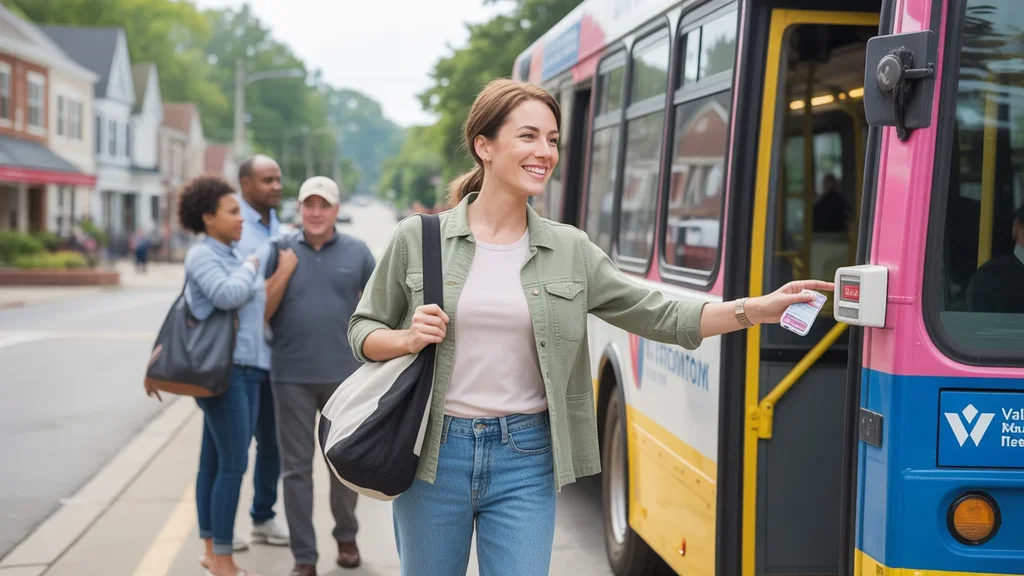
Public transit in Jeffersontown often centers around systems such as the Transit Authority of River City (TARC), which provides bus service connecting parts of the city to the broader Louisville metro area. Coverage exists, but it’s concentrated along specific corridors rather than distributed evenly across neighborhoods. Residents living near these routes have access to scheduled service, but those in more peripheral or residential-only zones may find the nearest stop too far to walk comfortably, especially given the low density of pedestrian paths.
Transit works best for commuters traveling to predictable destinations along established routes—typically jobs in downtown Louisville or other fixed locations within the metro. It tends to fall short for errands that require multiple stops, flexible timing, or destinations outside the core service area. Late-hour and weekend service is often limited, which narrows the window of usability for shift workers, evening activities, or spontaneous trips.
The structure of Jeffersontown—its layout, the spacing of commercial areas, and the lack of dense, walkable nodes—means transit can’t easily replace driving for daily household logistics. A bus might get you to work, but it won’t reliably get you to the grocery store, the clinic, and back home with bags in hand within a reasonable timeframe.
Driving & Car Dependence Reality
Driving is not optional for most people in Jeffersontown. The city’s car-oriented infrastructure, combined with sparse grocery access and limited pedestrian connectivity, makes vehicle ownership a practical necessity. Parking is generally abundant and free, which removes one of the friction points that discourages driving in denser cities. Commutes are flexible in the sense that you can leave when you want and take the route that works, but that flexibility comes at the cost of fuel, maintenance, insurance, and the assumption that you own a reliable vehicle.
For families, car dependence multiplies. School density is below the threshold that would allow most children to walk, and playgrounds and parks, while present, aren’t always within safe walking distance. Running a household—getting kids to activities, managing medical appointments, picking up groceries—requires the ability to make multiple stops in a single trip, something transit can’t accommodate here.
Retirees and single adults face a similar calculus. Even those who don’t commute daily still need access to pharmacies, clinics, and grocery stores, and the sparse distribution of these services makes driving the most practical option. The tradeoff is predictability: owning a car gives you control over timing and routing, but it also locks in a baseline cost structure that doesn’t fluctuate with how much you use it.
Commuting Patterns & Daily Mobility
Commuting in Jeffersontown typically follows a single-destination pattern: home to work, work to home. Multi-stop commutes—dropping kids at school, stopping for coffee, picking up groceries on the way back—are common, and they reinforce car dependence because transit doesn’t support that kind of chaining. People structure their days around the assumption that they can drive wherever they need to go, whenever they need to get there.
Proximity matters, but not in the way it does in transit-rich cities. Living closer to work reduces drive time and fuel consumption, but it doesn’t eliminate the need to drive for other errands. Similarly, living near a bus route might help with commuting, but it won’t reduce your reliance on a car for weekend trips, medical appointments, or bulk shopping.
The rhythm of daily mobility here is less about optimizing modes and more about managing time and convenience. People who benefit most are those with flexible schedules who can avoid peak congestion and those who live near both their workplace and key services. Everyone else absorbs the friction of longer drives, multiple trips, and the logistical weight of car dependency.
Who Transit Works For — and Who It Doesn’t
Transit in Jeffersontown works for a narrow slice of residents: those who live near bus corridors, work along predictable routes, and don’t need to make frequent stops for errands or caregiving. This might include single adults commuting to downtown Louisville, students traveling to fixed locations, or retirees making occasional trips into the metro core.
It doesn’t work well for families managing school runs, grocery trips, and activities. It doesn’t work for shift workers whose hours fall outside service windows. It doesn’t work for anyone living in peripheral neighborhoods where the nearest bus stop requires a car to reach. And it doesn’t work for households that need to make multiple stops in a single outing, because the time cost of transferring or waiting between routes becomes prohibitive.
Renters and owners face similar constraints here. Proximity to transit might lower transportation costs slightly, but it won’t eliminate the need for a car unless your life is unusually simple and your destinations unusually aligned with bus routes. The structure of Jeffersontown—not personal preference—determines who can realistically live without a vehicle, and that group is very small.
Transportation Tradeoffs in Jeffersontown
The tradeoff between transit and driving in Jeffersontown isn’t about cost savings—it’s about control, predictability, and reach. Transit offers lower baseline expenses if you can make it work, but it comes with rigid schedules, limited coverage, and the inability to handle complex trip chains. Driving offers total flexibility and the ability to manage a household’s full logistics, but it requires upfront investment, ongoing maintenance, and exposure to fuel price volatility.
For most residents, the question isn’t whether to drive—it’s how much driving you can avoid. Living closer to work reduces commute time. Living near a grocery store that you can walk to (rare here, but possible in some pockets) reduces weekly trips. Consolidating errands into fewer outings lowers fuel consumption. But none of these strategies eliminate the baseline need for a car.
Transit works as a supplement for specific trips, not as a replacement for vehicle ownership. The structure of Jeffersontown makes driving the path of least resistance, and that reality shapes what a budget has to handle in Jeffersontown—not just in fuel costs, but in insurance, maintenance, and the opportunity cost of capital tied up in a vehicle.
FAQs About Transportation in Jeffersontown (2026)
Is public transit usable for daily commuting in Jeffersontown?
Public transit is usable for commuters whose destinations align with bus routes and whose schedules fit service hours. It works best for trips to downtown Louisville or other fixed locations within the metro. For daily errands, caregiving, or flexible schedules, transit becomes impractical, and most residents default to driving.
Do most people in Jeffersontown rely on a car?
Yes. The city’s car-oriented layout, low pedestrian infrastructure, and sparse grocery access make vehicle ownership essential for the vast majority of residents. Even those near bus routes typically own a car for errands, appointments, and household logistics.
Which areas of Jeffersontown are easiest to live in without a car?
Very few. Areas near bus corridors with some commercial density offer the best chance, but even these require significant compromise. Grocery access remains sparse citywide, and most daily needs still require driving or long walks with limited pedestrian infrastructure.
How does commuting in Jeffersontown compare to nearby cities?
Jeffersontown shares the car-dependent character common to suburban communities in the Louisville metro. Compared to denser urban cores, commuting here involves less congestion but more baseline driving for all trip types. Compared to rural areas, Jeffersontown offers more bus service, but it’s not enough to replace car ownership for most households.
Can you get by with one car in a two-adult household in Jeffersontown?
It depends on work schedules and proximity. If both adults work along the same corridor or one works from home, a single car might suffice. But the sparse layout and limited transit coverage make two-car households far more common, especially for families managing school, errands, and activities.
How Transportation Fits Into the Cost of Living in Jeffersontown
Transportation in Jeffersontown isn’t just a line item—it’s a structural factor that shapes where you live, how you spend your time, and what flexibility you have. Car dependence means you’re carrying fixed costs (insurance, registration, depreciation) whether you drive five miles a week or fifty. Fuel prices, currently at $2.59 per gallon, add variable exposure, but the bigger cost is the upfront and ongoing investment required to own and maintain a reliable vehicle.
For families, transportation costs multiply with the number of drivers and the complexity of daily logistics. For retirees, the need to drive for healthcare and errands persists even after commuting ends. For single adults, the cost of car ownership can feel disproportionate to actual usage, but the structure of the city leaves few alternatives.
Imagine moving closer to a transit line, hoping to reduce your reliance on driving. You find an apartment near a bus stop and plan to take the bus to work. The commute works—mostly—but within a few weeks, you realize you’re still driving to the grocery store, the pharmacy, and the park. The bus gets you to one place, but it doesn’t reduce the number of trips you need to make or the errands you need to run. After a few months, you’re paying for both transit and a car, and the car is still doing most of the work. The lesson isn’t that transit is useless—it’s that the structure of Jeffersontown makes it hard to build a life around anything other than driving.
Understanding transportation costs in Jeffersontown means recognizing that mobility isn’t optional and that the city’s layout makes certain expenses unavoidable. The goal isn’t to eliminate driving—it’s to manage how much you drive, where you live relative to key destinations, and how you structure your household to minimize unnecessary trips.
How this article was built: In addition to public economic data, this article incorporates location-based experiential signals derived from anonymized geographic patterns—such as access density, walkability, and land-use mix—to reflect how day-to-day living actually feels in Jeffersontown, KY.