
Jeffersontown’s housing market reflects its role as a Louisville metro suburb where ownership dominates and car dependency shapes every housing decision. With a median home value of $225,500 and median rent at $1,175 per month, the city offers moderate costs relative to the regional median household income of $78,929 per year. But housing affordability here isn’t just about the price tag—it’s about how Jeffersontown’s infrastructure, climate extremes, and suburban layout change the total cost experience over time.
This article explains how housing costs behave in Jeffersontown, what drives long-term exposure for renters and owners, and which household types fit—or struggle—in this market.
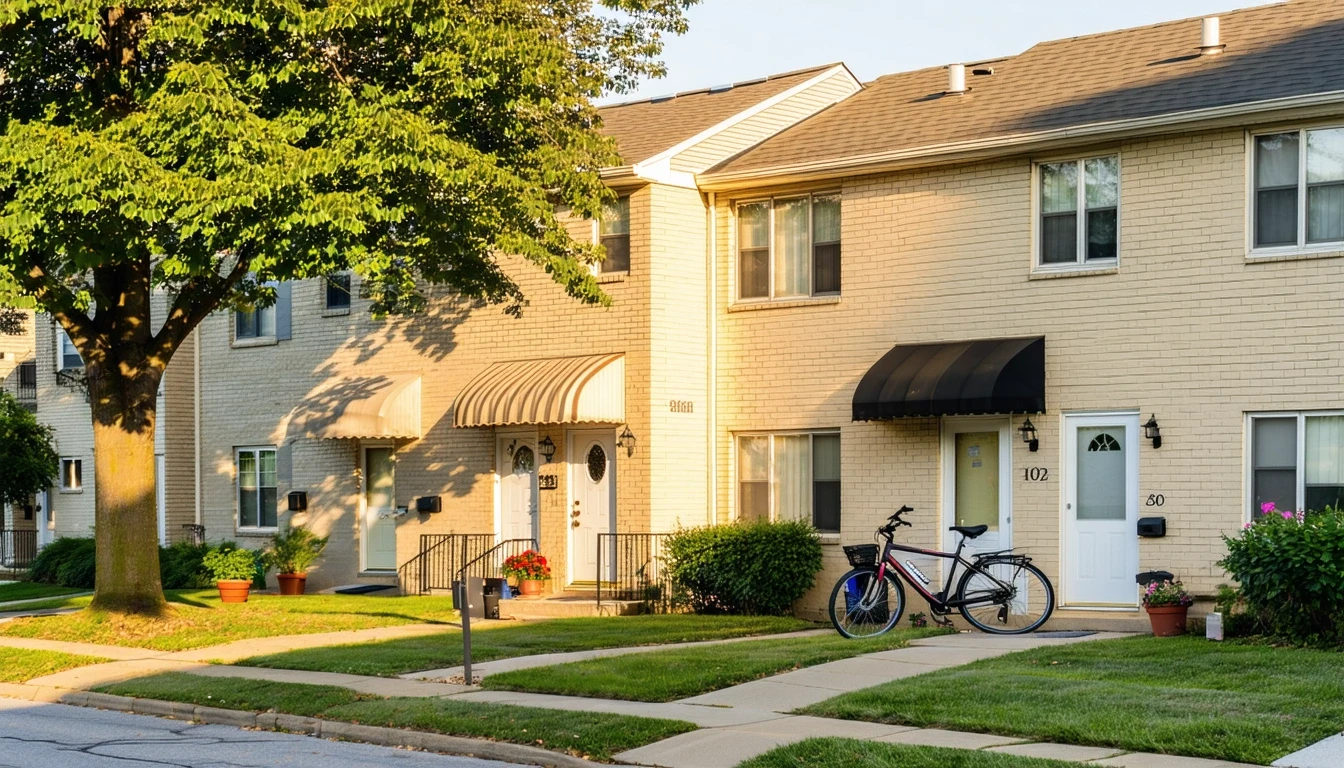
The Housing Market in Jeffersontown Today
Jeffersontown functions as a residential suburb within the Louisville metro, drawing households seeking space and relative affordability outside the urban core. The housing stock reflects this orientation: mixed building heights with both residential and commercial land use present, but the physical layout heavily favors car ownership. Pedestrian infrastructure sits below density thresholds, and grocery access remains sparse, meaning where you live within Jeffersontown determines how much time and fuel you spend on daily errands.
Home values here sit comfortably below many peer suburbs, supported by a regional price parity index of 94—meaning goods and services cost less than the national baseline. But that discount doesn’t eliminate exposure. Jeffersontown’s climate swings from cold winters (currently 16°F, feeling like 3°F) to hot, humid summers, creating dual-season utility pressure that affects both renters and owners. The unemployment rate of 4.8% suggests a stable local economy, but housing decisions here hinge less on job access and more on vehicle dependency and household logistics.
Newcomers often underestimate how much car-oriented infrastructure shapes housing tradeoffs. In Jeffersontown, you’re not choosing between walkable and drivable neighborhoods—you’re choosing how far you’re willing to drive for groceries, schools, and healthcare, and whether your housing budget can absorb the vehicle costs that come with it.
Renting in Jeffersontown
Renting in Jeffersontown costs $1,175 per month at the median, a figure that reflects the suburb’s moderate position within the Louisville metro. That rent buys access to the city’s lower regional cost structure, but it doesn’t buy walkability or errand convenience. Rental housing exists here, but the built environment assumes car ownership: bus service is present, but pedestrian infrastructure and grocery density both fall below thresholds that would support car-free living.
For renters, this creates a cost structure that extends beyond the lease. You’re paying for parking (either included or separately), vehicle insurance, fuel, and the time cost of driving to meet daily needs. Rental housing in Jeffersontown isn’t positioned as a car-optional lifestyle—it’s a suburban housing product that happens to come without ownership exposure.
Renters also face limited leverage over utility volatility. Electricity rates of 13.70¢/kWh and natural gas prices of $19.61/MCF mean that heating and cooling costs swing with the seasons, and most rental agreements pass those costs directly to tenants. In winter, heating dominates; in summer, air conditioning drives bills upward. Renters can control usage through behavior, but they can’t upgrade insulation, replace HVAC systems, or install programmable thermostats without landlord approval.
The rental experience here rewards households who already own a reliable vehicle, can absorb seasonal utility swings, and don’t require walkable access to schools or clinics. For everyone else, renting in Jeffersontown introduces friction that isn’t visible in the rent figure alone.
Owning a Home in Jeffersontown
Ownership in Jeffersontown centers on a median home value of $225,500, a price point that remains accessible relative to the area’s median household income. But buying here means taking on exposure that renters avoid: property taxes, maintenance unpredictability, and full responsibility for heating and cooling a structure through Kentucky’s temperature extremes.
Property taxes in Jeffersontown aren’t listed in available data, but they represent a recurring cost that rises over time as assessed values adjust. Unlike rent, which resets at lease renewal, property taxes compound quietly, and owners can’t negotiate them down. Maintenance costs follow a similar pattern: they’re not monthly, but they’re inevitable. Jeffersontown’s mixed building stock—from low-rise single-family homes to mid-height structures—means maintenance needs vary widely by age, construction quality, and prior upkeep. A roof replacement, HVAC failure, or water heater breakdown can cost thousands, and there’s no landlord to call.
Ownership also amplifies utility exposure. Owners control the thermostat, the insulation quality, and the efficiency of their systems, but they also absorb the full cost of keeping a house habitable through winter cold and summer heat. Heating and cooling aren’t optional in Jeffersontown—they’re survival expenses that shift with weather intensity, not just usage habits.
The tradeoff is control and stability. Owners lock in their housing cost structure (minus taxes, insurance, and maintenance), avoid lease renewals, and gain the ability to modify their property to reduce long-term costs. But that stability comes with risk: if the furnace fails in January or the AC quits in July, the repair bill lands entirely on the owner.
Apartment vs House in Jeffersontown — Cost Behavior Comparison
| Expense Category | Apartment | House |
|---|---|---|
| Heating & Cooling | Smaller conditioned space and shared walls reduce exposure; tenant controls usage but not system efficiency | Larger square footage and standalone structure increase heating/cooling load; owner controls system upgrades and insulation but absorbs full seasonal volatility |
| Maintenance Responsibility | Landlord handles structural repairs, HVAC, and appliances; tenant waits for approval and scheduling | Owner pays for all repairs and replacements; no delay but full financial exposure to failure timing |
| Vehicle Dependency | Parking typically included; car required for groceries and errands due to sparse accessibility | Driveway or garage standard; car dependency identical but storage and multi-vehicle capacity higher |
| Utility Predictability | Smaller space moderates swings; tenant cannot upgrade systems or insulation | Larger space amplifies seasonal swings; owner can invest in efficiency but upfront cost is significant |
Why these categories? Jeffersontown’s car-oriented layout and climate extremes make vehicle costs and utility exposure the primary differentiators between apartments and houses. Maintenance responsibility shifts entirely from landlord to owner, and the size difference between apartments and houses directly affects heating and cooling intensity. Categories like walkability or transit access were omitted because neither housing type in Jeffersontown offers a car-optional experience—the distinction is in storage and system control, not mobility.
Utilities & Upkeep Differences
Utility exposure in Jeffersontown isn’t subtle—it’s a dominant cost driver shaped by Kentucky’s temperature swings. Winter cold and summer heat create dual-season pressure, and the difference between an apartment and a house determines how much of that pressure you absorb.
Apartments benefit from smaller conditioned space and shared walls, which reduce heating and cooling loads. A 900-square-foot apartment requires less energy to maintain than a 1,800-square-foot house, and neighbors’ heating or cooling can passively moderate temperature swings. But tenants can’t upgrade windows, add insulation, or replace an inefficient HVAC system—they’re stuck with whatever the landlord installed, and efficiency upgrades rarely happen unless systems fail completely.
Houses, by contrast, expose owners to the full cost of heating and cooling a standalone structure. Larger square footage, higher ceilings, and standalone walls mean more surface area losing heat in winter and gaining it in summer. Owners can invest in programmable thermostats, insulation upgrades, or high-efficiency HVAC systems, but those improvements require upfront capital and years to pay off through lower bills. In the meantime, a poorly insulated house in Jeffersontown can generate utility bills that rival or exceed the rent on a comparable apartment.
Maintenance differences follow a similar pattern. Apartment tenants avoid roof repairs, foundation work, and exterior upkeep, but they also lose control over timing and quality. If the water heater fails, you wait for the landlord to schedule a replacement. Homeowners gain control but absorb unpredictability: a furnace replacement in January or an AC failure in July can cost thousands, and there’s no spreading that cost over time unless you finance the repair.
Jeffersontown’s mixed building stock means maintenance needs vary widely by property age and construction quality. Older homes may face frequent HVAC repairs, window leaks, or insulation gaps that drive up both utility and upkeep costs. Newer construction reduces some of that exposure, but it often comes with a higher purchase price that offsets the savings.
Rent vs Buy: Long-Term Exposure in Jeffersontown
The rent-versus-buy decision in Jeffersontown isn’t about which option costs less in year one—it’s about which cost structure fits your household’s capacity to absorb volatility, unpredictability, and long-term exposure.
Renters in Jeffersontown face lease renewals that reset rent annually, but they avoid property tax increases, maintenance surprises, and the risk of major system failures. Rent can rise, but it rises on a known schedule, and tenants can walk away at lease end if the increase doesn’t fit their budget. Utility costs remain variable, but the smaller footprint of most rental units moderates seasonal swings. The tradeoff is lack of control: you can’t upgrade insulation, replace an inefficient furnace, or lock in your housing cost structure beyond the lease term.
Owners, by contrast, lock in their principal and interest payments (if financed), but they take on exposure that compounds over time. Property taxes adjust as assessed values rise, insurance premiums shift with risk models and claim history, and maintenance costs arrive unpredictably. A roof lasts 20 years, an HVAC system 15, a water heater 10—but failures don’t wait for convenient timing. Owners also absorb the full cost of Jeffersontown’s climate extremes: heating a house through winter cold and cooling it through summer heat can dominate household budgets, and efficiency upgrades require capital that many buyers don’t have after closing.
Over time, ownership rewards households who can absorb short-term shocks and invest in systems that reduce long-term costs. Renters benefit from predictability and mobility, but they pay for that flexibility through lease renewals and lack of equity accumulation. In Jeffersontown, where car dependency and utility volatility affect both renters and owners, the decision hinges less on absolute cost and more on whether your household can handle the unpredictability that comes with ownership.
FAQs About Housing Costs in Jeffersontown
Is renting or buying cheaper in Jeffersontown?
Renting costs $1,175 per month at the median, while the median home value of $225,500 translates to ownership costs that depend on financing, taxes, insurance, and maintenance. Renting avoids maintenance and tax exposure but offers no equity accumulation or cost stability beyond the lease term. Buying locks in some costs but exposes owners to property tax increases, repair unpredictability, and full utility responsibility. The “cheaper” option depends on your household’s ability to absorb volatility and whether you plan to stay long enough to offset transaction costs.
How much does car dependency add to housing costs in Jeffersontown?
Jeffersontown’s car-oriented infrastructure makes vehicle ownership a structural requirement, not a lifestyle choice. Sparse grocery density and low pedestrian infrastructure mean every household needs at least one reliable vehicle to access food, healthcare, and schools. Vehicle costs—insurance, fuel, maintenance, and depreciation—add hundreds of dollars per month to household budgets, and that exposure exists whether you rent or own. Housing location within Jeffersontown can reduce trip frequency, but it can’t eliminate the need for a car.
What drives utility costs in Jeffersontown housing?
Utility costs in Jeffersontown are shaped by Kentucky’s temperature extremes and the size of your housing unit. Winter heating and summer cooling dominate bills, with electricity at 13.70¢/kWh and natural gas at $19.61/MCF. Apartments benefit from smaller conditioned space and shared walls, while houses expose owners to higher heating and cooling loads. Owners can invest in efficiency upgrades, but tenants are limited to behavioral changes like thermostat discipline and closing unused rooms.
Does Jeffersontown’s housing market favor families or singles?
Jeffersontown’s housing stock and infrastructure favor households with vehicles, stable incomes, and the capacity to manage logistics across a car-dependent suburb. Families face additional friction due to limited school density, which makes location within Jeffersontown critical for minimizing drive times. Singles and couples without children may find the suburban layout less constraining, but the lack of walkable errands and routine local healthcare (clinics present, no hospital) creates friction for anyone seeking convenience over space.
How does Jeffersontown’s cost structure compare to Louisville?
Jeffersontown offers lower absolute housing costs than Louisville’s urban core, supported by a regional price parity index of 94. But that discount comes with tradeoffs: car dependency is non-negotiable, grocery access is sparse, and utility exposure is shaped by standalone housing stock rather than dense multifamily buildings. Households moving from Louisville gain space and lower rent or purchase prices but lose walkability, transit viability, and the convenience of clustered errands.
Making Housing Choices in Jeffersontown
Housing costs in Jeffersontown reflect the city’s suburban structure, climate extremes, and car-oriented layout. Rent at $1,175 per month and home values at $225,500 position the city as moderately affordable within the Louisville metro, but those figures don’t capture the full cost experience. Vehicle dependency, dual-season utility exposure, and sparse grocery access create friction that affects renters and owners alike, and the choice between renting and buying hinges on your household’s capacity to absorb unpredictability rather than which option costs less in year one.
Renters gain mobility and avoid maintenance surprises, but they lose control over efficiency upgrades and face annual lease renewals. Owners lock in some costs and gain equity, but they take on property tax increases, repair unpredictability, and full responsibility for heating and cooling through Kentucky’s temperature swings. Both paths require a vehicle, planning capacity, and the ability to manage day-to-day costs that extend beyond the rent check or mortgage payment.
Jeffersontown rewards households who understand that housing costs here aren’t just about the price—they’re about how the city’s infrastructure, climate, and layout shape the total cost of living over time. For more on how these dynamics fit into broader household budgets, see What a Budget Has to Handle in Jeffersontown. And if you’re planning a move, our [2025 moving company picks](https://indexyard.com/best-moving-companies-guide/) can help you navigate logistics and costs.
How this article was built: In addition to public economic data, this article incorporates location-based experiential signals derived from anonymized geographic patterns—such as access density, walkability, and land-use mix—to reflect how day-to-day living actually feels in Jeffersontown, KY.