
Can you live in Indian Trail without a car? For most households, the answer is no—not comfortably. Indian Trail is a growing suburban community southeast of Charlotte where daily life is structured around driving. While some neighborhoods feature walkable pockets with decent pedestrian infrastructure and grocery access clustered along key corridors, the broader reality is that getting to work, managing school runs, and handling errands beyond those corridors requires a personal vehicle. Public transit exists in a limited regional capacity, but it serves a narrow slice of residents with flexible schedules and routes aligned to their needs.
Understanding transportation options in Indian Trail means recognizing how the town’s low-rise, spread-out development pattern shapes mobility. This isn’t a place where you hop on a train or catch a bus every fifteen minutes. It’s a place where driveways, parking lots, and highway access define convenience. For newcomers weighing whether to bring a second car or rely on transit, the structure of Indian Trail makes the choice clear: driving isn’t just common, it’s foundational.
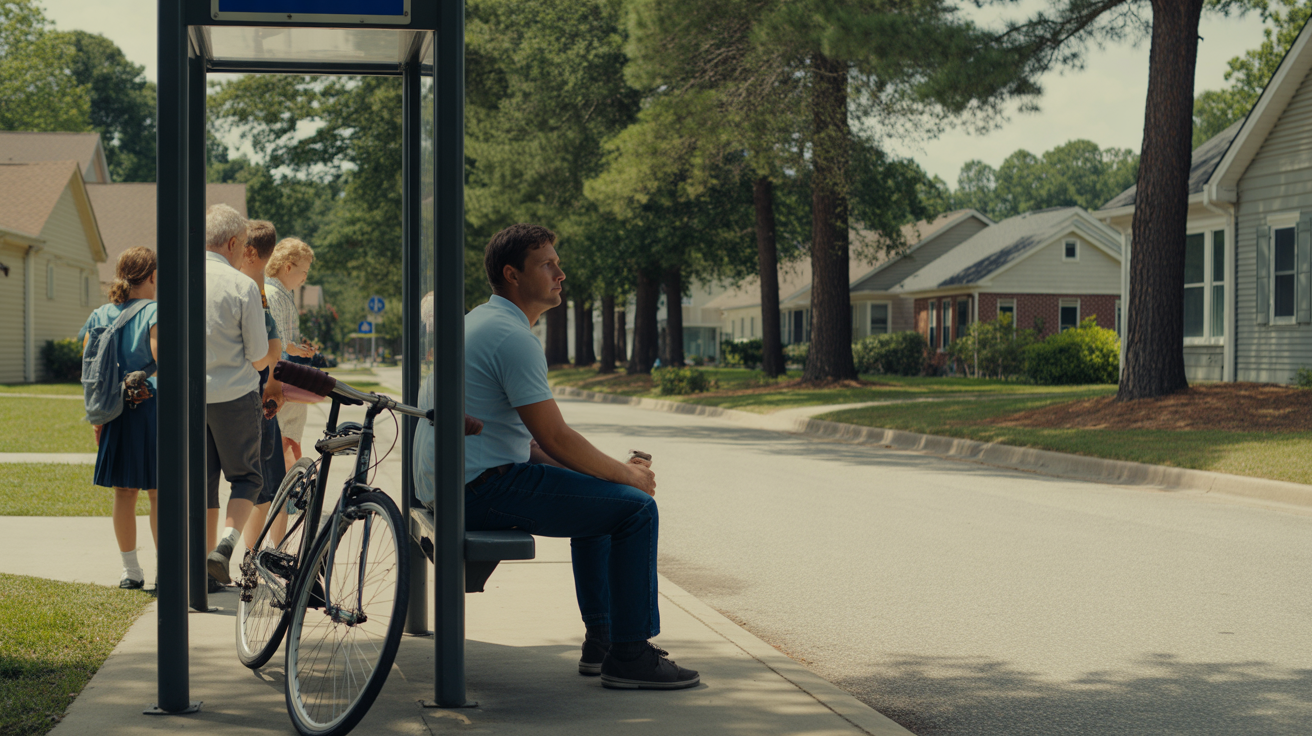
How People Get Around Indian Trail
Indian Trail’s layout reflects classic suburban growth—single-family homes on larger lots, commercial development along major roads, and residential streets that prioritize cars over foot traffic. The town does have areas where pedestrian infrastructure is more developed, with sidewalks and pathways that support walking within certain neighborhoods. But these walkable pockets don’t change the fundamental mobility pattern: most people drive most of the time.
The town’s position in the Charlotte metro area means many residents commute outward for work, often to Charlotte proper or other nearby employment centers. Without dense job clusters within Indian Trail itself, the daily rhythm involves getting in the car, merging onto highways, and covering distances that make walking or biking impractical. Even for those who live near the corridors where grocery stores and restaurants cluster, a car is still necessary for reaching workplaces, medical appointments, and schools spread across the area.
What newcomers often misunderstand is that suburban doesn’t always mean isolated. Indian Trail has mixed land use in certain zones—residential and commercial development coexist—but that mix doesn’t translate into transit-friendly density. The distances between home, work, and services remain too great for most households to manage without a vehicle, even if a quick errand to the grocery store might be walkable from some addresses.
Public Transit Availability in Indian Trail
Public transit in Indian Trail is minimal and regionally oriented. Residents may encounter bus service that connects to the broader Charlotte area, but coverage within Indian Trail itself is sparse. Transit works best for individuals whose origins and destinations happen to align with existing routes and who can tolerate longer travel times compared to driving. For most households—especially those with fixed work schedules, childcare responsibilities, or multiple daily stops—transit doesn’t offer a practical alternative.
Where transit tends to fall short is in frequency, coverage, and evening or weekend service. Suburban communities like Indian Trail typically see bus routes designed to serve commuters heading into urban cores during peak hours, leaving gaps for mid-day errands, late shifts, or non-work travel. If your routine involves dropping kids at school, stopping at the pharmacy, and picking up groceries on the way home, transit can’t replicate that flexibility.
The role transit plays here is supplementary, not foundational. It might work for a single commuter with a predictable schedule and a route that connects their home to their workplace. It doesn’t work for the household managing multiple destinations, irregular hours, or the need to move quickly between dispersed locations.
Driving & Car Dependence Reality
Driving in Indian Trail is not optional for most residents—it’s the default. The town’s geography, with commercial corridors separated from residential streets and employment centers located outside town limits, makes car ownership a practical necessity. Parking is abundant and free in most locations, which removes one of the friction points that might otherwise encourage alternative transportation. Sprawl isn’t extreme here, but the distances involved and the lack of dense, walkable mixed-use zones mean that even short errands often require a car.
For families, car dependence intensifies. School locations, pediatrician offices, extracurricular activities, and playdates are rarely within walking distance of each other. The logistics of managing a household with children almost always require at least one vehicle, and many families find that two cars provide the flexibility needed to juggle competing schedules without constant coordination.
Commute flexibility is another factor. Driving allows residents to live in Indian Trail while working in Charlotte, Matthews, or other nearby areas without being locked into rigid transit schedules. The tradeoff is exposure to gas prices, vehicle maintenance, and the time spent behind the wheel, but for most households, that tradeoff is more manageable than the limitations imposed by sparse transit coverage.
Commuting Patterns & Daily Mobility
Commuting from Indian Trail typically involves highway driving to reach job centers in the Charlotte metro area. The town itself doesn’t have a concentrated employment core, so residents who work locally are the exception rather than the rule. Most commuters structure their days around a single workplace trip, but households with multiple earners or those managing school drop-offs and pickups often face more complex routing.
Daily mobility in Indian Trail is shaped by the need to chain errands. Because grocery stores, medical facilities, and other services are clustered along specific corridors rather than distributed evenly, residents often plan trips that combine multiple stops. This pattern favors driving, where you can load groceries, pick up prescriptions, and stop for gas in a single loop. Transit, with its fixed routes and transfer requirements, can’t accommodate that kind of efficiency.
Who benefits from proximity? Residents who live near the grocery-dense corridors or within the walkable pockets can handle some errands on foot, reducing the number of car trips per week. But proximity to one corridor doesn’t eliminate the need for a car—it just reduces how often you use it. For those living in more isolated residential streets, every trip requires driving, and the infrastructure supports that expectation.
Who Transit Works For — and Who It Doesn’t
Transit in Indian Trail works for a narrow group: individuals with flexible schedules, predictable single-destination commutes, and the ability to tolerate longer travel times. If you’re a single commuter heading into Charlotte for a 9-to-5 job and you live near a bus stop that aligns with that route, transit might be viable. If your schedule varies, you have dependents, or your destinations change day to day, transit becomes a source of friction rather than convenience.
Renters in Indian Trail face the same transportation reality as owners. Location matters more than tenure. A renter near a grocery corridor with walkable access to a few services still needs a car for work, healthcare, and anything beyond that immediate radius. Owners in more peripheral neighborhoods are fully car-dependent, with no realistic transit alternative for any part of their routine.
Families, especially those with school-age children, find transit impractical. School locations are spread out, extracurriculars require transportation, and the coordination required to manage multiple schedules without a car is prohibitive. Even households committed to reducing car use typically find that Indian Trail’s infrastructure doesn’t support that goal.
Transportation Tradeoffs in Indian Trail
The tradeoff between driving and transit in Indian Trail isn’t balanced—it’s lopsided in favor of driving. Transit offers lower direct costs for those who can use it, but it imposes significant time penalties, limits flexibility, and restricts access to much of what residents need on a daily basis. Driving offers control, predictability, and the ability to manage complex schedules, but it ties households to vehicle expenses and exposes them to fluctuations in gas prices and maintenance needs.
For most households, the question isn’t whether to drive or take transit—it’s whether to own one car or two. The structure of Indian Trail, with its low-rise development, dispersed services, and limited transit coverage, makes single-car households workable only when schedules align perfectly or when one partner works from home. Two-car households gain the flexibility to manage competing demands without constant negotiation.
Predictability favors driving. You know when you’ll arrive, you control your route, and you’re not dependent on service changes or delays. Transit, where it exists, introduces variables that many households can’t absorb—missed connections, limited evening service, or routes that don’t quite reach your destination. In a town where driving is the norm, transit becomes a fallback option rather than a primary strategy.
How this article was built: In addition to public economic data, this article incorporates location-based experiential signals derived from anonymized geographic patterns—such as access density, walkability, and land-use mix—to reflect how day-to-day living actually feels in Indian Trail, NC.
FAQs About Transportation in Indian Trail (2026)
Is public transit usable for daily commuting in Indian Trail?
For most residents, no. Public transit coverage is limited and regionally focused, serving a narrow set of routes that may connect to Charlotte but don’t provide comprehensive local service. If your commute aligns with an existing route and you have schedule flexibility, transit might work. For households with multiple stops, childcare needs, or irregular hours, driving is the only practical option.
Do most people in Indian Trail rely on a car?
Yes. Indian Trail’s suburban layout, dispersed services, and limited transit infrastructure make car ownership essential for nearly all households. Even residents in walkable pockets or near grocery corridors still need a car for work, school, and errands beyond their immediate area.
Which areas of Indian Trail are easiest to live in without a car?
No area of Indian Trail is truly car-free friendly. Some neighborhoods have better pedestrian infrastructure and closer access to grocery stores along commercial corridors, which can reduce the number of car trips needed per week. But even in these areas, a car remains necessary for commuting, healthcare, and most non-grocery errands.
How does commuting in Indian Trail compare to nearby cities?
Indian Trail commuters typically drive to job centers in Charlotte or other nearby areas, facing similar highway-dependent patterns as residents of other suburban communities in the metro. The town lacks the dense employment cores or robust transit networks found in urban centers, so commuting here means accepting longer drives and car dependence as baseline conditions.
Can a household in Indian Trail manage with one car?
It depends on the household’s schedule and work arrangements. Single-person households or couples with aligned schedules can manage with one car, though it requires coordination. Families with children, multiple jobs, or staggered commitments usually find that a second car provides necessary flexibility, given the town’s spread-out layout and minimal transit options.
How Transportation Fits Into the Cost of Living in Indian Trail
Transportation in Indian Trail isn’t just a line item—it’s a structural factor that shapes where you can live, how you spend your time, and what flexibility you have in daily life. Car dependence means that vehicle expenses, fuel costs, and maintenance are unavoidable for most households. The town’s layout rewards those who can absorb those costs in exchange for suburban space, lower housing density, and proximity to Charlotte without urban intensity.
For households evaluating whether Indian Trail fits their budget, transportation should be considered alongside housing and your monthly budget in Indian Trail: where it breaks. The savings you might find in housing costs compared to closer-in neighborhoods can be offset by the need for reliable vehicles and the time spent commuting. The tradeoff isn’t inherently bad—it’s a matter of fit. If you value space, quieter streets, and don’t mind driving, Indian Trail’s transportation structure works. If you prefer walkability, transit access, or minimizing car use, the town’s infrastructure will feel limiting.
Understanding how people actually move through Indian Trail—by car, along corridors, with limited transit as a backup—gives you a clearer picture of what daily life costs in time, money, and flexibility. The town’s transportation reality isn’t hidden, but it’s easy to underestimate until you’re managing it yourself. Plan for driving, budget for vehicle expenses, and recognize that mobility here is built around the assumption that you’ll have a car in the driveway.