
Transit Coverage & Commute Reality in Hutto
| Metric | Hutto, TX |
|---|---|
| Average Commute Time | 28 minutes |
| Long Commute (60+ min) | 48.3% |
| Work From Home | 7.1% |
| Current Gas Price | $2.55/gal |
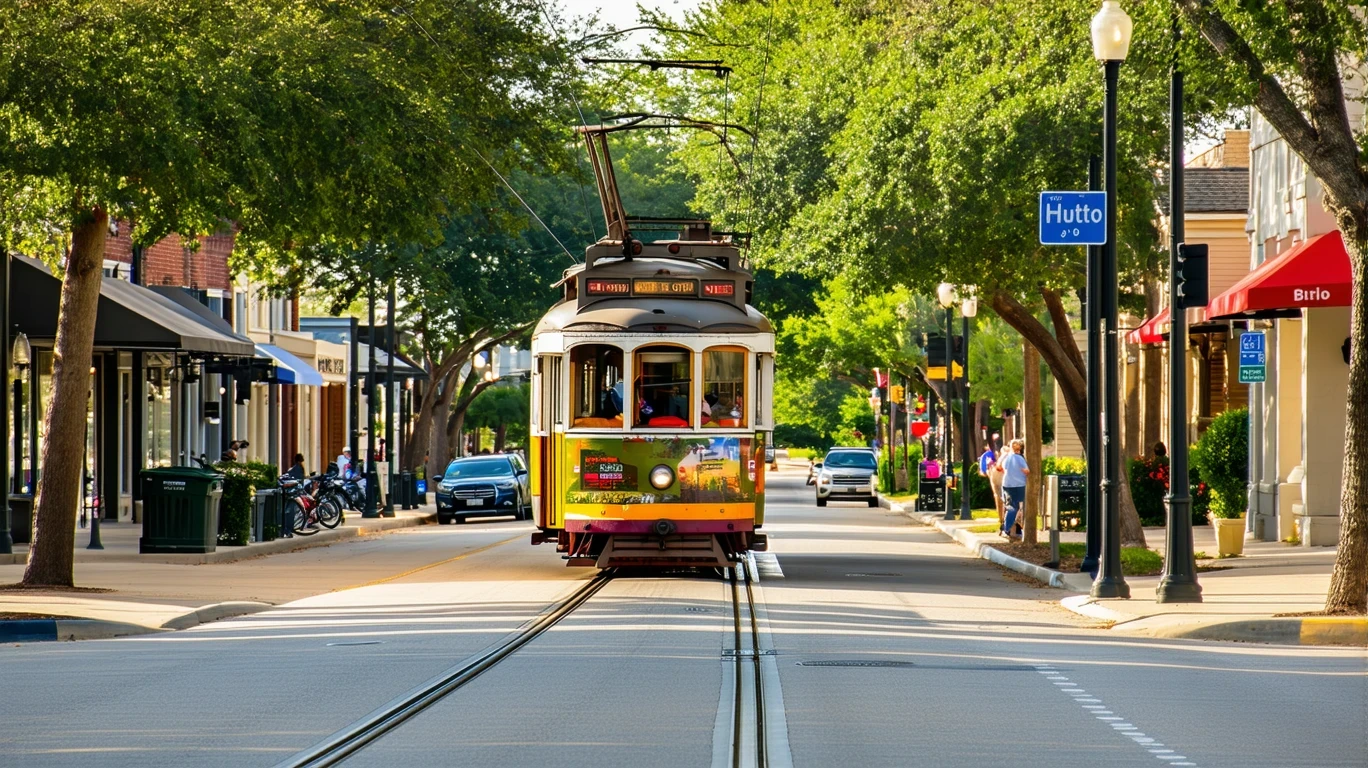
How People Get Around Hutto
Understanding transportation options in Hutto starts with recognizing the city’s suburban structure and its relationship to the broader Austin metro. Hutto sits northeast of Austin, and while the city has grown rapidly in recent years, its layout remains car-first. Most residents drive for work, errands, and daily logistics. The pedestrian-to-road ratio is high in certain pockets, meaning some neighborhoods support walking for short trips, but these walkable zones don’t eliminate the need for a vehicle citywide.
Newcomers often expect suburban transit options similar to denser metro cores, but Hutto’s infrastructure reflects a different reality. The city’s low-rise, horizontally spread development pattern means distances between home, work, grocery stores, and services are structured around driving. Even in areas where sidewalks and bike lanes exist, the sparse distribution of grocery stores and daily services reinforces car dependence. This isn’t about preference—it’s about how the city is built.
With nearly half of commuters spending over an hour traveling to work, many Hutto residents are making long drives into Austin or surrounding employment centers. The 28-minute average commute time reflects a mix of local workers and those traveling farther out, but the high percentage of long commutes signals that Hutto functions partly as a bedroom community for the metro.
Public Transit Availability in Hutto
Public transit infrastructure in Hutto is minimal. There are no detectable rail stations or extensive bus networks within the city’s boundaries based on current mapping data. For residents who need transit access to Austin or other parts of the metro, regional services may provide limited connections, but coverage within Hutto itself is sparse.
This absence shapes daily life significantly. Households that rely on public transit in denser cities will find Hutto’s structure incompatible with that lifestyle. Transit works best in places with concentrated corridors, frequent service, and mixed-use density—conditions that don’t currently define Hutto’s layout. The city’s growth has prioritized road expansion and residential development over transit infrastructure, which means most mobility happens in private vehicles.
For those commuting into Austin, some may access regional bus services from nearby hubs, but this requires driving to a park-and-ride or transfer point first. The lack of local transit means even short trips—picking up groceries, getting to a doctor’s appointment, dropping kids at school—require a car. There’s no fallback system for households without reliable vehicle access.
Driving & Car Dependence Reality
Driving isn’t optional in Hutto for most households—it’s the baseline. The city’s layout, with residential subdivisions separated from commercial zones and employment centers located outside city limits, makes car ownership a practical necessity. Parking is abundant and free in most areas, which removes one friction point common in denser cities, but it also reflects the expectation that everyone arrives by car.
The pedestrian infrastructure that does exist—sidewalks in newer developments, some bike lanes along main roads—serves recreational purposes more than transportation. You might walk your dog or bike around the neighborhood, but you’re still driving to the grocery store. The bike-to-road ratio sits in the medium range, meaning cycling infrastructure is present but not comprehensive. It’s enough for fitness or leisure, not enough to replace a car for daily errands.
Car dependence also means exposure to fuel prices, maintenance costs, and the time burden of driving. With long commutes common, many Hutto residents spend significant time behind the wheel each week. The current gas price of $2.55 per gallon is relatively moderate, but the cumulative exposure adds up when commutes stretch into the metro and errands require multiple trips across town.
Commuting Patterns & Daily Mobility
Commuting in Hutto often means leaving the city. The 48.3% of workers with commutes over an hour suggests a substantial portion of residents work in Austin, Round Rock, or other metro employment centers. The 28-minute average commute reflects a blend of those working locally and those traveling farther, but the high long-commute percentage reveals the reality: many households structure their lives around significant drive time.
For single-job commuters, the drive becomes routine, but for households managing multiple stops—daycare drop-offs, school pickups, errands on the way home—the car-dependent structure compounds. There’s no option to hop on a bus or train partway through the day. Every trip requires planning around vehicle access, and multi-car households become the norm rather than the exception.
Only 7.1% of Hutto workers are fully remote, meaning the vast majority are commuting regularly. This low work-from-home rate, combined with long commute exposure, means transportation isn’t just a cost factor—it’s a time and lifestyle factor. Proximity to work becomes a major variable in how manageable daily life feels, and for those commuting into Austin, traffic patterns and road conditions become daily considerations.
Who Transit Works For — and Who It Doesn’t
Transit-dependent households face significant challenges in Hutto. Without local bus service or rail access, anyone who cannot drive—whether due to age, disability, or financial barriers—will find daily mobility difficult. This isn’t a city where you can rely on public transportation for work, medical appointments, or grocery runs. The infrastructure simply isn’t there.
For remote workers or retirees who drive infrequently, Hutto’s car-dependent layout is less burdensome. If you’re not commuting daily and can consolidate errands into occasional trips, the lack of transit becomes less of a friction point. But for working families, especially those with two wage earners commuting in different directions, the need for multiple vehicles and the time cost of driving become unavoidable.
Renters in Hutto’s core neighborhoods may find some walkability for short trips—getting to a nearby park or walking the dog—but they’re still driving for groceries and work. Homeowners in newer subdivisions on the city’s edges face even longer drives to reach services. The mixed land use detected in the city means some commercial activity exists near residential areas, but it’s not dense or connected enough to support car-free living.
Transportation Tradeoffs in Hutto
Choosing to live in Hutto means accepting car dependence in exchange for other benefits—typically more space, newer housing stock, and a suburban environment. The tradeoff isn’t between transit and driving; it’s between the predictability and control of driving versus the time and cost exposure that comes with it.
Driving offers flexibility. You leave when you want, take the route you prefer, and aren’t constrained by schedules or coverage gaps. But that flexibility comes with responsibility: vehicle maintenance, fuel costs, insurance, and the time spent commuting. For households with long commutes into Austin, that time adds up quickly, and traffic variability can make commute durations unpredictable despite the control a car provides.
There’s also the question of household logistics. In cities with strong transit, one-car households or car-free living becomes feasible. In Hutto, most households need at least one vehicle per working adult, which shifts what a budget has to handle. The absence of transit doesn’t just affect commuting—it shapes housing choice, job flexibility, and daily routine in ways that aren’t immediately obvious until you’re living it.
FAQs About Transportation in Hutto (2026)
Is public transit usable for daily commuting in Hutto?
No. Hutto lacks local public transit infrastructure, and there are no rail or bus services operating within the city that would support daily commuting. Residents rely on personal vehicles for work, errands, and most travel.
Do most people in Hutto rely on a car?
Yes. The city’s layout, commute patterns, and sparse transit options make car ownership essential for nearly all households. Even neighborhoods with sidewalks and bike lanes require driving for groceries, work, and services.
Which areas of Hutto are easiest to live in without a car?
No area of Hutto is truly car-free friendly. Some neighborhoods have higher pedestrian infrastructure for short recreational walks, but daily errands and work commutes require a vehicle regardless of location within the city.
How does commuting in Hutto compare to nearby cities?
Hutto’s 28-minute average commute is moderate, but the 48.3% long-commute rate is high, reflecting the number of residents traveling into Austin or other metro centers. Nearby cities closer to Austin’s core may offer shorter drives, while more distant suburbs face similar or longer commute exposure.
Can you bike or walk for errands in Hutto?
Biking and walking infrastructure exists in pockets, but grocery density is low and commercial services are spread out. You might bike recreationally, but practical errands—groceries, appointments, school runs—require a car.
How Transportation Fits Into the Cost of Living in Hutto
Transportation in Hutto isn’t just a line item—it’s a structural factor that shapes housing decisions, job flexibility, and household logistics. Because the city requires car ownership for nearly all residents, the cost of living here includes vehicle expenses that might be optional or reduced in transit-rich cities. Fuel, insurance, maintenance, and the time cost of commuting all become part of the baseline, not optional add-ons.
For households evaluating whether Hutto fits their budget, understanding this car-dependent reality is essential. The city’s housing costs may be more accessible than closer-in Austin neighborhoods, but the transportation exposure offsets some of that savings. Long commutes don’t just cost fuel—they cost time, and for families managing multiple schedules, that time pressure compounds.
If you’re considering Hutto, factor in how commuting and driving will shape your day-to-day life. The city offers space, newer housing, and a suburban environment, but it requires accepting that mobility here happens on four wheels, not on foot or by transit. That’s not a flaw—it’s the reality of how the city is built, and it works well for households who prioritize space and are comfortable with driving as the primary mode of transportation.
How this article was built: In addition to public economic data, this article incorporates location-based experiential signals derived from anonymized geographic patterns—such as access density, walkability, and land-use mix—to reflect how day-to-day living actually feels in Hutto, TX.
—