

Hutto median rent: $2,103/month. Georgetown median home value: $361,700. Same metro, inverted cost structure. Both cities sit in the Austin metro, both offer low-rise suburban living with walkable pockets, and both share identical utility rates. Yet the financial pressure points couldn’t be more different. Hutto’s rent market runs hot while ownership entry stays accessible. Georgetown flips that script entirely: lower rent obligations, but a steep climb to ownership. For households deciding between these two in 2026, the question isn’t which city costs less overall—it’s which cost structure aligns with how your household actually operates, where your income flexibility lives, and what tradeoffs you’re willing to manage daily.
This comparison explains where cost pressure concentrates in each city, how housing, transportation, and daily logistics create different friction points, and which households find stability in each place. We’re not calculating total budgets or declaring a winner. We’re mapping the terrain so you can see which obstacles matter most for your situation.
Housing Costs
Hutto’s median home value sits at $279,800, while Georgetown’s reaches $361,700—a substantial gap that shapes the ownership entry barrier. For first-time buyers, Hutto offers a lower down payment threshold and easier mortgage qualification at typical lending ratios. Georgetown’s higher home values demand more upfront capital and stronger income documentation, creating a steeper climb into ownership. Both cities feature low-rise housing stock with mixed residential and commercial land use present, but the financial gateway differs sharply.
Rent structure inverts the pattern entirely. Hutto’s median gross rent stands at $2,103 per month, while Georgetown’s sits at $1,575 per month. That’s a significant ongoing obligation difference for renters. Hutto’s higher rent may reflect newer construction, tighter rental inventory, or stronger demand from households priced out of ownership in closer-in Austin suburbs. Georgetown’s lower rent could indicate older rental stock, more diverse housing types, or less competition for rental units. Either way, renters face opposite pressure: Hutto demands higher monthly cash flow, Georgetown offers more breathing room in the rent line item but may limit rental availability or unit quality at that price point.
The ownership-versus-rent calculus plays out differently depending on household income and timeline. Hutto’s median household income runs at $105,743 per year, while Georgetown’s sits at $87,465 per year. In Hutto, higher income households may absorb the elevated rent or save toward the lower home purchase threshold. In Georgetown, lower median income intersects with higher home values, creating a wider gap between renting and owning. Renters in Georgetown enjoy lower monthly obligations but face a steeper climb to ownership. Renters in Hutto pay more each month but find ownership within closer reach if they can sustain the rent burden long enough to save.
How this article was built: In addition to public economic data, this article incorporates location-based experiential signals derived from anonymized geographic patterns—such as access density, walkability, and land-use mix—to reflect how day-to-day living actually feels in Hutto and Georgetown.
| Housing Type | Hutto Pressure Point | Georgetown Pressure Point |
|---|---|---|
| Median Home Value | $279,800 | $361,700 |
| Median Gross Rent | $2,103/month | $1,575/month |
| Ownership Entry Barrier | Lower down payment, easier qualification | Higher capital requirement, steeper income threshold |
| Rent Obligation | Higher monthly cash flow demand | Lower ongoing rent pressure |
Housing takeaway: Renters experience opposite pressure—Hutto demands higher monthly rent, Georgetown offers lower rent but may limit inventory or quality. First-time buyers find Hutto more accessible for ownership entry, while Georgetown requires more upfront capital and income strength. Families weighing rent-versus-own timelines face different tradeoffs: Hutto’s higher rent competes with faster ownership access, Georgetown’s lower rent pairs with a longer savings horizon to reach ownership. The decision hinges on whether your household prioritizes lower ongoing rent obligations or faster pathways to ownership equity.
Utilities and Energy Costs
Both Hutto and Georgetown share identical electricity rates at 16.04¢/kWh and natural gas prices at $25.56/MCF, reflecting their position within the same regional utility infrastructure and deregulated Texas energy market. The cost structure for utilities doesn’t differ by city—it differs by how housing stock, home size, and household behavior interact with those rates. In both cities, triple-digit summer heat drives extended cooling seasons, making air conditioning the dominant utility cost driver for most of the year. Heating needs remain minimal, with only occasional cold snaps requiring natural gas or electric heat.
Where utility exposure diverges is in housing form and age. Hutto’s growth pattern skews toward newer construction, which often includes better insulation, more efficient HVAC systems, and tighter building envelopes. Newer homes reduce baseline energy consumption and smooth out seasonal spikes, making bills more predictable even during peak summer months. Georgetown’s housing stock includes more established homes, some of which predate modern energy efficiency standards. Older homes with less insulation, single-pane windows, or aging HVAC systems experience higher cooling costs and more volatile bills when temperatures climb. For households in older Georgetown homes, summer utility bills can spike unpredictably, especially in larger single-family homes with more square footage to cool.
Apartment renters in both cities face different exposure. Smaller square footage reduces total energy consumption, and many apartment complexes built in the last two decades include energy-efficient appliances and central systems that lower per-unit costs. Renters in Hutto’s newer apartment stock may see lower and more stable utility bills compared to renters in older Georgetown complexes. Single-family homeowners, particularly those in larger homes, carry the full weight of cooling costs during summer months. Households with flexible schedules can shift usage to off-peak hours if their provider offers time-of-use billing structures, reducing exposure without sacrificing comfort. Households with rigid schedules or high daytime cooling needs face less control over when usage occurs.
Utility takeaway: Both cities share the same rates, so utility cost differences come down to housing age, size, and household behavior. Hutto’s newer housing stock tends to deliver more predictable, lower baseline utility costs. Georgetown’s older homes introduce more volatility, especially for larger single-family houses during peak cooling months. Renters in smaller, newer apartments experience the least exposure in both cities. Families in older, larger homes face the highest seasonal spikes and benefit most from efficiency upgrades or time-of-use billing strategies.
Groceries and Daily Expenses
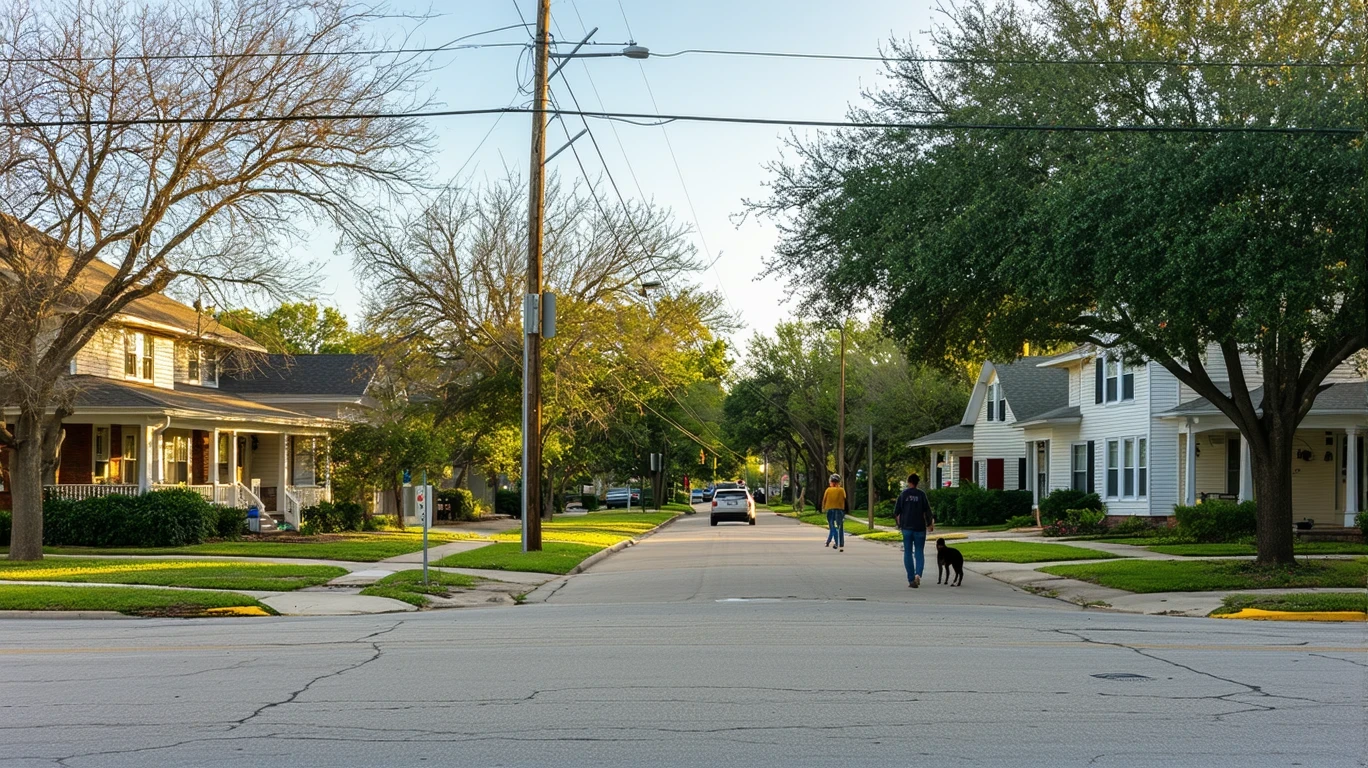
Both Hutto and Georgetown operate within the same regional price parity index of 98, meaning grocery staples and everyday goods reflect similar baseline pricing. Where the two cities diverge is in how daily errands and shopping logistics play out on the ground. Hutto shows sparse food and grocery establishment density, with grocery options falling below typical density thresholds. That means fewer stores within close proximity, longer drives to restock staples, and less flexibility to comparison-shop or make quick trips for forgotten items. Households in Hutto often consolidate grocery runs into weekly or bi-weekly trips to big-box stores or regional chains, reducing frequency but increasing planning burden.
Georgetown presents a different errands landscape. Food and grocery density clusters along corridors, with establishments concentrated in specific commercial zones rather than distributed evenly across neighborhoods. That corridor-clustered pattern means some Georgetown households enjoy walkable or short-drive access to multiple grocery options, while others face similar drive times as Hutto residents depending on where they live relative to those commercial corridors. For households near Georgetown’s main retail corridors, the ability to choose between discount grocers, specialty stores, and mid-tier chains introduces more price flexibility and reduces the need for bulk-only shopping strategies.
Daily convenience spending—coffee shops, takeout, quick household goods—follows the same structural pattern. Hutto’s sparse accessibility means fewer impulse-friendly options within easy reach, which can reduce convenience spending creep but increases the friction cost of running out of something mid-week. Georgetown’s corridor clustering offers more grab-and-go options for households near those zones, which can increase convenience spending if not managed intentionally. Single adults and couples with flexible schedules may find Georgetown’s clustering advantageous for quick errands between work and home. Families managing larger grocery volumes and tighter schedules may prefer Hutto’s lower density if it aligns with a planned, bulk-shopping rhythm that minimizes trip frequency.
Groceries takeaway: Prices don’t differ much between the two cities, but access patterns do. Hutto’s sparse grocery density increases planning burden and drive time but may reduce convenience spending temptation. Georgetown’s corridor-clustered options offer more flexibility and choice for households near those zones, but can increase convenience spending if proximity makes impulse purchases easier. Families with rigid schedules and bulk-shopping habits may find Hutto’s structure manageable. Households that value frequent, flexible errands access may prefer Georgetown’s clustering—if they live near the right corridors.
Taxes and Fees
Both Hutto and Georgetown sit within Texas, a state with no personal income tax, meaning cost pressure from taxes concentrates entirely in property taxes, sales taxes, and local fees. Property tax structures in both cities follow the Texas model: relatively high effective rates that fund schools, infrastructure, and municipal services. For homeowners, property taxes represent a significant ongoing obligation that scales with home value. In Georgetown, where the median home value reaches $361,700, property tax bills run higher in absolute terms compared to Hutto’s $279,800 median, even if effective rates remain similar. That difference compounds over time, creating a larger annual obligation for Georgetown homeowners.
Renters don’t pay property taxes directly, but landlords pass those costs through in rent pricing. Hutto’s higher median rent at $2,103 per month may partially reflect property tax obligations embedded in landlord expenses, though rent levels also respond to demand, inventory, and construction costs. Georgetown’s lower median rent at $1,575 per month suggests either lower property tax pass-through, older housing stock with lower assessed values, or less competitive rental demand. Either way, renters in both cities absorb property tax pressure indirectly, but the visibility and predictability differ. Homeowners see the tax bill annually and can plan for it; renters experience it as part of rent, with less transparency into how much of their monthly payment reflects tax obligations.
Local fees—trash collection, water, sewer, stormwater management—vary by provider and service area within each city. Some neighborhoods bundle these into HOA fees, others bill separately through municipal utilities. HOA fees in newer Hutto developments may include landscaping, shared amenities, and exterior maintenance, adding predictability but reducing flexibility. Older Georgetown neighborhoods may lack HOAs entirely, leaving homeowners responsible for individual upkeep but avoiding monthly HOA obligations. For households planning to stay several years, the structure of these fees matters more than the nominal amounts. Predictable, bundled fees simplify budgeting; variable, usage-based fees offer more control but require more active management.
Taxes and fees takeaway: Property taxes hit Georgetown homeowners harder in absolute terms due to higher home values, even if effective rates stay similar. Hutto homeowners face lower property tax bills but may encounter higher HOA fees in newer developments. Renters in both cities absorb property taxes indirectly through rent, with Hutto’s higher rent potentially reflecting stronger demand or newer construction costs rather than tax pass-through alone. Long-term homeowners in Georgetown face larger annual tax obligations; recent buyers in Hutto may find HOA fees add ongoing costs that older neighborhoods avoid.
Transportation & Commute Reality
Hutto’s commute patterns show an average of 28 minutes, with 48.3% of workers facing long commutes and only 7.1% working from home. That combination signals high car dependence and significant time-distance exposure for most households. The long commute percentage—nearly half of all workers—suggests many Hutto residents travel well beyond city limits for work, likely into Austin’s core employment centers or other metro suburbs. Gas prices in Hutto sit at $2.55 per gallon, a modest cost per fill-up, but the real exposure comes from frequency and distance. Households making daily round trips of substantial length accumulate fuel costs, vehicle wear, and time costs that compress evening schedules and reduce flexibility for errands, childcare, or household tasks.
Georgetown’s commute data isn’t available in the feed, but experiential signals show walkable pockets with pedestrian-to-road ratios exceeding high thresholds. That suggests some Georgetown residents—particularly those living near the city’s older core or commercial corridors—may experience shorter, more walkable commutes or have better access to local employment. Gas prices in Georgetown run slightly lower at $2.49 per gallon, but without commute time or long-commute percentage data, it’s unclear whether Georgetown households face similar car dependence or benefit from more localized work-life patterns. The corridor-clustered errands accessibility in Georgetown may also reduce mid-week driving for groceries or services, lowering total weekly mileage even if work commutes remain car-dependent.
For single adults and couples without school-age children, Hutto’s commute exposure becomes a daily friction cost—time spent in the car that could otherwise go toward exercise, meal prep, or downtime. For families, the 28-minute average and high long-commute percentage add logistical complexity: pickups, drop-offs, and errands must fit around longer work commutes, reducing schedule flexibility. Georgetown’s walkable pockets and better errands clustering may ease some of that friction for households living in the right areas, though without commute data it’s impossible to confirm whether work travel distances differ meaningfully.
Cost Structure Comparison
Housing dominates the cost experience differently in each city. In Hutto, rent obligations run higher, creating ongoing monthly pressure for renters but pairing with a lower ownership entry barrier for buyers ready to transition. In Georgetown, rent offers more breathing room, but ownership demands significantly more upfront capital and income strength. For renters prioritizing lower monthly obligations, Georgetown delivers. For households targeting ownership within a shorter timeline, Hutto’s lower home values create a faster pathway if they can sustain the higher rent long enough to save.
Utilities introduce similar seasonal volatility in both cities due to shared rates and climate, but housing age and size determine actual exposure. Hutto’s newer housing stock tends to smooth out utility costs and reduce peak-season spikes. Georgetown’s older homes, particularly larger single-family houses, face more unpredictable summer bills. Renters in smaller, newer apartments experience the least utility volatility in both cities. Homeowners in older, larger Georgetown homes face the highest exposure and benefit most from efficiency upgrades or time-of-use billing strategies.
Transportation patterns matter more in Hutto, where 28-minute average commutes and 48.3% long-commute rates signal high car dependence and significant time-distance costs. Georgetown’s walkable pockets and corridor-clustered errands may reduce total weekly mileage for some households, though without commute data it’s unclear whether work travel distances differ. For families managing school runs, errands, and work commutes, Hutto’s commute exposure adds logistical friction that compresses evening schedules. For households living near Georgetown’s commercial corridors, shorter errands distances may ease some of that burden.
Daily living and groceries don’t differ much in price, but access patterns shape convenience and planning burden. Hutto’s sparse grocery density increases drive time and requires more consolidated shopping trips. Georgetown’s corridor clustering offers more flexibility and choice for households near those zones, though it can also increase convenience spending if proximity makes impulse purchases easier. Families with bulk-shopping habits may find Hutto’s structure manageable. Households that value frequent, flexible errands access may prefer Georgetown’s clustering—if they live in the right areas.
The better choice depends on which costs dominate your household. For renters sensitive to monthly obligations, Georgetown’s lower rent offers more flexibility. For first-time buyers, Hutto’s lower home values create faster ownership access. For households managing long commutes and tight schedules, Hutto’s transportation exposure adds daily friction that Georgetown’s walkable pockets may ease—depending on where you live and work. For homeowners in older, larger homes, Georgetown’s utility volatility becomes a recurring seasonal pressure that Hutto’s newer stock avoids. The decision is less about total price and more about which cost structure aligns with how your household actually operates.
How the Same Income Feels in Hutto vs Georgetown
Single Adult
In Hutto, rent becomes the first non-negotiable cost, consuming a larger share of take-home pay and leaving less flexibility for discretionary spending or savings. Commute time and distance add daily friction, compressing evening schedules and reducing time for meal prep or exercise. Flexibility exists in grocery planning—sparse access encourages bulk shopping that reduces convenience spending creep. In Georgetown, lower rent frees up more monthly cash flow, but the higher home value creates a longer savings horizon if ownership is the goal. Walkable pockets and better errands clustering reduce weekly driving, lowering time costs and offering more schedule flexibility for households living near commercial corridors.
Dual-Income Couple
In Hutto, combined income can absorb the higher rent more easily, but both partners likely face long commutes that limit shared evening time and increase coordination complexity for errands or household tasks. The lower ownership entry barrier becomes more accessible with two incomes, shortening the timeline to transition from renting to owning. In Georgetown, lower rent obligations leave more room for savings or discretionary spending, but the higher home value demands more sustained dual-income stability to reach ownership. Corridor-clustered errands and walkable pockets offer more convenience for couples managing two work schedules, reducing the need for dedicated weekend shopping trips.
Family with Kids
In Hutto, higher rent competes with childcare, school expenses, and the logistical burden of long commutes that compress pickup and drop-off windows. Sparse grocery and errands accessibility increases planning burden, requiring more consolidated trips that must fit around rigid school and work schedules. The lower home value offers a faster path to ownership and more space, but ongoing rent pressure while saving can feel tight. In Georgetown, lower rent provides more breathing room for families managing multiple cost categories, but the higher home value extends the timeline to ownership. Limited family infrastructure density in both cities means fewer nearby schools and playgrounds, but Georgetown’s corridor clustering may ease some errands friction for families living near those zones.
Decision Matrix: Which City Fits Which Household?
| Decision Factor | If You’re Sensitive to This… | Hutto Tends to Fit When… | Georgetown Tends to Fit When… |
|---|---|---|---|
| Housing entry + space needs | Down payment size, mortgage qualification, or rent-to-own timeline | You prioritize faster ownership access and can sustain higher rent while saving | You need lower monthly rent obligations and can extend your savings timeline for ownership |
| Transportation dependence + commute friction | Daily drive time, long-distance commutes, or schedule compression | You can absorb 28-minute average commutes and long-distance work travel without schedule conflicts | You value walkable pockets and shorter errands distances that reduce total weekly mileage |
| Utility variability + home size exposure | Seasonal bill spikes, older home inefficiency, or cooling cost predictability | You prefer newer housing stock that smooths utility costs and reduces peak-season volatility | You can manage older home inefficiency or prioritize lower rent over utility predictability |
| Grocery strategy + convenience spending creep | Errands frequency, bulk-shopping discipline, or impulse purchase exposure | You prefer consolidated shopping trips and can manage sparse grocery access with planning | You value corridor-clustered options for flexible, frequent errands without long drives |
| Fees + friction costs (HOA, services, upkeep) | Predictable bundled fees vs variable individual maintenance obligations | You accept higher HOA fees in newer developments for bundled services and exterior upkeep | You prefer avoiding HOA obligations and managing individual home maintenance directly |
| Time budget (schedule flexibility, errands, logistics) | Evening availability, weekend errands burden, or household task coordination | You can absorb long commutes and sparse errands access without schedule conflicts | You need walkable pockets and corridor clustering to reduce driving and increase evening flexibility |
Lifestyle Fit
Both Hutto and Georgetown offer low-rise suburban living with mixed residential and commercial land use, but the on-the-ground experience differs in meaningful ways. Hutto’s growth pattern reflects newer suburban development, with integrated green space access—park density exceeds high thresholds—and water features present throughout the city. Walkable pockets exist, with pedestrian-to-road ratios exceeding high thresholds in some areas, though daily errands accessibility remains sparse overall. That combination creates a lifestyle where outdoor recreation and green space access come easily, but grocery runs and routine errands require more intentional planning and driving. Hutto has a hospital present, offering more comprehensive healthcare access locally, which matters for families with young children or households managing chronic conditions.
Georgetown’s lifestyle centers more around its established community character and corridor-clustered commercial zones. Walkable pockets with high pedestrian-to-road ratios exist here too, and park density sits in the moderate range with water features present. The key difference is errands accessibility: food and grocery density clusters along specific corridors, meaning households near those zones enjoy more walkable or short-drive access to daily needs. Georgetown’s healthcare access is limited to clinics, without a hospital facility present, which may require travel to nearby cities for emergency or specialized care. For households prioritizing a more established neighborhood feel with better errands clustering, Georgetown delivers—if you live near the right corridors.
Commute times shape daily lifestyle texture significantly. Hutto’s 28-minute average and 48.3% long-commute rate mean many residents spend substantial time in the car each day, compressing evening schedules and reducing flexibility for after-work activities, exercise, or family time. Georgetown’s commute patterns aren’t documented in available data, but the walkable pockets and corridor clustering suggest some residents may experience shorter, more localized work-life patterns. Both cities show limited family infrastructure density—school and playground density fall below low thresholds—which means families may need to drive to access playgrounds, sports facilities, or extracurricular activities regardless of which city they choose.
For households valuing outdoor access and hospital proximity, Hutto’s integrated green space and healthcare infrastructure offer clear advantages. For households prioritizing walkable errands access and an established community feel, Georgetown’s corridor clustering and older neighborhood character may feel more aligned—especially if you can position yourself near the commercial zones that concentrate daily services. Both cities require car dependence for most households, but the nature of that dependence differs: Hutto’s sparse errands density and long commutes create more driving overall, while Georgetown’s clustering may reduce mid-week mileage for households living in the right areas.
Frequently Asked Questions
Is it cheaper to rent in Hutto or Georgetown in 2026?
Georgetown’s median gross rent sits at $1,575 per month, significantly lower than Hutto’s $2,103 per month. For renters prioritizing lower monthly obligations, Georgetown offers more breathing room in the rent line item. However, rental inventory, unit quality, and availability may differ between the cities, so lower rent doesn’t automatically mean better rental options. Hutto’s higher rent may reflect newer construction, tighter inventory, or stronger demand from households priced out of closer-in Austin suburbs.
Which city is easier for first-time homebuyers, Hutto or Georgetown?
Hutto’s median home value of $279,800 creates a lower entry barrier compared to Georgetown’s $361,700. That difference translates to smaller down payment requirements and easier mortgage qualification at typical lending ratios. For first-time buyers with limited savings or moderate income, Hutto offers a faster pathway to ownership. Georgetown’s higher home values demand more upfront capital and stronger income documentation, extending the timeline for buyers to accumulate the necessary down payment.
Do utilities cost more in Hutto or Georgetown in 2026?
Both cities share identical electricity rates at 16.04¢/kWh and natural gas prices at $25.56/MCF, so utility cost differences come down to housing age, size, and household behavior rather than rate structures. Hutto’s newer housing stock tends to deliver more predictable, lower baseline utility costs due to better insulation and efficient HVAC systems. Georgetown’s older homes, particularly larger single-family houses, face more volatile summer cooling bills. Renters in smaller, newer apartments experience the least utility exposure in both cities.
How do commute times compare between Hutto and Georgetown?
Hutto shows an average commute time of 28 minutes, with 48.3% of workers facing long commutes and only 7.1% working from home. That signals high car dependence and significant time-distance exposure for most households. Georgetown’s commute data isn’t available, but experiential signals show walkable pockets and corridor-clustered errands that may reduce total weekly driving for some residents. Without specific commute metrics for Georgetown, it’s unclear whether work travel distances differ meaningfully, but Hutto’s documented long-commute percentage suggests more residents travel well beyond city limits for employment.
Which city has better access to groceries and daily errands in 2026?
Georgetown’s food and grocery density clusters along commercial corridors, offering more options and flexibility for households living near those zones. Hutto’s grocery accessibility is sparse, with density falling below typical thresholds, meaning fewer stores within close proximity and longer drives to restock staples. For households that value frequent, flexible errands access, Georgetown’s corridor clustering delivers—if you live near the right areas. For households comfortable with consolidated, planned shopping trips, Hutto’s sparse density becomes manageable with intentional scheduling.
Conclusion
Hutto and Georgetown present inverted cost structures that favor different household priorities. Hutto’s higher rent creates ongoing monthly pressure for renters but pairs with a lower ownership entry barrier and newer housing stock that smooths utility costs. Georgetown’s lower rent offers more monthly flexibility, but higher home values extend the timeline to ownership and older housing stock introduces more utility volatility. Transportation exposure differs sharply: Hutto’s documented long commutes and sparse errands accessibility increase daily driving and time costs, while Georgetown’s walkable pockets and corridor-clustered services may reduce weekly mileage for households positioned near commercial zones.
The decision hinges on which cost pressures your household can absorb and which tradeoffs align with your daily routines. Renters sensitive to monthly obligations find Georgetown’s lower rent advantageous. First-time buyers targeting faster ownership access benefit from Hutto’s lower home values. Families managing long commutes and tight schedules face more friction in Hutto, while Georgetown’s clustering may ease errands logistics—if you live in the right areas. Both cities require intentional planning around transportation, errands, and housing