
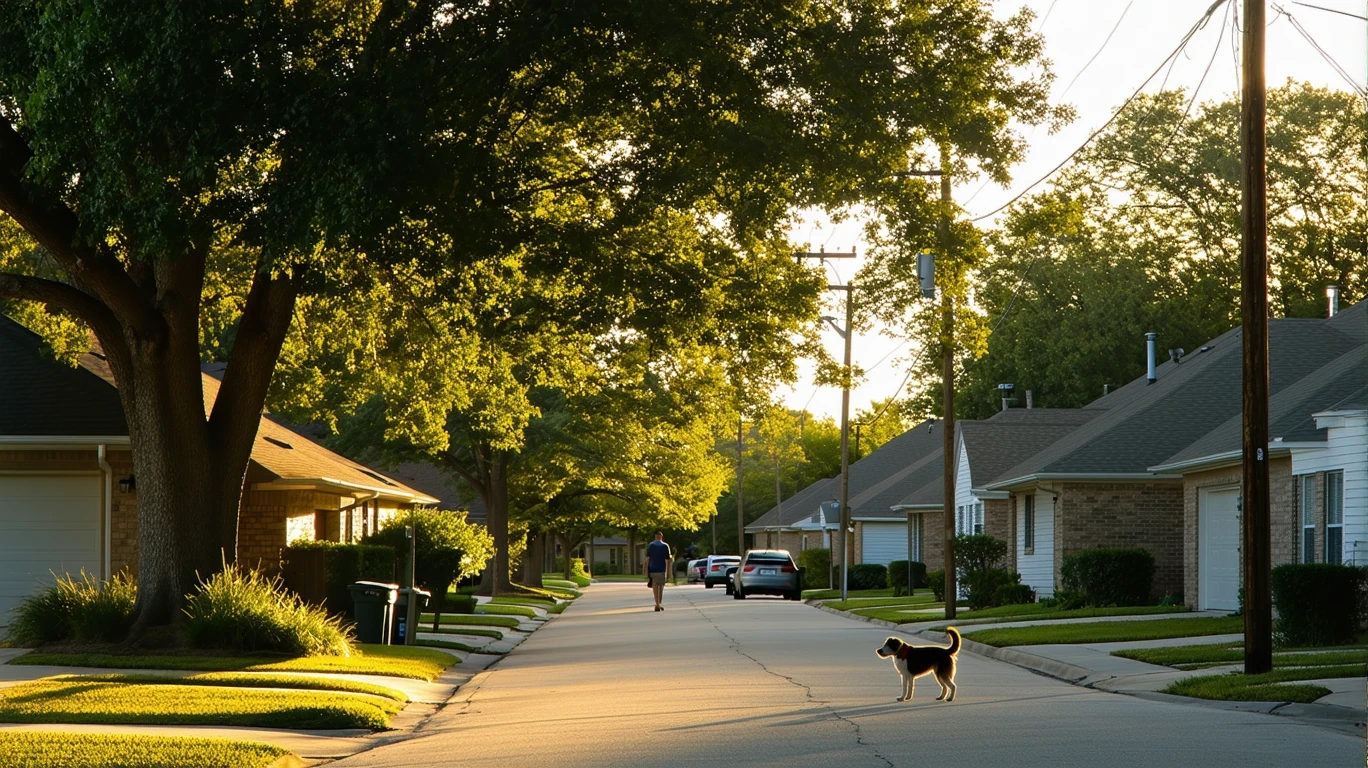
Hutto’s median rent sits at $2,103 per month while Austin’s comes in at $1,549—yet Hutto’s median home value is $279,800 compared to Austin’s $461,500. That inversion captures the core tension families face when choosing between these two cities in the Austin metro in 2026: lower entry barriers for homeownership in one direction, lower ongoing housing costs and better transit access in the other.
Both cities share the same regional price environment and similar utility rates, but the cost experience diverges sharply based on how households move, shop, and manage daily logistics. Hutto functions as a growing suburban community where 48.3% of workers face long commutes and car ownership is effectively non-negotiable. Austin offers rail transit, cycling infrastructure throughout parts of the city, and food and grocery options that exceed density thresholds, reducing the friction costs that accumulate when every errand requires planning and driving.
The better choice isn’t about which city costs less overall—it’s about which cost structure aligns with your household’s income pattern, transportation flexibility, and tolerance for logistical complexity. For families prioritizing space and homeownership, Hutto’s housing entry advantage may outweigh its transportation and errands burden. For singles, couples, or families valuing walkable errands and transit optionality, Austin’s rent advantage and accessibility may justify its higher home prices.
Housing Costs
Hutto’s housing market reflects its role as a newer suburban growth area: median home values sit at $279,800, offering a lower entry point for buyers compared to Austin’s $461,500. That gap represents real purchasing power for households with stable income and down payment savings, particularly those prioritizing single-family homes with yards and garage space. Hutto’s housing stock skews toward low-rise construction, and both residential and commercial land use are present, though the pedestrian-to-road ratio suggests development patterns favor driving over walking for most daily needs.
Austin’s rental market, however, tells a different story. Median gross rent in Austin is $1,549 per month—substantially lower than Hutto’s $2,103. That difference matters acutely for renters, especially single adults or couples without children who value proximity to work, errands, and social activity over square footage. Austin’s building height profile exceeds high thresholds, indicating a mix of apartments, mid-rises, and denser housing forms that support rental availability across price tiers. For renters prioritizing flexibility, Austin’s structure reduces monthly obligation while keeping transit and errands within closer reach.
The tradeoff becomes clearest when considering household type and timeline. First-time buyers stretching toward homeownership may find Hutto’s entry price more accessible, though they’ll absorb higher rent exposure if they delay purchase. Renters benefit more from Austin’s lower monthly housing cost, particularly if they lack the capital or timeline for ownership. Families seeking space and stability may accept Hutto’s higher rent as a short-term cost before buying, while those prioritizing urban access and lower car dependency may find Austin’s rental market better aligned with their needs despite higher home values locking them out of ownership longer.
| Housing Type | Hutto | Austin |
|---|---|---|
| Median Home Value | $279,800 | $461,500 |
| Median Gross Rent | $2,103/month | $1,549/month |
| Typical Housing Form | Low-rise, single-family dominant | Mixed height, apartments and mid-rises common |
Housing takeaway: Hutto offers lower entry barriers for homeownership but higher rent exposure, favoring buyers with down payments and families prioritizing space. Austin’s rent advantage benefits renters and households valuing transit access, though home purchase requires significantly more capital. The decision hinges on whether your household is optimizing for ownership entry or ongoing monthly flexibility.
Utilities and Energy Costs
Electricity rates in Hutto and Austin are nearly identical—16.04¢/kWh in Hutto versus 16.11¢/kWh in Austin—but natural gas pricing diverges meaningfully. Hutto’s natural gas price sits at $25.56 per thousand cubic feet (MCF), while Austin’s is $30.71/MCF. That gap matters most during winter months when heating demand rises, though Central Texas winters are mild compared to northern climates, meaning natural gas exposure remains secondary to cooling costs for most households year-round.
Both cities experience extended cooling seasons driven by triple-digit summer heat and high humidity. Air conditioning dominates utility bills from May through September, and households in larger single-family homes face greater exposure than apartment dwellers due to square footage and insulation variability. Hutto’s housing stock skews toward newer low-rise construction, which may offer better insulation and more efficient HVAC systems compared to older Austin housing stock, though Austin’s mix of apartments and mid-rises reduces per-unit cooling load for renters in multi-family buildings.
Utility cost volatility is driven more by household behavior and housing type than by rate differences between the cities. Families in Hutto managing larger homes with multiple occupants will see higher baseline usage and greater seasonal swings. Single adults or couples in Austin apartments benefit from smaller conditioned space and shared wall insulation, reducing both baseline costs and peak-season spikes. Older homes in either city—particularly those built before modern efficiency standards—introduce unpredictability, especially if HVAC systems, windows, or insulation haven’t been updated.
Utility takeaway: Rate differences between Hutto and Austin are minimal for electricity, with natural gas slightly lower in Hutto. Volatility is driven by housing type, home size, and age rather than location. Families in larger single-family homes face greater cooling exposure regardless of city, while apartment renters in Austin benefit from reduced square footage and shared insulation. Predictability depends more on housing choice than on which city you’re in.
Groceries and Daily Expenses
Grocery and daily spending pressure in Hutto and Austin differs less in price than in access friction. Both cities share the same regional price parity index (98), meaning grocery staples, household goods, and everyday items cost roughly the same at checkout. The meaningful difference lies in how much planning, driving, and time households must invest to access those goods—and how that friction shapes spending habits over time.
Hutto’s food and grocery establishment density falls below low thresholds, with food density in the medium band but grocery density sparse. That structure means households often drive longer distances to reach full-service grocery stores, and the limited concentration of options reduces flexibility for comparison shopping or quick top-up trips. Families managing larger weekly grocery volumes may find themselves making fewer, larger trips to big-box stores, which can reduce per-item costs but increases planning burden and makes it harder to respond to sales or adjust menus dynamically. Convenience spending—coffee runs, takeout, last-minute household items—requires deliberate trips rather than walkable errands, which tends to suppress spontaneous purchases but also reduces flexibility when schedules tighten.
Austin’s food and grocery density exceeds high thresholds, with both food establishments and grocery options broadly accessible throughout parts of the city. That density supports more frequent, smaller shopping trips and makes it easier to access discount grocers, specialty stores, and prepared food options without extensive driving. The tradeoff: broader accessibility can increase convenience spending if households lean toward takeout, coffee shops, or quick-service meals instead of cooking at home. Singles and couples benefit most from this structure, as walkable errands reduce car dependency and time costs, though the temptation to spend on convenience can erode grocery savings if not managed intentionally.
Families with children face different pressures in each city. In Hutto, the sparse grocery landscape favors bulk shopping and meal planning, which can lower per-meal costs but demands more upfront time and discipline. In Austin, the broadly accessible errands environment makes it easier to adapt to changing schedules or dietary needs, though the convenience premium can add up quickly if families rely heavily on prepared foods or frequent restaurant meals. Price sensitivity matters less than access strategy: Hutto rewards households that plan and batch; Austin rewards those who value flexibility and time savings over rigid routines.
Groceries takeaway: Price differences between Hutto and Austin are negligible due to shared regional pricing. Cost pressure is driven by access friction and spending habits. Hutto’s sparse grocery density favors planners and bulk shoppers but increases time and driving costs. Austin’s broad accessibility reduces friction and supports flexible schedules but can increase convenience spending if households don’t manage takeout and prepared food habits. Families optimizing for per-item cost may prefer Hutto’s structure; those prioritizing time flexibility and walkable errands may find Austin’s density worth the convenience premium.
Taxes and Fees

Property taxes in Texas are assessed at the county and municipal level, and both Hutto and Austin sit within the same regional tax structure, though specific rates vary by school district, municipal services, and special districts. Homeowners in both cities face property tax obligations that recur annually and adjust based on appraised home values, which have risen significantly across the Austin metro in recent years. Hutto’s lower median home value of $279,800 translates to a lower absolute tax bill compared to Austin’s $461,500 median, though the effective rate and assessment practices depend on local taxing authorities rather than city boundaries alone.
Renters in both cities are indirectly exposed to property taxes through rent pricing, though the passthrough is less transparent and more variable depending on landlord cost structure and market competition. Austin’s lower median rent may partially reflect its denser housing stock and higher rental supply, which can dilute per-unit tax exposure. Hutto’s higher rent despite lower home values suggests tighter rental supply or higher landlord operating costs, which may include property taxes, HOA fees, or maintenance expenses passed to tenants.
Fees and recurring costs beyond property taxes differ structurally between the cities. Hutto’s newer suburban development often includes homeowners association (HOA) fees that bundle services like landscaping, trash collection, and shared amenity maintenance. These fees add predictability but reduce flexibility, as households pay regardless of usage. Austin’s housing mix includes older neighborhoods without HOA structures, as well as condo and apartment communities with varying fee schedules. Utility billing, trash collection, and water services may be structured differently depending on housing type and provider, with some costs billed separately and others bundled into rent or HOA dues.
Taxes and fees takeaway: Property tax exposure is lower in absolute terms for Hutto homeowners due to lower home values, though effective rates depend on local districts. Renters face indirect tax exposure through rent pricing, with Austin’s lower rent potentially reflecting denser supply and competitive pressure. HOA fees are more common in Hutto’s newer developments, adding predictability but reducing cost control. Long-term homeowners in either city face ongoing tax exposure tied to appraisal growth, while renters experience tax pressure indirectly through lease renewals and market-driven rent adjustments.
Transportation & Commute Reality
Hutto’s average commute time is 28 minutes, with 48.3% of workers facing long commutes and only 7.1% working from home. Austin’s average commute is 25 minutes, with 19.9% facing long commutes and 4.8% working from home. Those numbers reflect structural differences in job proximity and transit options, not just distance. Hutto functions as a bedroom community where most employment is elsewhere, meaning car ownership and fuel costs are non-negotiable for the majority of households. Austin’s job density and transit infrastructure—including rail service—create more optionality, though many residents still drive depending on where they live and work within the city.
Gas prices in Hutto sit at $2.55 per gallon compared to Austin’s $2.41, a small difference that compounds over time for households driving long distances daily. Hutto’s sparse errands accessibility and limited cycling infrastructure mean most trips—work, groceries, errands, school drop-offs—require a car. Austin’s bike-to-road ratio exceeds high thresholds, and rail transit is present, giving households more flexibility to reduce car dependency if they live and work near transit corridors or within walkable neighborhoods. That flexibility doesn’t eliminate car costs for most Austin households, but it does create opportunities to reduce mileage, delay second-car purchases, or rely on transit for commuting while keeping a car for weekend or off-peak trips.
The time cost of commuting matters as much as the fuel cost. Hutto’s long commute percentage suggests many workers spend an hour or more in the car daily, which reduces time available for errands, childcare, meal preparation, or leisure. Austin’s lower long commute percentage and transit options reduce that time burden for some households, though traffic congestion and sprawl mean many Austin residents still face significant drive times depending on their specific origin and destination. The difference is less about average commute time and more about whether households have alternatives: Hutto offers few; Austin offers some, depending on where you live and work.
Transportation takeaway: Hutto’s commute patterns and sparse transit infrastructure make car ownership and long drive times unavoidable for most households, increasing both fuel costs and time burden. Austin’s rail transit, cycling infrastructure, and job density create more optionality, though many residents still drive depending on neighborhood and workplace. Households sensitive to time costs and car dependency may find Austin’s structure more flexible; those prioritizing space and homeownership may accept Hutto’s transportation burden as part of the tradeoff.
Cost Structure Comparison
Housing dominates the cost experience in both cities, but the pressure shows up differently. Hutto’s lower home values make ownership entry more accessible for buyers with down payments, but renters face higher monthly obligations at $2,103 compared to Austin’s $1,549. That inversion means the better choice depends entirely on whether your household is optimizing for ownership or flexibility. Buyers prioritizing space and long-term equity may find Hutto’s structure advantageous despite higher rent; renters and households without purchase capital benefit more from Austin’s lower monthly housing cost.
Transportation patterns introduce the next major divergence. Hutto’s sparse errands accessibility, limited transit options, and high long-commute percentage mean car ownership, fuel costs, and time spent driving are unavoidable for most households. Austin’s rail transit, cycling infrastructure, and broadly accessible food and grocery density reduce car dependency for households living and working near transit corridors or within walkable neighborhoods. The difference isn’t just fuel cost—it’s time burden, second-car necessity, and the friction cost of planning every errand around driving. Households sensitive to time flexibility and car dependency will feel that difference daily in Hutto; those prioritizing space and homeownership may accept the transportation burden as part of the suburban tradeoff.
Utilities introduce more volatility in both cities due to extended cooling seasons and triple-digit summer heat, but the exposure is driven more by housing type and home size than by location. Families in larger single-family homes face greater seasonal swings regardless of city, while apartment renters in Austin benefit from smaller conditioned space and shared insulation. Natural gas costs are slightly lower in Hutto, though heating exposure is minimal in Central Texas compared to cooling. Predictability depends more on housing choice—newer construction, insulation quality, HVAC efficiency—than on which city you’re in.
Daily living and groceries cost roughly the same at checkout due to shared regional pricing, but access friction differs sharply. Hutto’s sparse grocery density rewards households that plan, batch, and drive to big-box stores, reducing per-item costs but increasing time and logistical burden. Austin’s broadly accessible errands environment reduces friction and supports flexible schedules, though the convenience premium can erode savings if households lean heavily on takeout and prepared foods. Families optimizing for per-item cost may prefer Hutto’s structure; those prioritizing time savings and walkable errands may find Austin’s density worth the convenience tradeoff.
The decision is less about which city costs less and more about which cost structure aligns with your household’s income pattern, transportation needs, and tolerance for logistical complexity. Households sensitive to housing entry barriers and prioritizing homeownership may prefer Hutto despite higher rent and car dependency. Those valuing lower monthly housing costs, transit optionality, and walkable errands may find Austin’s structure better aligned with their needs despite higher home values locking them out of ownership longer. For families, the choice depends on whether family infrastructure density, school access, and playground availability outweigh transportation friction—Austin offers stronger family infrastructure, while Hutto offers lower ownership entry but limited family amenities.
How the Same Income Feels in Hutto vs Austin
Single Adult
In Hutto, car ownership becomes non-negotiable first, followed by rent at $2,103, leaving less flexibility for discretionary spending or savings. Sparse errands accessibility means every grocery trip, coffee run, or errand requires planning and driving, increasing both time and fuel costs. In Austin, lower rent at $1,549 and transit options create more breathing room, with rail and cycling infrastructure reducing car dependency if you live near transit corridors. Broadly accessible food and grocery options mean errands fold into daily routines without requiring dedicated trips, reducing friction and freeing up time for work flexibility or social activity.
Dual-Income Couple
In Hutto, housing entry is more accessible at $279,800 for buyers, but renters absorb higher monthly costs and both partners likely need cars if commutes diverge. Long commute exposure for nearly half of workers means time costs accumulate quickly, reducing flexibility for shared errands or household logistics. In Austin, lower rent and transit options reduce front-loaded costs, and one partner may avoid car ownership if work and errands align with transit or cycling routes. Higher home values delay ownership, but the flexibility gained from walkable errands and transit optionality can offset that pressure if the couple prioritizes time over space.
Family with Kids
In Hutto, lower home values make ownership entry easier, but limited family infrastructure—school and playground density both fall below thresholds—means parents face more logistical friction for childcare, school access, and recreational activities. Car dependency is unavoidable, and sparse errands accessibility increases time spent coordinating trips. In Austin, stronger family infrastructure with school and playground density in the medium band reduces logistical burden, and broadly accessible errands mean parents can fold grocery trips and daily needs into tighter schedules. Higher home values create ownership pressure, but lower rent and transit options reduce ongoing monthly costs and car dependency, freeing up time and flexibility for managing household logistics.
Decision Matrix: Which City Fits Which Household?
| Decision factor | If you’re sensitive to this… | Hutto tends to fit when… | Austin tends to fit when… |
|---|---|---|---|
| Housing entry + space needs | You prioritize homeownership entry and single-family space over monthly flexibility | You have down payment capital and value lower purchase price despite higher rent exposure | You prioritize lower monthly rent and flexibility over ownership entry despite higher home values |
| Transportation dependence + commute friction | You value time flexibility and want to avoid long commutes or mandatory car ownership | You accept car dependency and long commutes as part of suburban tradeoff for space | You value transit options, cycling infrastructure, and shorter commute exposure for time savings |
| Utility variability + home size exposure | You want predictable utility costs and lower cooling exposure during extended summer heat | You prioritize newer low-rise construction with better insulation despite larger square footage | You prefer smaller conditioned space in apartments or mid-rises to reduce baseline usage and seasonal swings |
| Grocery strategy + convenience spending creep | You want to minimize per-item grocery costs and avoid convenience spending temptation | You plan meals, batch shop, and drive to big-box stores to reduce per-item costs despite time burden | You value walkable errands and time flexibility over per-item savings and accept convenience premium risk |
| Fees + friction costs (HOA, services, upkeep) | You want predictable bundled services or prefer control over individual cost decisions | You accept HOA fees for bundled landscaping and amenities in newer suburban developments | You prefer older neighborhoods without HOA structures or flexible fee arrangements in mixed housing stock |
| Time budget (schedule flexibility, errands, logistics) | You need to fold errands into tight schedules and minimize time spent coordinating trips | You can absorb planning burden and dedicated driving time for errands and long commutes | You value broadly accessible errands, transit options, and walkable infrastructure to reduce logistical friction |
Lifestyle Fit
Hutto offers the space and quiet of a growing suburban community with integrated park access—park density exceeds high thresholds—and water features present throughout the area. Families prioritizing yards, newer low-rise housing, and outdoor recreation will find those qualities abundant, though the tradeoff is limited walkability for daily errands and minimal family infrastructure like schools and playgrounds. The pedestrian-to-road ratio exceeds high thresholds in parts of the city, suggesting some neighborhoods support walking, but the sparse grocery and food establishment density means most daily needs require driving. Cycling infrastructure is present in limited areas, and no transit options exist beyond personal vehicles, making car ownership essential for work, errands, and social activity.
Austin’s lifestyle centers on accessibility and optionality. Rail transit connects parts of the city, cycling infrastructure is present throughout, and food and grocery density exceeds high thresholds, meaning errands, dining, and daily needs are broadly accessible without requiring a car for every trip. Park density is similarly high, with water features present, supporting outdoor activity and recreation. The building height profile exceeds high thresholds, reflecting a mix of apartments, mid-rises, and denser housing forms that support walkability and transit use. Family infrastructure is strong, with both school and playground density in the medium band, reducing logistical friction for parents managing childcare, school access, and recreational activities. The tradeoff is higher home values and less single-family space compared to Hutto, though lower rent and transit options offset some of that pressure for renters and households prioritizing flexibility over ownership.
The lifestyle difference is less about amenities and more about how much time and planning daily life requires. Hutto rewards households that value space, privacy, and lower ownership entry, but demands more driving, longer commutes, and greater logistical coordination for errands and family activities. Austin rewards those who value time flexibility, walkable access, and transit options, but requires accepting higher home values, denser housing forms, and the temptation of convenience spending if you don’t manage takeout and prepared food habits intentionally. Both cities offer outdoor access and park density; the difference is whether you’re willing to drive to reach them or prefer them folded into walkable daily routines.
Hutto median household income: $105,743 per year (gross)
Austin median household income: $86,556 per year (gross)
Frequently Asked Questions
Is Hutto or Austin cheaper for renters in 2026?
Austin’s median gross rent is $1,549 per month compared to Hutto’s $2,103, making Austin substantially lower for renters despite higher home values. The rent difference reflects Austin’s denser housing stock and greater rental supply, which benefits singles, couples, and families prioritizing monthly flexibility over homeownership entry. Hutto’s higher rent suggests tighter rental supply and newer suburban development patterns, where landlords may pass through higher operating costs including property taxes, HOA fees, or maintenance expenses.
Which city is better for families with kids comparing Hutto and Austin in 2026?
Austin offers stronger family infrastructure, with school and playground density in the medium band and broadly accessible errands that reduce logistical friction for parents managing tight schedules. Hutto’s family infrastructure is limited—school and playground density both fall below thresholds—though park access is integrated and home values are lower for buyers prioritizing space. The decision depends on whether you value family amenities and walkable errands over ownership entry and single-family space.
How does commuting differ between Hutto and Austin in 2026?
Hutto’s average commute is 28 minutes, with 48.3% of workers facing long commutes and car ownership non-negotiable due to sparse transit and limited job density. Austin’s average commute is 25 minutes, with 19.9% facing long commutes, and rail transit plus cycling infrastructure create more optionality for households living and working near transit corridors. The difference is less about average time and more about whether you have alternatives: Hutto offers few; Austin offers some, depending on where you live and work.
Do utilities cost more in Hutto or Austin in 2026?
Electricity rates are nearly identical—16.04¢/kWh in Hutto versus 16.11¢/kWh in Austin—and both cities face extended cooling seasons due to triple-digit summer heat. Natural gas is slightly lower in Hutto at $25.56/MCF compared to Austin’s $30.71/MCF, though heating exposure is minimal in Central Texas. Utility cost differences are driven more by housing type, home size, and insulation quality than by location, with families in larger single-family homes facing greater volatility regardless of city.
Is it easier to live without a car in Hutto or Austin in 2026?
Austin’s rail transit, cycling infrastructure, and broadly accessible food and grocery density make car-free or car-light living feasible for households living near transit corridors or within walkable neighborhoods. Hutto’s sparse errands accessibility, limited cycling infrastructure, and lack of transit options mean car ownership is effectively required for work, groceries, errands, and family activities. The difference is structural: Austin offers optionality; Hutto does not.
How this article was built: In addition to public economic data, this article incorporates location-based experiential signals derived from anonymized geographic patterns—such as access density, walkability, and land-use mix—to reflect how day-to-day living actually feels in Hutto, TX.
Conclusion
Hutto and Austin offer opposing cost structures within the same regional economy. Hutto’s lower home values make ownership entry more accessible for buyers with down payment capital, but higher rent, sparse errands accessibility, and car dependency increase ongoing costs and time burden for renters and households managing daily logistics. Austin’s lower rent, rail transit, and broadly accessible errands reduce monthly housing costs and transportation friction, though higher home values delay ownership and d