
Housing in Hutto sits at the intersection of Austin-area growth pressure and small-town suburban development. With a median home value of $279,800 and median rent at $2,103 per month, the city offers more accessible entry points than core Austin neighborhoods—but the cost structure extends well beyond the lease signature or down payment. Hutto’s low-rise, car-oriented layout and sparse grocery accessibility mean that what a budget has to handle includes not just shelter, but the transportation, time, and logistics costs tied to how the city is built.
This article explains how housing costs behave in Hutto: what renters and owners actually pay, which expenses stay predictable and which grow over time, and how local conditions—triple-digit summer heat, long commutes, limited walkable services—change the ownership and rental experience in ways that don’t show up in listing prices.
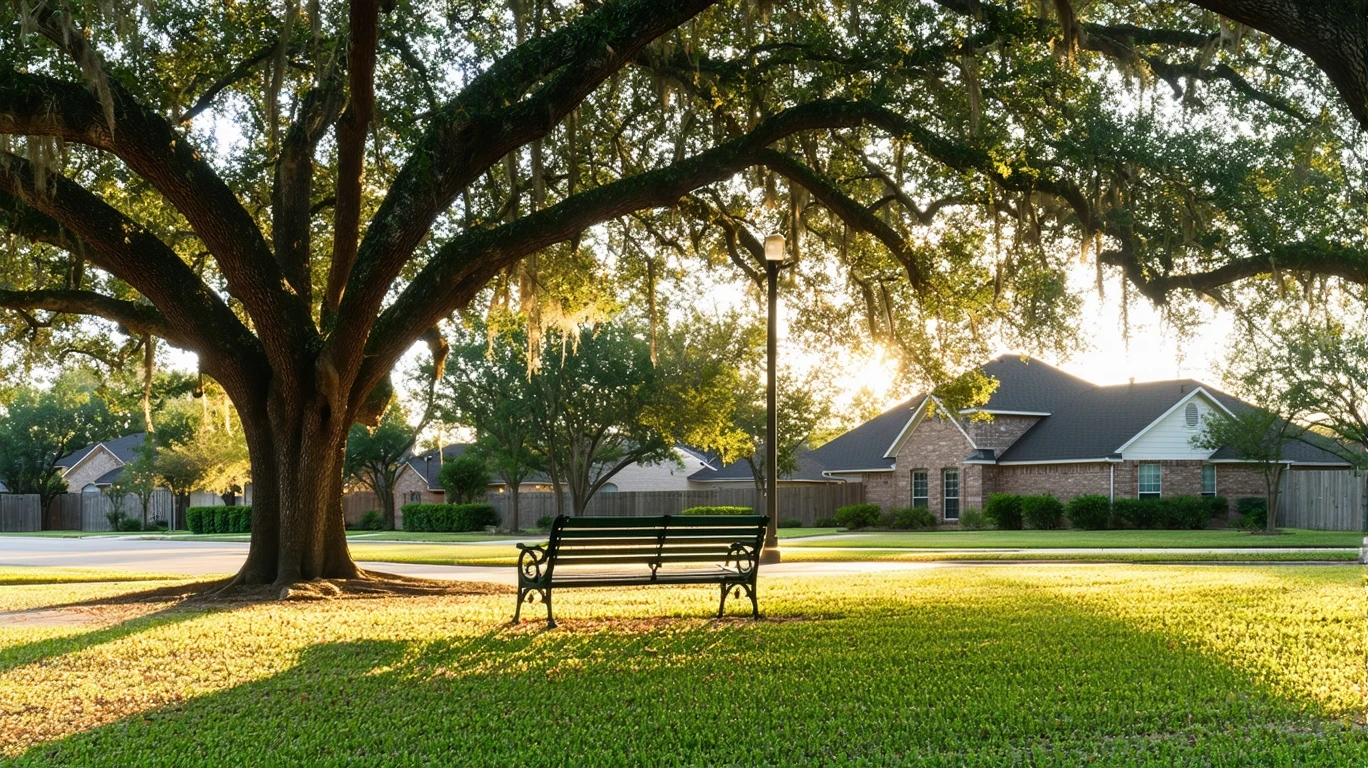
The Housing Market in Hutto Today
Hutto functions as a commuter suburb within the Austin metro, drawing households seeking lower entry costs and newer construction outside the urban core. The median household income of $105,743 supports the median home value, but the city’s structure creates cost exposure beyond the mortgage or rent check. With an average commute of 28 minutes and 48.3% of workers facing long commutes, housing location determines not just shelter expense but daily time and fuel costs. Only 7.1% of residents work from home, meaning most households depend on reliable vehicle access and the transportation budget that comes with it.
The housing stock is predominantly low-rise and single-family, with mixed residential and commercial land use present but grocery density below thresholds. This means that even in walkable pockets—where pedestrian-to-road ratios are high—daily errands still require driving. For newcomers comparing Hutto to denser suburbs or urban neighborhoods, the tradeoff is clear: lower purchase prices and rent, but higher ongoing costs for transportation and time spent managing household logistics.
Hutto’s growth trajectory also means that today’s cost structure may not reflect tomorrow’s. Property tax assessments tend to follow home value appreciation in expanding suburbs, and infrastructure development—roads, schools, services—often shifts tax burdens over time. Buyers entering now should expect ownership costs to behave more like a growth market than a stable small town.
Renting in Hutto
At $2,103 per month, median rent in Hutto reflects the city’s position within the Austin metro rental market. This figure captures the baseline shelter cost, but renters also absorb the city’s car-dependent structure. Sparse grocery accessibility and limited transit options mean that renters without reliable transportation face significant friction in daily errands. Even in areas with higher pedestrian infrastructure, the distance to essential services requires vehicle access, adding fuel, insurance, and maintenance costs to the monthly reality.
Rental housing in Hutto tends to be newer construction, often managed by regional property companies rather than individual landlords. This can mean more predictable maintenance response but also stricter lease terms and annual rent adjustments tied to metro-wide demand rather than hyper-local conditions. Renters benefit from insulation against property tax increases and major repair costs, but they lose control over renewal pricing in a market shaped by Austin’s broader growth pressure.
For renters prioritizing budget predictability, Hutto offers a clearer cost ceiling than ownership—but only if transportation and time costs are factored in. The city’s limited family infrastructure (low school and playground density) and hospital presence without dense pediatric or urgent care options mean that households with children or medical needs may face additional travel and time burdens that amplify the effective cost of renting here.
Owning a Home in Hutto
Ownership in Hutto begins with a median home value of $279,800, which is accessible relative to the median household income. But the ownership experience is defined by exposure to property taxes, climate-driven maintenance, and the long-term cost behavior of a low-rise, car-dependent suburb. Texas has no state income tax, which shifts revenue generation to property taxes. While the specific rate isn’t provided here, buyers should expect assessments to rise with home values and local infrastructure investment, creating a variable cost stream that increases over time.
Hutto’s triple-digit summer heat imposes sustained cooling costs and accelerates exterior maintenance cycles. Roofs, siding, and HVAC systems face more intense wear than in milder climates, and deferred maintenance compounds quickly. Owners also navigate HOA governance in many neighborhoods, which can bundle landscaping or amenity access but also impose rules and fee increases that reduce financial flexibility.
Ownership here also means absorbing the cost of transportation infrastructure that the city’s layout demands. Garages, driveways, and vehicle maintenance become non-negotiable expenses, and the time cost of driving to groceries, schools, and healthcare doesn’t decrease with tenure. Equity accumulation and control over housing decisions are the primary ownership advantages, but they come with exposure to volatility that renters avoid.
Apartment vs House in Hutto — Cost Behavior Comparison
| Expense Category | Apartment | House |
|---|---|---|
| Cooling costs | Lower square footage and shared walls reduce cooling load during extended summer heat | Larger footprint and standalone structure increase exposure to triple-digit temperatures; higher sustained usage |
| Exterior maintenance | Managed by landlord or property company; tenant insulated from climate-driven wear | Owner responsible for roof, siding, and landscaping in hot, dry climate; accelerated replacement cycles |
| Transportation dependency | Same car-oriented structure; location near corridors may reduce trip length but not frequency | Same car-oriented structure; single-family neighborhoods often farther from commercial corridors, increasing fuel and time costs |
| Property tax exposure | Indirect; rent adjustments may reflect landlord’s tax increases but tenant has no direct assessment | Direct and variable; assessments rise with home values and local infrastructure investment |
Why these categories: Hutto’s climate, low-rise layout, and car-dependent infrastructure create meaningful cost differences in cooling, maintenance, and transportation. Property tax exposure is a structural distinction in Texas markets. Categories like water/sewer or trash are often bundled or billed similarly across housing types here and were excluded to focus on what actually varies in Hutto’s context.
Utilities & Upkeep Differences
Utility exposure in Hutto is dominated by cooling costs. Electricity at 16.04¢/kWh becomes a major budget line during the extended summer season, when triple-digit heat drives air conditioning usage for months. Houses face higher absolute costs due to square footage and standalone construction, but even apartment renters experience noticeable seasonal spikes. Natural gas at $25.56/MCF plays a smaller role, as heating demand is minimal and brief compared to cooling.
Upkeep differences are driven by climate intensity and housing age. Exterior paint, roofing materials, and HVAC components degrade faster under sustained heat and UV exposure. Homeowners in Hutto should expect more frequent replacement cycles than in temperate or northern climates, and the cost of deferred maintenance compounds quickly when systems fail during peak summer demand. Apartment renters avoid this exposure entirely, as property management absorbs repair and replacement costs.
Landscaping and water usage also vary by housing type. Houses with yards face irrigation costs and maintenance labor, while apartments typically bundle landscaping into rent. In Hutto’s dry, hot climate, outdoor maintenance is not optional—it’s a structural cost of ownership that doesn’t diminish over time.
Rent vs Buy: Long-Term Exposure in Hutto
The rent-versus-buy decision in Hutto is less about monthly payment comparison and more about which cost risks a household can manage. Renters face renewal volatility tied to Austin metro demand, but they avoid property tax increases, major repairs, and climate-driven maintenance cycles. Owners gain equity and control but accept exposure to rising assessments, HVAC replacements, and the compounding cost of exterior upkeep in a hot climate.
Over time, ownership in Hutto shifts from predictable mortgage payments to variable tax and maintenance costs. Property tax assessments follow home value appreciation, and infrastructure investment in a growing suburb often accelerates that trajectory. Cooling costs remain high regardless of tenure, but owners also absorb the cost of system failures and efficiency degradation. Renters pay indirectly through rent increases but avoid the timing risk and capital outlay of emergency repairs.
Ownership makes sense for households who value control, expect to stay long enough to absorb transaction costs, and can budget for variable expenses that grow with the city. Renting makes sense for those prioritizing flexibility, predictable monthly costs, and insulation from maintenance shocks. Neither path is inherently cheaper in Hutto—they simply allocate risk differently.
FAQs About Housing Costs in Hutto
Is renting or buying cheaper in Hutto, TX?
Neither is universally cheaper. At $2,103 median rent and $279,800 median home value, the monthly cost depends on down payment, loan terms, and property taxes. Ownership builds equity but exposes households to rising tax assessments and climate-driven maintenance. Renting avoids those risks but offers no equity accumulation and faces renewal volatility tied to Austin metro demand.
How much do property taxes add to homeownership costs in Hutto?
Texas relies on property taxes for revenue, and Hutto’s growth trajectory suggests assessments will rise with home values and infrastructure investment. Buyers should expect property taxes to increase over time, creating a variable cost stream that grows alongside equity. The specific rate isn’t provided here, but it’s a major long-term exposure for owners.
Do apartments or houses cost more to cool in Hutto?
Houses cost more in absolute terms due to larger square footage and standalone construction, but both housing types face sustained cooling costs during Hutto’s extended summer heat. Electricity at 16.04¢/kWh becomes a dominant budget line for all residents, with houses experiencing higher peaks and apartments seeing noticeable seasonal increases.
Does Hutto’s car-dependent layout affect housing costs?
Yes. Sparse grocery accessibility and limited transit options mean that housing location determines transportation and time costs. Even in walkable pockets, daily errands require driving, adding fuel, insurance, and vehicle maintenance to the effective cost of living here. Households without reliable transportation face significant friction in managing daily logistics.
What makes housing maintenance more expensive in Hutto?
Triple-digit summer heat accelerates wear on roofs, siding, HVAC systems, and exterior paint. Replacement cycles are shorter than in milder climates, and deferred maintenance compounds quickly when systems fail during peak cooling season. Homeowners face higher long-term upkeep costs, while renters are insulated from this exposure.
Making Housing Choices in Hutto
Housing costs in Hutto extend beyond the rent check or mortgage payment. The city’s low-rise, car-dependent structure and sparse grocery accessibility mean that shelter expense is only one part of what costs people most—transportation, time, and household logistics add layers that don’t appear in listing prices. Renters gain predictability and flexibility but pay high baseline rent and face renewal volatility. Owners gain equity and control but accept exposure to rising property taxes, climate-driven maintenance, and the compounding costs of a hot, growth-oriented suburb.
The right choice depends on which risks a household can manage and which tradeoffs align with their priorities. Hutto offers accessible entry points relative to core Austin, but the cost structure rewards households who can absorb variability, plan for long-term maintenance, and budget for the transportation dependency that the city’s layout demands. For those considering a move, understanding how housing costs behave here—not just what they cost today—is the foundation of a sustainable decision. Learn more about moving companies, costs, and logistics to plan your transition effectively.
How this article was built: In addition to public economic data, this article incorporates location-based experiential signals derived from anonymized geographic patterns—such as access density, walkability, and land-use mix—to reflect how day-to-day living actually feels in Hutto, TX.