
Hutto is considered moderately priced in 2026, with a median home value of $279,800 and median rent of $2,103 per month. The value proposition depends on housing entry cost versus car dependence, as nearly half of workers face long commutes and grocery access requires planning.
Is the True Cost of Living Higher Than You Think?
The answer depends less on day-to-day prices and more on how Hutto’s structure shapes your household’s recurring expenses. While the city sits near the national price baseline with a regional price parity index of 98, the real cost pressure comes from what you can’t avoid: housing entry decisions, vehicle dependency, and seasonal utility swings driven by extended heat exposure.
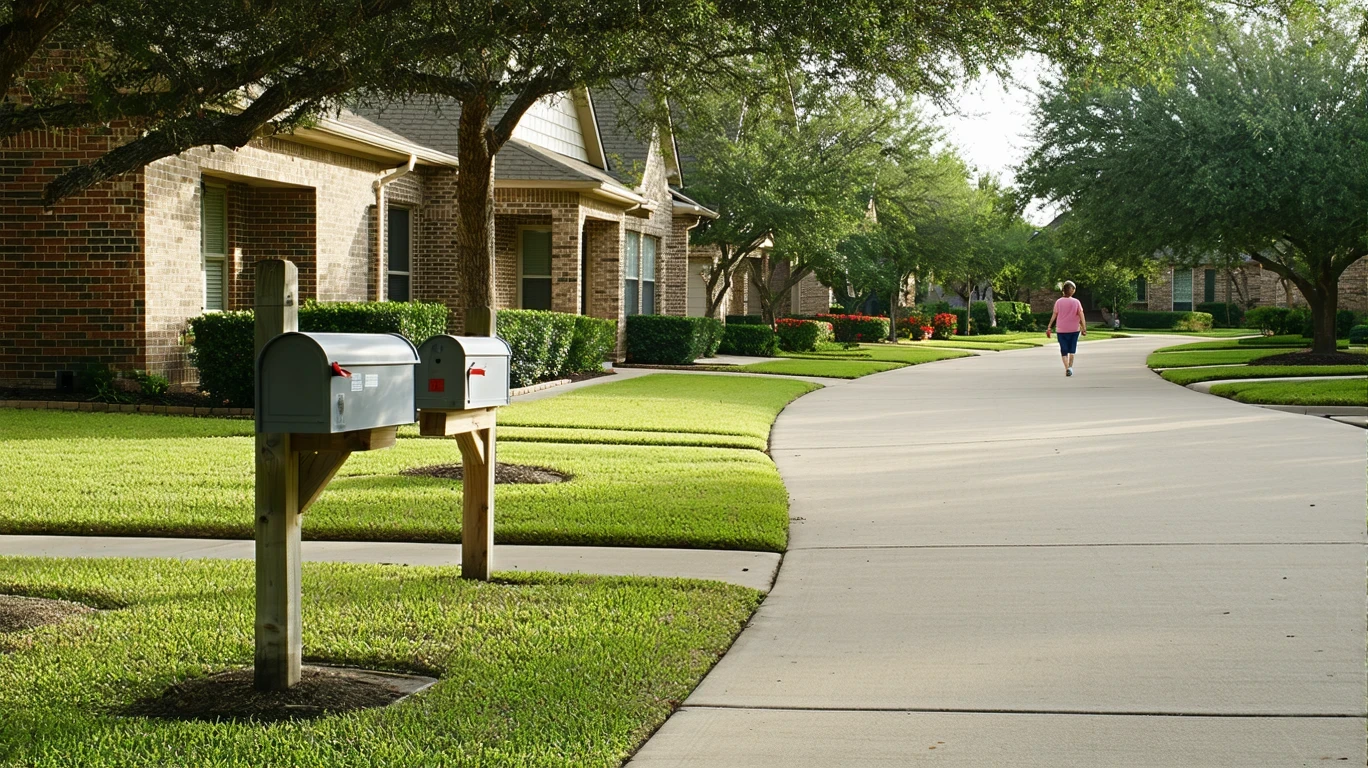
Hutto functions as a suburban growth node in the Austin metro, where affordability is defined by tradeoffs rather than across-the-board savings. The housing market offers a lower entry point than central Austin, but that advantage gets tested by transportation realities—48.3% of workers endure long commutes, and only 7.1% work from home. Meanwhile, grocery density falls below typical thresholds, meaning even routine errands often require a car trip. The city’s pedestrian infrastructure creates walkable pockets in certain areas, but the overall errands landscape remains sparse, reinforcing car dependency as a structural cost driver.
Overall Cost of Living Snapshot
Hutto’s cost structure is shaped by three forces: housing entry cost, transportation dependence, and utility seasonality. The regional price parity index of 98 places the city just below the national average, but that number masks the internal composition of expenses. Housing dominates upfront decisions—whether to rent at $2,103 per month or buy at a median value of $279,800—and that choice cascades into long-term cost exposure. Transportation follows close behind, not because gas is expensive at $2.55 per gallon, but because the city’s layout and commute patterns make vehicle ownership non-negotiable for most households.
Utilities add a third layer of volatility. Electricity rates of 16.04¢ per kWh combine with triple-digit summer heat to create seasonal spikes that vary by home age, insulation quality, and cooling habits. Natural gas pricing at $25.56 per MCF affects winter months but plays a smaller role given the region’s mild heating season. The unemployment rate of 3.6% reflects a stable local economy, and median household income of $105,743 per year provides context for how these costs land across different household types.
The verdict: Hutto’s cost pressure comes from structural exposure—how far you drive, how much space you cool, and whether you’re building equity or paying rent—rather than from inflated prices on goods and services. Surprises tend to emerge from underestimating transportation’s recurring bite and utility seasonality’s summer peaks.
Housing Costs (Primary Driver)
Housing is where Hutto’s value proposition takes shape. The median home value of $279,800 positions the city as an accessible entry point within the Austin metro, especially compared to the urban core and inner suburbs. For buyers, this price point opens the door to single-family homes with yards, garages, and space—assets that carry weight for families and remote workers. Ownership also locks in a fixed cost anchor, insulating households from rent inflation and building equity over time.
Renting at $2,103 per month creates a different calculus. That figure reflects gross rent, including estimated utilities, and it competes directly with mortgage payments on similarly sized homes. For transient households, renters without down payment savings, or those testing the market before committing, renting offers flexibility. But for stable households planning to stay multiple years, the rent-to-ownership gap narrows quickly, especially when factoring in property tax, insurance, and maintenance costs that ownership brings.
The housing tradeoffs here aren’t about finding cheap shelter—they’re about choosing between upfront capital and long-term cost control. Buyers absorb more risk and responsibility but gain predictability. Renters preserve liquidity and mobility but remain exposed to lease renewals and landlord decisions. Hutto leans toward ownership for households with stable income and long-term plans, while renting serves as a transitional or flexibility-driven option.
| Housing Type | Cost Anchor | What That Buys You |
|---|---|---|
| Median Home Value | $279,800 | Single-family home, equity building, fixed cost base |
| Median Gross Rent | $2,103/month | Flexibility, no maintenance burden, liquidity preservation |
Conclusion: Hutto is a buying city for households with down payment capacity and multi-year horizons. Renting works for short-term stays or income uncertainty, but the ownership incentive strengthens with every lease renewal.
Utilities & Energy Risk
Electricity dominates utility exposure in Hutto, driven by the region’s extended cooling season and triple-digit summer heat. At 16.04¢ per kWh, the rate sits near the state average, but the real cost comes from volume—how many kilowatt-hours your household consumes keeping indoor temperatures livable from May through September. Older homes with minimal insulation, single-pane windows, or aging HVAC systems face the highest exposure, while newer construction with modern efficiency standards reduces usage intensity.
Natural gas pricing at $25.56 per MCF affects winter months, primarily for heating and water heating, but the region’s mild winters limit this exposure compared to cooling. Gas bills rise during cold snaps but rarely approach the sustained pressure that summer electricity creates. Households with gas appliances—ranges, dryers, water heaters—see year-round usage, but the cost remains secondary to electricity’s seasonal dominance.
Utility volatility in Hutto is moderate. The primary risk isn’t rate instability—it’s seasonal intensity. Households that underestimate cooling costs or move into poorly insulated homes face bill shock in July and August. Those who plan for it—through thermostat discipline, shade management, or efficiency upgrades—can reduce exposure, but the baseline reality remains: summer heat drives the utility budget, and there’s no opting out.
Risk classification: Moderate. Electricity seasonality creates predictable but significant summer peaks; natural gas adds minor winter variability.
Groceries & Daily Costs
Hutto’s grocery and daily cost landscape reflects near-national pricing with modest regional adjustment. The regional price parity index of 98 indicates costs run just below the U.S. baseline, and derived grocery estimates support that picture: bread at $1.81 per pound, chicken at $2.00 per pound, eggs at $2.53 per dozen, and ground beef at $6.62 per pound. These figures, adjusted from national data using regional price parity, suggest moderate pressure rather than bargain or premium territory.
Derived estimate based on national baseline adjusted by regional price parity; not an observed local price.
The bigger friction point isn’t price—it’s access. Grocery density in Hutto falls below typical thresholds, meaning fewer stores per square mile and longer distances between shopping options. This doesn’t mean food deserts, but it does mean planning. Running out for a single item often requires a deliberate trip rather than a quick walk or short detour. For households accustomed to urban density or walkable errands, this shift adds time and vehicle dependency to routine tasks.
Daily costs beyond groceries—household supplies, personal care, pharmacy needs—follow similar patterns. Pricing stays close to national norms, but access requires a car. The city’s sparse grocery infrastructure and limited walkable retail mean most households consolidate errands into planned trips rather than handling them opportunistically. This doesn’t inflate costs directly, but it does shape how households manage time, fuel, and convenience.
Transportation Reality
Transportation in Hutto isn’t a variable expense—it’s a structural requirement. The city’s layout, job distribution, and infrastructure create an environment where car ownership is non-negotiable for most households. The average commute of 28 minutes reflects the reality that many residents work outside Hutto, often in Austin or surrounding suburbs, and 48.3% of workers face long commutes that stretch beyond typical thresholds. Only 7.1% work from home, leaving the vast majority dependent on personal vehicles for daily job access.
Gas prices at $2.55 per gallon sit below recent peaks, but the cost accumulates through frequency and distance rather than per-gallon pain. A household with two working adults, each commuting 25 miles round trip five days a week, burns through fuel quickly. Add errands, school runs, and weekend activities, and transportation becomes a recurring exposure that compounds monthly. Vehicle maintenance, insurance, registration, and depreciation layer on top of fuel costs, creating a total transportation burden that rivals or exceeds housing for some households.
The city’s experiential structure reinforces this dependency. While walkable pockets exist—areas with higher pedestrian-to-road ratios and some sidewalk connectivity—grocery density remains sparse, and mixed land use is present but limited. This means even households in more walkable neighborhoods still rely on cars for most errands. Cycling infrastructure exists in some pockets, but it serves recreational or short-trip use rather than replacing vehicle dependency for work or shopping.
Transportation in Hutto is a fixed cost driver, not a discretionary one. Households that can reduce commute length, share vehicles, or work from home gain significant cost relief. Those who can’t—especially multi-worker households with long commutes—face sustained, unavoidable exposure that shapes monthly cash flow and long-term financial flexibility.
Cost Exposure Profiles
Cost exposure in Hutto varies less by income level and more by household structure and decision points. The city’s cost drivers—housing entry, car dependency, and utility seasonality—hit differently depending on how many vehicles you own, how far you commute, and whether you’re building equity or paying rent.
Low-exposure households own their homes, work nearby or remotely, and drive one fuel-efficient vehicle. They’ve locked in housing costs through ownership, avoided long commutes that burn fuel and time, and live in newer or well-insulated homes that reduce summer cooling intensity. Their cost structure is predictable, with limited volatility beyond seasonal utility swings they can partially control through efficiency and behavior.
High-exposure households rent, commute long distances with multiple vehicles, and occupy older homes with poor insulation. They face rent renewal risk, sustained transportation costs that compound with every commute, and summer utility bills that spike unpredictably. Their cost structure is volatile, with limited control over the primary drivers and recurring pressure that makes financial planning harder.
The difference isn’t about who can or cannot afford Hutto—it’s about which cost exposures dominate and how much control a household has over them. Ownership reduces housing volatility but increases responsibility. Short commutes reduce transportation exposure but may limit job options. Newer homes reduce utility risk but cost more upfront. Every decision involves tradeoffs, and the city’s structure rewards households that can align their choices with low-exposure profiles.
Frequently Asked Questions
Is Hutto more affordable than Austin in 2026? Yes, particularly for housing entry—Hutto’s median home value of $279,800 is significantly lower than Austin’s urban core. However, transportation costs rise due to longer commutes, and car dependency is non-negotiable, which offsets some housing savings.
What does a typical cost profile look like in Hutto? Housing dominates upfront decisions, transportation creates recurring monthly pressure through commuting and errands, and utilities spike in summer due to extended cooling season. Grocery and daily costs stay near national averages but require vehicle access.
Do utilities cost more in Hutto than nearby areas? Electricity rates at 16.04¢ per kWh are close to regional norms, but total utility costs depend heavily on home age, insulation, and cooling intensity during summer months. Natural gas at $25.56 per MCF plays a smaller role given mild winters.
What costs tend to surprise newcomers in Hutto? Transportation exposure surprises households underestimating commute frequency and distance, and summer utility bills shock those moving into older or poorly insulated homes. Grocery access also requires more planning than in denser urban areas.
Are property taxes higher in Hutto than nearby suburbs? Property tax rates vary by jurisdiction and are not included in the provided data, but Texas generally has higher property taxes than states with income tax. Buyers should verify local tax rates and exemptions before purchasing.
Is Hutto a good place for renters or buyers? Hutto favors buyers with stable income and long-term plans, as the rent-to-ownership gap narrows quickly and ownership locks in cost predictability. Renters benefit from flexibility but face exposure to lease renewals and limited cost control.
How does car dependency affect monthly costs? Car dependency in Hutto is structural, not optional—48.3% of workers have long commutes, and grocery density is sparse. Households with multiple vehicles and long commutes face sustained fuel, maintenance, and insurance costs that compound monthly.
Does Hutto’s cost structure favor families or singles? Families benefit from lower housing entry costs and access to parks (park density exceeds high thresholds), but family infrastructure like schools and playgrounds remains limited. Singles and couples face the same transportation and utility exposures but may find housing costs easier to manage with dual incomes.
How this article was built: In addition to public economic data, this article incorporates location-based experiential signals derived from anonymized geographic patterns—such as access density, walkability, and land-use mix—to reflect how day-to-day living actually feels in Hutto, TX.