
Between 2020 and 2024, U.S. grocery prices climbed more than 25%—the steepest four-year surge in food costs since the 1970s. For families evaluating a move to Huntersville, NC, that national backdrop raises an immediate question: how do grocery costs feel here, and who feels the pressure most?
Huntersville sits in a regional price environment slightly below the national average, with a regional price parity index of 97—meaning the overall cost of goods and services runs about 3% lower than the U.S. baseline. That modest discount shows up in grocery aisles, but the experience of food costs in Huntersville varies widely depending on household income, family size, and store choice. With a median household income of $112,893 per year, many families here absorb grocery expenses comfortably. But for households earning below that median—or managing larger families on tighter budgets—grocery costs become a meaningful line item that responds directly to planning, store selection, and shopping habits.
This article explains how grocery prices feel in Huntersville, which households notice food cost pressure most, and how store tier and behavior shape the weekly shopping experience. It does not estimate total monthly grocery spending—that belongs in the broader monthly budget conversation. Instead, it focuses on relative price positioning, sensitivity, and control.
How Grocery Costs Feel in Huntersville
Grocery costs in Huntersville reflect a suburban cost structure common to the Charlotte metro area: prices sit modestly below national averages, but the shopping experience is car-dependent and destination-based rather than walkable or errand-friendly. The city’s sparse food retail density—evidenced by low food establishment concentration and moderate grocery density—means most households drive to a specific store for a planned shopping trip rather than stopping by a neighborhood market on the way home. That structure favors less-frequent, larger trips, which can support bulk buying and warehouse club strategies but requires upfront cash flow and storage space.
For households earning near or above Huntersville’s median income of $112,893, grocery costs rarely constrain weekly decisions. These families choose stores based on convenience, quality preference, or specialty offerings rather than price sensitivity. A few dollars’ difference per item doesn’t alter behavior. But for households earning below the median—particularly those supporting three or more people—grocery costs become a budget category that requires active management. Singles and couples without children notice individual item prices less, but they also lack the per-person economies of scale that larger households achieve through bulk purchases and home cooking.
The regional price discount (RPP 97) doesn’t eliminate grocery pressure; it shifts the threshold slightly. Families that would feel tight at national average prices may find a bit more breathing room here, but the structure of the pressure remains the same: larger households multiply per-item costs quickly, and store tier choice drives significant variance in identical baskets.
Grocery Price Signals (Illustrative)
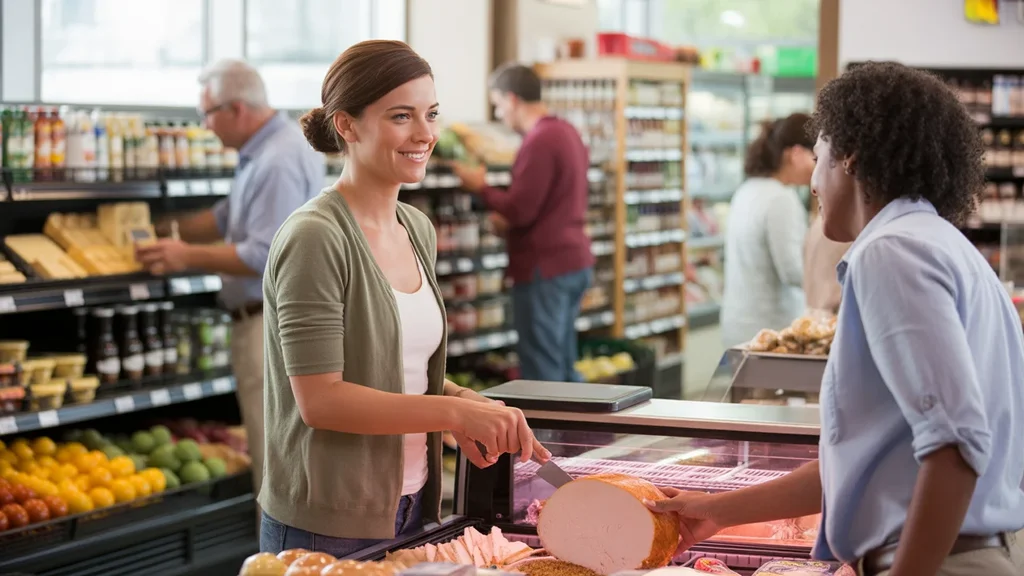
The table below shows illustrative prices for common staple items in Huntersville, derived from national baselines adjusted for regional price parity. These figures are not observed retail prices from a specific store or week—they serve as reference points to understand how staple costs compare locally. Actual prices vary by store tier, brand, and promotion.
| Item | Illustrative Price |
|---|---|
| Bread | $1.79/lb |
| Eggs | $2.50/dozen |
| Milk | $3.98/half-gallon |
| Chicken | $1.98/lb |
| Ground Beef | $6.55/lb |
| Cheese | $4.70/lb |
| Rice | $1.03/lb |
Derived estimate based on national baseline adjusted by regional price parity; not an observed local price.
These prices illustrate relative positioning—not a complete shopping list or a simulated cart. Bread, eggs, and rice sit in ranges that feel accessible for most households. Ground beef and cheese represent higher per-pound costs that add up quickly in family-sized quantities. Chicken remains one of the most cost-efficient proteins, which is why it anchors weeknight meal planning for budget-conscious households across income levels.
Store Choice & Price Sensitivity
Grocery cost pressure in Huntersville varies more by store tier than by a single “average” experience. The same basket of staples can differ by 15–30% depending on whether a household shops at a discount grocer, a mid-tier supermarket, or a premium format. That spread matters most for families buying in volume or managing fixed incomes.
Discount tier stores—typically no-frills formats with limited selection and house brands—offer the lowest per-item prices. Households that prioritize cost control over convenience or variety often anchor their shopping here, supplementing with occasional trips elsewhere for specialty items. The tradeoff: fewer locations, less ambiance, and a need to plan around what’s in stock.
Mid-tier supermarkets represent the most common shopping experience in Huntersville. These stores balance price, selection, and convenience, offering national brands alongside store labels, frequent promotions, and loyalty programs. Most households earning near the median shop here by default, using sales and coupons to manage costs without sacrificing variety. This tier absorbs the largest share of grocery spending in suburban markets like Huntersville.
Premium grocers—focused on organic, specialty, or prepared foods—charge higher base prices in exchange for quality curation, service, and atmosphere. Households shopping here regularly typically earn well above the median and treat grocery costs as discretionary rather than constrained. For these families, store choice reflects lifestyle preference, not budget pressure.
The sparse food retail density in Huntersville means store choice often involves a deliberate drive rather than a quick detour. That structure rewards households that consolidate trips, plan meals in advance, and buy in larger quantities—but it also penalizes those without reliable transportation or the flexibility to shop outside peak hours.
What Drives Grocery Pressure Here
Grocery cost pressure in Huntersville is shaped by the interaction of income distribution, household composition, and regional access patterns. The city’s high median income creates a bifurcated experience: many households feel no meaningful grocery constraint, while those below the median face pressure that scales directly with family size.
Household size acts as the primary multiplier. A single adult buying chicken at $1.98 per pound might purchase one pound per week; a family of four buying the same item needs four to six pounds, turning a modest per-unit cost into a $10–$12 weekly line item for that protein alone. Multiply that dynamic across dairy, produce, and pantry staples, and the difference between a $60 weekly trip and a $180 trip becomes a function of headcount, not extravagance.
Regional distribution patterns also influence grocery costs indirectly. Huntersville’s position within the Charlotte metro means it benefits from competitive grocery retail and regional supply chains, but the car-dependent shopping structure limits the practicality of price-shopping across multiple stores in a single trip. Households that lack transportation flexibility or time to compare prices across formats often pay a convenience premium by shopping at the closest mid-tier option rather than seeking out discount alternatives.
Seasonal variability in produce and protein costs affects all households, but it’s most visible for families that cook from scratch and buy fresh ingredients in volume. Summer produce costs drop; winter prices for berries and greens rise. Protein costs fluctuate with supply conditions and holiday demand. Households that adapt menus to seasonal availability smooth out some of that volatility; those that buy the same items year-round absorb more price swings.
Practical Ways People Manage Grocery Costs
Households in Huntersville manage grocery costs through behavioral strategies that emphasize control, predictability, and waste reduction rather than extreme couponing or deprivation. These approaches work across income levels, though the motivation differs: below-median earners use them to stretch tight budgets, while higher earners use them to avoid waste and maintain intentionality.
- Meal planning around sales and seasonal items reduces impulse purchases and aligns spending with lower-cost windows. Families that plan a week’s meals before shopping avoid duplicate purchases and minimize mid-week top-up trips.
- Buying store brands for staples cuts costs on items where brand differentiation matters least—flour, sugar, canned goods, dairy. The quality gap between national and store brands has narrowed significantly, making this a low-friction savings lever.
- Buying proteins in bulk and freezing portions takes advantage of per-pound discounts on family packs while spreading the cost across multiple meals. This strategy requires freezer space and upfront cash flow but pays off over weeks.
- Shopping discount tiers for pantry staples and mid-tier for fresh items splits the basket strategically, capturing low prices on non-perishables while maintaining quality and selection for produce and proteins.
- Tracking per-unit prices rather than package prices reveals when larger sizes actually cost more per ounce or when smaller packages on sale beat bulk pricing. This habit prevents false economies.
- Limiting prepared and convenience foods reduces the markup on pre-cut, pre-cooked, or single-serve items. Households that cook from scratch consistently spend less per meal, though they trade money for time.
These strategies don’t eliminate grocery costs, but they shift the experience from passive spending to active management. For households feeling pressure, that sense of control often matters as much as the dollar savings.
Groceries vs Eating Out (Directional)
The tradeoff between cooking at home and eating out shapes how households experience grocery costs. Families that cook most meals treat grocery spending as a fixed weekly expense that’s predictable and controllable. Those that eat out frequently—whether by choice or necessity—experience food costs as more variable and harder to manage, but they also avoid the time cost of meal planning, shopping, and cooking.
In Huntersville, the car-dependent structure and moderate grocery density mean that shopping for groceries requires a planned trip, not a spontaneous errand. That friction can push time-constrained households toward takeout or dining out, especially on weeknights. But the cost differential remains significant: a home-cooked dinner for four typically costs a fraction of the same meal at a casual restaurant, even accounting for grocery price variance across store tiers.
Households that balance both—cooking on weeknights and dining out occasionally—often find the most sustainable rhythm. Grocery costs stay manageable through volume and planning, while occasional restaurant meals provide relief without destabilizing the food budget. The key is treating dining out as a deliberate choice rather than a default response to an empty fridge or a busy week.
FAQs About Grocery Costs in Huntersville (2026)
Is it cheaper to shop in bulk in Huntersville? Bulk buying reduces per-unit costs on non-perishables and proteins, but it requires upfront cash flow, storage space, and the ability to use items before they expire. Warehouse clubs and family packs at mid-tier grocers offer the best bulk pricing, though discount-tier stores sometimes beat them on individual staples.
Which stores in Huntersville are best for low prices? Discount-tier grocers consistently offer the lowest base prices, but mid-tier supermarkets often match or beat them on sale items with loyalty programs. The lowest total cost comes from splitting trips strategically: discount stores for pantry staples, mid-tier for fresh items and promotions.
How much more do organic items cost in Huntersville? Organic versions of staples like milk, eggs, and produce typically carry premiums of 20–50% over conventional equivalents, with the gap widening at mid-tier and premium stores. Households prioritizing organic selectively—focusing on high-impact items like berries or greens—manage costs better than those buying organic across the board.
How do grocery costs for families in Huntersville compare to nearby cities? Huntersville’s regional price parity of 97 suggests modestly lower grocery costs than the national average, and it tracks closely with the broader Charlotte metro. Families moving from higher-cost metros may notice meaningful relief; those coming from lower-cost rural areas may find prices slightly elevated but still manageable given local income levels.
How do households in Huntersville think about grocery spending when cooking at home? Most households treat grocery spending as a controllable expense that responds to planning, store choice, and waste reduction. Families that cook from scratch and buy in volume see groceries as one of the most flexible budget categories, while those relying on convenience foods or shopping without a plan experience less control and higher per-meal costs.
How Groceries Fit Into the Cost of Living in Huntersville
Grocery costs represent a moderate but manageable share of household expenses in Huntersville, sitting well below housing and transportation in terms of total budget impact. For most families earning near or above the median income of $112,893, food costs don’t constrain other financial decisions—they’re a recurring expense that responds to behavior and store choice but rarely forces tradeoffs with savings or discretionary spending.
For below-median households, grocery costs interact more directly with housing pressure and transportation expenses. A family spending 35% of income on rent or mortgage, 15% on car payments and gas, and 10–12% on groceries has less flexibility to absorb price swings or unexpected costs. In that context, grocery management becomes part of a broader strategy to maintain stability rather than an isolated optimization exercise.
This article focuses on how grocery costs feel and how households manage them. For a complete picture of how groceries fit alongside housing, utilities, transportation, and other expenses, see the full monthly budget breakdown for Huntersville. That article walks through the total cost structure and shows how different household types allocate income across all major categories.
Grocery costs in Huntersville reward planning, flexibility, and intentionality. Families that shop strategically, cook from scratch, and adapt to seasonal availability experience food costs as predictable and controllable. Those that shop reactively or rely heavily on convenience formats face higher costs and less flexibility. The difference isn’t about deprivation—it’s about structure. And in a city where median incomes run high but cost pressure still varies widely by household composition, that structure makes grocery spending one of the most responsive levers families control.
How this article was built: In addition to public economic data, this article incorporates location-based experiential signals derived from anonymized geographic patterns—such as access density, walkability, and land-use mix—to reflect how day-to-day living actually feels in Huntersville, NC.