
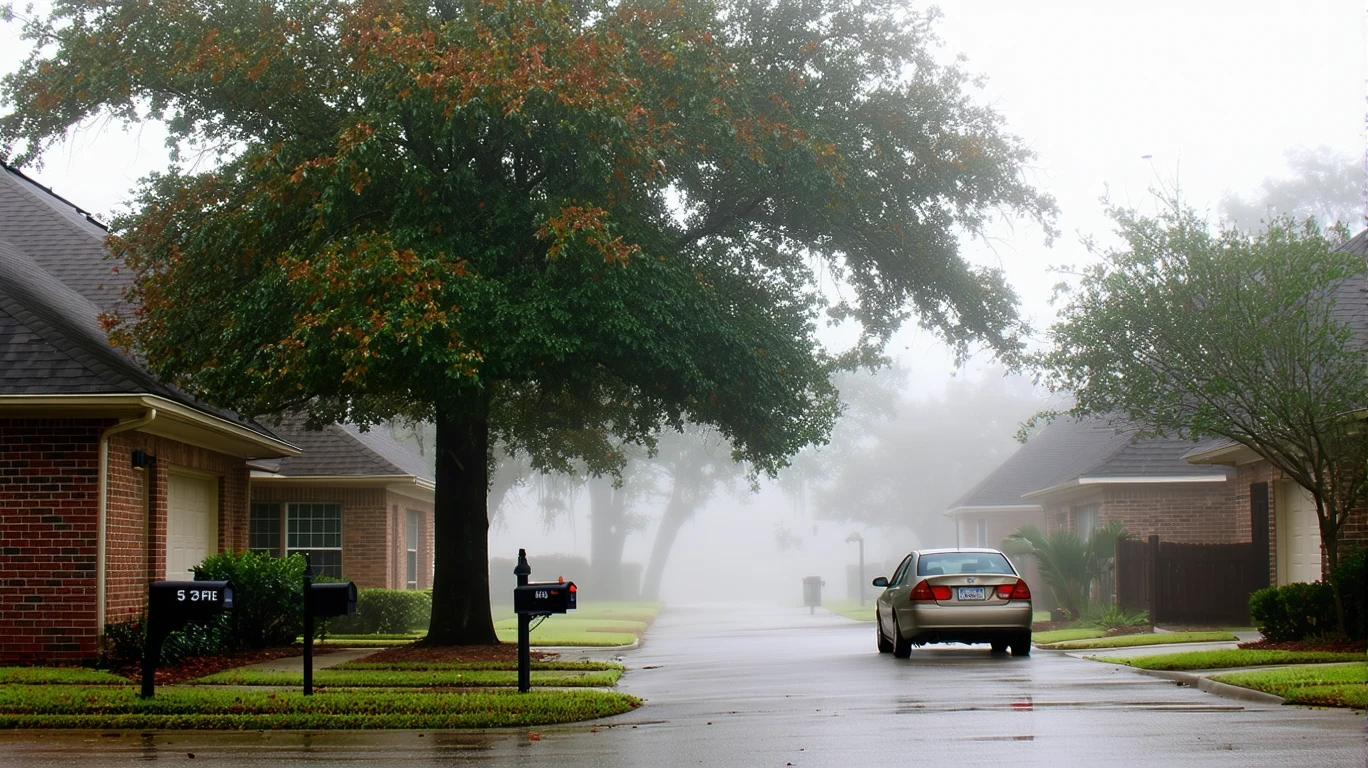
Picture two households earning the same income, shopping at the same grocery chains, filling up at similar gas stations—but experiencing completely different financial pressure. One rents a two-bedroom apartment in Humble for $1,123 per month, budgets carefully around a median household income of $58,581 per year, and navigates a car-oriented suburb where errands cluster along commercial corridors. The other pays $1,723 per month for comparable rental space in The Woodlands, benefits from a median household income of $142,384 per year, and enjoys a master-planned community known for green space and polished amenities. Both are part of the Houston metro. Both face Texas heat, deregulated electricity markets, and car dependency. Yet the mechanics of cost—where pressure concentrates, what flexibility exists, and which tradeoffs matter most—differ sharply.
This comparison isn’t about declaring one city universally cheaper or better. It’s about understanding how the same categories of spending—housing, utilities, groceries, transportation—behave differently depending on where you live, what you earn, and what your household prioritizes in 2026. Humble and The Woodlands sit roughly 20 miles apart, share the same regional price parity index, and operate within the same broader economic ecosystem. But housing stock, income distribution, infrastructure maturity, and community design create distinct cost experiences. For some households, Humble’s lower entry costs and straightforward suburban layout offer breathing room. For others, The Woodlands’ higher baseline expenses come with predictability, established services, and reduced logistical friction. The right choice depends less on which city costs less overall and more on which cost structure aligns with your income, lifestyle, and tolerance for variability.
What follows is a structured breakdown of how cost pressure shows up in each city—not as a race to the bottom, but as a guide to understanding where your money goes, what you control, and what you don’t.
Housing Costs
Housing dominates the cost experience in both cities, but the entry barrier and ongoing obligations differ significantly. In Humble, the median home value sits at $176,500, while The Woodlands commands $456,400. For renters, the gap is smaller but still meaningful: $1,123 per month in Humble versus $1,723 per month in The Woodlands. These aren’t just numbers—they represent fundamentally different housing markets. Humble’s lower home values reflect a mix of older single-family homes, townhomes, and apartment complexes that cater to working families, first-time buyers, and households prioritizing affordability over amenity density. The Woodlands, by contrast, is a master-planned community with newer construction, stricter aesthetic standards, and a housing stock designed around higher-income households. The price premium buys access to more consistent infrastructure, established HOAs, and neighborhoods built with long-term value retention in mind.
For renters, the $600 monthly difference translates into different tradeoffs. In Humble, $1,123 per month typically covers a two-bedroom apartment in a car-oriented complex with basic amenities—parking, laundry, maybe a pool. Lease terms are straightforward, and turnover is common, which can create variability in renewal pricing but also opportunity for negotiation. In The Woodlands, $1,723 per month often includes access to community amenities—walking trails, fitness centers, maintained green space—and places renters within a more polished, amenity-rich environment. The higher rent reflects not just square footage but also the surrounding infrastructure: better-maintained roads, more consistent landscaping, and proximity to services that reduce daily friction. Renters in The Woodlands are more likely to stay longer, which can mean more stable lease terms but less flexibility to move without financial penalty.
For buyers, the difference is even starker. A household purchasing a home at Humble’s median value of $176,500 faces lower down payment requirements, smaller monthly mortgage obligations, and reduced property tax exposure in absolute terms. This makes homeownership accessible to households earning closer to the city’s median income of $58,581 per year. However, lower home values also mean older housing stock, which can introduce higher maintenance costs, less energy efficiency, and greater exposure to repair volatility. In The Woodlands, a $456,400 home requires significantly more upfront capital and higher monthly obligations, but it typically comes with newer construction, better insulation, modern HVAC systems, and inclusion in HOA structures that handle exterior maintenance and common area upkeep. The higher entry cost front-loads financial pressure but can reduce ongoing variability.
Housing takeaway: Humble fits households prioritizing lower entry costs and flexibility, especially renters and first-time buyers willing to manage older housing stock and accept some maintenance unpredictability. The Woodlands fits households with higher stable income who value newer construction, predictable HOA-managed services, and reduced logistical friction, even at the cost of significantly higher monthly obligations.
Utilities and Energy Costs
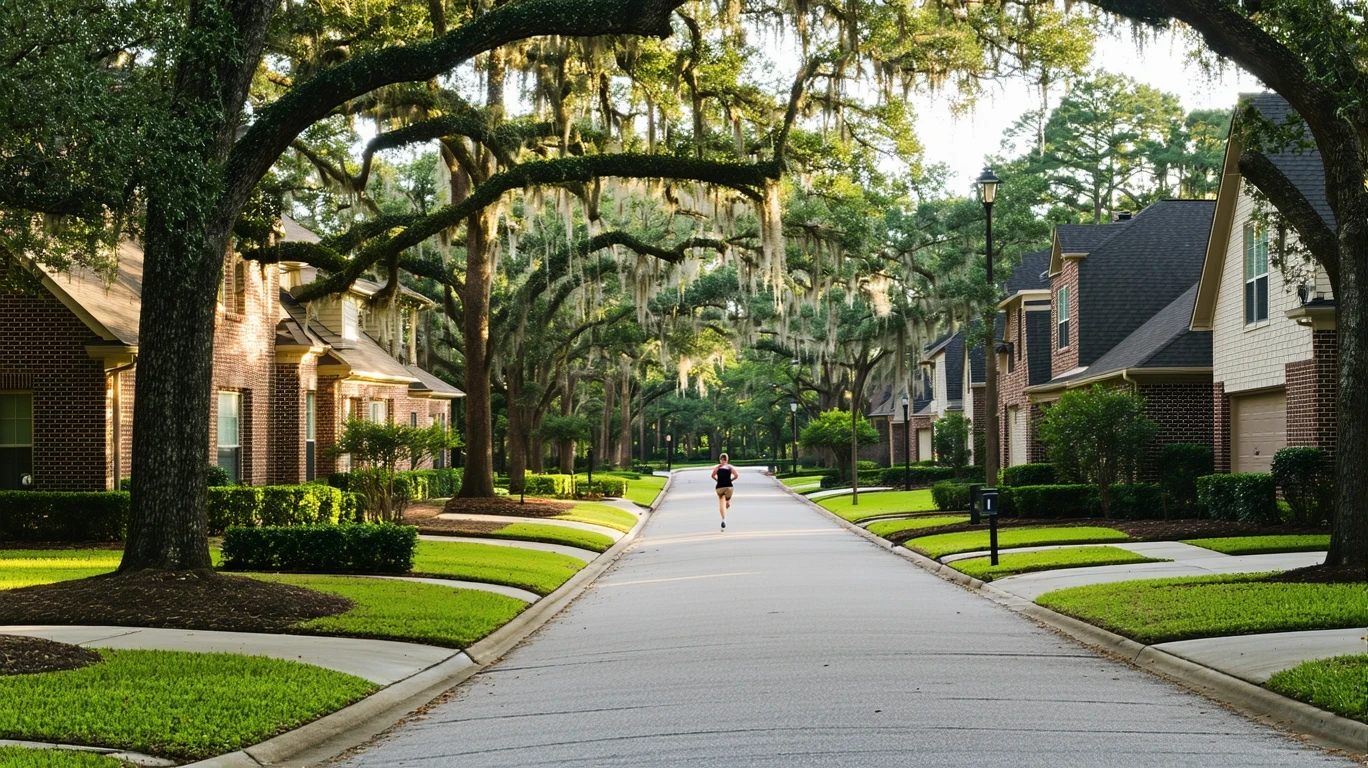
Both cities face the same brutal reality: Houston-area summers demand relentless air conditioning, and Texas’ deregulated electricity market means households bear the full weight of rate volatility and usage spikes. Humble’s electricity rate sits at 15.87¢/kWh, while The Woodlands pays 16.11¢/kWh—a negligible difference that matters far less than housing age, insulation quality, and household behavior. Natural gas pricing shows a wider gap: $19.31/MCF in Humble versus $30.71/MCF in The Woodlands. Natural gas primarily affects heating during the brief winter months and water heating year-round, so the impact is less dramatic than electricity but still notable for larger households or older homes with gas-powered systems.
The real difference in utility exposure comes down to housing stock. Humble’s older homes—many built in the 1980s and 1990s—often feature single-pane windows, older HVAC systems, and minimal insulation by modern standards. During peak summer months, cooling a 1,500-square-foot home can push electricity usage well above 1,000 kWh per month, especially if the thermostat stays below 75°F. Apartments in Humble vary widely: newer complexes may have energy-efficient units, but older buildings can be drafty and poorly sealed, leaving renters with limited control over their bills. In The Woodlands, newer construction means better insulation, double-pane windows, programmable thermostats, and HVAC systems designed for efficiency. A similarly sized home in The Woodlands may use 20–30% less electricity during peak months simply because the building envelope is tighter and the equipment is newer. The higher natural gas rate in The Woodlands is partially offset by the fact that many newer homes use electric heat pumps rather than gas furnaces, reducing winter gas consumption.
Household size and home type amplify these differences. A single adult renting a one-bedroom apartment in Humble may see modest summer bills if the unit is small and shaded, but a family in a 2,000-square-foot single-family home will face significant cooling costs with little ability to reduce usage without sacrificing comfort. In The Woodlands, families in newer homes benefit from lower per-square-foot energy costs, but the baseline is higher because homes are often larger and designed with open floor plans that require more conditioning. Renters in The Woodlands typically enjoy more predictable utility bills because apartment complexes are newer and better maintained, but they also pay higher rent that may or may not include utilities.
Utility takeaway: Humble households face higher utility volatility, especially in older single-family homes where cooling dominates summer spending and insulation is inconsistent. The Woodlands households benefit from newer construction and lower per-square-foot energy use, but larger homes and higher natural gas rates mean baseline utility spending is elevated. Families in older Humble homes experience the most exposure; renters in newer Woodlands apartments enjoy the most predictability.
Groceries and Daily Expenses
Grocery costs in both cities reflect the same regional price parity index—RPP 100—meaning baseline food prices are statistically identical. A pound of chicken, a gallon of milk, or a dozen eggs costs roughly the same whether you’re shopping in Humble or The Woodlands. But how households experience grocery spending differs based on store access, shopping habits, and the friction involved in running errands. Humble’s food and grocery establishments cluster along commercial corridors—FM 1960, Highway 59, Beltway 8—creating a car-dependent errand pattern where households batch trips to big-box stores, discount grocers, and chain supermarkets. The Woodlands, while also car-oriented, features more integrated retail within planned village centers, reducing the distance between home and grocery store and offering a mix of national chains, specialty markets, and prepared food options within closer proximity.
The real cost difference emerges in convenience spending and dining habits. Humble’s corridor-clustered layout means grocery trips often coincide with other errands—gas, pharmacy, household goods—which can encourage bulk buying and reduce per-trip costs but also increases the temptation to add non-grocery items. Dining out in Humble skews toward fast-casual chains, taco shops, and family-style restaurants where a meal for two rarely exceeds $30–$40. The Woodlands offers more upscale casual dining, bistros, and chef-driven concepts where similar meals easily run $50–$70. For households that cook most meals at home, the grocery cost difference is minimal. For those who rely on takeout, meal kits, or frequent restaurant visits, The Woodlands introduces significantly higher baseline spending.
Household size and income sensitivity shape grocery pressure differently in each city. A single adult in Humble can shop strategically at discount grocers, buy in bulk at warehouse clubs, and keep monthly grocery spending lean with minimal friction. A family of four faces higher absolute costs but benefits from Humble’s access to budget-friendly chains and the ability to stretch dollars through careful planning. In The Woodlands, single adults and couples often prioritize convenience—pre-prepped meals, organic options, specialty items—which raises per-trip spending even when total volume is low. Families in The Woodlands may spend similarly on staples but face higher pressure from convenience creep: grabbing coffee, ordering delivery, or dining out because the options are closer and more appealing.
Grocery takeaway: Humble fits households willing to plan trips, shop strategically, and prioritize price over convenience. The Woodlands fits households with higher income who value proximity, variety, and prepared food access, even when it raises baseline spending. Families managing larger grocery volumes feel less difference in staples but more difference in dining and convenience habits.
Taxes and Fees
Texas has no state income tax, so property taxes and local fees carry the full weight of funding schools, infrastructure, and municipal services in both cities. Property tax rates in the Houston metro are among the highest in the nation, typically ranging from 2.5% to 3.0% of assessed home value annually. For a homeowner in Humble with a median home value of $176,500, annual property taxes might run $4,400–$5,300 depending on the specific tax district, exemptions, and appraisal adjustments. In The Woodlands, a $456,400 home could face $11,400–$13,700 annually. These aren’t small differences—they represent $600–$700 per month in ongoing obligation that renters avoid directly but pay indirectly through landlord pass-through.
Beyond property taxes, The Woodlands introduces another layer: mandatory HOA fees. Many neighborhoods within The Woodlands require monthly or quarterly HOA payments ranging from $50 to $200+ per month, depending on the village and amenities included. These fees cover landscaping, common area maintenance, trash collection, and access to pools, parks, and fitness centers. For some households, this bundling reduces friction and provides predictable service quality. For others, it’s a non-negotiable cost that limits flexibility. Humble has fewer mandatory HOA structures, especially in older neighborhoods, which means lower recurring fees but also more variability in neighborhood upkeep and services. Homeowners in Humble handle their own landscaping, trash contracts, and exterior maintenance, which can be cheaper if managed carefully but introduces more logistical burden.
Sales taxes in both cities hover around 8.25%, covering state, county, and local portions. This affects all households equally on everyday purchases—gas, groceries, dining, retail—but the impact scales with spending. Higher-income households in The Woodlands spend more in absolute terms, so they pay more in sales tax, but it’s a smaller share of their budget. Lower-income households in Humble feel sales tax more acutely because a larger share of their income goes toward taxable consumption.
Tax and fee takeaway: Humble homeowners face lower absolute property tax bills and fewer mandatory HOA fees, which reduces ongoing obligations but increases self-management burden. The Woodlands homeowners pay significantly higher property taxes and recurring HOA fees, which front-loads cost but provides more predictable services and less logistical friction. Renters in both cities avoid direct property tax exposure but pay indirectly through rent, with The Woodlands renters absorbing higher pass-through costs.
Transportation & Commute Reality
Both Humble and The Woodlands are car-oriented suburbs where daily life assumes vehicle ownership. Humble’s infrastructure reflects typical suburban sprawl: wide arterial roads, strip malls, and residential subdivisions connected by collector streets with minimal pedestrian infrastructure. The experiential signals confirm this—pedestrian density falls below low thresholds, and the pedestrian-to-road ratio is minimal. Bus service exists, but it’s limited and designed primarily for commuters heading into Houston rather than intra-city errands. For most Humble residents, a car isn’t optional—it’s the only practical way to get to work, buy groceries, or access services. Gas prices in Humble sit at $2.82/gal, which is higher than The Woodlands’ $2.41/gal, a difference that adds up for households driving 25+ miles daily for work or errands.
The Woodlands shares the same car dependency but with slightly different texture. The master-planned layout includes internal pathways, bike trails, and village centers designed to reduce some short trips, but the scale of the community still requires a car for most daily needs. The lower gas price—$2.41/gal—provides modest relief for commuters, especially those driving into Houston or to nearby employment hubs. However, The Woodlands’ location farther north means longer commutes for many workers, which can offset the per-gallon savings with higher total mileage. Both cities lack rail transit, and neither offers walkable urban density that would allow households to reduce car reliance meaningfully.
Transportation costs in both cities are less about the price per gallon and more about distance, frequency, and vehicle maintenance. A household in Humble commuting 30 miles round-trip daily will spend more on gas than a household in The Woodlands commuting 20 miles, even with the higher per-gallon rate. Families managing multiple vehicles—common in both cities—face compounded costs: insurance, registration, maintenance, and fuel. The Woodlands’ newer roads and better-maintained infrastructure may reduce wear-and-tear costs slightly, but the difference is marginal. The real transportation pressure comes from time: longer commutes mean less flexibility for errands, childcare, and household logistics, which can push families toward convenience spending elsewhere.
Cost Structure Comparison
Housing pressure dominates the cost experience in both cities, but the nature of that pressure differs. In Humble, lower home values and rents reduce the entry barrier, making homeownership and rental access feasible for households earning closer to the city’s median income of $58,581 per year. However, older housing stock introduces maintenance unpredictability, and lower home values mean less equity accumulation over time. In The Woodlands, housing costs are front-loaded—higher down payments, larger monthly obligations, steeper property taxes—but newer construction and HOA-managed services reduce ongoing variability and logistical burden. Households earning closer to The Woodlands’ median income of $142,384 per year can absorb these costs more comfortably, but the financial commitment is rigid and leaves less room for error.
Utilities introduce more volatility in Humble, especially for families in older single-family homes where cooling costs spike unpredictably during summer months. The Woodlands benefits from newer, more efficient housing stock, which stabilizes utility spending but doesn’t eliminate it—larger homes and higher baseline usage mean bills are still substantial. Grocery and daily spending show minimal structural difference in staple costs, but The Woodlands’ proximity to upscale dining and convenience options creates more opportunity for spending creep. Humble households who plan carefully and batch errands can keep grocery costs lean, but the car-dependent layout adds time and fuel costs to every trip.
Transportation patterns matter more in Humble, where higher gas prices and corridor-clustered errands mean more driving and more fuel consumption. The Woodlands’ lower gas price provides modest relief, but longer commutes for some households offset the savings. Taxes and fees hit harder in The Woodlands—both in absolute property tax dollars and mandatory HOA obligations—but the services provided reduce friction and self-management burden. Humble homeowners pay less in recurring fees but shoulder more responsibility for maintenance, landscaping, and service coordination.
The decision isn’t about which city costs less—it’s about which cost structure aligns with your household’s income, priorities, and tolerance for variability. Households sensitive to entry costs, flexibility, and self-management may prefer Humble. Households prioritizing predictability, newer infrastructure, and reduced logistical friction may prefer The Woodlands, even at significantly higher baseline expense.
How the Same Income Feels in Humble vs The Woodlands
Single Adult
For a single adult, housing becomes the first non-negotiable cost, and the difference between $1,123 and $1,723 in monthly rent determines how much flexibility remains for everything else. In Humble, lower rent leaves more room for discretionary spending, savings, or debt repayment, but the car-oriented layout means every errand requires planning and fuel. In The Woodlands, higher rent consumes a larger share of income upfront, but proximity to services and maintained amenities reduces time cost and logistical friction. Utilities in Humble can swing unpredictably in summer, especially in older apartments, while The Woodlands offers more stable bills in newer units. The tradeoff is between cash flexibility and convenience predictability.
Dual-Income Couple
For a dual-income couple, housing still dominates, but the ability to split costs makes higher rent or mortgage payments more manageable in The Woodlands, especially if both partners earn above-median income. In Humble, lower housing costs free up income for travel, dining, or savings, but managing two commutes in a car-dependent suburb adds time pressure and coordination complexity. Grocery spending remains similar in both cities for couples who cook at home, but The Woodlands introduces more temptation to outsource meals or pay for convenience. Utilities in Humble require more active management—adjusting thermostats, monitoring usage—while The Woodlands’ newer housing stock reduces that friction. The decision hinges on whether the couple values cash savings or time savings more.
Family with Kids
For families, housing, utilities, and logistics costs all escalate, and the differences between Humble and The Woodlands become more pronounced. In Humble, lower home values make ownership accessible, but older homes mean higher cooling costs, more frequent repairs, and less predictable monthly spending. Families must manage their own landscaping, coordinate trash service, and handle maintenance, which adds logistical burden. In The Woodlands, higher home values and mandatory HOA fees front-load costs, but newer homes, bundled services, and maintained green space reduce ongoing friction. School density in Humble falls below low thresholds, meaning families may face longer drives for extracurriculars or childcare. The Woodlands offers more established family infrastructure, but the higher baseline cost assumes stable, above-median household income. The tradeoff is between lower entry costs with more self-management versus higher predictable costs with less friction.
Decision Matrix: Which City Fits Which Household?
| Decision factor | If you’re sensitive to this… | Humble tends to fit when… | The Woodlands tends to fit when… |
|---|---|---|---|
| Housing entry + space needs | You prioritize lower down payments, smaller monthly obligations, and flexibility to move or upgrade later. | You’re a first-time buyer, renter, or household earning closer to median income and willing to manage older housing stock. | You have stable above-median income, value newer construction, and prefer predictable HOA-managed services over self-management. |
| Transportation dependence + commute friction | You drive daily for work and errands, and fuel costs and time spent in the car affect your budget and schedule. | You work closer to Humble or northeast Houston and can tolerate higher gas prices in exchange for shorter commute distance. | You work farther north or can absorb longer commutes in exchange for lower gas prices and better-maintained roads. |
| Utility variability + home size exposure | You want to control or predict monthly utility bills and avoid surprise spikes during extreme weather. | You’re willing to actively manage thermostat settings, accept some seasonal volatility, and prioritize lower baseline housing costs over energy efficiency. | You value newer, better-insulated homes that reduce per-square-foot energy use and stabilize bills, even if baseline usage is higher due to larger home size. |
| Grocery strategy + convenience spending creep | You want to minimize food and dining costs through careful planning and bulk shopping, or you value proximity to upscale dining and prepared food options. | You’re comfortable batching errands, shopping at discount grocers, and cooking most meals at home to keep spending lean. | You prioritize convenience, proximity to specialty markets, and access to dining options, even if it raises baseline spending. |
| Fees + friction costs (HOA, services, upkeep) | You want to minimize recurring fees and maintain control over how services are managed, or you prefer bundled services that reduce self-management burden. | You’re willing to handle your own landscaping, trash, and maintenance to avoid mandatory HOA fees and retain flexibility. | You value predictable, bundled services and maintained common areas, even if it means higher recurring fees and less control over service choices. |
| Time budget (schedule flexibility, errands, logistics) | You need to minimize time spent on errands, maintenance, and household logistics because of work, family, or personal priorities. | You have flexible schedules, can batch errands efficiently, and don’t mind self-managing home and yard maintenance. | You have limited time for errands and maintenance and prefer proximity to services, maintained infrastructure, and reduced logistical friction. |
Lifestyle Fit
Humble and The Woodlands offer distinct lifestyle textures shaped by infrastructure, community design, and the rhythm of daily life. Humble is a working-class suburb with a straightforward, no-frills character. Errands happen along commercial corridors—FM 1960, Highway 59—where chain restaurants, big-box stores, and service providers cluster in strip malls and shopping centers. The layout assumes car ownership and rewards efficiency: batch your trips, know your routes, and plan ahead. There’s little pretense here—Humble is a place where people work, raise families, and manage budgets without expecting curated experiences or polished aesthetics. Parks exist, and green space is present, but outdoor recreation requires intentionality rather than spontaneous access. For households comfortable with self-reliance and willing to trade convenience for lower baseline costs, Humble delivers functional suburban living without the premium.
The Woodlands, by contrast, is a master-planned community designed around quality-of-life amenities and aesthetic consistency. Village centers integrate retail, dining, and services within walking or short driving distance of residential neighborhoods, reducing the friction of daily errands. The community features extensive walking and biking trails, maintained green space, and recreational facilities that encourage outdoor activity without requiring long drives. The Woodlands attracts families, professionals, and retirees who value predictability, maintained infrastructure, and a polished suburban environment. Cultural amenities—performing arts venues, seasonal festivals, farmers markets—are woven into the community fabric, creating a sense of place beyond just housing. The tradeoff is higher cost and less flexibility: HOA rules govern exterior appearance, and the community’s design assumes stable, above-median income.
Both cities are car-dependent, but the experience of car dependency differs. In Humble, driving is purely functional—getting from home to work, store to store, errand to errand. In The Woodlands, driving is shorter and more pleasant, with tree-lined streets, well-maintained roads, and less visual clutter. For families, The Woodlands offers more established infrastructure for kids—playgrounds, sports leagues, community events—though school density in Humble is lower, meaning families may need to drive farther for extracurriculars. Healthcare access is strong in both cities: Humble has a hospital and pharmacies present, while The Woodlands benefits from proximity to major medical centers in the broader Houston metro.
Quick fact: Humble’s low-rise, car-oriented layout means most daily needs are met within a 10-minute drive, but walkability is minimal.
Quick fact: The Woodlands’ master-planned design includes over 200 miles of pathways, though most residents still drive for groceries and work commutes.
Frequently Asked Questions
Is Humble or The Woodlands better for renters in 2026?
Humble offers lower rent—$1,123 per month versus $1,723 per month in The Woodlands—which provides more breathing room for renters earning closer to median income. However, The Woodlands’ higher rent often includes access to newer apartments, better-maintained complexes, and proximity to services that reduce daily friction. Renters prioritizing cash flexibility and willing to manage older housing stock may prefer Humble. Renters valuing predictability, amenities, and reduced logistical burden may find The Woodlands worth the premium, especially if income supports it.
How do utility costs compare between Humble and The Woodlands in 2026?
Electricity rates are nearly identical—15.87¢/kWh in Humble versus 16.11¢/kWh in The Woodlands—but housing age drives the real difference. Humble’s older homes often lack modern insulation and efficient HVAC systems, leading to higher summer cooling costs and more volatile bills. The Woodlands’ newer construction reduces per-square-foot energy use, stabilizing utility spending even in larger homes. Natural gas is more expensive in The Woodlands—$30.71/MCF versus $19.31/MCF—but many newer homes use electric heat pumps, reducing winter gas consumption. Families in older Humble homes face the most utility volatility; renters in newer Woodlands apartments enjoy the most predictability.
Which city is better for families trying to manage housing and daily costs in 2026?
Humble fits families prioritizing lower home entry costs and willing to manage older housing stock, self-coordinate services, and accept some maintenance unpredictability. The median home value of $176,500 makes ownership accessible for households earning closer to the city’s median income. The Woodlands fits families with stable above-median income who value newer homes, HOA-managed services, and established family infrastructure, even at significantly higher cost. The median home value of $456,400 requires more upfront capital and higher monthly obligations, but it reduces ongoing friction and provides more predictable services. The decision hinges on whether the family prioritizes entry affordability or long-term predictability.
Do transportation costs differ much between Humble and The Woodlands in 2026?
Gas prices are lower in The Woodlands—$2.41/gal versus $2.82/gal in Humble—but total transportation costs depend more on commute distance and daily driving patterns than per-gallon price. Both cities are car-oriented, and most households drive daily for work, errands, and services. Humble’s corridor-clustered layout means more driving for errands, while The Woodlands’ village centers reduce some short trips. However, The Woodlands’ location farther north can mean longer commutes for households working in central Houston, offsetting the lower gas price. Families managing multiple vehicles in either city face similar insurance, maintenance, and registration costs.
How do taxes and fees shape the cost difference between Humble and The Woodlands in 2026?
Property taxes hit harder in The Woodlands due to higher home values—$456,400 versus $176,500 in Humble—resulting in annual tax bills that can exceed $11,000 compared to $4,000–$5,000 in Humble. The Woodlands also requires mandatory HOA fees in many neighborhoods,