
Humble and Katy sit within the same Houston metro area, share the same regional price environment, and both offer suburban living with access to the city’s job market. Yet the cost pressures households face in each place differ in meaningful ways—not because one is universally cheaper, but because the structure of expenses, the timing of financial obligations, and the trade-offs between housing, transportation, and daily logistics play out differently depending on income level, household composition, and lifestyle priorities in 2026.
People compare these two cities because they represent distinct suburban strategies within the same region. Humble offers lower housing entry costs and a more established, car-oriented layout with food and services clustered along corridors. Katy presents higher housing entry barriers but also higher median incomes, longer documented commutes, and a newer suburban infrastructure. The decision between them isn’t about which costs less overall—it’s about which cost pressures a household can absorb, which trade-offs align with daily routines, and where financial flexibility matters most.
This article breaks down how housing, utilities, groceries, transportation, taxes, and lifestyle factors create different financial experiences in Humble versus Katy. It explains where costs concentrate, which households feel specific pressures more acutely, and how the same income can feel stable in one city and stretched in the other—without declaring a winner or calculating total affordability.
Housing Costs
Housing represents the most visible cost difference between Humble and Katy. Humble’s median home value sits at $176,500, while Katy’s reaches $359,800. Median gross rent in Humble runs $1,123 per month compared to Katy’s $1,444 per month. These aren’t small gaps—they reflect fundamentally different housing markets within the same metro area, shaped by development timing, school district reputations, and proximity to employment corridors.
For renters, the monthly obligation difference matters immediately. Humble’s lower rent baseline creates more breathing room for households managing tighter budgets, particularly single adults or younger couples still building savings. Katy’s higher rent reflects newer construction, larger floor plans, and amenities that appeal to families prioritizing space and school access. The rent gap isn’t just about square footage—it’s about predictability. Newer buildings in Katy may offer more stable utility performance and lower maintenance friction, while older stock in Humble may introduce variability in heating and cooling efficiency.
For buyers, the home value difference translates into down payment requirements, mortgage approval thresholds, and ongoing property tax exposure. A household aiming for a conventional loan in Katy faces a substantially higher entry barrier, which can delay homeownership or require dual incomes to qualify comfortably. Humble’s lower entry point opens homeownership to single-income households or those with modest savings, though it also reflects an older housing stock that may require more upkeep over time. Property taxes in Texas apply uniformly at the local level, so the higher home values in Katy generate higher annual tax bills even at identical rates—a recurring cost that doesn’t disappear after the mortgage is paid.
| Housing Type | Humble | Katy |
|---|---|---|
| Median Home Value | $176,500 | $359,800 |
| Median Gross Rent | $1,123/month | $1,444/month |
The housing cost difference affects household types unevenly. First-time buyers with limited savings face fewer barriers in Humble, where lower home values reduce down payment hurdles and monthly mortgage obligations. Families prioritizing school quality and newer construction may find Katy’s higher costs justified by access to highly rated districts and modern amenities. Renters sensitive to monthly cash flow will feel Katy’s higher rent immediately, while those prioritizing long-term equity building may accept higher entry costs in exchange for stronger appreciation potential in Katy’s newer developments.
Housing takeaway: Humble’s lower housing entry costs favor households with tighter budgets, single-income buyers, or renters prioritizing monthly flexibility. Katy’s higher housing costs reflect newer stock, larger homes, and school access, fitting dual-income families willing to absorb higher entry barriers and ongoing property tax exposure in exchange for space and infrastructure quality.
Utilities and Energy Costs
Utility costs in Humble and Katy respond to the same Gulf Coast climate—long, humid summers requiring sustained air conditioning and mild winters with occasional heating demand. Both cities face similar cooling exposure, but differences in housing stock age, natural gas pricing, and home size create distinct cost experiences. Humble’s electricity rate sits at 15.87¢/kWh, while Katy’s runs slightly higher at 16.11¢/kWh. The difference is modest, but natural gas pricing diverges more sharply: Humble’s natural gas costs $19.31/MCF compared to Katy’s $30.71/MCF.
The natural gas price gap matters most during winter months when heating demand rises, though Texas winters remain mild compared to northern climates. Households in Katy face higher exposure to natural gas costs, which can add volatility to winter utility bills, particularly in larger single-family homes with older HVAC systems. Humble’s lower natural gas pricing offers more predictability for households relying on gas heating, though the overall impact depends on home size, insulation quality, and thermostat discipline. Cooling costs dominate the annual utility budget in both cities, driven by extended summer heat and high humidity that keeps air conditioning running from late spring through early fall.
Housing stock differences amplify utility cost variation. Katy’s newer construction typically includes better insulation, modern HVAC systems, and energy-efficient windows, which can offset the slightly higher electricity rate and reduce baseline usage. Humble’s older housing stock may lack these efficiencies, leading to higher cooling costs in summer despite the marginally lower electricity rate. Apartment dwellers in both cities benefit from smaller conditioned spaces and shared wall insulation, which reduces exposure to temperature extremes. Single-family homeowners, particularly those in larger homes, face greater utility volatility and higher absolute costs regardless of city.
Household size and daily routines shape utility exposure beyond climate and rates. Families with multiple occupants generate higher baseline usage through laundry, cooking, and extended HVAC runtime. Single adults or couples working outside the home reduce daytime cooling demand, lowering monthly bills. Households working from home in either city face higher utility costs year-round, as continuous occupancy eliminates the savings from reduced daytime usage. Time-of-use billing structures, where available, reward households that can shift usage to off-peak hours, though this requires schedule flexibility that not all households possess.
Utility takeaway: Katy’s higher natural gas pricing introduces more winter volatility, particularly for larger homes, while its newer housing stock may offset electricity costs through better efficiency. Humble’s lower natural gas costs and slightly lower electricity rate favor predictability, though older housing stock can erode those advantages through higher cooling demand. Households in larger single-family homes face greater utility exposure in both cities, while apartment dwellers and those in newer construction experience more stable, predictable bills.
Groceries and Daily Expenses
Grocery and daily spending pressure in Humble and Katy reflects similar regional pricing—both cities share the same RPP index of 100, indicating no systematic price difference at the metro level. Yet the experience of grocery shopping and managing everyday expenses differs based on store access, household size, and the friction costs of running errands in car-dependent environments. Humble’s experiential signals show food and grocery options concentrated along corridors, meaning households plan trips around specific routes rather than walking to nearby stores. Katy lacks comparable experiential data, but its newer suburban layout suggests similar car-oriented access patterns.
Grocery staples—bread, eggs, milk, chicken, ground beef—carry similar price tags in both cities, with minor variation driven by store format rather than location. Big-box retailers, discount grocers, and regional chains operate in both areas, giving households flexibility to trade convenience for savings. Families managing larger grocery volumes benefit from bulk purchasing at warehouse clubs, which requires upfront membership costs and storage space but reduces per-unit prices. Single adults and couples face less pressure to optimize grocery spending but may lean more heavily on prepared foods, takeout, and convenience items that carry higher per-serving costs.
Dining out and convenience spending introduce more variability than grocery staples. Katy’s higher median income supports a broader range of dining options, from fast-casual chains to sit-down restaurants, which can tempt households into higher discretionary spending. Humble’s corridor-clustered food access means dining options concentrate along major routes, reducing spontaneous spending but requiring more intentional trip planning. Households sensitive to convenience spending creep—frequent coffee runs, takeout meals, impulse purchases—face similar exposure in both cities, though Katy’s denser commercial development may present more opportunities for unplanned spending.
Household composition drives grocery cost pressure more than location. Families with children face higher absolute grocery costs due to volume, dietary variety, and the challenge of managing preferences across multiple people. Couples and single adults spend less in absolute terms but may experience higher per-person costs if they rely on smaller package sizes, prepared foods, or frequent dining out. Price sensitivity matters most for households operating on tighter budgets, where the difference between discount and premium grocery formats translates into meaningful monthly savings. Households with more income flexibility can prioritize convenience, quality, or specialty items without disrupting their overall financial stability.
Grocery takeaway: Grocery prices remain similar across Humble and Katy due to shared regional pricing, but access patterns differ. Humble’s corridor-clustered food options require more intentional trip planning, while Katy’s layout likely mirrors this car-oriented structure. Families feel grocery pressure most acutely due to volume and variety demands, while single adults and couples face less absolute cost but may spend more per person on convenience. Price sensitivity depends more on household budget discipline than city choice.
Taxes and Fees
Texas relies heavily on property taxes to fund local services, schools, and infrastructure, meaning homeowners in both Humble and Katy face recurring tax obligations that scale with home values. Katy’s higher median home value of $359,800 generates substantially higher annual property tax bills compared to Humble’s $176,500 median, even at identical tax rates. This difference persists year after year, creating a long-term cost gap that doesn’t diminish with mortgage payoff. Renters don’t pay property taxes directly, but landlords pass those costs through in monthly rent, so the higher property tax exposure in Katy contributes to its higher median rent of $1,444 per month versus Humble’s $1,123 per month.
Sales taxes apply uniformly across the Houston metro area, so households in Humble and Katy face the same consumption tax burden on everyday purchases. The difference lies in how much households spend, not the tax rate itself. Higher-income households in Katy may generate higher absolute sales tax payments through larger discretionary purchases, but the rate remains constant. Property taxes, by contrast, vary based on assessed home values and local district rates, making them the primary tax differentiator between the two cities.
HOA fees, trash collection, water, and sewer charges introduce additional recurring costs that vary by neighborhood and housing type. Katy’s newer master-planned communities often include HOA fees that bundle landscaping, amenity access, and shared infrastructure maintenance. These fees add predictability—households know the monthly cost upfront—but they also add a fixed obligation that doesn’t fluctuate with usage. Humble’s older neighborhoods may have lower or nonexistent HOA fees, reducing monthly obligations but shifting maintenance responsibility to individual homeowners. Trash, water, and sewer fees apply in both cities, though rates and billing structures vary by municipal provider.
Homeowners face the full weight of property taxes and fees, making these costs a significant factor in long-term affordability. A household planning to stay several years must account for property tax exposure, which rises with home values and can increase over time as assessments adjust. Renters experience these costs indirectly through rent, but they avoid the volatility and direct responsibility of tax payments. Recent movers to Katy may underestimate the ongoing tax burden if they focus solely on mortgage affordability, while long-term residents in Humble benefit from lower property tax exposure even as home values appreciate modestly.
Taxes and fees takeaway: Katy’s higher home values generate substantially higher property tax obligations, creating a recurring cost gap that affects homeowners year after year. Humble’s lower home values reduce property tax exposure, favoring long-term residents and single-income buyers. HOA fees add predictability in Katy’s newer communities but increase fixed monthly costs, while Humble’s older neighborhoods may offer lower fees at the expense of individual maintenance responsibility. Renters in both cities experience tax and fee pressure indirectly through rent, but homeowners bear the full structural difference.
Transportation and Commute Reality
Transportation costs in Humble and Katy reflect car dependency, commute length, and fuel pricing rather than transit alternatives. Katy reports an average commute time of 29 minutes, with 48.4% of workers facing long commutes and 13.5% working from home. Humble lacks comparable commute data, but its experiential signals confirm car-oriented infrastructure with minimal pedestrian density and bus-only transit service. Both cities require cars for daily errands, work commutes, and household logistics, meaning transportation costs concentrate in fuel, maintenance, insurance, and vehicle depreciation rather than transit fares or walkable access.
Fuel pricing differs modestly between the two cities. Humble’s gas price sits at $2.82/gal, while Katy’s runs lower at $2.40/gal. The gap matters most for households driving long distances regularly—Katy’s documented long commute percentage suggests many residents absorb significant fuel costs despite the lower per-gallon price. Humble’s higher gas price affects households similarly dependent on cars, though the absence of commute data prevents direct comparison of trip length or frequency. Both cities require households to budget for fuel as a recurring, non-negotiable expense, with costs scaling based on commute distance, errands frequency, and vehicle efficiency.
Commute time introduces a cost beyond fuel—time itself. Katy’s 29-minute average commute translates to nearly an hour of daily travel for round-trip commuters, reducing time available for household tasks, childcare, or personal activities. Households with two working adults face compounded time costs, particularly if both partners commute in opposite directions or work non-standard hours. Humble’s car-oriented layout and corridor-clustered errands suggest similar time costs for commuting and daily logistics, though the lack of specific commute data limits precise comparison. Working from home eliminates commute time and fuel costs but increases utility exposure, as discussed earlier.
Car dependence affects household types unevenly. Single adults managing one vehicle face lower absolute transportation costs but less flexibility if the car requires repair or maintenance. Dual-income couples often require two vehicles, doubling insurance, registration, and maintenance costs. Families with teenage drivers add a third vehicle, further increasing fixed transportation obligations. Households in either city gain no meaningful relief from transit—Humble’s bus service exists but doesn’t eliminate car dependency, and Katy lacks experiential transit data to suggest otherwise. Transportation costs remain high, predictable, and unavoidable for nearly all households in both cities.
Cost Structure Comparison
Housing dominates the cost experience differently in Humble and Katy. Humble’s lower home values and rent create a more accessible entry point, reducing the upfront financial barrier for renters and first-time buyers. Katy’s higher housing costs reflect newer construction, larger homes, and school district access, but they also generate higher property tax exposure and require higher incomes to qualify for mortgages. Households prioritizing lower monthly housing obligations or faster paths to homeownership face less pressure in Humble. Those willing to absorb higher entry costs in exchange for newer infrastructure and space find Katy’s housing market aligned with those priorities, provided their income supports the higher baseline.
Utilities introduce more volatility in Katy due to higher natural gas pricing, particularly for larger single-family homes during winter months. Humble’s lower natural gas costs and slightly lower electricity rate offer more predictability, though older housing stock can erode efficiency gains and increase cooling costs. Households in newer construction—more common in Katy—benefit from better insulation and modern HVAC systems, which can offset higher utility rates. Apartment dwellers in both cities experience more stable utility costs due to smaller conditioned spaces, while single-family homeowners face greater exposure to seasonal swings and home size effects.
Grocery and daily spending pressure remains similar across both cities due to shared regional pricing, but access patterns differ. Humble’s corridor-clustered food options require intentional trip planning, while Katy’s layout likely mirrors this car-oriented structure. Families managing larger grocery volumes feel cost pressure most acutely, regardless of city, while single adults and couples face lower absolute costs but may spend more per person on convenience. Price sensitivity depends more on household budget discipline and store format choices than location.
Transportation patterns matter more in Katy, where documented long commutes affect nearly half of workers and average commute times reach 29 minutes. Humble’s car-oriented infrastructure suggests similar dependence, though the absence of commute data limits direct comparison. Both cities require cars for daily life, meaning transportation costs remain high and predictable. Katy’s lower gas price offers modest relief, but longer commutes can offset that advantage through higher total fuel consumption. Time costs—commute duration, errands logistics—affect dual-income households and families most severely, reducing flexibility and increasing schedule complexity.
The better choice depends on which costs dominate the household. Households sensitive to housing entry barriers may prefer Humble’s lower home values and rent, accepting older housing stock and corridor-based errands in exchange for monthly flexibility. Households prioritizing newer construction, school access, and larger homes may find Katy’s higher costs justified, provided their income supports the higher baseline and they can absorb property tax exposure over time. For single adults and couples, the difference is less about price and more about predictability—Humble offers lower entry costs but older infrastructure, while Katy offers newer amenities but higher recurring obligations.
How the Same Income Feels in Humble vs Katy
Single Adult
Housing becomes the first non-negotiable cost, and the difference between Humble’s lower rent and Katy’s higher baseline determines how much remains for savings, transportation, and discretionary spending. Flexibility exists in grocery format choices and dining frequency, but car dependency eliminates transportation savings in both cities. Humble’s lower housing entry point creates more breathing room for building emergency savings or managing irregular expenses, while Katy’s higher rent compresses monthly flexibility unless income rises to match. The role of commute friction matters less for single adults without childcare logistics, but time costs still accumulate through longer drives and corridor-based errands.
Dual-Income Couple
Housing costs become more manageable with two incomes, but transportation costs double with two vehicles, two commutes, and two sets of fuel and maintenance obligations. Flexibility exists in housing choice—Katy’s higher costs become accessible with dual incomes, while Humble’s lower baseline accelerates savings or debt payoff. The role of commute friction intensifies if both partners work in opposite directions or face long commutes, reducing time available for household tasks and increasing reliance on convenience spending. Predictability matters more than absolute cost—couples in Katy face higher fixed obligations but gain access to newer infrastructure, while couples in Humble trade lower costs for older housing stock and potential maintenance variability.
Family with Kids
Housing space becomes non-negotiable, and the difference between Humble’s lower entry costs and Katy’s larger, newer homes shapes long-term financial stability. Flexibility disappears in groceries—volume demands rise, and price sensitivity increases—but the real pressure comes from time costs. School proximity, childcare logistics, and errands complexity multiply in car-dependent environments, making commute length and daily trip planning critical factors. Katy’s higher housing costs and property tax exposure require higher household income to maintain stability, but access to highly rated schools and newer infrastructure may justify the trade-off. Humble’s lower costs create more monthly flexibility, but older housing stock and corridor-clustered services introduce friction that families with tight schedules feel acutely.
Decision Matrix: Which City Fits Which Household?
| Decision Factor | If You’re Sensitive to This… | Humble Tends to Fit When… | Katy Tends to Fit When… |
|---|---|---|---|
| Housing entry + space needs | Down payment size, monthly rent, mortgage qualification thresholds | You prioritize lower entry barriers and can accept older housing stock | You have higher income and prioritize newer construction and larger floor plans |
| Transportation dependence + commute friction | Commute length, fuel costs, time lost to driving | You accept car dependency and corridor-based errands with modest commute exposure | You tolerate longer documented commutes and higher time costs for newer suburban infrastructure |
| Utility variability + home size exposure | Seasonal bill swings, heating and cooling efficiency, natural gas pricing | You value lower natural gas costs and slightly lower electricity rates despite older housing stock | You benefit from newer construction efficiency but face higher natural gas pricing and larger home exposure |
| Grocery strategy + convenience spending creep | Bulk purchasing, dining out frequency, impulse discretionary spending | You plan trips intentionally around corridor-clustered options and manage spending discipline | You navigate similar car-oriented access but may face more dining and convenience temptations |
| Fees + friction costs (HOA, services, upkeep) | Property taxes, HOA fees, maintenance responsibility, recurring obligations | You accept lower or no HOA fees and individual maintenance responsibility for lower property tax exposure | You absorb higher property taxes and HOA fees in exchange for bundled services and predictable upkeep |
| Time budget (schedule flexibility, errands, logistics) | Commute duration, errands complexity, childcare proximity, daily trip planning | You manage corridor-based errands and accept car dependency with less documented commute friction | You tolerate longer average commutes and higher long-commute percentages for access to newer amenities |
Lifestyle Fit
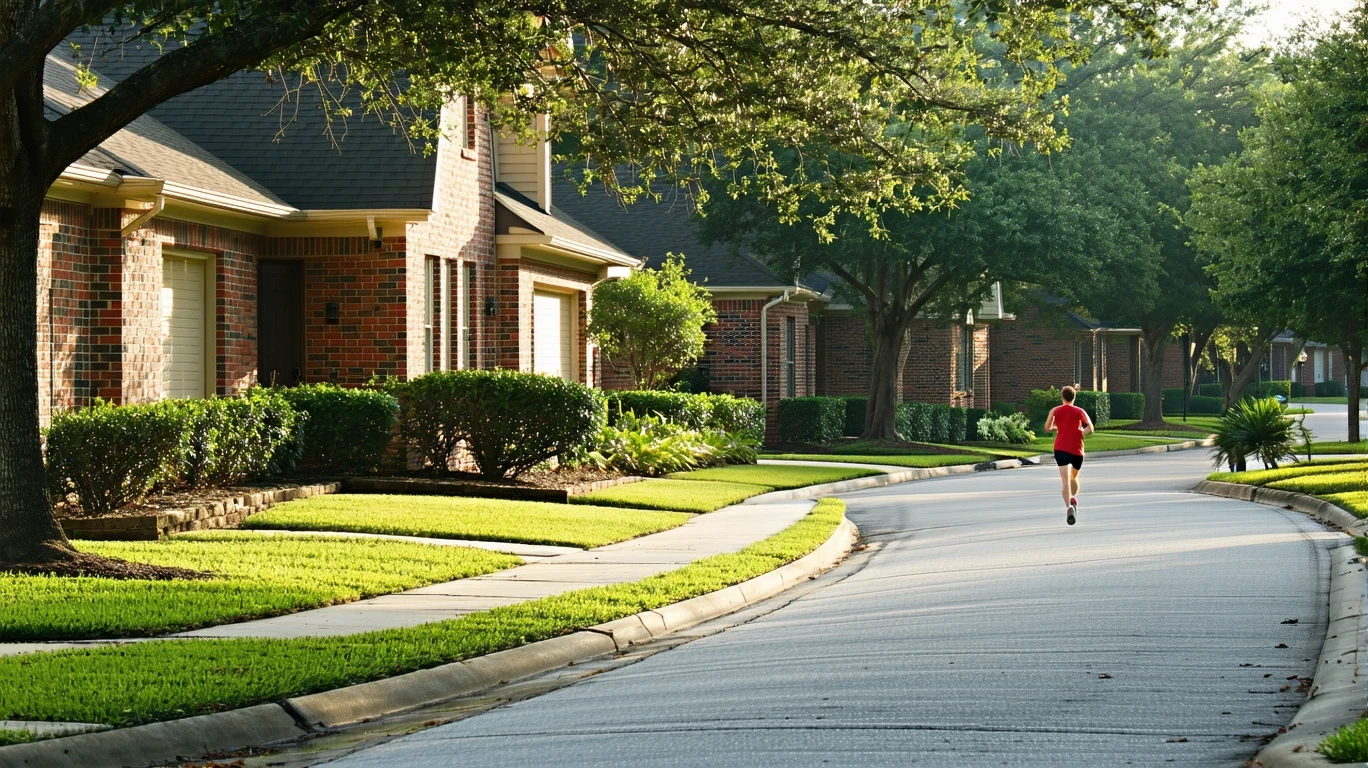
Humble and Katy offer distinct suburban lifestyles within the same Houston metro area, shaped by development timing, infrastructure age, and community character. Humble’s low-rise, car-oriented layout reflects an older suburban pattern, with food and services concentrated along corridors and parks present but not densely distributed. A hospital and pharmacies provide healthcare access, but school density falls below typical thresholds, suggesting families may need to navigate district boundaries or consider private options. The city’s experiential signals confirm limited pedestrian infrastructure and bus-only transit, meaning daily life revolves around driving, trip planning, and managing errands along established routes.
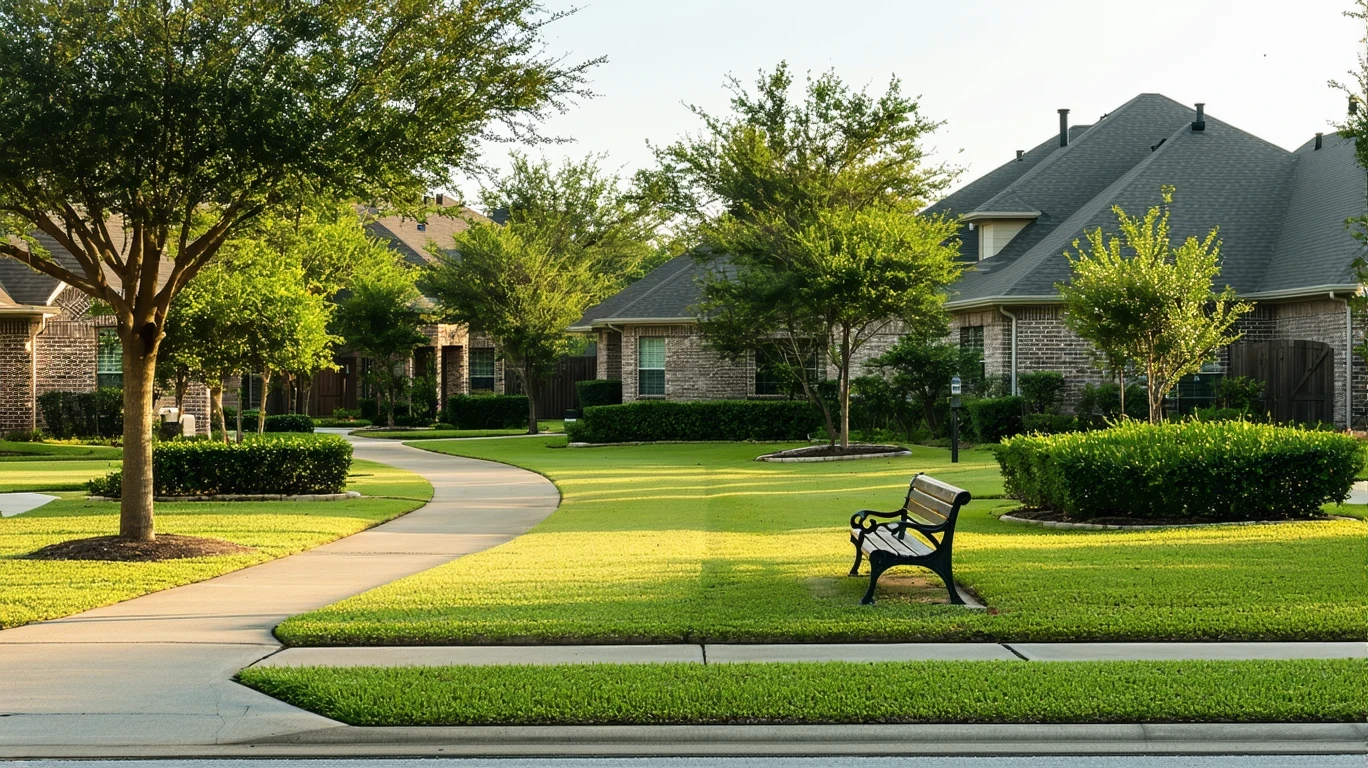
Katy’s newer suburban infrastructure appeals to families prioritizing modern amenities, highly rated schools, and master-planned communities with recreational facilities. The city’s documented commute patterns—29-minute average, 48.4% long commutes—reflect its role as a bedroom community for Houston’s western employment corridors. Households working from home (13.5%) avoid commute time costs but face higher utility exposure, as discussed earlier. Katy’s lifestyle centers on space, school access, and newer construction, with trade-offs in commute length and higher housing costs shaping daily routines.
Lifestyle factors indirectly affect costs in both cities. Humble’s older housing stock may require more maintenance and upkeep, increasing friction costs for homeowners who lack time or budget for repairs. Katy’s newer construction reduces maintenance variability but locks households into higher property tax obligations and HOA fees that bundle services. Humble’s corridor-clustered errands require intentional trip planning, which can reduce impulse spending but increases time costs for households managing complex schedules. Katy’s layout likely mirrors this car-oriented structure, though the absence of experiential data limits direct comparison of daily logistics friction.
Humble’s median household income sits at $58,581 per year, while Katy’s reaches $114,917 per year—a substantial gap that shapes not just housing affordability but also the baseline financial flexibility households experience in each city. Unemployment rates remain low in both cities: 4.4% in Humble and 4.1% in Katy, indicating stable job markets within the broader Houston metro economy. Current weather conditions show Humble at 71°F (feels like 72°F) and Katy at 68°F (feels like 69°F), reflecting the mild Gulf Coast climate that drives extended cooling seasons and shapes utility cost exposure year-round.
Frequently Asked Questions
Is Humble or Katy cheaper for renters in 2026?
Humble’s median gross rent of $1,123 per month creates a lower monthly obligation compared to Katy’s $1,444 per month, reducing immediate cash flow pressure for renters. The difference reflects housing stock age, floor plan size, and school district access rather than a universal cost-of-living gap. Renters prioritizing lower monthly costs and tolerance for older construction may find Humble’s rent baseline more manageable, while those valuing newer amenities and larger spaces may justify Katy’s higher rent if their income supports it.
How do housing costs in Humble and Katy affect first-time homebuyers in 2026?
Humble’s median home value of $176,500 lowers the down payment barrier and reduces mortgage qualification thresholds, making homeownership more accessible for single-income households or those with modest savings. Katy’s median home value of $359,800 requires substantially higher upfront capital and ongoing property tax exposure, fitting dual-income buyers or those prioritizing newer construction and school access. The cost difference isn’t just entry—it’s recurring, as higher home values generate higher property tax bills year after year.
Which city has lower utility costs, Humble or Katy, in 2026?
Humble’s electricity rate (15.87¢/kWh) and natural gas price ($19.31/MCF) run lower than Katy’s electricity rate (16.11¢/kWh) and natural gas price ($30.71/MCF), creating more predictable utility costs, particularly during winter heating months. However, Katy’s newer housing stock often includes better insulation and modern HVAC systems, which can offset higher rates through reduced usage. Households in older homes in Humble may face higher cooling costs despite lower rates, while those in newer Katy construction benefit from efficiency gains that stabilize bills.
Do commute costs differ between Humble and Katy in 2026?
Katy’s documented average commute time of 29 minutes and long-commute percentage of 48.4% indicate substantial time and fuel costs for many workers, despite a lower gas price of $2.40/gal. Humble’s higher gas price of $2.82/gal affects fuel costs, but the absence of commute data limits direct comparison of trip length or frequency. Both cities require cars for daily life, meaning transportation costs remain high and predictable regardless of location. The real difference lies in time costs—Katy’s longer documented commutes reduce flexibility for dual-income households and families managing tight schedules.
How do property taxes compare between Humble and Katy in 2026?
Property taxes scale with home values, so Katy’s higher median home value of $359,800 generates substantially higher annual tax bills compared to Humble’s $176,500 median, even at identical tax rates. This recurring cost persists year after year, affecting long-term affordability for homeowners. Renters experience property tax pressure indirectly through rent, but homeowners in Katy face the full structural difference. Households planning to stay several years must account for this ongoing obligation, which doesn’t diminish with mortgage payoff and can increase as assessments adjust over time.
Conclusion
Humble and Katy present different cost structures within the same Houston metro area, shaped by housing stock age, income baselines, and infrastructure development rather than regional price differences. Humble’s lower housing entry costs, reduced property tax exposure, and lower natural gas pricing favor households prioritizing monthly flexibility, single-income buyers, or renters managing tighter budgets. Katy’s higher housing costs, documented longer commutes, and newer suburban infrastructure fit dual-income families willing to absorb higher entry barriers and recurring obligations in exchange for space, school access, and modern amenities.
The decision between Humble and Katy isn’t about which costs less overall—it’s