
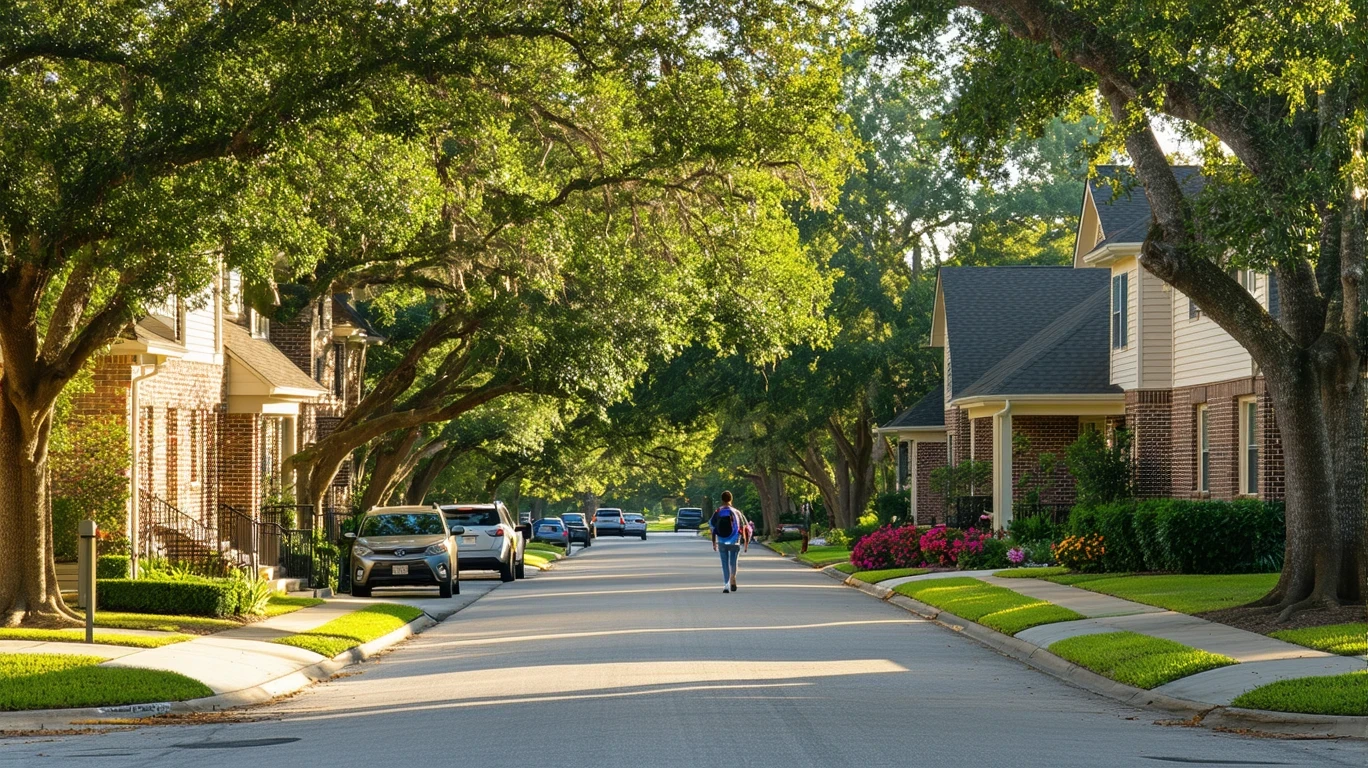
Why Students Choose Houston
What makes Houston work for college students who need more than just a campus address? The answer isn’t just about one university or one neighborhood—it’s about how the city’s structure supports the daily logistics of student life. Houston offers something many college towns struggle to deliver: accessible errands, multiple transportation options, and neighborhoods where you can actually live without a car if you choose your location carefully.
Houston earns a student-friendliness score of 78 out of 100, driven primarily by its broadly accessible food and grocery infrastructure, rail transit availability, and notable cycling infrastructure. The city features walkable pockets with substantial pedestrian infrastructure, integrated green space that exceeds density thresholds, and mixed residential and commercial land use that supports live-study-work proximity. For students, this translates to fewer logistical headaches: you can bike to the grocery store, take rail transit to internships, and find study spaces beyond the library without needing to plan every errand around a car.
The job market matters too. With an unemployment rate of 4.4%, Houston provides part-time work opportunities that help offset monthly expenses. The city’s more vertical urban form and strong family infrastructure indicate established community services—healthcare, recreation, schools—that create a stable environment for students balancing academics and independence.
Housing Options for Students
The off-campus rental market in Houston centers around a median gross rent of $1,235 per month. For students, that figure represents solo living in a one-bedroom apartment. The more common student strategy—shared housing—typically runs $600–$750 per month per person in a two- or three-bedroom unit, depending on proximity to campus and neighborhood amenities. Purpose-built student housing complexes often fall in the $800–$1,000 range for private bedrooms with shared common areas, offering furnished units and utilities-included pricing that simplifies budgeting.
Lease terms in Houston generally follow academic calendars, with 12-month leases standard and some complexes offering 9- or 10-month options for students who leave during summer. Expect deposit requirements of one month’s rent, plus potential pet deposits if applicable. Roommate-finding resources range from university housing boards to Facebook groups and off-campus housing services, though many students connect through academic programs or mutual friends before signing leases.
Location strategy matters more than raw price. Living near rail transit lines or in walkable pockets reduces transportation costs and time, even if rent runs slightly higher. The city’s mixed land use means some neighborhoods offer grocery stores, coffee shops, and study spaces within biking or walking distance—a meaningful convenience when balancing coursework, part-time work, and social commitments.
Getting Around: Transportation and Campus Access
Houston’s rail transit system provides connectivity that many students overlook when they assume Texas cities require cars. The presence of rail service, combined with notable bike infrastructure (bike-to-road ratio exceeds high thresholds), creates viable alternatives to car ownership. Students living near rail lines can reach campuses, internship sites, and entertainment districts without the fixed costs of insurance, parking permits, and maintenance.
Cycling infrastructure supports daily commuting in select corridors. Protected bike lanes, bike-share programs, and campus bike parking make two-wheel transportation practical for students willing to navigate weather considerations—primarily summer heat and occasional heavy rain. Walking works well within the walkable pockets identified by pedestrian infrastructure density, though Houston’s overall scale means walking alone won’t cover all needs.
For students who do own cars, gas prices of $2.55 per gallon and an average commute time of 27 minutes set baseline expectations. Parking availability varies widely: some off-campus housing includes parking, while denser student neighborhoods charge $50–$100 monthly for reserved spots. Campus parking permits add another layer of cost, often running $200–$400 per semester depending on lot proximity.
Ride-sharing fills gaps when transit or biking doesn’t fit the trip. A typical ride from off-campus housing to campus runs $8–$15, manageable for occasional use but expensive as a daily solution. The key decision for students: choose housing that aligns with your transportation preference, whether that’s rail-adjacent, bike-friendly, or car-dependent.
Student Cost of Living
Monthly budgets for students in Houston vary significantly based on housing choice and lifestyle. A frugal student in shared housing can operate on $1,200–$1,400 per month, covering rent, groceries, minimal transportation, and basic personal expenses. This assumes cooking most meals, using transit or biking, and limiting entertainment to free or low-cost campus events.
A moderate student budget with solo housing, occasional dining out, and a car runs closer to $2,000–$2,300 per month. This includes the full median rent, a mix of grocery and restaurant meals, gas and parking costs, and regular social activities. Students at this level typically work 15–20 hours per week to cover non-tuition expenses, balancing income with academic demands.
Food costs break down across three channels: dining plans (if living on campus), groceries, and eating out. Grocery shopping at broadly accessible food establishments keeps costs manageable—bread at $1.84/lb, chicken at $2.04/lb, eggs at $2.58/dozen—allowing students who cook to eat well on $200–$300 per month. Dining plans typically run $300–$450 per month depending on meal frequency, while students who eat out regularly can easily spend $400–$600 monthly.
Textbooks and course materials add $300–$500 per semester, though buying used, renting, or using digital versions reduces this burden. Entertainment and personal expenses—concerts, coffee shops, clothing, toiletries—vary widely but typically fall in the $150–$300 monthly range for students balancing social life with budget constraints.
Part-time job opportunities in Houston’s strong labor market (4.4% unemployment) typically pay $12–$16 per hour for retail, food service, tutoring, or campus positions. Working 15 hours per week generates roughly $720–$960 per month before taxes, covering a significant portion of non-housing costs for students in shared housing situations.
Monthly Student Budget in Houston
Here’s what a typical monthly student budget might look like in Houston:
| Expense Category | Shared Housing | Solo Living |
|---|---|---|
| Rent | $650 | $1,235 |
| Utilities (electric, internet) | $80 | $140 |
| Food (groceries + occasional dining) | $280 | $350 |
| Transportation (transit/bike or car) | $60 | $180 |
| Textbooks & supplies (monthly avg) | $70 | $70 |
| Entertainment & social | $100 | $150 |
| Personal care & miscellaneous | $60 | $80 |
| Total Monthly | $1,300 | $2,205 |
Estimates based on average student spending patterns and local costs. Transportation assumes transit/bike for shared housing, car ownership for solo living. Utilities reflect electricity at 16.04¢/kWh and split costs in shared scenarios.
Student-Friendly Amenities and Services
Houston’s integrated green space—park density exceeding high thresholds—provides study environments beyond campus libraries. Students use public parks for outdoor reading, group projects, and mental health breaks, particularly during mild weather months. The presence of water features adds recreational options for students seeking low-cost weekend activities.
Coffee shops with reliable Wi-Fi cluster in neighborhoods with high food establishment density, creating third spaces for studying between classes or meeting project groups. The broadly accessible food and grocery infrastructure means students can grab lunch, pick up supplies, or meet friends without extensive travel planning—a daily convenience that reduces friction in already-packed schedules.
Healthcare access includes hospital presence and pharmacy availability, important for students managing routine health needs, prescriptions, or unexpected illness away from family support. Many campuses offer student health centers for basic care, but having local clinics and hospitals accessible via transit or bike provides backup options and specialist access.
Gym facilities range from campus recreation centers (typically included in student fees) to budget fitness chains charging $10–$30 monthly. The strong family infrastructure indicator suggests established recreational programming—community sports leagues, fitness classes, swimming pools—that students can access alongside local residents.
Student discounts appear at local businesses, though availability varies. Movie theaters, museums, and some restaurants offer student pricing with valid ID. Campus job opportunities through work-study programs, research assistant positions, or departmental hiring provide both income and resume-building experience, with typical campus wages running $10–$14 per hour.
Social Scene and Nightlife
Campus social events form the foundation of student social life—orientation activities, student organization meetings, intramural sports, and academic department gatherings. These free or low-cost options help students build networks, explore interests, and fill weekends without straining budgets. Student organizations span academic, cultural, recreational, and professional development focuses, offering structured community for students navigating new independence.
Houston’s local nightlife includes age-appropriate venues for students 18+ and 21+, from live music venues to dance clubs to laid-back bars. Entertainment districts accessible via rail transit allow students to socialize without designated driver logistics. Cover charges typically run $5–$15 for most venues, with drink prices varying widely based on location and event.
Cultural activities leverage Houston’s size and diversity: free museum days, outdoor concerts, food festivals, and neighborhood events provide entertainment options beyond the typical college bar scene. The integrated green space supports informal gatherings—pickup sports, picnics, outdoor study groups—that build community without requiring spending.
Dating and social networking happen through the usual channels: classes, student organizations, part-time jobs, and social media. The mixed land use and walkable pockets create casual encounter opportunities—coffee shops, grocery stores, parks—where students cross paths outside structured campus settings. The presence of multiple universities in the broader metro area expands the potential social network beyond a single campus bubble.
Safety and Practical Considerations
Campus safety measures typically include campus police, emergency call boxes, late-night escort services, and security cameras in parking areas and building entrances. Students should research specific campus safety resources and review crime statistics for both on-campus and surrounding neighborhoods when choosing housing locations. Walking safety varies by neighborhood, with well-lit areas and higher pedestrian traffic generally correlating with lower incident rates.
Safe transportation options after dark include campus shuttles (where available), ride-sharing, and traveling in groups. Students using transit or biking should plan routes that stick to well-traveled corridors and avoid isolated areas late at night. The rail transit system provides relatively safe travel during operating hours, though students should remain aware of surroundings and travel with others when possible.
Academic support services—tutoring centers, writing labs, supplemental instruction, office hours—help students manage coursework demands. Most campuses offer free peer tutoring in high-enrollment courses and writing assistance for papers and projects. Mental health resources, including counseling centers and crisis hotlines, provide support for students dealing with stress, anxiety, or adjustment challenges.
Internship opportunities in Houston’s diverse economy span energy, healthcare, education, technology, and service sectors. The strong job market (4.4% unemployment) creates openings for students seeking professional experience alongside academics. Career services offices facilitate connections through job boards, career fairs, resume workshops, and employer networking events, helping students build experience that supports post-graduation employment.
FAQs About Student Life in Houston
What’s the average cost of student living in Houston?
Students in shared housing typically spend $1,200–$1,400 monthly covering rent, food, transportation, and personal expenses. Solo living pushes costs to $2,000–$2,300 monthly, depending on housing location and transportation choices. Part-time work at $12–$16 per hour helps many students cover non-tuition costs.
How safe is it for students to live off-campus?
Safety varies significantly by neighborhood. Research crime statistics for specific areas, prioritize well-lit streets with pedestrian traffic, and choose housing near transit lines or in walkable pockets when possible. Campus police and local law enforcement provide resources, and traveling in groups after dark reduces risk regardless of location.
Are there good part-time job opportunities?
Yes. Houston’s 4.4% unemployment rate indicates a strong labor market with openings in retail, food service, tutoring, and campus positions. Typical student wages run $12–$16 per hour, with 15–20 hours weekly generating $720–$960 monthly before taxes—enough to cover significant portions of living costs for students in shared housing.
What’s the social scene like for college students?
Campus organizations, intramural sports, and student events provide free or low-cost social foundations. Houston’s size adds local nightlife, cultural festivals, live music, and diverse dining options accessible via rail transit. Integrated green space and walkable neighborhoods create informal gathering spots beyond structured campus activities.
Making the Decision: Is Houston Right for Your College Years?
Houston works best for students who value transportation flexibility, accessible daily errands, and a strong part-time job market. The city’s rail transit, notable bike infrastructure, and walkable pockets support car-free living in select neighborhoods—a meaningful cost saver compared to car ownership. Broadly accessible food and grocery options reduce the planning friction that complicates student schedules, while integrated green space provides study and recreation options beyond campus.
The primary tradeoff: Houston requires intentional location choice. Students who select housing near transit, in walkable areas, or close to campus unlock the city’s student-friendly infrastructure. Those who choose car-dependent locations face higher transportation costs and time burdens. Shared housing remains the most affordable path, with solo living requiring either substantial part-time work hours or family financial support.
For students prioritizing independence, job opportunities, and urban amenities alongside academics, Houston delivers. The strong labor market, diverse internship landscape, and mixed-use neighborhoods support both current student needs and post-graduation transitions. Prospective students should visit target neighborhoods, test transportation routes, and calculate realistic budgets based on their housing and lifestyle preferences before committing.
How this article was built: In addition to public economic data, this article incorporates location-based experiential signals derived from anonymized geographic patterns—such as access density, walkability, and land-use mix—to reflect how day-to-day living actually feels in Houston, TX.