
What Does Living in Houston Actually Feel Like?
“We moved to Houston for the schools, but stayed for the neighbors.”
That sentiment captures something essential about life in Houston—a city where the emotional experience depends heavily on which version of Houston you land in. For some, it’s a sprawling, car-dependent challenge with relentless heat and traffic. For others, it’s a surprisingly walkable, transit-connected city with parks, diversity, and energy. Both experiences are real, and the gap between them shapes much of the local conversation.
Houston doesn’t fit neatly into a single narrative. It’s a major metro with rail transit and dense, mixed-use neighborhoods, but it’s also known for sprawl and highway culture. It has integrated green space and high park density, yet the summer heat can make outdoor life feel punishing. It offers strong family infrastructure—schools and playgrounds meet density thresholds across much of the city—but debates about school quality and district boundaries run hot. The city’s vibe isn’t about whether it’s “good” or “bad”; it’s about whether its particular mix of tradeoffs aligns with what you need.
People who thrive here tend to value accessibility, diversity, and practical amenities over postcard charm. They appreciate that groceries, parks, and healthcare are broadly accessible, and they’ve learned to navigate the city’s structure—knowing which pockets offer walkability and transit access, and which require a car for everything. People who struggle often arrived expecting either a classic suburban enclave or a compact urban core, and found Houston operating on a different logic entirely.
How Houstonians Talk About Their City Online
Public discussion about Houston—on platforms like Reddit, neighborhood Facebook groups, and X—tends to circle around a few recurring tensions. There’s pride in the city’s diversity, food scene, and lack of pretension, but also frustration with traffic, summer heat, and the perception that the city “could be more” if infrastructure kept pace with growth.
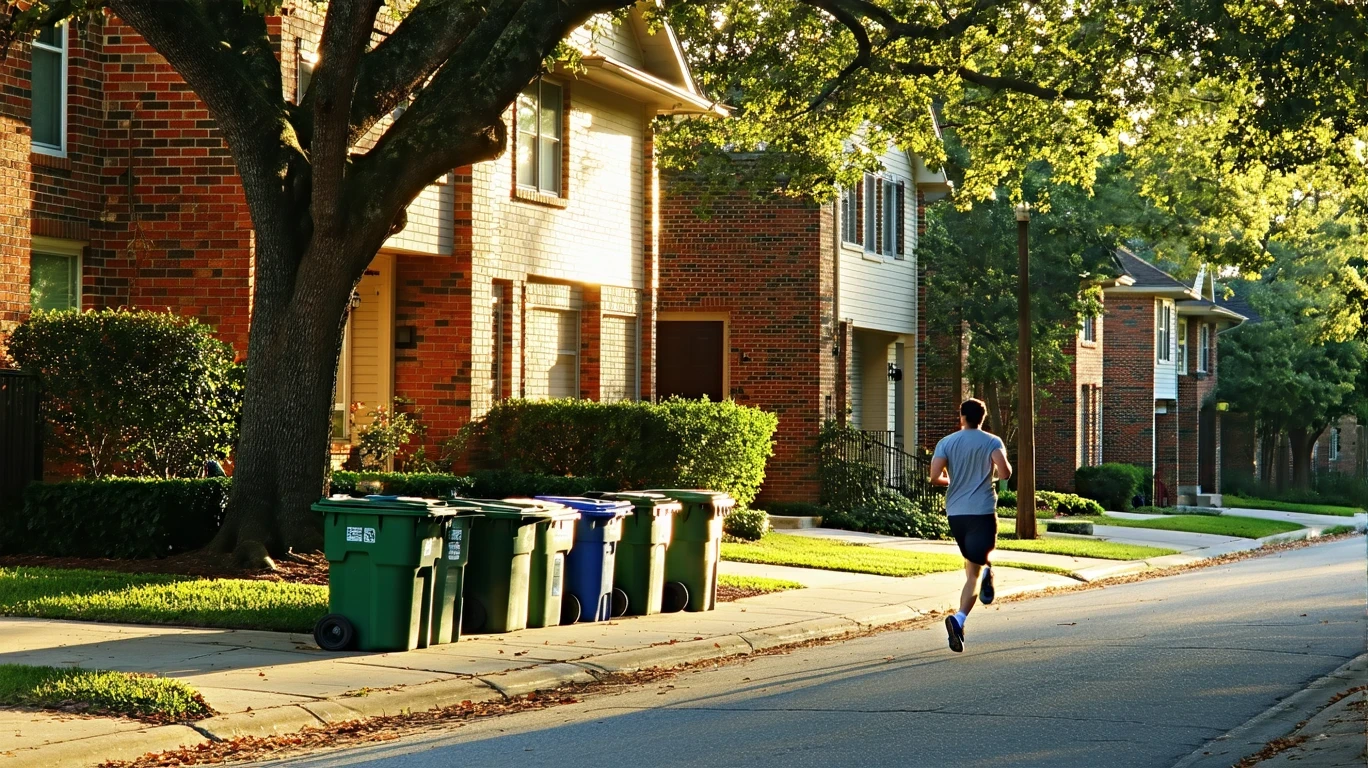
One common theme: “Houston has everything you need, but you have to know where to look.” Residents in walkable pockets near rail lines or inside the loop talk about biking to coffee shops, walking to parks, and skipping the car for errands. Meanwhile, those in outer suburbs describe a different reality—one where every trip requires driving, and the city feels like a series of disconnected islands.
Another frequent sentiment: “People here are genuinely friendly, but the city itself can feel indifferent.” There’s warmth in local interactions—neighbors help each other, communities form quickly—but the physical environment often lacks the cohesion or charm that makes a place feel emotionally resonant. It’s a city that rewards effort and exploration, but doesn’t hand you a sense of place on arrival.
Heat and weather dominate summer conversations. “You plan your whole day around air conditioning” is a refrain that captures the reality of triple-digit temperatures and extended cooling seasons. For some, it’s a dealbreaker. For others, it’s just the cost of living somewhere affordable with year-round outdoor access (outside of July and August).
What Local Coverage Tends to Emphasize
Local news and community coverage in Houston often frame the city through the lens of growth, change, and infrastructure strain. Headlines and stories tend to focus on:
- “Neighborhoods Debate Density and Development”
- “New Transit Options Expand, But Car Culture Remains Dominant”
- “Flooding Preparedness and Drainage Projects in Focus”
- “School Ratings and District Boundaries Spark Community Conversations”
- “Diverse Food Scene and Cultural Events Draw National Attention”
The tone is rarely celebratory or pessimistic—it’s pragmatic. Coverage reflects a city in constant motion, where growth brings both opportunity and friction. There’s acknowledgment that Houston is doing many things right (job growth, affordability relative to other metros, cultural richness), but also recognition that the city’s infrastructure and planning haven’t always kept up with its expansion.
Stories about flooding, drainage, and hurricane preparedness are evergreen topics, reflecting real household concerns about weather exposure and resilience. At the same time, coverage of new parks, trail expansions, and mixed-use developments signals a city investing in quality-of-life improvements—even if those improvements feel unevenly distributed.
What Reviews and Public Perception Reveal
On platforms like Google Reviews, Yelp, and Nextdoor, Houston’s public perception splits along expectation lines. People who moved here for work, affordability, or family reasons—and who approached the city on its own terms—tend to express satisfaction. They praise the accessibility of groceries and healthcare, the presence of parks and water features, and the fact that you can find walkable, transit-friendly neighborhoods if you prioritize them.
“It’s not the prettiest city, but it works” is a common refrain. Residents appreciate that daily errands don’t require elaborate planning, that hospital and clinic access is strong, and that the city’s diversity shows up in food, culture, and community life. Families, in particular, highlight the availability of schools and playgrounds, even as they debate quality and district reputation.
On the flip side, disappointment often centers on unmet expectations. People who wanted a compact, walkable urban experience without needing to research neighborhoods can feel let down by the city’s sprawl. Those who prioritized aesthetics, charm, or a strong sense of place sometimes describe Houston as “functional but soulless.” And newcomers from cooler climates frequently underestimate the emotional and logistical weight of the heat.
Neighborhood variation matters. Older pockets closer to downtown and inside the loop tend to get praised for character, walkability, and transit access. Newer planned communities farther out earn points for convenience and family amenities, but can feel generic or isolated. The city doesn’t have a single personality—it has dozens, and finding the right one requires intentionality.
How Houston Compares to Nearby Cities
| Aspect | Houston | Austin | San Antonio |
|---|---|---|---|
| Overall Vibe | Diverse, sprawling, functional; walkable pockets exist but require seeking out | Trendy, outdoorsy, fast-growing; higher cost and competitive housing market | Laid-back, historic, affordable; slower pace and strong cultural identity |
| Walkability & Transit | Rail present, notable bike infrastructure, high pedestrian-to-road ratio in pockets | Growing transit, walkable core, but still car-dependent in many areas | Limited transit, car-oriented, but compact downtown and riverwalk areas |
| Community Feel | Friendly but sprawling; neighborhood identity varies widely | Tight-knit in some areas, but influx of newcomers creates tension | Strong local pride, multigenerational roots, slower to change |
| Cost Pressure | Moderate rent and home prices; income and cost roughly balanced | High housing costs; income growth hasn’t kept pace with demand | Most affordable of the three; lower income but also lower expenses |
| Weather & Outdoor Life | Hot, humid summers; integrated parks and green space | Hot summers but drier; strong outdoor culture and access to hill country | Hot summers, milder winters; river and mission trail access |
Houston, Austin, and San Antonio each offer a different version of Texas metro life. If you want the most job diversity, the strongest transit infrastructure, and the broadest access to amenities, Houston delivers—but you’ll trade charm and compactness for functionality and scale. If you prioritize outdoor culture, a defined urban core, and a “scene,” Austin fits better—but you’ll pay significantly more for housing and face stiffer competition. If you value affordability, slower pace, and cultural continuity, San Antonio offers the most relaxed experience—but with fewer career options and less infrastructure depth.
None of these cities is objectively better. The right fit depends on whether you value access over aesthetics, diversity over cohesion, and practicality over charm.
Voices from the Ground: What Locals Are Saying
“I was skeptical about moving here, but the walkability in Montrose surprised me. I bike to the grocery store, walk to restaurants, and take the rail downtown. It’s not New York, but it’s not the car prison I expected either.”
— Young professional, renting near a rail stop
“We chose Houston because we could afford a house with a yard and still have good schools nearby. The heat is rough in summer, but the parks are great, and our kids have friends on every block.”
— Parent of two, suburban neighborhood
“Houston has everything—museums, food, diversity—but it doesn’t feel like a ‘place.’ It’s more like a collection of places. You have to build your own experience here.”
— Transplant from the Midwest, living inside the loop
“The traffic is worse than people admit, and the summer heat is no joke. But the cost of living is manageable, people are down-to-earth, and there’s always something to do if you’re willing to drive.”
— Long-time resident, outer suburb
“I love that I can get to a park in five minutes, grab groceries without a huge ordeal, and still afford to live alone. It’s not glamorous, but it works for my life right now.”
— Remote worker, renting in a mixed-use area
“We moved here for a job, and I thought we’d leave after a few years. But the people are kind, the food is incredible, and we’ve built a real community. I still don’t love the sprawl, but I’ve learned to navigate it.”
— Mid-career professional, family of four
“Houston gets a bad rap for being car-dependent, but I’ve found the opposite in my neighborhood. I walk my dog to the park, bike to coffee, and only drive when I’m leaving the area. It’s about where you choose to live.”
— Retiree, older pocket near downtown
Translating Place Structure into Daily Life
Houston’s infrastructure creates distinct day-to-day experiences depending on where you live and how you move. In areas where the pedestrian-to-road ratio is high and rail transit is accessible, households can reduce car dependency significantly. Errands become walkable or bikeable, commutes can shift to transit, and the city starts to feel less like a sprawling highway network and more like a series of connected neighborhoods. Families in these areas benefit from proximity to parks, schools, and playgrounds that meet density thresholds, making it easier to manage daily logistics without constant driving.
In contrast, households in outer suburbs or areas with lower pedestrian infrastructure face a different reality. Every trip requires a car, commute times stretch longer, and the city’s amenities—while broadly accessible—require more planning and travel time to reach. For some, this tradeoff is worth it for larger homes, quieter streets, and lower housing pressure. For others, it creates friction that accumulates over time.
The presence of rail transit and notable bike infrastructure means that car-light or car-free living is genuinely viable in parts of Houston, contradicting the city’s reputation as purely car-dependent. But this viability is localized—it’s not a citywide condition. Understanding where these pockets exist, and whether they align with your housing budget and lifestyle needs, is central to predicting whether Houston will feel liberating or limiting.
Does Houston Feel Like a Good Fit?
Houston doesn’t ask you to fall in love with it. It asks you to decide whether its particular mix of access, diversity, and pragmatism outweighs its heat, sprawl, and lack of postcard charm. It’s a city that works well for people who value functionality over aesthetics, who are willing to research neighborhoods to find walkable pockets, and who appreciate cultural richness without needing a tightly defined sense of place.
It tends to frustrate people who want a compact, cohesive urban experience without effort, who prioritize mild weather and outdoor comfort year-round, or who need a city to feel emotionally resonant from day one. Houston rewards intentionality—it gives you the tools (transit, parks, grocery density, healthcare access, family infrastructure), but it doesn’t hand you a ready-made lifestyle.
If you’re considering a move, focus less on whether Houston is “happy” and more on whether its tradeoffs align with your priorities. Explore walkable neighborhoods if car-light living matters to you. Research school districts if family infrastructure is central. Accept that summer heat will shape your routine. And recognize that the city’s diversity and accessibility come with a sprawl that requires navigation.
Houston isn’t for everyone. But for those it fits, it offers a rare combination: big-city amenities, manageable costs, and the freedom to build the life you want without fighting the city every step of the way.
How this article was built: In addition to public economic data, this article incorporates location-based experiential signals derived from anonymized geographic patterns—such as access density, walkability, and land-use mix—to reflect how day-to-day living actually feels in Houston, TX.
The perspectives shown reflect commonly expressed local sentiment and recurring themes in public discussion, rather than individual accounts.