
Can you live in Hilliard without a car? It’s a question that shapes housing decisions, daily routines, and long-term satisfaction for anyone considering this Columbus suburb. The short answer is nuanced: Hilliard’s transportation landscape rewards flexibility and planning, but it doesn’t eliminate car dependence for most households. Understanding how people actually move through this city—and where the infrastructure supports alternatives—matters more than assumptions about suburban life.
How People Get Around Hilliard
Hilliard operates primarily as a car-oriented community, but with pockets of pedestrian-friendly infrastructure that create islands of walkability within a larger suburban framework. The pedestrian-to-road ratio exceeds typical suburban thresholds in certain areas, meaning some neighborhoods support walking for errands or recreation more readily than others. Cycling infrastructure is notably present, with bike-to-road ratios that suggest intentional investment in non-car mobility options.
What newcomers often misunderstand is that Hilliard isn’t uniformly car-dependent. The city’s layout creates distinct zones: corridors where food and grocery density clusters moderately, and residential areas where daily errands require more deliberate planning. Mixed land use—both residential and commercial development interspersed—exists in parts of the city, which means some residents can walk to a coffee shop or pharmacy while others drive for every errand.
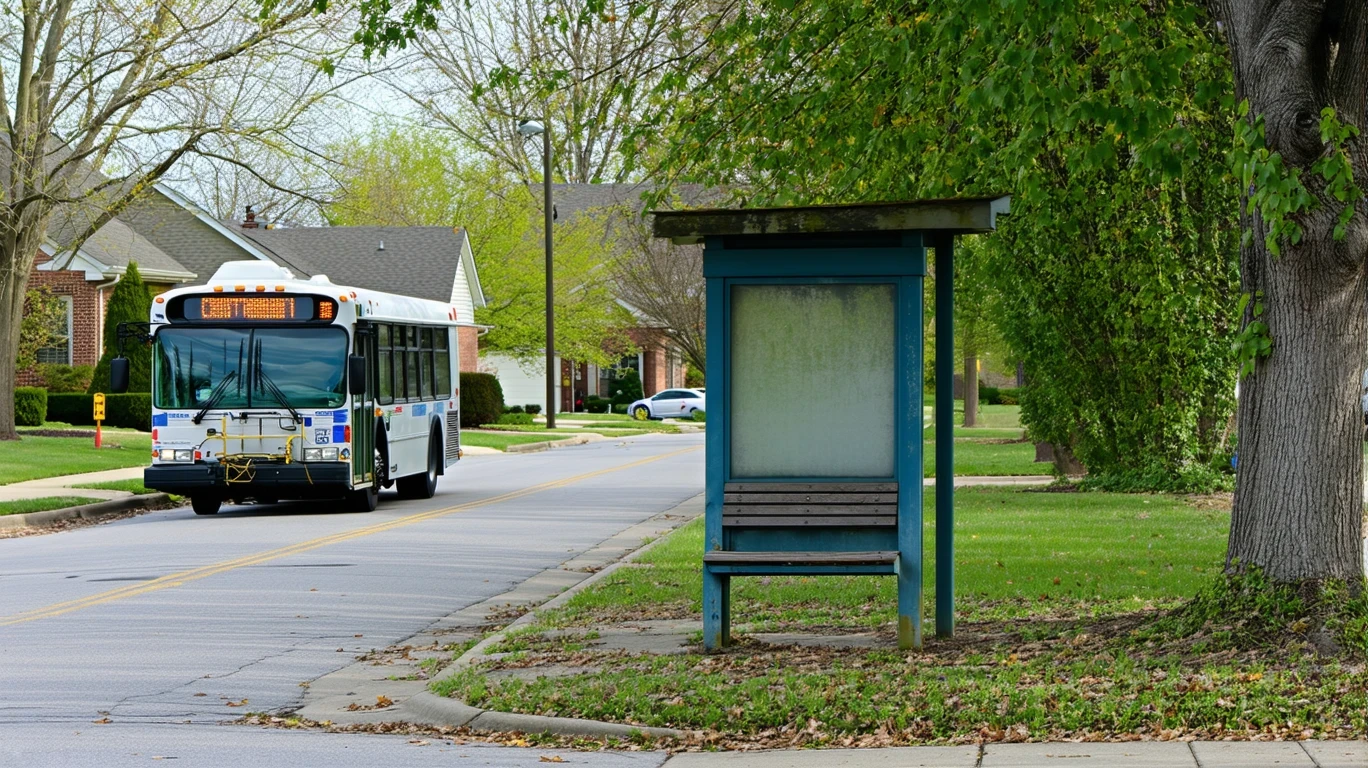
Bus service is present and functional, but it serves as a supplementary option rather than a primary mobility system for most households. Rail transit does not exist here. The result is a transportation environment that asks residents to think strategically about where they live relative to where they need to go regularly.
Public Transit Availability in Hilliard
Public transit in Hilliard often centers around systems such as the Central Ohio Transit Authority (COTA), which provides bus service connecting Hilliard to Columbus and surrounding areas. Coverage is not comprehensive across the city; instead, it follows major corridors and serves specific nodes where demand justifies routes.
Transit works best for residents living near these corridors and commuting into Columbus during standard business hours. It tends to fall short for those in peripheral neighborhoods, for late-night travel, or for multi-stop errands that don’t align with linear bus routes. The infrastructure supports intentional commuters—people who can structure their day around fixed schedules—but it doesn’t replace the flexibility of a personal vehicle for most daily logistics.
For households evaluating transit viability, proximity to bus stops matters less than proximity to destinations the bus actually serves well. A stop two blocks away is only useful if it connects to your workplace, grocery store, or childcare without requiring transfers that double travel time.
Driving & Car Dependence Reality
Driving remains the default mode of transportation for most Hilliard residents. The city’s development pattern—moderate building density, mixed-height structures, and corridor-based commercial clustering—means that even neighborhoods with sidewalks and bike lanes often require a car for weekly grocery runs, medical appointments, or accessing services outside the immediate area.
Parking is generally abundant and free in most contexts, which removes one friction point common in denser cities. Commute flexibility is high for drivers: you can leave early to avoid traffic, take alternate routes, or chain errands on the way home. That flexibility comes with exposure to gas price volatility—currently around $3.00 per gallon—and the fixed costs of vehicle ownership, insurance, and maintenance.
Car reliance here isn’t about preference; it’s about infrastructure. The city’s layout assumes most households have at least one vehicle, and daily life is structured accordingly. For families with multiple working adults or children in activities, a second car often shifts from luxury to necessity.
Commuting Patterns & Daily Mobility
Commuting in Hilliard typically involves either a drive into Columbus or a shorter trip to employers within the western suburbs. The structure of these commutes varies widely: some residents make a single daily round trip, while others juggle multi-stop routines that include school drop-offs, daycare pickups, or mid-day errands.
Proximity to major routes and the direction of your commute determine much of your daily friction. Residents commuting against the primary flow—away from Columbus rather than toward it—often experience shorter, less congested drives. Those heading into the city during peak hours face predictable slowdowns, though the severity depends on route choice and timing flexibility.
For households where one or both adults work from home, day-to-day costs shift away from fuel and vehicle wear toward other categories, and the pressure to live near transit or major highways diminishes. For everyone else, commute logistics shape housing decisions as much as square footage or school ratings.
Who Transit Works For — and Who It Doesn’t
Public transit in Hilliard fits a specific profile: single adults or couples without children, commuting to jobs in Columbus along established bus routes, with schedules that align to weekday service hours. For this group, bus service can reduce driving frequency and provide a predictable, lower-cost commute option.
Transit becomes impractical for families managing school schedules, extracurricular activities, or grocery trips with multiple bags. It also falls short for shift workers, evening commuters, or anyone whose job requires travel to multiple sites during the day. Renters in corridor-adjacent apartments may find transit more viable than homeowners in residential cul-de-sacs, simply because of proximity to stops and destinations.
The distinction isn’t about effort or preference—it’s about whether the transit network connects your home to the places you need to reach, on a schedule that matches your life. For many Hilliard households, it doesn’t.
Transportation Tradeoffs in Hilliard
Choosing between transit and driving in Hilliard means weighing predictability against flexibility. Transit offers fixed costs and eliminates parking concerns, but it constrains timing and limits spontaneity. Driving provides control and convenience, but it exposes you to fuel price swings, maintenance surprises, and the ongoing expense of vehicle ownership.
For households living in walkable pockets near grocery clusters and bus routes, a hybrid approach becomes possible: walk or bike for nearby errands, drive for larger trips, and use transit for commutes when weather and schedules cooperate. For those in less connected areas, driving becomes the only practical option, and transportation costs become a structural fixture rather than a variable to optimize.
The tradeoff also extends to time. A 20-minute drive might translate to a 50-minute bus trip with a transfer. Whether that exchange makes sense depends on what you’re trading time for—cost savings, reduced stress, environmental impact—and how much margin your schedule holds.
FAQs About Transportation in Hilliard (2026)
Is public transit usable for daily commuting in Hilliard?
Yes, but only for specific commute patterns. If you live near a bus route that connects directly to your workplace in Columbus and your schedule aligns with weekday service hours, transit can work well. For most other scenarios—especially those involving multiple stops, evening hours, or destinations outside Columbus—driving remains more practical.
Do most people in Hilliard rely on a car?
Yes. The city’s layout, errand accessibility, and limited transit coverage mean that most households depend on at least one vehicle for daily life. Even residents in walkable areas typically own a car for trips that fall outside their immediate neighborhood.
Which areas of Hilliard are easiest to live in without a car?
Neighborhoods near commercial corridors with moderate grocery and food density, close to bus stops serving Columbus, offer the best chance of reducing car dependence. Even in these areas, going entirely car-free requires significant lifestyle adjustments and limits flexibility.
How does commuting in Hilliard compare to nearby cities?
Hilliard’s commute reality is similar to other Columbus suburbs: driving is the norm, transit exists but serves limited routes, and commute friction depends heavily on direction and timing. Compared to denser cities with extensive rail networks, Hilliard offers less transit coverage but more parking ease and route flexibility for drivers.
Does Hilliard have bike-friendly infrastructure?
Yes, to a notable degree. Bike-to-road ratios suggest intentional investment in cycling infrastructure, and some residents use bikes for recreation or short errands. However, cycling as a primary transportation mode still requires careful route planning and tolerance for weather exposure, especially during colder months.
How Transportation Fits Into the Cost of Living in Hilliard
Transportation in Hilliard functions as a structural cost driver, not just a budget line. Where you live relative to work, schools, and services determines how much you drive, how often you refuel, and whether a second vehicle becomes necessary. These decisions ripple into housing affordability, time allocation, and household logistics complexity.
Gas prices around $3.00 per gallon set a baseline for fuel exposure, but the real cost comes from frequency and distance. A household driving 25 miles round trip daily faces different pressure than one with a 10-mile commute or the flexibility to work from home several days a week. Vehicle insurance, maintenance, and depreciation add layers that don’t fluctuate with gas prices but compound over time.
For a fuller picture of how transportation costs interact with housing, utilities, and other expenses, see Your Monthly Budget in Hilliard: Where It Breaks. That breakdown shows how mobility decisions fit into the larger financial structure of living here.
The key insight is this: transportation in Hilliard isn’t something you optimize after choosing where to live—it’s a factor that should shape that choice from the start. Proximity to work, access to walkable errands, and alignment with transit routes all reduce friction and cost over time. Ignoring these factors in favor of square footage or aesthetics often leads to regret once the daily commute becomes routine.
How this article was built: In addition to public economic data, this article incorporates location-based experiential signals derived from anonymized geographic patterns—such as access density, walkability, and land-use mix—to reflect how day-to-day living actually feels in Hilliard, OH.