
A friend who just accepted a job in the Salt Lake City area called me last week with a question I hear often: “I’m looking at Herriman—will I actually like living here?” She’d seen the parks, noticed the rail station, read about the growth. But she wanted to know how it feels. Does the place match the lifestyle she’s imagining, or will she spend her first year wishing she’d chosen differently?
That’s the question this article tries to answer—not with satisfaction scores or rankings, but by translating the emotional texture of life in Herriman as expressed by the people who live it every day.
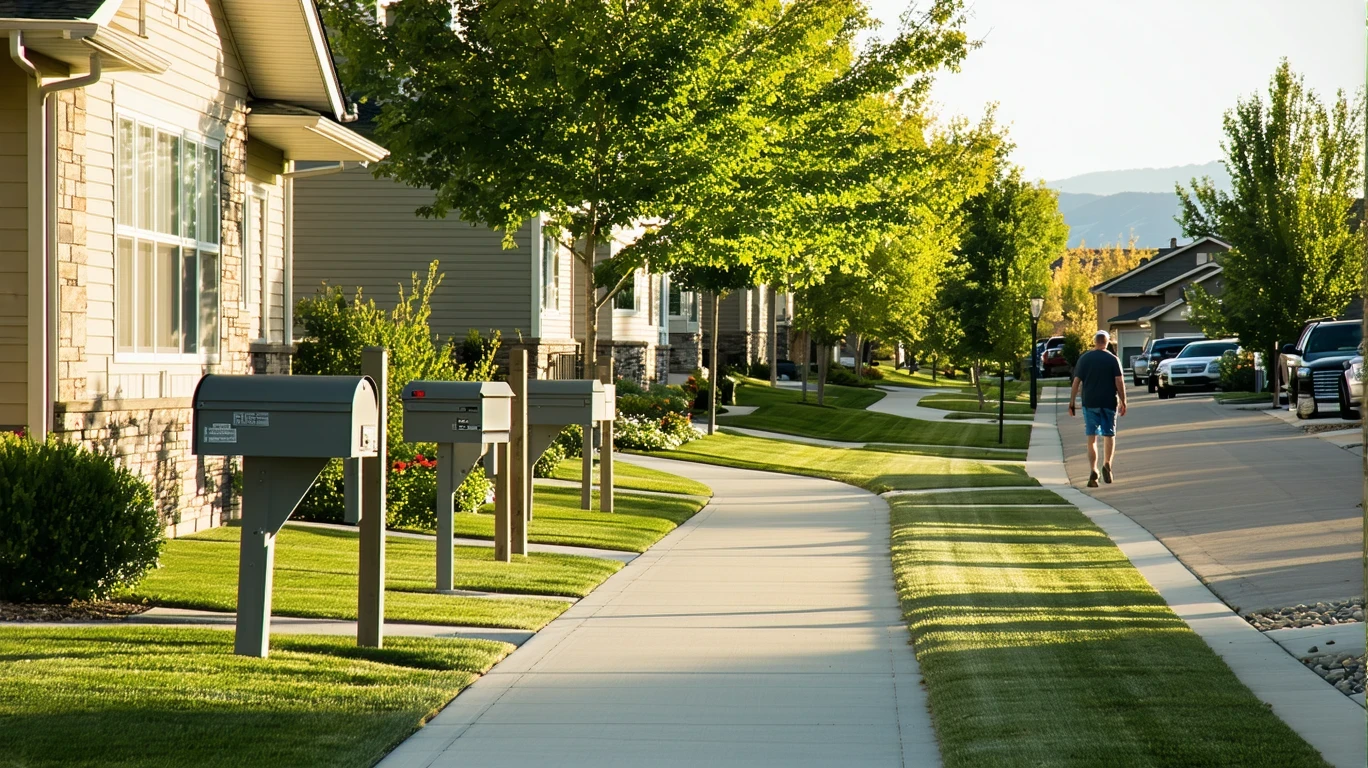
What Living in Herriman Actually Feels Like
Herriman sits in an interesting middle space. It’s a newer suburban community with the infrastructure and planning that come with recent growth, but it’s not a blank slate. The city has rail access, walkable pockets that surprise newcomers, and park density that exceeds what many suburban areas offer. At the same time, it’s still very much a place where you plan your errands around specific corridors, where commutes can stretch long despite transit options, and where the rhythm of daily life leans suburban.
The people who feel most at home here tend to be families who prioritize outdoor access, appreciate the newer housing stock, and value the option of rail connectivity even if they don’t use it daily. They’re comfortable with a suburban pace and don’t expect spontaneous walkability to every destination. They’ve chosen Herriman because it offers space, parks, and a family-oriented atmosphere—and they’re willing to drive or plan ahead for dining, entertainment, and specialized services.
The people who feel friction tend to be those who arrived expecting urban texture or assumed that proximity to Salt Lake City would mean short commutes. They’re often surprised by how much of daily life still requires a car, even with rail access nearby. They miss the density of neighborhood retail, the variety of dining options, and the ability to run errands without thinking about which corridor they’re heading to. For them, Herriman can feel like it’s still becoming what it wants to be, rather than fully formed.
How People Talk About Herriman Online
Public discussion about Herriman tends to center on a few recurring themes: growth, outdoor life, commute reality, and the tension between suburban comfort and urban convenience.
On platforms where locals gather, you’ll see pride in the parks and trails. People talk about weekend mornings at the splash pad, evening walks with mountain views, and the sense that outdoor access is woven into the city’s identity. There’s also frequent conversation about the rail station—some residents use it religiously and feel it’s a game-changer, while others mention it as something they thought they’d use more often but don’t.
Growth is a constant topic. Some residents express excitement about new restaurants and retail arriving, while others worry about traffic, school capacity, and whether the city’s infrastructure is keeping pace. The tone isn’t angry, but it’s watchful. People want Herriman to grow thoughtfully, not just quickly.
Commute discussions reveal a split. Those working in Herriman or using the rail to downtown Salt Lake City tend to feel good about their transportation setup. But a significant portion of residents commute to job centers that aren’t well-served by transit, and for them, the drive can feel long and repetitive. As one composite sentiment puts it: “I love coming home to Herriman, but getting to work every day reminds me how far south we really are.”
Another common thread: “It’s quiet, and that’s exactly what we wanted—but if you’re looking for nightlife or walkable coffee shops on every corner, you’ll be disappointed.” That tradeoff—peace and space versus spontaneous variety—comes up again and again.
How Local Coverage Frames the City
Local news and community coverage tend to frame Herriman through the lens of growth, change, and identity formation. The city is still defining itself, and that process generates ongoing conversation.
Typical coverage themes include:
- “New Parks and Trails Open as City Expands Outdoor Network”
- “Residents Weigh Suburban Comfort Against Urban Amenity Gaps”
- “Transit Access Grows, But Commute Patterns Remain Complex”
- “Community Debates What Growth Should Look Like”
- “Family-Friendly Reputation Draws New Residents”
The tone is generally optimistic but not uncritical. Coverage acknowledges that Herriman is still maturing, that infrastructure sometimes lags behind population growth, and that residents have strong opinions about the city’s direction. There’s a sense that people care deeply about getting it right.
What Reviews and Public Feedback Reveal
When people leave reviews or share experiences on platforms like Google, Yelp, or neighborhood forums, the feedback tends to cluster around expectations and fit.
Positive feedback often highlights:
- Exceptional park quality and outdoor access—this is where Herriman consistently exceeds expectations
- Newer homes and well-maintained neighborhoods
- Family-friendly atmosphere and perceived safety
- Rail access for those who use it
- Sense of community forming among newer residents
Constructive or mixed feedback tends to focus on:
- Limited dining and entertainment variety—people mention driving to Draper or South Jordan for options
- Errands requiring intentional planning around specific corridors rather than spontaneous neighborhood stops
- Commute length for jobs not served by rail
- Healthcare access—clinics are available locally, but hospital-level care requires travel
- School availability relative to the number of families moving in
One recurring sentiment: “If you’re coming from a dense urban area, adjust your expectations. If you’re coming from a rural area or older suburb, you’ll probably be impressed.” Herriman tends to delight people who wanted suburban comfort with modern infrastructure, and it tends to underwhelm people who wanted urban texture with a suburban price tag.
Newer planned areas generally receive praise for walkability within their boundaries, while older pockets feel more car-dependent. That internal variation matters—where you land in Herriman shapes your daily experience significantly.
How Herriman Compares to Nearby Cities
| Dimension | Herriman | Draper | South Jordan |
|---|---|---|---|
| Overall Vibe | Newer suburban, family-focused, still forming identity | Established suburban, more retail variety, higher price point | Mixed suburban density, more dining options, central location |
| Walkability | Pockets of walkability, corridor-dependent for errands | Similar pockets, slightly more distributed retail | More neighborhood retail, better errand distribution |
| Transit Access | Rail present, meaningful for some commuters | Rail present, similar usage patterns | Rail present, slightly more central to job centers |
| Outdoor Access | Exceptional park density, water features, trails | Strong outdoor access, mountain proximity | Good park access, less emphasis on trails |
| Dining & Entertainment | Limited locally, growing slowly | More variety, established restaurant scene | Broader variety, more spontaneous options |
The comparison isn’t about declaring a winner—it’s about helping you predict alignment. If outdoor access and newer infrastructure matter most, and you’re comfortable planning errands around corridors, Herriman often feels like the right fit. If you want more dining variety and slightly better errand distribution without leaving your immediate area, South Jordan might feel more convenient. If you’re willing to pay more for an established suburban feel with more retail maturity, Draper might align better.
All three cities share similar transit access and commute challenges for jobs outside the rail corridor. The real differences show up in daily texture: how much variety you want within a short drive, how important outdoor access is, and whether you prefer newer infrastructure or established neighborhoods.
What Locals Are Saying
“We moved here for the parks and the schools, and the outdoor access has been everything we hoped for. My kids are outside every day. But I do wish there were more local restaurants—we end up driving to Draper or Riverton a lot for date nights.” — Family with young children, moved from out of state
“I take the train downtown for work, and it’s been a game-changer. I read on the way in, I don’t deal with traffic, and I actually enjoy my commute now. But if I didn’t work downtown, I’d probably feel differently about living this far south.” — Young professional, works in Salt Lake City
“Herriman feels like it’s still figuring itself out. There’s a lot of growth, a lot of new faces, and not quite enough infrastructure to match yet. I’m optimistic, but it’s definitely a work in progress.” — Long-time Utah resident, moved to Herriman three years ago
“It’s quiet, safe, and family-friendly—exactly what we wanted after living in a busier area. We don’t mind driving for entertainment. The tradeoff is worth it for us.” — Family with school-age children, previously lived in South Jordan
“I thought being close to Salt Lake would mean short commutes, but my job is in Sandy, and it’s a longer drive than I expected. The rail doesn’t help me. I love the neighborhood, but the commute wears on me.” — Remote worker with occasional office days
“The parks here are genuinely impressive. We’ve lived in a lot of suburbs, and Herriman’s outdoor network is better than most. If you’re an active family, this place delivers.” — Retiree couple, moved from Arizona
“I miss having a coffee shop I can walk to, or a corner store for quick trips. Everything requires getting in the car and driving to a specific area. It’s fine, but it’s not the convenience I was used to.” — Newcomer from a denser urban area
Does Herriman Feel Like a Good Fit?
Herriman tends to work well for people who value outdoor access, appreciate newer infrastructure, and are comfortable with a suburban rhythm that requires planning around specific corridors. It’s a strong fit for families who want parks, trails, and a family-oriented atmosphere, and for commuters who can use the rail line effectively. The city offers space, safety, and a sense of community that’s still forming—and for many residents, that’s exactly the combination they were looking for.
It tends to frustrate people who expect urban texture, spontaneous walkability to diverse amenities, or short commutes to job centers outside the rail corridor. If you’re coming from a dense urban area and expect that same convenience in a suburban setting, Herriman will likely feel limiting. If you need hospital-level healthcare nearby, extensive dining variety, or established school density, you’ll notice those gaps.
The city’s emotional profile is one of optimism mixed with patience. People who thrive here tend to focus on what’s present—exceptional parks, newer homes, rail access—and accept what’s still developing. People who struggle tend to focus on what’s missing and feel the gap more acutely.
If you’re considering Herriman, the most useful question isn’t “Is this a happy place?” but rather “Does this place’s structure match how I actually want to live day-to-day?” If you value outdoor life, can handle corridor-based errands, and either work downtown or are comfortable with longer commutes, Herriman’s texture will likely feel rewarding. If you need density, variety, and spontaneous convenience, the friction will show up quickly.
For a clearer sense of where money goes and what drives financial pressure in Herriman, or to explore quality of life factors that shape daily satisfaction, those guides offer additional context. And if you’re weighing housing tradeoffs, understanding what drives costs here can help clarify whether the investment aligns with what you’re actually getting.
How this article was built: In addition to public economic data, this article incorporates location-based experiential signals derived from anonymized geographic patterns—such as access density, walkability, and land-use mix—to reflect how day-to-day living actually feels in Herriman, UT.
The perspectives shown reflect commonly expressed local sentiment and recurring themes in public discussion, rather than individual accounts.