
“I thought I could skip buying a second car when we moved here—turns out, that lasted about three weeks,” says a daily commuter who relocated to Henderson from a denser metro area. “The bus runs, but if you’re not right on the route, you’re basically planning your whole day around it.”
Understanding transportation options in Henderson means recognizing that this is a city built around the car, with public transit playing a supporting role rather than a lead one. For newcomers weighing whether they can rely on buses, bikes, or ride-sharing, the reality is more nuanced than a simple yes or no. Henderson’s layout, density, and infrastructure create a mobility landscape where some households manage without a vehicle—but most don’t.
How People Get Around Henderson
Henderson is a sprawling suburban city in the Las Vegas metro area, and its transportation patterns reflect that geography. The dominant mode of travel is driving. Wide arterials, dispersed residential neighborhoods, and commercial corridors designed for car access mean that most daily trips—work commutes, grocery runs, school drop-offs—are easiest by car.
Public transit exists, but it serves a narrow slice of the population: those living near bus corridors, those with flexible schedules, and those whose destinations align with available routes. For everyone else, the car is the default, and often the only practical option.
What newcomers often misunderstand is that Henderson’s walkable pockets and mixed-use areas don’t translate into citywide walkability. Pedestrian infrastructure exists in certain neighborhoods, and the ratio of sidewalks to roads is higher than in some comparable suburbs, but those amenities cluster rather than spread. If you’re not in one of those pockets, daily life requires wheels.
Public Transit Availability in Henderson
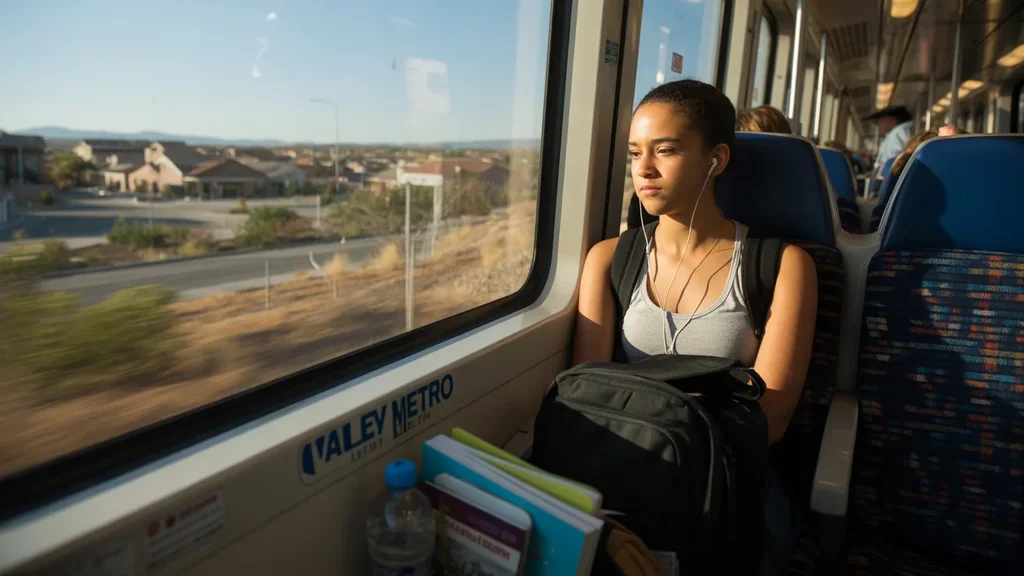
Public transit in Henderson often centers around systems such as the Regional Transportation Commission of Southern Nevada (RTC), which operates bus service throughout the Las Vegas metro area, including Henderson. There is no rail service in the city, so all transit options are bus-based.
Bus routes tend to work best along major corridors—places where residential density, commercial activity, and commuter demand overlap. In those zones, transit can be a viable option for getting to work, running errands, or accessing services. Coverage is more limited in peripheral neighborhoods, where routes are sparse and frequencies stretched.
Transit also falls short during off-peak hours. Early mornings, late evenings, and weekends see reduced service, which makes transit less practical for shift workers, service industry employees, or anyone whose schedule doesn’t align with peak commuting windows. For households relying on transit, this means planning around the bus, not the other way around.
Driving & Car Dependence Reality
For most Henderson residents, driving isn’t a preference—it’s a necessity. The city’s layout, with residential subdivisions separated from commercial centers and employment hubs, makes car ownership the path of least resistance. Parking is abundant, gas stations are plentiful, and road infrastructure is designed to move vehicles quickly.
Car dependence also brings tradeoffs. Households absorb the cost of vehicle ownership, maintenance, insurance, and fuel (currently around $3.56 per gallon). Commutes are predictable in route but variable in time, depending on traffic and distance. For families managing multiple stops—daycare, school, work, errands—the car offers flexibility that transit simply can’t match.
Sprawl also means that even short trips often require driving. The distance between home and the nearest grocery store, pharmacy, or park may be walkable in theory but impractical in reality, especially in summer heat or with children in tow.
Commuting Patterns & Daily Mobility
Commuting in Henderson varies widely depending on where you live and where you work. Some residents work locally, within Henderson’s growing commercial and industrial sectors. Others commute into Las Vegas, North Las Vegas, or other parts of the metro area, which can mean longer drives and exposure to freeway congestion.
Daily mobility isn’t just about the commute to work. It’s also about how people structure their days: dropping kids at school, stopping for groceries, picking up prescriptions, meeting friends. In Henderson, those trips are almost always car trips. Transit can handle point-to-point commuting for some, but it struggles with the multi-stop, time-sensitive logistics that define household life.
For renters living near bus corridors and working along those same routes, transit can reduce day-to-day costs. For homeowners in peripheral neighborhoods, or anyone whose work or errands fall outside transit coverage, the car is non-negotiable.
Who Transit Works For—and Who It Doesn’t
Transit in Henderson works best for a specific profile: renters or residents in denser, older neighborhoods near major corridors, with jobs or schools accessible by direct bus routes, and schedules flexible enough to accommodate transit timing. For that group, bus service can be a practical, lower-cost alternative to car ownership.
Transit works less well for families managing multiple daily stops, shift workers with non-standard hours, and anyone living in newer subdivisions on the city’s edges. It also struggles in summer, when waiting outside in triple-digit heat becomes a real barrier to use, especially for children, elderly residents, or anyone with health vulnerabilities.
Homeowners, particularly those in single-family neighborhoods, are far more likely to own multiple vehicles. The structure of their daily lives—longer distances, dispersed destinations, household logistics—makes car dependence almost inevitable.
Transportation Tradeoffs in Henderson
Choosing between transit and driving in Henderson isn’t about affordability alone—it’s about control, predictability, and time. Driving offers flexibility and speed but comes with ongoing costs and exposure to fuel price swings, maintenance surprises, and insurance premiums. Transit offers lower direct costs but requires schedule alignment, longer trip times, and acceptance of limited coverage.
For households trying to minimize transportation expenses, the calculus depends on where they live and what their daily patterns look like. Living near a bus corridor and working along that same route can make transit viable. Living anywhere else usually means driving, and the only real tradeoff is how much driving you can avoid by clustering errands or working closer to home.
Biking exists in pockets, with some cycling infrastructure present in parts of the city, but it’s not a primary mode of transportation for most residents. The heat, distances, and car-oriented road design make biking more recreational than practical for daily commuting or errands.
FAQs About Transportation in Henderson (2026)
Is public transit usable for daily commuting in Henderson?
It depends on where you live and work. If both are near major bus corridors, transit can be a practical option. If either falls outside those routes, or if your schedule doesn’t align with bus service hours, driving becomes necessary.
Do most people in Henderson rely on a car?
Yes. The vast majority of Henderson residents drive for daily transportation. The city’s layout, density, and infrastructure are built around car access, and transit serves a supplemental role rather than a primary one.
Which areas of Henderson are easiest to live in without a car?
Older, denser neighborhoods near major commercial corridors offer the best chance of managing without a car. These areas tend to have better pedestrian infrastructure, closer access to groceries and services, and more direct bus routes. Peripheral subdivisions are far more car-dependent.
How does commuting in Henderson compare to nearby cities?
Henderson’s commuting experience is similar to other suburban cities in the Las Vegas metro area: car-oriented, with limited transit alternatives. Compared to denser urban cores elsewhere, Henderson offers less transit coverage but also less congestion and more parking availability.
Can you get by with one car in a two-adult household in Henderson?
It’s possible but challenging. Success depends on both adults working near home or along the same transit route, and on household logistics that don’t require simultaneous trips. Most two-adult households in Henderson own two vehicles because the city’s layout makes single-car life difficult.
How Transportation Fits Into the Cost of Living in Henderson
Transportation isn’t just a line item—it’s a structural factor that shapes where people live, how they spend their time, and what tradeoffs they accept. In Henderson, getting around almost always means driving, and that reality affects housing choices, job flexibility, and daily routines.
Households trying to understand their full cost exposure need to think about transportation as part of a broader system: where they live determines how much they drive, how much they drive affects fuel and maintenance costs, and those costs interact with housing affordability and time availability. For a fuller picture of how these pieces fit together, see A Month of Expenses in Henderson: What It Feels Like.
The bottom line: Henderson rewards car ownership with convenience, flexibility, and access. It penalizes car-free living with limited options, longer trip times, and logistical friction. For most households, the choice isn’t whether to own a car—it’s how much driving they can avoid, and whether their daily patterns allow for any meaningful reduction in transportation dependence.
How this article was built: In addition to public economic data, this article incorporates location-based experiential signals derived from anonymized geographic patterns—such as access density, walkability, and land-use mix—to reflect how day-to-day living actually feels in Henderson, NV.
—