
“I’ve lived here three years and I’ve never seen a bus,” says Marcus Chen, who commutes daily from Harrisburg to Charlotte for work. “You need a car. That’s just how it is.”
Understanding transportation options in Harrisburg means recognizing that this is a car-first community. While pockets of the town offer pleasant walking conditions and some bike-friendly streets, the infrastructure for getting around without a vehicle remains limited. For most residents—especially those commuting to jobs in the Charlotte metro area—driving isn’t a lifestyle choice; it’s a structural necessity.
This article explains how people actually move through Harrisburg, what transit options exist (or don’t), and how mobility shapes daily life and household logistics in 2026.
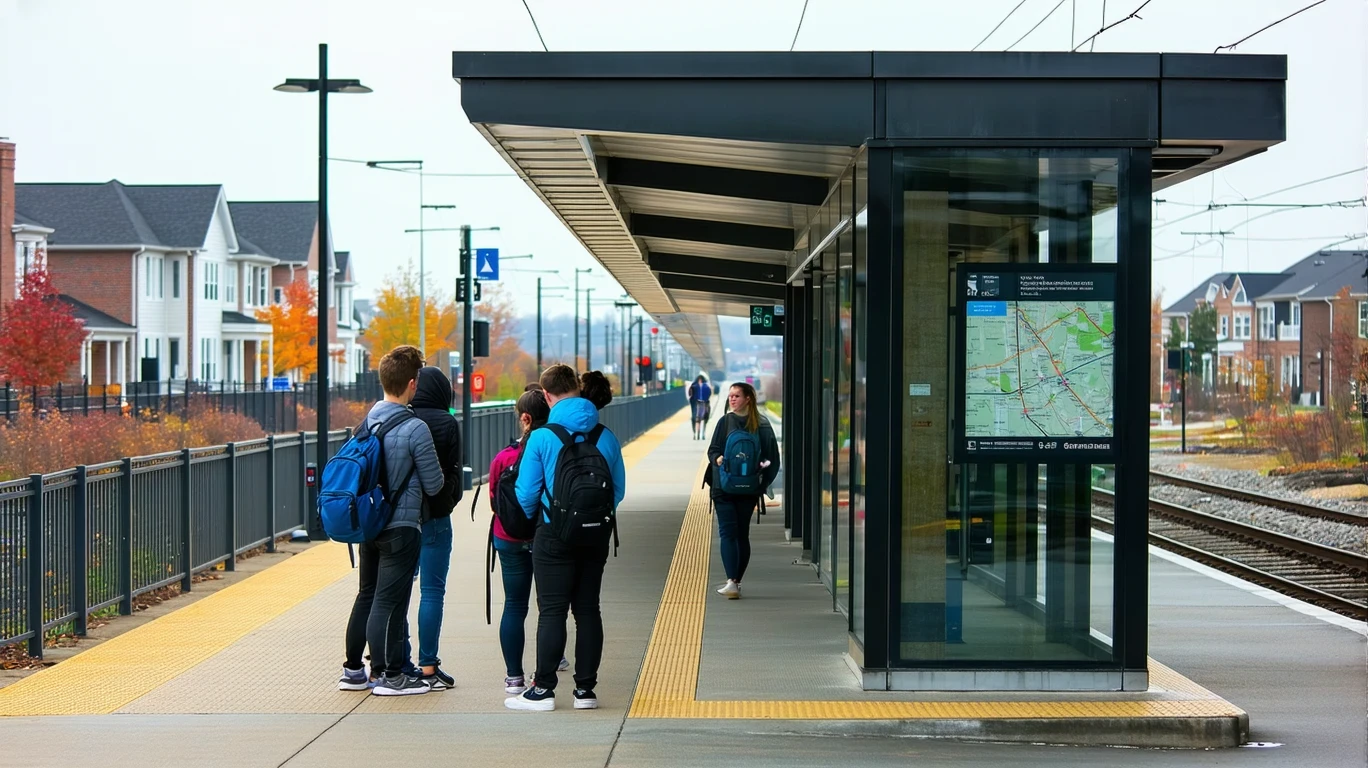
How People Get Around Harrisburg
Harrisburg sits within the Charlotte metro area, but it functions as a suburban bedroom community rather than a transit-connected node. The town’s layout reflects low-rise, spread-out development, with residential neighborhoods separated from commercial corridors. While certain areas feature sidewalks, tree-lined streets, and higher pedestrian-to-road ratios, these walkable pockets don’t eliminate the need for a car—they simply make short trips within those zones more pleasant.
Newcomers often assume that proximity to Charlotte means access to regional transit. In practice, Harrisburg lacks the bus routes, rail connections, or shuttle services that would make car-free living viable. The average commute here is 30 minutes, and nearly half of workers (46.1%) face long commutes, typically because they’re driving to jobs elsewhere in the metro.
Only 8.8% of Harrisburg workers report working from home, meaning the vast majority are on the road regularly. For families, retirees, or anyone without flexible remote work, that translates to daily driving for employment, errands, healthcare, and social life.
Public Transit Availability in Harrisburg
Public transit plays virtually no role in Harrisburg’s transportation landscape. No bus stops or rail stations were detected within the town’s infrastructure, and there are no regional services that meaningfully connect Harrisburg to Charlotte or surrounding areas with frequent, reliable schedules.
This isn’t an oversight—it’s a reflection of the town’s density, layout, and development pattern. Harrisburg grew as a car-oriented suburb, and its infrastructure prioritizes road access over transit coverage. Residents who rely on public transportation for daily commuting, medical appointments, or errands will find Harrisburg functionally inaccessible.
For those moving from cities with robust transit systems, this represents a significant lifestyle shift. There are no monthly passes to budget for, no route maps to learn, and no transfer points to navigate—because the system simply doesn’t exist here.
Driving & Car Dependence Reality
In Harrisburg, driving isn’t just the most common way to get around—it’s the only practical option for most households. Grocery stores, schools, healthcare facilities, and workplaces are spread across corridors and commercial zones that aren’t reachable on foot or by bike for the majority of residents.
Parking is abundant and typically free, which removes one friction point common in denser cities. Driveways, garages, and surface lots dominate the landscape, and traffic congestion tends to be moderate rather than severe, except during peak commute hours on routes leading toward Charlotte.
Car dependence here means that every adult in a household often needs their own vehicle. Families with multiple jobs, school drop-offs, or extracurricular schedules face compounding logistics. A single-car household can work if schedules align tightly, but it introduces friction that most residents avoid by maintaining two or more vehicles.
This also means that transportation isn’t just a monthly expense—it’s a structural cost that shapes housing decisions, job flexibility, and daily routines.
Commuting Patterns & Daily Mobility
Commuting in Harrisburg typically means driving to Charlotte or other parts of Cabarrus County. The 30-minute average commute reflects a mix of shorter local trips and longer hauls into the metro core. For those working in Uptown Charlotte or other employment hubs, commutes can stretch well beyond that average, especially during morning and evening rush periods.
Nearly half of workers here face long commutes, a pattern that reflects Harrisburg’s role as an affordable bedroom community within a high-cost metro. Residents trade proximity for housing value, accepting longer drives in exchange for larger homes, newer construction, and lower property costs than they’d find closer to Charlotte.
This commute structure also affects household logistics. Parents managing school schedules, daycare pickups, and after-work errands must plan around drive times and traffic patterns. Flexibility matters: a job with rigid start times and a 45-minute commute creates more friction than remote work or a local position, even if the local job pays less.
Who Transit Works For — and Who It Doesn’t
Transit doesn’t work for anyone in Harrisburg, because it doesn’t exist in any functional form. This isn’t a question of coverage gaps or service frequency—it’s a binary absence.
Households that depend on public transportation for daily mobility—whether due to age, disability, income, or preference—will find Harrisburg incompatible with their needs. There are no bus lines to supplement driving, no paratransit services widely available, and no regional rail to offset car ownership costs.
Even in the walkable pockets where sidewalks and bike lanes make short trips feasible, those zones don’t connect to employment centers, grocery stores, or medical facilities in a way that eliminates the need for a car. Walking works for recreation or hyperlocal errands, but it doesn’t replace vehicle ownership.
Renters and younger households sometimes attempt car-light living in denser suburbs, relying on rideshare or carpooling. In Harrisburg, that strategy quickly becomes expensive and logistically complex. Without transit as a fallback, every trip requires either a personal vehicle or paying for a ride.
Transportation Tradeoffs in Harrisburg
The tradeoff in Harrisburg isn’t between driving and transit—it’s between car dependence and proximity. Residents accept the need for vehicles in exchange for housing affordability, space, and access to the Charlotte metro’s job market without paying Charlotte’s housing costs.
Driving offers control and flexibility. Schedules aren’t dictated by bus routes or train times, and trips can be combined efficiently. But that control comes with exposure: fuel prices, maintenance costs, insurance, and vehicle depreciation all become household constants rather than optional expenses.
For families, the calculus often favors Harrisburg despite the driving requirement. Larger homes, good schools, and neighborhood amenities outweigh the inconvenience of commuting. For singles or couples without kids, especially those working in Charlotte, the lack of transit and walkability can feel isolating, particularly if they’re accustomed to urban mobility.
There’s also a time cost. Long commutes mean less time at home, more wear on vehicles, and greater exposure to traffic variability. A 30-minute commute can stretch to 50 minutes on a bad day, and that unpredictability affects everything from childcare pickup to evening plans.
FAQs About Transportation in Harrisburg (2026)
Is public transit usable for daily commuting in Harrisburg?
No. Harrisburg lacks public transit infrastructure entirely. There are no bus routes, rail stations, or regional services that support car-free commuting. Residents rely on personal vehicles for all daily travel.
Do most people in Harrisburg rely on a car?
Yes. Car ownership is functionally required for employment, errands, healthcare, and social activities. The town’s layout and lack of transit make driving the only viable option for nearly all households.
Which areas of Harrisburg are easiest to live in without a car?
No area of Harrisburg supports car-free living in a practical sense. Some neighborhoods feature sidewalks and bike lanes that make short recreational trips possible, but these don’t connect to grocery stores, jobs, or essential services in a way that eliminates the need for a vehicle.
How does commuting in Harrisburg compare to nearby cities?
Harrisburg’s 30-minute average commute reflects its role as a suburban bedroom community. Nearly half of workers face long commutes, typically driving to Charlotte or other metro employment centers. Compared to towns closer to Uptown Charlotte, Harrisburg offers more affordable housing but longer drive times.
Are there bike lanes or pedestrian paths in Harrisburg?
Some areas of Harrisburg include bike-friendly streets and pedestrian infrastructure, particularly in newer developments. However, these features support recreation and short local trips rather than replacing car dependency for daily needs.
How Transportation Fits Into the Cost of Living in Harrisburg
Transportation in Harrisburg isn’t just a line item—it’s a structural factor that shapes housing decisions, job flexibility, and household logistics. Because driving is required, every adult typically needs a vehicle, which means insurance, fuel, maintenance, and depreciation become fixed household costs rather than optional expenses.
This also affects where money goes each month. Families with two cars face double the exposure to fuel price swings, repair costs, and registration fees. Commuters driving to Charlotte absorb both time and financial costs, and those expenses don’t disappear during slow months or tight budgets.
For newcomers evaluating Harrisburg, the transportation question isn’t “Can I get by without a car?” but “How many cars will my household need, and how does that fit into our overall cost structure?” The answer shapes everything from where you live to which job offers you accept.
Harrisburg offers affordability and space, but it requires mobility infrastructure that residents must provide themselves. Understanding that tradeoff—and planning for it—makes the difference between a smooth transition and constant logistical friction.
How this article was built: In addition to public economic data, this article incorporates location-based experiential signals derived from anonymized geographic patterns—such as access density, walkability, and land-use mix—to reflect how day-to-day living actually feels in Harrisburg, NC.