
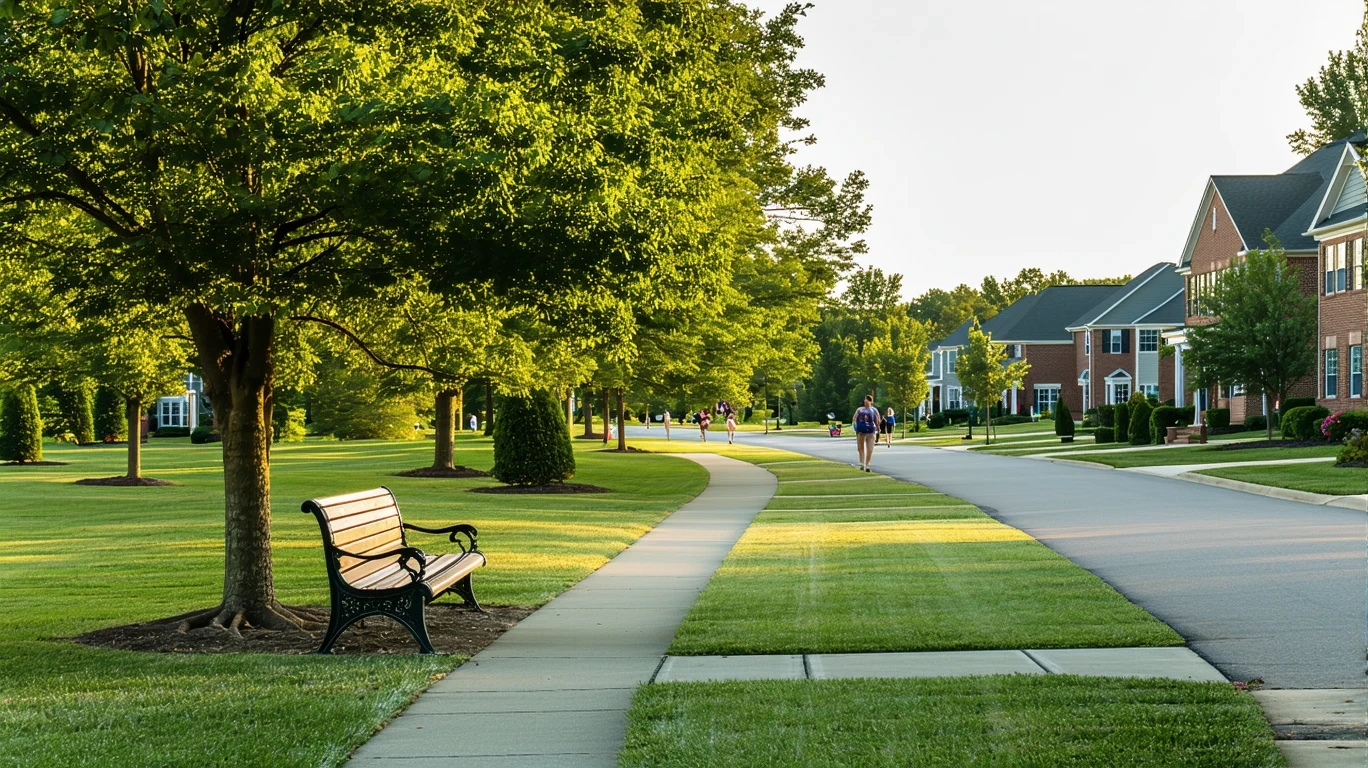
Harrisburg and Concord sit just miles apart in the Charlotte metro, yet the way costs show up in daily life differs more than their proximity suggests. Both cities attract households looking for suburban space and reasonable access to Charlotte’s job market, but the financial pressure points—and the households best positioned to manage them—don’t align neatly. In 2026, the choice between these two isn’t about which is universally cheaper; it’s about which cost structure fits the way a household actually lives, works, and moves through the week.
Harrisburg appeals to higher-income professionals willing to absorb steeper housing entry costs in exchange for walkable pockets and tighter grocery access that reduce daily friction. Concord offers lower rent and home prices but distributes cost pressure differently: sparse grocery density and limited transit mean more intentional planning, more driving, and less flexibility for households that rely on spontaneous errands or don’t want a second car. The Ramirez family—two working parents with a middle schooler—spent months weighing these tradeoffs. They loved Concord’s lower mortgage payments but worried about the extra drive time to stock up on groceries and the lack of nearby clinics. Harrisburg’s housing prices felt steep, but the ability to walk to a pharmacy and find multiple grocery options within a short drive felt like it would save time and stress in the long run.
This comparison explains where costs concentrate, how daily logistics shift, and which households feel the differences most acutely. It’s not a race to the bottom—it’s a structural fit question, and the answer depends entirely on what dominates your household budget and schedule.
Housing Costs
Housing entry costs separate these cities more sharply than any other category. Harrisburg’s median home value sits at $383,400, while Concord’s is $288,100—a gap that immediately signals different buyer profiles and financing thresholds. Renters face a similar divide: Harrisburg’s median gross rent is $2,094 per month, compared to Concord’s $1,259. These aren’t minor variations; they represent fundamentally different levels of upfront financial commitment and ongoing monthly obligation.
The difference isn’t just about price—it’s about what that price buys in terms of housing form, neighborhood density, and access. Harrisburg’s higher costs correspond with neighborhoods that show walkable pockets and higher grocery density, meaning households trade housing expense for reduced transportation friction and tighter errand loops. Concord’s lower entry costs come with trade-offs in daily accessibility: grocery options fall below density thresholds, and the urban form is more spread out, which increases car dependency even for routine tasks. For families prioritizing space and lower monthly obligations, Concord’s housing market offers breathing room. For dual-income professionals who value time savings and walkability, Harrisburg’s premium may feel justified by the reduction in logistical overhead.
First-time buyers face different barriers in each city. In Harrisburg, the higher home values demand larger down payments and stronger income documentation, which narrows the pool of qualifying households. Concord’s lower entry point opens the door to moderate-income families and younger buyers, but the savings on purchase price can be offset by higher transportation costs and the need for more intentional grocery and errand planning. Renters in Harrisburg absorb significant monthly housing costs but gain proximity to services and walkable infrastructure; renters in Concord pay less but may find themselves driving more frequently and managing a more fragmented errand landscape.
Housing takeaway: Harrisburg’s housing costs create a higher entry barrier but correspond with infrastructure that reduces daily friction. Concord’s lower prices appeal to households prioritizing affordability and space, but the cost savings shift into transportation and time. Higher-income households and those who value walkability may find Harrisburg’s premium worthwhile; moderate-income families and those comfortable with car-dependent routines will find Concord’s housing market more accessible.
Utilities and Energy Costs

Utility cost exposure in both cities follows similar seasonal rhythms—hot, humid summers drive cooling demand, and mild winters keep heating costs moderate—but the structural differences in housing stock and urban form create different volatility profiles. Harrisburg’s electricity rate is 14.64¢/kWh, slightly lower than Concord’s 15.05¢/kWh, but the real difference lies in how housing type and density interact with energy usage. Harrisburg’s low-rise, more compact neighborhoods may reduce cooling loads in smaller homes or townhomes, while Concord’s mixed building heights and more spread-out form mean larger single-family homes dominate, increasing baseline energy consumption.
Households in older single-family homes—common in both cities—face higher cooling exposure during extended summer heat. Insulation quality, window efficiency, and HVAC age matter more than the per-kilowatt-hour rate when it comes to managing monthly bills. In Harrisburg, the concentration of walkable pockets and tighter urban form may correlate with newer construction or better-maintained housing stock, which can reduce energy waste. Concord’s housing market, with its lower entry costs, may include more older homes where energy efficiency upgrades haven’t been prioritized, leading to higher usage even if the rate difference is minimal.
Families in larger homes feel utility volatility more acutely. A 2,500-square-foot house in Concord with older windows and an aging HVAC system can see significant swings in summer bills, even with modest rate differences. In Harrisburg, smaller lot sizes and denser neighborhoods may mean less square footage to cool, which dampens volatility. Single adults and couples in apartments or townhomes experience more predictable utility costs in both cities, but those in Concord’s more car-dependent areas may find that transportation costs offset any utility savings from smaller living spaces.
Utility takeaway: Utility costs in both cities are driven more by housing type, age, and size than by rate differences. Harrisburg’s denser, low-rise form may reduce cooling exposure for households in smaller homes, while Concord’s larger single-family housing stock increases baseline energy consumption. Families in older homes face more volatility in Concord; households in newer or smaller units in Harrisburg may experience more predictable bills.
Groceries and Daily Expenses
Grocery and daily spending pressure diverges sharply between these cities, not because of price differences—both share the same regional price parity—but because of how access and density shape shopping behavior. Harrisburg shows high grocery density concentrated along corridors, meaning households can choose between multiple stores, compare prices easily, and make quick trips without extensive planning. Concord’s grocery density falls below thresholds, meaning fewer options, longer drives, and more reliance on bulk shopping trips to avoid frequent travel.
For families managing weekly grocery runs, Harrisburg’s tighter access reduces friction: multiple stores within a short drive mean less time spent traveling and more flexibility to shop sales or pick up forgotten items without a major detour. Concord’s sparse grocery landscape forces more intentional planning—households may need to consolidate trips, rely on a single primary store, or drive farther to access discount options. This doesn’t necessarily mean higher prices, but it does mean more time, more fuel, and less spontaneity. The Ramirez family found this difference tangible: in Harrisburg, they could stop at three different grocery stores within a 10-minute radius; in Concord, the nearest comparable options required 15–20 minutes of driving, which added up over the course of a month.
Single adults and couples without kids may feel this difference less acutely—smaller households can shop less frequently and absorb the occasional longer trip—but families with children, especially those managing school schedules and extracurriculars, find that sparse grocery access compounds time pressure. Convenience spending also shifts: Harrisburg’s walkable pockets and higher food establishment density mean more coffee shops, quick-service restaurants, and prepared food options within easy reach, which can increase spending if households lean on convenience. Concord’s lower food density reduces temptation but also reduces flexibility, meaning households need to plan meals more carefully or accept longer drives for takeout.
Grocery takeaway: Harrisburg’s high grocery density reduces time and planning burden, especially for families managing frequent shopping trips. Concord’s sparse access increases car dependency and requires more intentional trip consolidation. Households that value flexibility and spontaneity will feel the difference; those comfortable with bulk shopping and planned routines may find Concord’s structure manageable.
Taxes and Fees
Property taxes, local fees, and recurring service charges shape long-term cost exposure in both cities, but the structural differences in housing values and neighborhood density create different profiles. Harrisburg’s higher median home values mean property tax obligations are higher in absolute terms, even if rates are similar, because the assessed value base is larger. Homeowners in Harrisburg face steeper annual property tax bills, which compounds the upfront housing cost barrier and increases the ongoing financial commitment required to stay in the home.
Concord’s lower home values reduce property tax exposure, which can make homeownership more sustainable for moderate-income families over time. However, the trade-off often appears in the form of higher transportation costs and less predictable maintenance expenses in older housing stock. Both cities may include neighborhoods with HOA fees, especially in newer subdivisions, but the prevalence and structure of these fees vary by development. In Harrisburg, HOAs in walkable pockets may bundle services like landscaping or shared amenities, which can increase predictability but also add to monthly obligations. In Concord, HOA fees may be less common in older neighborhoods, but when present, they can cover similar services without the density benefits that reduce individual household logistics.
Renters in both cities are indirectly exposed to property taxes through rent levels, but the impact is more visible in Harrisburg, where higher home values and property taxes contribute to the elevated rent baseline. Concord’s lower rent reflects not just lower home values but also the reduced density and accessibility that shift costs into transportation and time. Long-term residents in either city face the risk of property tax increases as home values appreciate, but Harrisburg’s already-high entry point means households need to plan for sustained high obligations, while Concord’s lower baseline offers more cushion against future increases.
Tax and fee takeaway: Harrisburg’s higher home values drive higher property tax obligations, which increases long-term cost exposure for homeowners. Concord’s lower values reduce tax burden but shift costs into transportation and time. Renters in Harrisburg face higher rent partly due to property tax pass-through; renters in Concord pay less but absorb costs elsewhere.
Transportation & Commute Reality
Transportation costs and commute friction differ not just in distance but in how daily movement is structured. Harrisburg’s average commute time is 30 minutes, with 46.1% of workers facing long commutes and only 8.8% working from home. This suggests a workforce heavily oriented toward Charlotte or other regional job centers, with most households relying on personal vehicles for the daily trek. Gas prices in Harrisburg sit at $2.77 per gallon, slightly higher than Concord’s $2.73, but the real cost difference comes from how often households need to drive for non-commute errands.
Harrisburg’s walkable pockets and high grocery density mean that once home from work, many households can handle errands on foot or with short drives, reducing the number of trips and the total miles driven each week. Concord, despite having bus service, shows sparse grocery access and lower overall walkability, meaning households drive more frequently for routine tasks even if the commute to work is comparable. The presence of bus stops in Concord offers some flexibility for households without a second car, but the sparse errand infrastructure limits how much transit can reduce overall car dependency.
Families with two working adults feel this difference acutely. In Harrisburg, one partner might walk to a pharmacy or nearby grocery store while the other handles the commute, reducing the need for a second car or constant coordination. In Concord, both partners likely need access to a vehicle throughout the day, which increases insurance, maintenance, and fuel costs even if the per-gallon price is slightly lower. Single adults in Concord may find the bus service useful for commuting but still need a car for weekend errands or grocery runs, which limits the cost savings from transit use.
Transportation takeaway: Harrisburg’s longer commutes are offset by walkable pockets that reduce non-commute driving. Concord’s bus service offers some flexibility, but sparse grocery access increases overall car dependency. Households that value reduced errand friction may prefer Harrisburg; those comfortable with car-dependent routines and lower housing costs may find Concord’s structure manageable.
Cost Structure Comparison
Housing dominates the cost experience in Harrisburg, creating a high entry barrier and sustained monthly obligation that narrows the pool of qualifying households. The premium buys access to walkable pockets, tighter grocery density, and reduced daily friction—benefits that matter most to higher-income professionals and families who value time savings over lower baseline costs. Concord’s lower housing costs open the door to moderate-income families and first-time buyers, but the savings shift into transportation, time, and planning burden. Sparse grocery access and car-dependent errands mean households drive more, plan more, and absorb logistical overhead that doesn’t show up in rent or mortgage payments.
Utilities introduce similar seasonal exposure in both cities, but Harrisburg’s denser, low-rise form may reduce cooling costs for households in smaller homes, while Concord’s larger single-family housing stock increases baseline energy consumption. The difference isn’t dramatic, but it compounds over time, especially for families in older homes where efficiency upgrades haven’t been prioritized. Groceries and daily expenses follow the same regional price baseline, but Harrisburg’s high grocery density reduces time and fuel costs, while Concord’s sparse access forces more intentional trip planning and longer drives.
Transportation patterns matter more in Concord, where the lack of walkable errands and limited grocery options mean households rely on cars for nearly every task. Harrisburg’s walkable pockets don’t eliminate car dependency—most households still commute to Charlotte—but they reduce the number of trips and the total miles driven each week, which lowers fuel, maintenance, and insurance exposure. For households sensitive to time pressure and logistical complexity, Harrisburg’s structure feels more forgiving. For those prioritizing lower monthly housing obligations and comfortable with car-dependent routines, Concord’s cost structure offers more breathing room.
The decision isn’t about which city is cheaper overall—it’s about which costs dominate the household and which structure reduces the most friction. Households sensitive to housing entry barriers and ongoing rent or mortgage obligations may struggle in Harrisburg, even with higher incomes. Households sensitive to transportation costs, time pressure, and errand logistics may find Concord’s lower housing costs offset by the extra driving and planning required to manage daily life.
How the Same Income Feels in Harrisburg vs Concord
Single Adult
A single adult in Harrisburg faces steep rent that claims a larger share of gross monthly income, leaving less flexibility for discretionary spending or savings. However, walkable pockets and high grocery density reduce the need for frequent driving, which lowers transportation costs and time spent on errands. In Concord, lower rent frees up more monthly income, but sparse grocery access and car-dependent errands mean more fuel costs, more time behind the wheel, and less spontaneity. The flexibility gained from lower housing costs can disappear quickly if the household needs to maintain a car, pay for insurance, and absorb maintenance expenses that wouldn’t be as pressing in a more walkable environment.
Dual-Income Couple
A dual-income couple in Harrisburg absorbs high housing costs but benefits from reduced logistical complexity: one partner can handle errands on foot or with short drives while the other commutes, reducing the need for constant coordination or a second car. In Concord, lower housing costs feel more manageable at first, but both partners likely need access to a vehicle throughout the day, which increases insurance, fuel, and maintenance expenses. The time cost of driving to sparse grocery options and managing less-dense errand infrastructure can erode the financial breathing room that lower rent or mortgage payments initially provide. Couples who value predictability and reduced friction may find Harrisburg’s structure worth the premium; those prioritizing lower baseline housing obligations may prefer Concord’s cost profile.
Family with Kids
A family in Harrisburg faces the highest housing pressure of any household type, with steep rent or mortgage payments that dominate the monthly budget. However, walkable pockets and high grocery density reduce the time and fuel costs of managing school pickups, extracurriculars, and weekly shopping trips, which matters more as schedules grow complex. In Concord, lower housing costs offer more financial cushion, but sparse grocery access and limited family infrastructure mean more driving, more planning, and more logistical overhead. The savings on housing can be offset by the need for a second car, higher fuel costs, and the time burden of managing errands across a more spread-out landscape. Families with flexible schedules and comfort with car-dependent routines may thrive in Concord; those juggling tight schedules and valuing reduced friction may find Harrisburg’s structure more sustainable despite the higher costs.
Decision Matrix: Which City Fits Which Household?
| Decision factor | If you’re sensitive to this… | Harrisburg tends to fit when… | Concord tends to fit when… |
|---|---|---|---|
| Housing entry + space needs | You need lower upfront costs and more breathing room in monthly obligations | You can absorb higher rent or mortgage in exchange for reduced daily friction | You prioritize lower baseline housing costs and can manage car-dependent logistics |
| Transportation dependence + commute friction | You want to minimize driving for errands and reduce fuel and maintenance exposure | Walkable pockets reduce non-commute trips even if work commutes remain long | You’re comfortable with car-dependent routines and can consolidate errands into planned trips |
| Utility variability + home size exposure | You want predictable energy costs and lower cooling exposure | Denser, low-rise housing stock may reduce cooling loads in smaller homes | You can manage higher energy consumption in larger single-family homes with older systems |
| Grocery strategy + convenience spending creep | You value flexibility, spontaneity, and multiple store options within short drives | High grocery density reduces time and planning burden for frequent shopping trips | You’re comfortable with bulk shopping and planned routines that reduce trip frequency |
| Fees + friction costs (HOA, services, upkeep) | You want lower property tax exposure and reduced long-term obligations | You can absorb higher property taxes in exchange for walkable infrastructure and tighter access | Lower home values reduce property tax burden but may shift costs into transportation and time |
| Time budget (schedule flexibility, errands, logistics) | You need to minimize logistical overhead and reduce time spent managing daily tasks | Walkable pockets and high grocery density reduce errand friction and time pressure | You have flexible schedules and can absorb the extra time required for car-dependent errands |
Lifestyle Fit
Harrisburg and Concord offer different textures of suburban life, shaped less by distance from Charlotte than by how daily movement and access are structured. Harrisburg’s walkable pockets and high grocery density create a rhythm where errands feel less like expeditions and more like quick stops—households can walk to a pharmacy, grab coffee, or hit a grocery store without extensive planning. The low-rise, compact form means neighborhoods feel cohesive, and the presence of water features and moderate park density adds green space without requiring long drives. For families who value reduced friction and spontaneity, this structure feels more forgiving, even if housing costs are steep.
Concord’s mixed building heights and landuse mix signal a more varied urban form, with pockets of commercial activity interspersed among residential areas. The presence of bus service offers some flexibility for households without a second car, and clinics provide routine healthcare access without needing to travel to a hospital. However, sparse grocery density and limited park access mean households need to be more intentional about errands and recreation. Families comfortable with car-dependent routines and planned outings may find Concord’s lower housing costs and more spread-out structure appealing, especially if they prioritize space over walkability.
Both cities show limited family infrastructure—school and playground density fall below thresholds in each—which suggests that families with young children may need to drive to access parks, playgrounds, or extracurriculars. Harrisburg’s water features and moderate park density offer some nearby outdoor options, while Concord’s lower park density means families may need to travel farther for green space. For households prioritizing outdoor recreation and spontaneous play, Harrisburg’s structure offers more immediate access. For those comfortable with weekend trips to regional parks or organized activities, Concord’s layout is manageable.
Harrisburg’s median household income is $134,767 per year, reflecting a higher-income professional base. Concord’s median household income is $83,480 per year, suggesting a more moderate-income family demographic.
Frequently Asked Questions
Is Harrisburg or Concord more affordable for renters in 2026?
Concord offers significantly lower rent—$1,259 per month compared to Harrisburg’s $2,094—but the savings shift into transportation and time. Harrisburg’s higher rent corresponds with walkable pockets and high grocery density, which reduce the need for frequent driving and lower fuel and maintenance costs. Renters in Concord pay less upfront but absorb more car dependency, which can erode the financial breathing room that lower rent provides. The better fit depends on whether the household prioritizes lower baseline housing costs or reduced logistical overhead.
How do grocery costs compare between Harrisburg and Concord in 2026?
Both cities share the same regional price parity, so grocery prices are similar, but access and density create different cost experiences. Harrisburg’s high grocery density means multiple stores within short drives, which reduces time, fuel, and planning burden. Concord’s sparse grocery access forces more intentional trip planning and longer drives, which increases transportation costs even if prices at the store are comparable. Families managing frequent shopping trips feel this difference more acutely than single adults or couples who shop less often.
Which city has lower transportation costs, Harrisburg or Concord, in 2026?
Harrisburg’s gas price is slightly higher at $2.77 per gallon compared to Concord’s $2.73, but transportation costs are driven more by how often households need to drive than by per-gallon price. Harrisburg’s walkable pockets reduce non-commute trips, which lowers total miles driven and reduces fuel, insurance, and maintenance exposure. Concord’s sparse grocery access and car-dependent errands mean households drive more frequently, which can offset the slightly lower gas price. Households that value reduced errand friction may find Harrisburg’s structure lowers overall transportation costs despite higher gas prices.
Are utility bills higher in Harrisburg or Concord in 2026?
Concord’s electricity rate is slightly higher at 15.05¢/kWh compared to Harrisburg’s 14.64¢/kWh, but utility costs are driven more by housing type, size, and age than by rate differences. Harrisburg’s denser, low-rise form may reduce cooling exposure for households in smaller homes, while Concord’s larger single-family housing stock increases baseline energy consumption. Families in older homes with aging HVAC systems face more volatility in Concord; households in newer or smaller units in Harrisburg may experience more predictable bills.
Which city is better for families with kids, Harrisburg or Concord, in 2026?
Both cities show limited family infrastructure—school and playground density fall below thresholds in each—but the cost structure and daily logistics differ. Harrisburg’s higher housing costs create financial pressure, but walkable pockets and high grocery density reduce the time and fuel costs of managing school pickups, extracurriculars, and weekly shopping. Concord’s lower housing costs offer more financial cushion, but sparse grocery access and limited park density mean more driving and more planning. Families with flexible schedules and comfort with car-dependent routines may thrive in Concord; those juggling tight schedules and valuing reduced friction may find Harrisburg’s structure more sustainable despite higher costs.
Conclusion
Harrisburg and Concord don’t compete on the same terms—they offer fundamentally different cost structures that fit different household profiles. Harrisburg’s higher housing costs create a steep entry barrier and sustained monthly obligation, but the walkable pockets, high grocery density, and reduced errand friction reward households who value time savings and logistical simplicity. Concord’s lower rent and home prices open the door to moderate-income families and first-time buyers, but the sparse grocery access, car-dependent errands, and more spread-out form shift costs into transportation, time, and planning burden.
The decision hinges on which costs dominate the household and which structure reduces the most friction. Higher-income professionals and families who prioritize walkability, spontaneity, and reduced driving may find Harrisburg’s premium justified by the reduction in daily overhead. Moderate-income families and those comfortable with car-dependent routines may find Concord’s lower baseline costs more sustainable, especially if they can absorb the extra driving and planning required to manage daily life. Neither city is universally cheaper—each trades one set of pressures for another, and the right fit depends entirely on how the household earns, spends, and moves through the week.
How this article was built: In addition to public economic data, this article incorporates location-based experiential signals derived from anonymized geographic patterns—such as access density, walkability, and land-use mix—to reflect how day-to-day living actually feels in Harrisburg, NC.