

Hamilton and West Chester sit roughly 15 miles apart in the Cincinnati metro area, sharing utility providers, gas stations, and regional weather patterns—but the cost experience in each city diverges sharply once you move past the pump and the power bill. Hamilton offers older housing stock, established neighborhoods with rail access, and a pedestrian-to-road ratio that supports walking in pockets of the city. West Chester brings newer construction, higher household incomes, and a development pattern built around major corridors and planned communities. In 2026, the decision between these two cities isn’t about which one costs less overall—it’s about which cost pressures show up first, which households feel them most acutely, and whether your budget prioritizes entry barriers or ongoing obligations.
Both cities function as residential anchors within the broader Cincinnati region, but they serve different household types and lifestyle strategies. Hamilton’s housing market reflects decades of industrial heritage and gradual reinvestment, with median home values and rents that open the door to homeownership and independent living for single adults, young couples, and families managing tighter budgets. West Chester’s housing stock skews newer and larger, with correspondingly higher entry costs that appeal to dual-income households, families prioritizing school access and neighborhood amenities, and buyers willing to trade higher monthly obligations for predictability and space. The cities share identical electricity rates, natural gas prices, and fuel costs, but the way those costs interact with housing type, commute patterns, and household routines creates distinct financial textures that matter more than any line-item comparison.
This article explains where cost pressure concentrates in Hamilton versus West Chester, how different household types experience those pressures, and why the better choice depends on which costs dominate your day-to-day life. We’ll walk through housing entry barriers, utility exposure by home type, grocery and daily spending patterns, transportation dependence, and the role of taxes and fees—without declaring a winner or calculating totals. The goal is to help you see which city’s cost structure aligns with your household’s income stability, time budget, and tolerance for volatility versus predictability.
Housing Costs: Entry Barrier vs Ongoing Obligation
Housing costs separate Hamilton and West Chester more decisively than any other category. Hamilton’s median home value sits at $141,300, with median gross rent at $947 per month. West Chester’s median home value reaches $289,200, with median gross rent at $1,381 per month. These aren’t small differences—they represent fundamentally different housing markets serving different income bands and household strategies. Hamilton’s housing stock reflects older construction, smaller lot sizes, and a mix of single-family homes, duplexes, and older apartment complexes concentrated near the downtown core and along established transit corridors. West Chester’s housing leans toward newer single-family subdivisions, townhome communities, and apartment complexes built in the last two decades, often with HOA structures and amenity packages that bundle services but add recurring fees.
For renters, the gap between Hamilton and West Chester translates directly into monthly budget flexibility. A single adult or young couple renting in Hamilton faces lower baseline housing obligations, leaving more room for discretionary spending, emergency savings, or student loan payments. West Chester’s rental market targets households with higher incomes and often includes amenities like fitness centers, pools, and maintained grounds—features that justify higher rents but may not align with every renter’s priorities. Families renting in either city face different tradeoffs: Hamilton offers proximity to rail transit and walkable pockets that reduce car dependency, while West Chester provides newer construction with better insulation, modern HVAC systems, and layouts designed for larger households. The choice hinges on whether predictability (newer systems, fewer maintenance surprises) or flexibility (lower rent, more budget cushion) matters more to your household.
For buyers, the difference between Hamilton and West Chester shows up in down payment requirements, mortgage approval thresholds, and long-term equity exposure. Hamilton’s lower home values make homeownership accessible to first-time buyers, single-income households, and families prioritizing ownership over rental flexibility. West Chester’s higher home values require larger down payments and higher income verification, but they also offer access to newer construction, larger lots, and neighborhoods with established HOA governance and amenity infrastructure. Buyers in Hamilton gain entry to ownership with less upfront capital and lower monthly mortgage obligations, but they inherit older systems (roofs, HVAC, plumbing) that may require replacement or repair within the first few years. Buyers in West Chester pay more upfront and monthly, but they often acquire homes with warranties, newer systems, and HOA-managed exteriors that reduce surprise maintenance costs in the short term.
| Housing Type | Hamilton | West Chester |
|---|---|---|
| Median Home Value | $141,300 | $289,200 |
| Median Gross Rent | $947/month | $1,381/month |
| Typical Housing Stock | Older single-family, duplexes, mixed-age apartments | Newer single-family, townhomes, planned communities |
| HOA Prevalence | Less common, mostly in newer pockets | Common in subdivisions and townhome developments |
The housing cost difference between Hamilton and West Chester affects renters and buyers differently, but the underlying dynamic remains consistent: Hamilton front-loads affordability and flexibility, while West Chester front-loads predictability and space. Renters sensitive to monthly cash flow and buyers prioritizing lower entry barriers will find Hamilton’s housing market more forgiving. Renters prioritizing newer construction and buyers willing to absorb higher monthly obligations in exchange for larger homes and managed amenities will find West Chester’s housing market better aligned with those goals. Neither city offers a universal advantage—the better choice depends on whether your household prioritizes access or predictability, and whether you’re more exposed to upfront costs or ongoing obligations.
Utilities and Energy Costs: Same Rates, Different Exposure
Hamilton and West Chester share identical utility rate structures: 17.66¢/kWh for electricity and $13.33/MCF for natural gas. Both cities experience the same regional climate patterns, with hot, humid summers that drive air conditioning usage and cold winters that require heating. The rates don’t change, but the way households experience utility costs does—because housing stock, home size, insulation quality, and HVAC system age vary significantly between the two cities. Hamilton’s older housing stock often includes single-pane windows, older furnaces, and less effective insulation, which means the same temperature swings outside translate into higher energy consumption inside. West Chester’s newer construction typically includes double-pane windows, modern HVAC systems with programmable thermostats, and better insulation, which dampens the impact of extreme weather on monthly utility bills.
For single adults and couples living in apartments, utility exposure in Hamilton and West Chester depends more on building age and management practices than on household behavior. Older apartment complexes in Hamilton may lack central air conditioning or rely on window units, which consume more electricity per square foot cooled and create uneven temperature control. Newer apartment complexes in West Chester often include central HVAC systems, energy-efficient appliances, and better building envelopes, which reduce baseline energy consumption even if the household doesn’t actively manage usage. Renters in either city should ask whether utilities are included in rent or billed separately, and whether the building has undergone recent energy efficiency upgrades—because those structural factors matter more than thermostat discipline when it comes to monthly volatility.
For families in single-family homes, utility exposure scales with square footage, system age, and household size. Hamilton’s housing stock includes many homes built before modern energy codes took effect, which means families heating or cooling 1,500–2,000 square feet may face higher per-square-foot costs than families in West Chester managing similar or even larger homes with newer systems. West Chester’s newer homes often include zoned HVAC systems, better attic insulation, and more efficient water heaters, which reduce the baseline energy load and make monthly bills more predictable across seasons. Families in Hamilton can offset some of this exposure by upgrading insulation, sealing ducts, and replacing older HVAC systems, but those improvements require upfront capital and time—resources that may not be available to households already stretched by other obligations.
Utility cost volatility in both cities follows the same seasonal rhythm: cooling dominates summer bills, heating dominates winter bills, and shoulder seasons (spring and fall) offer brief relief. But the amplitude of that volatility differs based on housing type and system efficiency. Households in older Hamilton homes may see summer electric bills spike sharply during heat waves, while households in newer West Chester homes experience smaller swings because their HVAC systems don’t have to work as hard to maintain comfort. Similarly, winter heating costs in Hamilton can escalate quickly if furnaces are older and homes are drafty, while West Chester households benefit from better insulation and more efficient heating systems that smooth out the cost curve. Neither city offers a structural advantage in utility rates, but West Chester’s newer housing stock reduces exposure to the extremes, while Hamilton’s older stock increases volatility and rewards households willing to invest in efficiency upgrades.
Utility takeaway: Households prioritizing predictable monthly utility bills and minimal maintenance surprises will find West Chester’s newer housing stock better aligned with those goals, even though the rates are identical. Households willing to manage older systems, invest in efficiency upgrades over time, or tolerate higher seasonal volatility in exchange for lower housing entry costs will find Hamilton’s utility exposure manageable—but it requires more active attention and occasional capital investment. The difference isn’t about rates; it’s about how housing stock amplifies or dampens the impact of those rates on your monthly budget.
Groceries and Daily Expenses: Access, Habits, and Price Sensitivity
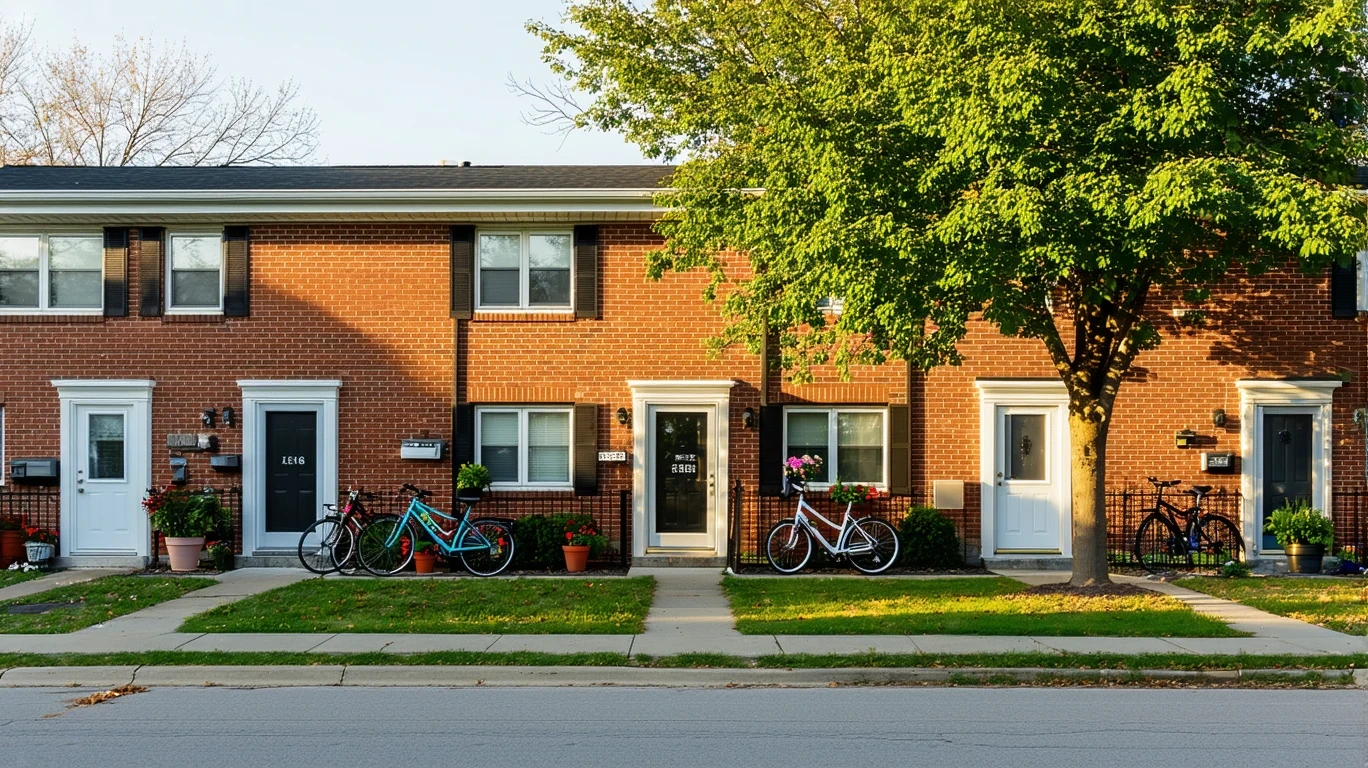
Grocery and daily expense pressure in Hamilton and West Chester reflects differences in store concentration, household shopping habits, and the friction cost of running errands. Both cities show corridor-clustered food and grocery establishment density, meaning most shopping options concentrate along major roads rather than distributing evenly across neighborhoods. Hamilton’s grocery landscape includes a mix of regional chains, discount grocers, and smaller neighborhood stores, with some walkable access in older parts of the city where pedestrian infrastructure supports foot traffic. West Chester’s grocery options lean toward larger format stores—big-box retailers, warehouse clubs, and newer supermarket locations—often situated in shopping centers designed for car access and bulk purchasing.
For single adults and couples, grocery spending in Hamilton and West Chester depends less on price differences (which are minimal within the same metro area) and more on shopping strategy and convenience tradeoffs. Hamilton’s corridor-clustered grocery access means households living near downtown or along transit routes can walk or take short trips to neighborhood stores, reducing the need for bulk shopping and allowing for more frequent, smaller purchases. West Chester’s grocery landscape rewards households with cars, storage space, and time to plan larger shopping trips—because the stores are bigger, the parking lots are easier to navigate, and the product selection supports stocking up rather than filling in. Single adults in Hamilton may find it easier to grab fresh produce or a few staples on the way home from work, while single adults in West Chester may need to dedicate weekend time to a full grocery run.
For families managing larger grocery volumes, the difference between Hamilton and West Chester shows up in time cost, storage capacity, and price flexibility. Families in West Chester benefit from proximity to warehouse clubs and big-box grocers that offer lower per-unit prices on bulk staples—rice, pasta, canned goods, frozen vegetables—but those savings require upfront spending, storage space, and the ability to use products before they expire. Families in Hamilton have access to similar stores along major corridors, but the trip may take longer, parking may be more congested, and the household may lack the pantry or freezer space to take full advantage of bulk pricing. The result: families in West Chester can reduce per-meal grocery costs if they have the time, space, and budget flexibility to shop strategically, while families in Hamilton may pay slightly more per unit but avoid the friction cost of long shopping trips and the risk of food waste from over-purchasing.
Daily convenience spending—coffee shops, takeout, quick meals, household goods—follows a similar pattern. Hamilton’s mixed land use and walkable pockets mean some households can access coffee shops, pharmacies, and convenience stores without driving, which reduces the friction cost of small errands but may increase the temptation to spend on convenience. West Chester’s corridor-based development means most convenience spending requires a car trip, which adds time cost but may reduce impulse spending because the trip itself becomes more deliberate. Families in either city face the same tradeoff: convenience costs money, but inconvenience costs time. The better choice depends on whether your household prioritizes minimizing cash outflow (West Chester’s bulk-shopping advantage) or minimizing time and friction (Hamilton’s walkable-pocket advantage).
Grocery takeaway: Households with cars, storage space, and time to plan bulk shopping trips will find West Chester’s grocery landscape more efficient and potentially less expensive per unit. Households prioritizing walkable access, smaller shopping trips, and reduced car dependency will find Hamilton’s corridor-clustered grocery options more convenient, even if per-unit prices are slightly higher. The difference isn’t about food prices—it’s about how shopping infrastructure aligns with your household’s time budget, storage capacity, and tolerance for planning versus spontaneity.
Taxes and Fees: Predictability vs Surprise Costs
Property taxes, local fees, and recurring service charges shape the ongoing cost experience in Hamilton and West Chester differently, even though both cities operate within Ohio’s property tax framework. Hamilton’s older housing stock and lower home values mean property tax bills are generally lower in absolute terms, but the city’s infrastructure age and maintenance needs can translate into higher water, sewer, and trash fees over time. West Chester’s higher home values generate higher property tax bills, but many neighborhoods operate under HOA structures that bundle services like lawn care, snow removal, and exterior maintenance into monthly or annual fees—creating predictability but adding another layer of recurring obligation.
For homeowners, property tax exposure in Hamilton and West Chester scales with assessed home value, but the way those taxes interact with other fees and services differs. Hamilton homeowners pay lower property taxes on average but may face higher utility connection fees, special assessments for infrastructure repairs, or unpredictable costs for services that aren’t bundled. West Chester homeowners pay higher property taxes but often live in neighborhoods where HOA fees cover services that Hamilton homeowners must budget for separately—landscaping, street lighting, community amenities. The tradeoff: Hamilton offers lower baseline tax obligations but requires more active management of individual service costs, while West Chester bundles more services into predictable recurring fees but raises the baseline obligation.
For renters, taxes and fees show up indirectly through rent levels and lease structures. Renters in Hamilton may see lower rents but face separate charges for utilities, trash, or parking, which can make monthly budgeting less predictable. Renters in West Chester often pay higher base rents that include more services, reducing the number of separate bills but raising the total monthly housing obligation. Long-term residents in either city should also consider how property tax increases (driven by reassessments or levy changes) eventually flow through to rent increases, even if renters don’t pay property taxes directly. Hamilton’s lower home values provide some insulation from sharp tax increases, while West Chester’s higher home values create more exposure to reassessment-driven tax hikes that landlords may pass through to tenants.
Tax and fee takeaway: Homeowners prioritizing lower baseline tax obligations and willing to manage individual service costs will find Hamilton’s tax structure more flexible. Homeowners prioritizing predictable, bundled service fees and willing to absorb higher property taxes in exchange for less day-to-day management will find West Chester’s HOA-heavy structure more aligned with those goals. Renters in either city should ask which services are included in rent and which are billed separately, because the difference between a lower base rent with multiple add-ons and a higher all-inclusive rent can shift the affordability calculus significantly.
Transportation and Commute Reality
Transportation costs in Hamilton and West Chester share the same fuel price—$2.78/gal—but the way households experience commute pressure differs based on transit access, car dependency, and time-versus-distance tradeoffs. Hamilton’s average commute time sits at 25 minutes, with 6.5% of workers working from home and 35.6% facing long commutes. West Chester’s average commute time is slightly shorter at 23 minutes, with 4.4% working from home and 31.0% facing long commutes. The numbers are close, but the structural differences matter: Hamilton offers rail transit access and walkable pockets that reduce car dependency for some households, while West Chester’s development pattern assumes car ownership and highway access for most daily trips.
Hamilton’s rail transit presence—confirmed by infrastructure mapping—creates an alternative to driving for households living near stations or willing to structure their routines around transit schedules. Single adults and couples working in downtown Cincinnati or along transit corridors can reduce or eliminate car ownership costs by relying on rail for commuting and walking or biking for local errands. Families in Hamilton face a more complex calculus: rail transit may work for one adult’s commute, but school drop-offs, grocery runs, and extracurricular activities often require a car, which means the household still absorbs insurance, maintenance, and parking costs even if one vehicle sits idle most days. The benefit of rail access in Hamilton isn’t eliminating transportation costs—it’s creating optionality and reducing the household’s exposure to fuel price volatility and car depreciation.
West Chester’s transportation landscape assumes car ownership as the default. No rail transit infrastructure was detected, and the city’s corridor-based development pattern means most errands, commutes, and social trips require driving. Households in West Chester benefit from shorter average commute times and better highway access, which reduces time cost and makes multi-stop trips more efficient, but they also face higher baseline transportation obligations: car payments or depreciation, insurance, maintenance, registration, and fuel. Families in West Chester often operate as two-car households by necessity, because the city’s layout and school catchment areas make it difficult to manage daily logistics with one vehicle. The result: West Chester households trade higher transportation baseline costs for greater schedule flexibility and reduced friction in managing complex household routines.
The commute time difference between Hamilton and West Chester—two minutes—matters less than the structural difference in transportation dependence. Hamilton households with access to rail transit and walkable neighborhoods can reduce car dependency and shift some transportation spending into housing or savings, but they sacrifice some schedule flexibility and convenience. West Chester households absorb higher baseline transportation costs but gain the ability to manage complex schedules, run errands efficiently, and avoid the time cost of waiting for transit or coordinating trips around fixed schedules. The better choice depends on whether your household prioritizes minimizing cash outflow (Hamilton’s transit option) or minimizing time friction (West Chester’s car-centric efficiency).
Transportation takeaway: Households willing to structure routines around transit schedules, reduce car ownership, and prioritize walkable access will find Hamilton’s rail transit and pedestrian infrastructure valuable, even if it doesn’t eliminate all transportation costs. Households prioritizing schedule flexibility, multi-stop efficiency, and the ability to manage complex logistics without time constraints will find West Chester’s car-centric infrastructure better aligned with those goals, even though it raises baseline transportation obligations. The difference isn’t about commute time—it’s about whether your household’s daily routines can adapt to transit constraints or require the flexibility that car ownership provides.
Cost Structure Comparison
Housing pressure dominates the cost experience in both Hamilton and West Chester, but the nature of that pressure differs fundamentally. Hamilton’s lower home values and rents reduce the entry barrier to independent living and homeownership, making the city accessible to single adults, young couples, and families managing tighter budgets or prioritizing flexibility over predictability. West Chester’s higher home values and rents create a steeper entry barrier but deliver newer construction, larger homes, and HOA-managed amenities that reduce maintenance surprises and smooth out ongoing obligations. Households sensitive to upfront costs—down payments, first month’s rent, moving expenses—will find Hamilton’s housing market more forgiving. Households sensitive to ongoing volatility—unexpected repairs, system replacements, variable utility bills—will find West Chester’s housing market more predictable.
Utilities introduce more volatility in Hamilton because the city’s older housing stock amplifies the impact of seasonal temperature swings. Families heating or cooling older homes with less efficient systems face sharper summer and winter bill spikes, which can strain monthly budgets if not anticipated. West Chester’s newer housing stock dampens utility volatility through better insulation, modern HVAC systems, and energy-efficient construction, which makes monthly bills more predictable even though the underlying rates are identical. Households with tight monthly cash flow or limited emergency savings will feel utility volatility more acutely in Hamilton, while households with budget cushion or stable incomes will find West Chester’s utility predictability worth the higher housing entry cost.
Transportation patterns matter more in Hamilton because the city offers rail transit and walkable pockets that create optionality for households willing to reduce car dependency. Single adults and couples can structure routines around transit schedules and walking, which reduces baseline transportation costs and shifts spending capacity into other categories. West Chester’s car-centric development pattern eliminates that optionality, which means households must absorb the full cost of car ownership regardless of income level or household size. Families in West Chester gain schedule flexibility and errand efficiency, but they pay for it through higher baseline transportation obligations that don’t scale down easily.
Daily living and grocery costs follow similar patterns in both cities, but the friction cost of running errands differs. Hamilton’s corridor-clustered grocery access and walkable pockets reduce the time cost of small trips, which benefits households prioritizing convenience and spontaneity. West Chester’s big-box grocery landscape rewards households with cars, storage space, and time to plan bulk shopping trips, which can reduce per-unit costs but requires more upfront spending and logistical planning. Households managing tight schedules or lacking storage space will find Hamilton’s grocery landscape easier to navigate, while households with time to plan and space to store bulk purchases will find West Chester’s grocery infrastructure more efficient.
The better choice between Hamilton and West Chester depends on which costs dominate your household’s budget and which tradeoffs align with your income stability, time budget, and tolerance for volatility. Households sensitive to housing entry barriers, transportation baseline costs, and upfront capital requirements may prefer Hamilton’s lower thresholds and transit optionality. Households sensitive to utility volatility, maintenance surprises, and time friction may prefer West Chester’s newer construction, predictable systems, and car-centric efficiency. Neither city offers a universal advantage—the decision hinges on whether your household prioritizes access or predictability, and whether you’re more exposed to upfront costs or ongoing obligations.
How the Same Income Feels in Hamilton vs West Chester
Single Adult
For a single adult, housing becomes non-negotiable first, and the difference between Hamilton’s lower rents and West Chester’s higher rents determines how much flexibility remains for everything else. In Hamilton, lower rent leaves more room for discretionary spending, emergency savings, or paying down debt, but older housing stock may introduce utility volatility that requires active budget management. In West Chester, higher rent consumes more of the monthly budget upfront, but newer construction and bundled amenities reduce the likelihood of surprise costs and make monthly planning more predictable. The role of commute friction differs sharply: Hamilton’s rail transit and walkable pockets allow some single adults to reduce or eliminate car ownership, while West Chester assumes car ownership as the baseline, which raises transportation obligations but eliminates the time cost of coordinating trips around transit schedules.
Dual-Income Couple
For a dual-income couple, housing entry costs and transportation dependence become the primary decision points. In Hamilton, lower home values and rents make it easier to save for a down payment or allocate income toward other goals, and rail transit creates optionality for one partner to commute without a car. In West Chester, higher home values and rents require more combined income to qualify for housing, but newer construction and HOA-managed exteriors reduce the time cost of home maintenance and create more predictable monthly obligations. Flexibility exists in Hamilton through lower baseline costs and transit optionality, but it disappears in West Chester as higher housing and transportation obligations consume more of the household’s combined income. The tradeoff: Hamilton offers more financial flexibility and lower entry barriers, while West Chester offers more schedule flexibility and reduced maintenance friction.
Family with Kids
For a family with kids, housing size, school access, and household logistics become non-negotiable first, and the difference between Hamilton and West Chester shows up in how much time and money the household spends managing daily routines. In Hamilton, lower housing costs and rail transit access create budget flexibility, but older housing stock increases utility volatility and maintenance exposure, and the family likely needs a car to manage school drop-offs and extracurricular activities. In West Chester, higher housing costs and car dependency raise baseline obligations, but newer construction reduces utility volatility, larger homes provide more space for growing families, and car-centric infrastructure makes multi-stop logistics more efficient. The role of time cost versus cash cost becomes central: Hamilton families trade higher maintenance attention and transit coordination for lower monthly obligations, while West Chester families trade higher monthly obligations for reduced logistics friction and more predictable systems.
Decision Matrix: Which City Fits Which Household?
| Decision factor | If you’re sensitive to this… | Hamilton tends to fit when… | West Chester tends to fit when… |
|---|---|---|---|
| Housing entry + space needs | Down payment size, first month’s rent, qualifying income | You prioritize lower entry barriers and can manage older systems | You prioritize newer construction and can absorb higher monthly obligations |
| Transportation dependence + commute friction | Car ownership costs, transit schedules, time flexibility | You can structure routines around rail transit and reduce car dependency | You need schedule flexibility and can absorb two-car household costs |
| Utility variability + home size exposure | Seasonal bill spikes, HVAC efficiency, insulation quality | You can tolerate volatility and invest in efficiency upgrades over time | You prioritize predictable bills and benefit from newer, efficient systems |
| Grocery strategy + convenience spending creep | Bulk shopping access, walkable errands, time cost of trips | You value walkable access and smaller, more frequent shopping trips | You have storage space and time to plan bulk shopping for lower per-unit costs |
| Fees + friction costs (HOA, services, upkeep) | Predictability of recurring charges, bundled vs separate services | You prefer lower baseline fees and can manage individual service costs | You prefer bundled, predictable fees and reduced day-to-day management |
| Time budget (schedule flexibility, errands, logistics) | Coordination of school, work, errands, and household tasks | You can adapt routines to transit schedules and walkable access | You need car-based efficiency to manage complex, multi-stop logistics |
Lifestyle Fit: Walkability, Amenities, and Daily Routines
Hamilton and West Chester offer distinct lifestyle textures that extend beyond cost structure into how households experience daily routines, access to amenities, and the balance between convenience and planning. Hamilton’s walkable pockets and rail transit access create opportunities for households to structure routines around foot traffic and public transportation, which reduces car dependency but requires adapting schedules to transit availability and walking distances. The city’s mixed land use and integrated green space access—confirmed by park density exceeding high thresholds and water features present—support outdoor recreation, casual walking, and neighborhood-based social life. Families in Hamilton benefit from moderate school density and hospital presence, which means essential services are accessible without long drives, though the city’s older infrastructure may require more active navigation of service availability and quality.
West Chester’s lifestyle leans toward car-based efficiency and planned community amenities. The city’s corridor-clustered development pattern and moderate park density create access to outdoor space, but most trips—errands, recreation, social visits—require driving. West Chester’s hospital presence and pharmacy access ensure healthcare availability, but the city’s limited family infrastructure density (school density below low thresholds) means families may face longer drives to schools or need to prioritize proximity to specific school catchment areas when choosing housing. The tradeoff: West Chester offers newer construction, larger homes, and HOA-managed amenities that reduce day-to-day maintenance friction, but it assumes car ownership and highway access as the baseline for managing daily life.
Recreation and outdoor access differ in texture rather than availability. Hamilton’s integrated green space access and water features create opportunities for walking, biking, and casual outdoor time within neighborhoods, which benefits households prioritizing spontaneous outdoor activity and reducing car trips. West Chester’s moderate park density and water features provide similar outdoor access, but the city’s car-centric layout means most park visits require driving,