
“It’s not quite small-town anymore, but it’s not trying to be Columbus either — and honestly, that’s exactly what I wanted when I moved here.”
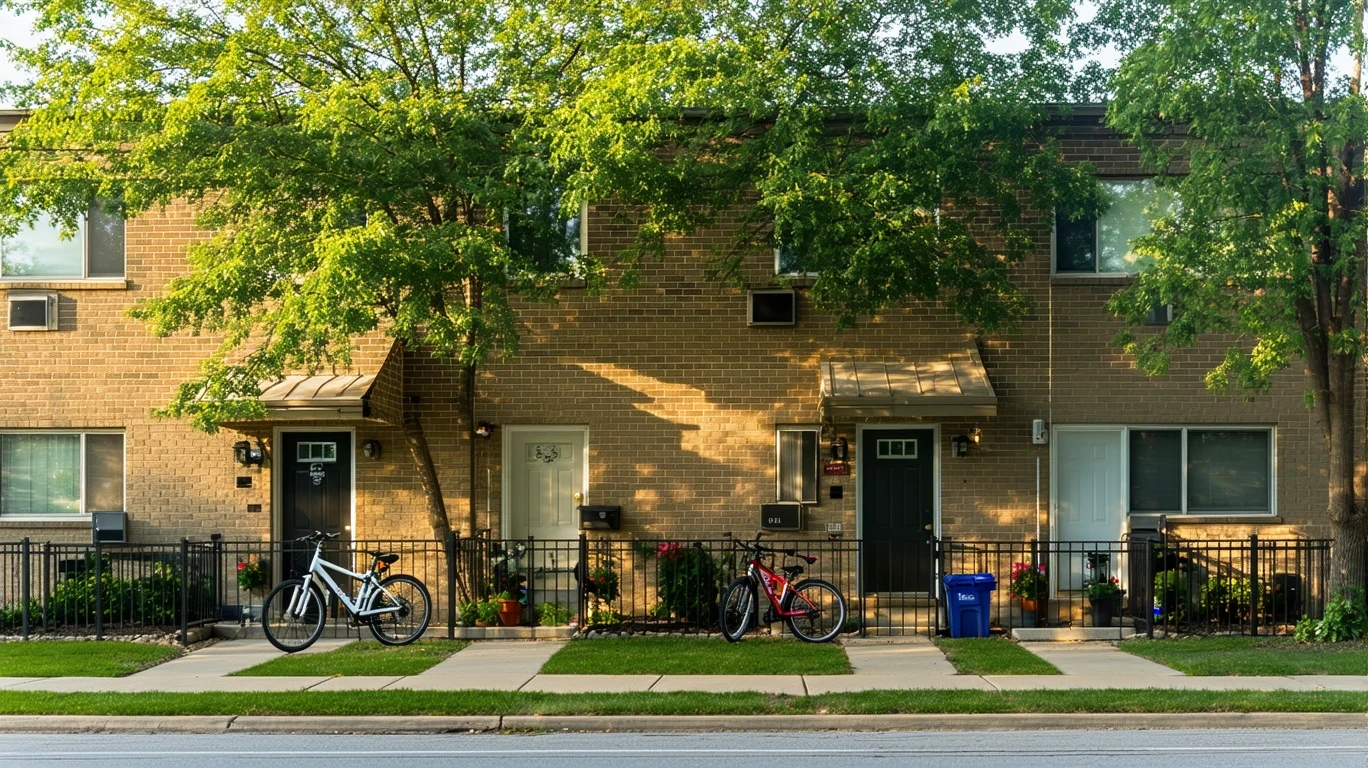
What Does Grove City Actually Feel Like?
Grove City sits in a curious emotional space: close enough to Columbus to feel its gravitational pull, but far enough out to maintain a suburban rhythm that prioritizes yards, schools, and predictability over density and spontaneity. The city’s vibe reflects a tradeoff many residents embrace willingly — trading cultural texture and hyperlocal walkability for family-friendly infrastructure, manageable commutes, and housing costs that feel more forgiving than the metro core.
What tends to feel rewarding here is the infrastructure that supports family routines: schools and playgrounds are woven throughout the city, parks offer green space without requiring a drive, and parts of the city reveal surprisingly walkable pockets where sidewalks and bike paths create alternatives to constant car dependence. The city doesn’t demand you choose between suburban safety and basic pedestrian infrastructure — it offers both, at least in certain neighborhoods.
What tends to feel limiting is the lack of dense, spontaneous texture. Errands cluster along commercial corridors rather than within walking distance of every home, and the absence of a local hospital means medical emergencies or specialist care require a drive. For those who crave arts venues, late-night dining, or the kind of walkable urbanism where every block offers something new, Grove City can feel like a placeholder rather than a destination.
The people who feel “at home” here tend to value stability, school quality, and the ability to access Columbus amenities without paying Columbus housing prices. The people who feel restless often describe Grove City as a place that works logistically but doesn’t spark joy — functional, but not fulfilling.
Social Media Buzz in Grove City
Online conversations about Grove City tend to revolve around growth, proximity, and the tension between small-town nostalgia and suburban expansion. On platforms like Facebook neighborhood groups and local Reddit threads, residents express pride in the city’s family-friendly reputation while also voicing concern about losing the quiet, close-knit character that originally drew them in.
Recurring themes include frustration with traffic along certain commercial corridors, appreciation for the city’s parks and green spaces, and debate over new development. Some residents celebrate the arrival of new shopping and dining options as long-overdue convenience; others worry that each new subdivision or retail center pushes Grove City further from its roots.
“We moved here because it felt like a real community, not just a bedroom suburb. I hope it stays that way.”
“It’s nice having everything we need without the chaos of living downtown. I don’t miss the noise or the parking struggles.”
“I wish there were more local spots — coffee shops, bookstores, things that aren’t chains. It all feels a little generic sometimes.”
The emotional tone is protective rather than celebratory. Residents tend to defend Grove City’s livability while acknowledging its limitations, particularly when comparing it to more urban or culturally dense alternatives.
Local News Tone
Local coverage of Grove City tends to frame the city through the lens of growth management, infrastructure expansion, and community identity. Stories often focus on how the city is evolving — new schools, road projects, retail developments — while also reflecting ongoing debate about what kind of place Grove City should become.
Common headline-style themes include:
- “Community Debates What Growth Should Look Like”
- “New Amenities Arrive as Town Identity Evolves”
- “Residents Weigh Convenience vs Quiet”
- “Schools and Parks Remain Central to City Planning”
- “Commuters Seek Balance Between Access and Affordability”
The framing is rarely alarmist, but it’s not purely boosterish either. Coverage reflects a city in transition, where residents are actively negotiating what they’re willing to gain and what they’re afraid to lose.
Review-Based Public Perception
On platforms like Google Reviews, Yelp, and Nextdoor-style community boards, Grove City earns praise for what it delivers reliably: safe neighborhoods, good schools, accessible parks, and a manageable cost of living relative to Columbus proper. Families, in particular, tend to describe the city as a place where daily logistics — school drop-offs, grocery runs, weekend park visits — flow smoothly.
Positive sentiment often centers on the city’s infrastructure. Residents appreciate that parts of Grove City offer sidewalks, bike paths, and green spaces that make it easier to move around without constant car dependence. The presence of both residential and commercial land use in certain areas creates a sense of place that feels less isolated than typical sprawl.
Criticism tends to focus on what’s missing rather than what’s broken. The lack of a local hospital is a recurring frustration, particularly for families with young children or aging parents. Residents also note that while errands are manageable, they often require driving to commercial corridors rather than walking to nearby shops. For those seeking nightlife, arts venues, or diverse dining options, Grove City feels limited — functional for daily needs, but lacking in spontaneity or cultural texture.
Neighborhood variation exists, though it’s often described in broad terms: newer planned areas tend to feel more polished and family-oriented, while older pockets offer more established trees and slightly more varied housing stock. Neither feels urban, but both offer a version of suburban comfort that works for different preferences.
Comparison to Nearby Cities
| Aspect | Grove City | Hilliard | Reynoldsburg |
|---|---|---|---|
| Overall Vibe | Suburban comfort with walkable pockets, family-focused | Polished suburban feel, slightly more upscale | Affordable, diverse, more working-class texture |
| Walkability | Surprising infrastructure in parts, not car-free | Similar suburban walkability, newer development | More car-dependent, fewer pedestrian amenities |
| Family Appeal | Strong school and playground infrastructure | Highly rated schools, family-centric planning | Family-friendly but fewer amenities |
| Cost Perception | Moderate, more affordable than inner suburbs | Higher cost, reflects proximity and reputation | Most affordable of the three |
| Cultural Texture | Limited, mostly chain retail and dining | Slightly more local dining and arts presence | Diverse community, less polished but more varied |
Grove City occupies a middle ground between Hilliard’s polished, slightly pricier suburban appeal and Reynoldsburg’s more affordable, working-class character. If you prioritize school quality and family infrastructure without paying Hilliard’s premium, Grove City tends to deliver. If you’re seeking the most affordable option and don’t mind fewer pedestrian amenities, Reynoldsburg may feel like a better fit. If you want a bit more cultural texture and don’t mind higher costs, Hilliard offers that trade.
None of these cities will satisfy someone seeking dense urban walkability or a thriving arts scene — for that, you’d need to look closer to downtown Columbus. But within the suburban spectrum, Grove City offers a version of comfort that balances infrastructure, affordability, and proximity without feeling either too generic or too isolated.
What Locals Are Saying
“We moved here from downtown Columbus when we had our second kid. The schools are solid, there are parks everywhere, and we’re still close enough to visit friends in the city. It’s not exciting, but it works.” — Young family, relocated from urban core
“I love that I can bike to the park with my kids and actually feel safe doing it. Not every suburb has that.” — Parent of two, newer planned neighborhood
“It’s fine, but I miss having a coffee shop I can walk to. Everything requires getting in the car, even if it’s just five minutes away.” — Remote worker, older pocket of the city
“The lack of a hospital is a real problem. When my daughter had an emergency, we had to drive 20 minutes. That’s not something you think about until you need it.” — Parent, long-time resident
“It’s quiet, affordable, and I can get to work in Columbus in under half an hour. I don’t need nightlife or fancy restaurants — I just need a place that doesn’t stress me out.” — Commuter, renting near commercial corridor
“Grove City feels like it’s trying to figure out what it wants to be. It’s growing, but I’m not sure it’s growing in a way that makes it more interesting.” — Newcomer, mid-30s professional
“I’ve been here for 20 years, and it’s changed a lot. Some of that’s good — better stores, nicer parks. But it’s also lost some of the small-town feel I used to love.” — Long-time resident, retiree
Does Grove City Feel Like a Good Fit?
Grove City doesn’t try to be everything to everyone, and that clarity is part of its appeal. It works best for people who value family infrastructure, manageable commutes, and housing costs that feel more forgiving than the metro core. The city’s surprising walkability in certain pockets — sidewalks, bike paths, parks — sets it apart from typical sprawl, offering a version of suburban life that doesn’t demand total car dependence.
It tends to frustrate people who need frequent access to specialist medical care, those seeking dense urban walkability, or anyone craving cultural texture beyond chain retail and dining. The absence of a local hospital is a real friction point, and the corridor-based errands model means you’ll still need a car for most daily logistics.
If you’re a family seeking strong schools, safe neighborhoods, and proximity to Columbus without downtown costs, Grove City tends to deliver. If you’re a remote worker or retiree who values quiet and predictability over spontaneity, it may feel like a relief. But if you’re someone who measures quality of life by the number of independent bookstores, late-night venues, or walkable coffee shops within a five-minute radius, Grove City will likely feel like a compromise rather than a choice.
The city’s emotional profile is one of stability, not excitement. It’s a place where logistics work, routines flow smoothly, and housing pressure feels less intense than in more competitive suburbs. Whether that feels like “home” depends entirely on what you’re trading up for — and what you’re willing to live without.
If you’re weighing Grove City against other options, consider exploring housing tradeoffs, where money goes each month, or what lifestyle factors matter most to your household.
How this article was built: In addition to public economic data, this article incorporates location-based experiential signals derived from anonymized geographic patterns—such as access density, walkability, and land-use mix—to reflect how day-to-day living actually feels in Grove City, OH.
The perspectives shown reflect commonly expressed local sentiment and recurring themes in public discussion, rather than individual accounts.